Published: 23 January 2026. The English Chronicle Desk. The English Chronicle Online
A planned board game that seeks to recreate the Northern Ireland Troubles as a strategic, dice-driven contest has ignited a fierce and emotional backlash across Northern Ireland, with victims’ groups warning that it risks retraumatising survivors and trivialising decades of violence, grief and unresolved pain. Although the game is still in development and not yet available for purchase, its emergence has reopened deep wounds in a society where the legacy of conflict remains ever-present.
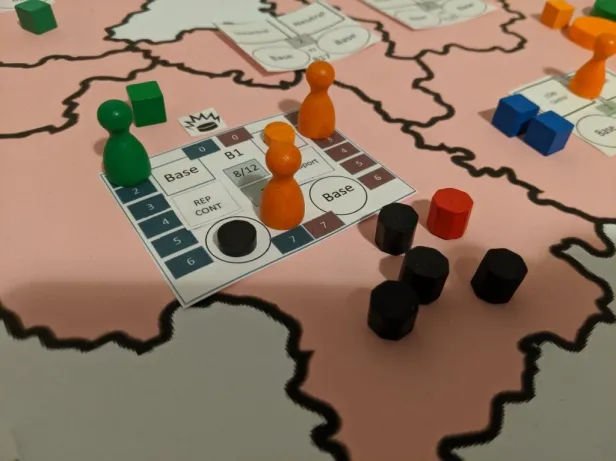
The game, titled The Troubles: Shadow War in Northern Ireland 1964–1998, has been developed by Compass Games, a United States-based company known for producing historically themed military board games. According to its designers, the game allows players to assume the roles of various factions involved in the conflict, including the Provisional Irish Republican Army, the British army, the Royal Ulster Constabulary, loyalist paramilitaries and nationalist and unionist political movements. Through a combination of cards, tokens and dice, players can engage in actions such as planting bombs, conducting security operations, negotiating political agreements and contesting elections, with the stated aim of “resolving” the conflict within a single extended play session of around six hours.
News of the game’s existence, first reported by the Belfast Telegraph, prompted swift condemnation from victims’ advocates and community representatives. Kenny Donaldson, director of the South East Fermanagh Foundation, which supports victims and survivors of the Troubles, said the concept showed a profound lack of understanding of the human cost of the conflict. He warned that many people who lived through the violence could feel deeply triggered by seeing their lived trauma transformed into a form of entertainment.

Donaldson said the game appeared to oversimplify a complex and deeply painful history, reducing decades of loss, fear and political struggle into a competitive exercise. He argued that such an approach risked minimising the suffering of victims and survivors, many of whom continue to live with physical injuries, psychological trauma and unresolved grief. For them, the Troubles are not a distant historical episode but an ongoing reality that shapes daily life.
Drawing a comparison to other global tragedies, Donaldson questioned how families of victims of the 11 September attacks in the United States might react if a similar board game were created about those events. He said the core failure of the project lay in its apparent assumption that the Troubles are safely consigned to the past, when in reality they remain deeply embedded in Northern Ireland’s political, social and cultural fabric.
Compass Games, based in Connecticut, had briefly listed the game for pre-order on its website at a price of $85 before the controversy erupted. The listing described a detailed and immersive experience spanning more than three decades of conflict, divided into multiple historical phases. Following the backlash, the company sought to emphasise that the project was still at an early stage and would not be released for several years.
Bill Thomas, the founder and president of Compass Games, said the current version of the game was far from final and remained subject to extensive development and play testing. He stressed that the company’s intention was not to make light of the conflict but to present a serious and historically grounded depiction of it. Thomas said Compass Games specialised in complex historical simulations and believed that games could serve as educational tools rather than mere entertainment.
According to Thomas, the original design submitted to the company was far more detailed and nuanced than he had expected, running to more than 200 pages of rules and background material. This complexity, he said, was evidence of the designer’s effort to grapple with the political and social dimensions of the conflict rather than presenting a simplistic or sensationalised narrative.
The game’s designer, Hugh O’Donnell, is a secondary school teacher based in Scotland. His design reportedly traces the roots of the Troubles back to the late nineteenth century, beginning with Westminster’s 1886 home rule bill and following the trajectory of Ireland’s partition and the creation of Northern Ireland. By doing so, the game attempts to situate the violence of the late twentieth century within a longer historical arc of political division and contested identities.
In its current form, the game allows between two and six players to take control of different factions, each with its own objectives, resources and constraints. Players must navigate a shifting landscape of security operations, public opinion and political negotiations. Paramilitary groups can choose between escalating violence or, in some scenarios, colluding with elements of the security forces. Political factions can decide whether to support armed campaigns, pursue electoral strategies or engage in power-sharing arrangements.
One controversial element highlighted by critics is the inclusion of real historical references, such as the IRA informer known as Stakeknife, whose activities remain the subject of ongoing investigations and deep controversy. The game’s cards are divided into eight historical “epochs”, covering periods such as the intense violence of the early 1970s, the hunger strikes of the early 1980s and the IRA’s “target mainland” bombing campaign in England during the mid-1980s.
Visually, the game uses colour-coded pieces to represent different actors in the conflict. Blue markers stand in for RUC troops and bases, black pieces represent IRA units and infrastructure, tan pieces signify British military forces, red denotes loyalist paramilitaries, while orange and green represent unionist and nationalist political movements respectively. Accompanying these components are a detailed rulebook and a historical playbook intended to provide context for players unfamiliar with the period.
Thomas has defended the educational value of the project, arguing that many younger people, particularly outside the UK and Ireland, have little understanding of the Troubles or their causes. He suggested that interactive formats such as board games could engage audiences who might not otherwise encounter this history through books or documentaries. In his view, making history engaging does not necessarily mean trivialising it.
He also questioned whether opposition to such projects risked consigning the memory of the conflict to obscurity outside Northern Ireland. Thomas said that while he recognised the pain endured by communities during the Troubles, he believed there was value in ensuring that the conflict was understood internationally, rather than forgotten or reduced to a few stereotypes.
However, critics in Northern Ireland argue that the issue is not whether the Troubles should be remembered, but how. Many feel that transforming the conflict into a game, particularly one that allows players to “win” by successfully deploying violence or political manoeuvring, crosses an ethical line. They argue that education about the Troubles should centre the experiences of victims and survivors, emphasising human cost rather than strategic outcomes.

The controversy has also highlighted broader debates about the commercialisation of history and trauma. In recent years, there has been increasing scrutiny of how conflicts, atrocities and tragedies are represented in popular culture, from films and television series to video games and interactive media. While some argue that such representations can foster understanding and empathy, others warn that they risk sensationalism and desensitisation.
In Northern Ireland, where peace remains fragile and political tensions persist, these concerns are particularly acute. Many families are still seeking truth and justice for killings that occurred decades ago. In this context, any portrayal of the conflict is likely to be judged not only on its historical accuracy but on its sensitivity to those who suffered.
As of now, Compass Games has not indicated whether it will alter or abandon the project in response to the criticism. Thomas has said the company remains open to dialogue and feedback as development continues. For victims’ groups, however, the very premise of the game raises questions that go beyond design details or disclaimers.
The debate sparked by The Troubles: Shadow War in Northern Ireland 1964–1998 underscores the enduring power of the past in Northern Ireland. It is a reminder that, for many, the Troubles are not a chapter closed but a lived experience that continues to shape identity, memory and politics. Whether the game ultimately proceeds or not, the reaction to it has already revealed how sensitive and contested the act of remembering can be.
Related News:
 British Woman in Iran ‘Losing Hope’ Amid Ongoing Detention
 BBC Journalist Held and Interrogated in Vietnam
 Green Party Surges Past Labour in Latest UK Poll
 Celebrities and Charities Demand UK Government Act on Child Poverty
 Sultana says new party is aiming to ‘run government’
 Trump’s UK Ambassador Urges North Sea Drilling to Strengthen US Ties
 FBI Director Kash Patel Defends Girlfriend Amid Government Jet Claims
 Phillipson urges careful review of gender recognition guidance
 French Taxi Driver Cleared in David Lammy Theft Case After Fare Dispute
 Rachel Reeves Set to Break Labour Pledge and Raise Income Tax
 Who is Rama Duwaji? What Zohran Mamdani’s wife has said about Gaza and ICE as he’s elected NYC mayor
 MPs Press Rachel Reeves to Hike Gambling Taxes
 Met Police Culture Makes Racial Harm ‘Inevitable’
 Eleven Arrested After Pro-Palestine Protest at Villa Match
 Boris Johnson accused of undermining BBC leadership
 Remaining rebel Labour MPs have whip restored
 Cuts to home insulation funding threaten UK climate goals
 ‘Reckless’ cuts to victims’ services will cost more than they save
 BBC director-general and news chief resign amid bias row
 Millionaires group urge Reeves to introduce wealth tax to ‘lift kids out of poverty’
 Starmer Faces Growing Dissent as Labour MPs Weigh Leadership Challenge
 BBC Faces Backlash as Reform UK Withdraws from Film
 Tim Davie Defends BBC Amid Bias Scandal Storm
 Reeves rejects £1bn plea for NHS redundancy payouts
 Farage appointee to lead Reform youth accused of anti-British views
 Palace to reinstate hyphen in Andrew’s surname
 Politics latest: Starmer ‘will fight any leadership coup’ as Streeting denies attempt to oust Labour PM
 PM Condemns Leaks, Vows Loyalty to Ministers and Stability
 Major Rent Reform Ends No-Fault Evictions in England
 Peers Flood Assisted Dying Bill with 942 Amendments
 England’s Special Needs Support Faces Breaking Point
 MoD warned over Excel risks before Afghan data breach
 UK Unveils Fast-Track Deportation and Asylum Overhaul
 UK Asylum Overhaul Sparks Debate Over Human Rights and Deportations
 UK Asylum Reforms: Temporary Refugee Status and Faster Deportations
 UK Candidate Moved to Safe House After Election Threats
 Mahmood Defends Tough Overhaul of UK Asylum System
 UK Warns China After MI5 Issues Espionage Alert
 Westminster Advances Legacy Bill Amid Criticism
 Minister Defends Tough New Asylum Reform Plan
 UK Vulnerable to Attack, Defence Committee Finds
 Labour Faces Historic Decline in Wales
 Rama Rebukes Mahmood for Targeting Albanian Families
 Russian Vessel Used Lasers on RAF Pilots, UK Claims
 PM Shares Emotional Letter to Son on Men’s Struggles
 MP Offers Seat to Help Burnham Challenge Starmer
 PM Highlights UK Business at G20 in South Africa
 Kate Forbes: Motherhood Harder Than Politics
 Welsh Government Christmas 2020 Lockdown Criticised
Reeves to Crack Down on Benefit Fraud While Lifting Two-Child Limit
Welsh Government Christmas 2020 Lockdown Criticised
Reeves to Crack Down on Benefit Fraud While Lifting Two-Child Limit
 BBC to Expand Standards Panel and Create Deputy Director Role
 Most Tories Expect to Support a Farage-Led Government
 Labour MP claims devolution bill is ‘blatant discrimination’ against Cornwall
 English Mayors Set to Introduce Tourist Taxes
 Millions Face Higher Taxes Under Reeves New Budget
 Peers Get Extra Time to Debate Assisted Dying Bill
 Planned Palestinian Flag Raising at Belfast City Hall Faces Delay Amid Legal Concerns
 Government righting decades-old injustice for miners
 Starmer Says Labour’s Economic Plan Needs Years to Deliver
 UK delays ruling on China embassy plan until January
 Culture secretary to review Telegraph takeover by Daily Mail owner
 Andy Burnham Apologises for Past LGBTQ+ Police Discrimination
 UK to Launch Military ‘Gap Year’ Scheme to Boost Recruitment
 Reeves Slams Farage Over Two-Child Benefit Cap Opposition
 Mandelson Refuses Apology Over Epstein Ties
 Plans to Limit Jury Trials Face Retreat After Mounting Opposition
 Jenrick Reform defection deepens Tory civil war
 China Dependence Threatens UK Energy Supply Chains and Jobs
 Right Must Unite After Jenrick Defection, Urges Rees-Mogg
 Romford MP Andrew Rosindell defects to Reform UK
 UK Ministers Drop Foreign Student Targets for Global Education Push
 MPs warn AI financial risks threaten UK stability
 MPs warn AI financial risks threaten UK stability
 No Gas Boiler Ban as UK Warm Homes Plan Backs Heat Pumps
 Hugh Grant Joins Call for Under-16 Social Media Ban in UK
 Shinzo Abe’s killer receives life sentence in Japan
 US Africa aid remarks spark anger after leaked State email
 Lords Vote Piles Pressure on Starmer Over Social Media Ban
 Judge-only trials plan fails to ease court backlog
 UK Government Borrowing Drops to £11.6bn in December