Published: 26 January 2026. The English Chronicle Desk. The English Chronicle Online.
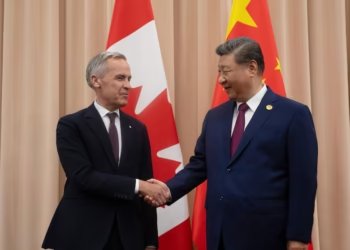
Canada has no plans to pursue a free trade agreement with China, Prime Minister Mark Carney confirmed. The Canada China trade issue has drawn attention after recent tariff adjustments targeted specific sectors affected in past years. Carney emphasized that Canada will not negotiate with non-market economies without prior consultation with its North American partners under the USMCA commitments. “We have no intention of doing that with China or any other non-market economy,” Carney said, clarifying that Canada’s actions addressed existing issues rather than forming a new trade pact.
In 2024, Canada mirrored US policy by imposing a 100% tariff on electric vehicles from China and a 25% tariff on steel and aluminium products. China responded with retaliatory measures, applying 100% import taxes on Canadian canola oil and meal, and 25% tariffs on pork and seafood. The recent agreement saw Canada reduce its electric vehicle tariffs in return for lower tariffs on certain Canadian exports. Carney highlighted that Chinese electric vehicle imports will initially face a cap of 49,000 units annually at a tariff rate of 6.1%, gradually rising to 70,000 over five years. This is a minor fraction, about 3%, of the 1.8 million vehicles sold annually in Canada.

The move drew criticism from former US President Donald Trump, who threatened via social media to impose a 100% tariff on Canadian goods if Canada allowed China to export products into the United States. Trump warned against Canada becoming a “drop-off port” for Chinese goods. US Treasury Secretary Scott Bessent also weighed in, stressing that Canada cannot become a conduit for cheap Chinese imports under the existing trade agreement. Bessent highlighted that the USMCA is set for renegotiation this summer and questioned Carney’s approach, framing it as virtue signaling to globalist peers.
Carney’s firm stance comes amid growing tension with the US over trade and sovereignty. His recent speech at Davos emphasized the importance of middle powers acting collectively to counter coercive actions by great powers. He stated that countries must collaborate strategically or risk being sidelined, drawing significant attention and praise for his leadership on the global stage. Canada China trade has emerged as a point of debate among international economic experts monitoring North American policy coherence.
Canada’s careful navigation reflects a strategy aimed at balancing relations with China while respecting obligations to its North American allies. The reduced tariffs on Chinese electric vehicles signal pragmatism rather than a free trade commitment. Carney clarified that the agreement does not pave the way for unrestricted trade, but instead rectifies tariffs applied in recent years, demonstrating a measured approach to international commerce.
Economists have noted that Canada China trade strategy aims to protect domestic industries while maintaining the credibility of the USMCA framework. By capping Chinese electric vehicle imports, Canada ensures domestic auto manufacturers remain competitive while allowing for incremental foreign investment. Analysts suggest that China’s expected investment in the Canadian auto industry within three years could provide long-term benefits, but the move remains tightly controlled.
Political observers in Canada have praised Carney for prioritizing national interests without escalating tensions unnecessarily. The careful framing of the China agreement shows Canada’s commitment to strategic diplomacy while avoiding direct confrontation with the United States. Carney’s ability to navigate these complex trade waters highlights his experience in global economic affairs and his focus on middle power collaboration.
China’s response to the revised tariffs has been cautious but constructive. Officials have indicated that the country is prepared to engage in the Canadian auto sector under the new terms, reflecting a willingness to cooperate within a defined framework. Experts emphasize that Canada’s insistence on prior notification under USMCA provisions ensures transparency and prevents trade disputes with its North American partners. Canada China trade remains structured to maintain a balance between sovereignty and economic opportunity.
The ongoing dialogue illustrates the delicate balance of modern trade diplomacy, where economic and geopolitical interests intersect. Canada’s approach demonstrates that small-to-medium powers can assert their sovereignty while maintaining positive engagement with major global economies. Carney’s remarks in Davos reinforced this perspective, advocating for collective action and strategic planning among middle powers.

Observers also note the symbolic significance of Carney’s leadership at the World Economic Forum. By upstaging Trump with reasoned diplomacy and emphasizing rules-based trade, Carney positioned Canada as a thoughtful actor on the world stage. The focus on regulated trade, measured tariff adjustments, and careful planning underscores Canada’s commitment to principled economic policies without compromising international relationships.
Canada’s restraint in avoiding a full free trade deal with China signals prudence amid global uncertainty. The decision maintains strong ties with the US while allowing selective engagement with China, ensuring national interests remain protected. Analysts suggest that Carney’s balanced approach could serve as a model for other nations navigating similar trade complexities.
In conclusion, Canada’s careful handling of tariffs and international relations highlights its commitment to strategic, rules-based trade. By clarifying that no free trade deal with China is intended, Carney reassures domestic and international stakeholders of Canada’s consistent adherence to North American trade obligations. The selective tariff adjustments reflect pragmatism, maintaining competitiveness while avoiding unnecessary conflict. Canada China trade remains a priority carefully managed for both national and global benefit.
Related News:
 Shock US Raid: Maduro Pleads Not Guilty in Manhattan Court
 Trump Plans Venezuela Meeting, Warns of Cartel Land Strikes
 Mandelson apologises over Epstein ties after public scrutiny
 Rudd successor: Defence chief and former ministers considered
 US Senate rejects resolution limiting Trump military powers
 Trump Calls Greenland Critical for US Security After Denmark Talks
 Trump: Iran Killing Has Stopped, Strike Threats Pulled Back
 Machado Trump medal gesture reshapes Venezuela power struggle
 Trump Receives Machado’s Nobel Medal in White House Meeting
 Iran unrest slows under brutal crackdown and global tensions
 Trump Allies Pursue $200m European Gas Pipeline Deal
 US Considers Asylum for British Jews Amid Rising Antisemitism
 Starmer Challenges US Over Controversial Greenland Deal
 Spoof “Make America Go Away” Caps Rally Denmark Over Greenland
 Trump slams UK ‘stupidity’ over Chagos Islands, eyes Greenland takeover
 UK Presses On With Chagos Handover Despite Trump Criticism
 Kim Jong-un Fires Vice-Premier Over Factory Failures
 Shinzo Abe’s killer receives life sentence in Japan
 Starmer Resists Matching Trump Amid Greenland Tensions
 Netanyahu Accepts Trump’s ‘Board of Peace’ Invitation
 South Korean Ex-PM Jailed 23 Years Over Martial Law Role
 Russia Strikes Kyiv and Kharkiv as Peace Talks Enter Day Two
 Green Party Surges Past Labour in Latest UK Poll
 Army Officers Orders to Cut Ties with Men-Only Clubs
 Trump’s UK Ambassador Urges North Sea Drilling to Strengthen US Ties
 French Taxi Driver Cleared in David Lammy Theft Case After Fare Dispute
 Labour immigration crackdown could cost UK £4.4bn
BBC to Apologise Over Edited Trump Speech Amid Backlash
Labour immigration crackdown could cost UK £4.4bn
BBC to Apologise Over Edited Trump Speech Amid Backlash
 Britain deploys RAF specialists to assist Belgium with drone threats
 Millionaires group urge Reeves to introduce wealth tax to ‘lift kids out of poverty’
 Starmer Faces Growing Dissent as Labour MPs Weigh Leadership Challenge
 Reeves rejects £1bn plea for NHS redundancy payouts
 PM Condemns Leaks, Vows Loyalty to Ministers and Stability
 Major Rent Reform Ends No-Fault Evictions in England
 Peers Flood Assisted Dying Bill with 942 Amendments
 Senator John Fetterman Hospitalized After Fall from Heart Flare-Up, Keeps Sense of Humor
 US Justice Department Files Lawsuit Against California Over Partisan Voting Maps
 Greene Pushes Epstein Files Amid Trump Fallout
 Trump Deploys DHS to Charlotte in Major Arrest Operation
 December Run-Off in Chile as Election Produces No Winner
 Canada Passes Carney’s First Budget in Tight Parliamentary Vote
 Shadow Fleet at Sea: Europe’s Battle Against Illicit Oil Shipping
 Pentagon Officials in Ukraine to Discuss War End
 Venezuela Threatens Nobel Winner Machado with Fugitive Status
 Most Tories Expect to Support a Farage-Led Government
 Labour MP claims devolution bill is ‘blatant discrimination’ against Cornwall
 Millions Face Higher Taxes Under Reeves New Budget
 Georgians Defy Government Crackdown After Year of Protests
 US National Guard Member Killed in DC Shooting
 ICC to Rule on Duterte’s Provisional Release
 Jordan Bardella: France’s Young Presidential Contender
 Starmer Says Labour’s Economic Plan Needs Years to Deliver
 EU plans $105bn Ukraine aid using frozen Russian assets
 Culture secretary to review Telegraph takeover by Daily Mail owner
 Khaleda Zia Death in Bangladesh: First Female PM Dies at 80
 Russia losses Ukraine war peace talks intensify amid rising deaths
 Albanese Opens Door to Bondi Royal Commission Amid Rising Pressure
 Trump Escalates Minnesota Immigration Surge Amid Rising Tensions
 Saudi Officials Report Zubaidi Flee Before Yemen Peace Talks
 UK Targets in New York Bomb Threat Hoax: Man Jailed
 Gambia Supreme Court Hears Case to Overturn FGM Ban
 Iran Protesters Defy Crackdown as Violent Clashes Intensify
 Homeland security agents deployed amid Minneapolis protests
 Plans to Limit Jury Trials Face Retreat After Mounting Opposition
 Trump targets Iran trade with 25% tariff warning
 Trump Threatens Strong Action If Iran Executes Protesters
 Gulf states warn Trump Iran strikes risk wider Middle East war
 Geopolitical football: Iran, Trump and the World Cup clash
 Canada-China trade gains momentum in new strategic partnership
 Right Must Unite After Jenrick Defection, Urges Rees-Mogg
 EU weighs response amid Greenland tariff crisis with Trump
 UK Ministers Drop Foreign Student Targets for Global Education Push
 MPs warn AI financial risks threaten UK stability
 No Gas Boiler Ban as UK Warm Homes Plan Backs Heat Pumps
 American democracy faces crisis after Trump’s return
 Sussan Ley leadership milestone shakes Liberal future
 EU Says US Ties Have Suffered ‘Big Blow’ After Greenland Crisis
 Andrew Hastie Emerges as Leadership Rival to Ley
 Satire Can Skewer Trump, But It Won’t Save Democracy
 Police response times face strict new national limits