Published: 29 January 2026. The English Chronicle Desk. The English Chronicle Online.
Newly released Alex Pretti videos have intensified scrutiny around the fatal shooting of the Minneapolis ICU nurse by federal officers. The footage, published on Wednesday by a digital outlet, shows a tense confrontation that occurred eleven days before his death. The images have circulated widely on social media, prompting renewed debate about federal enforcement tactics and accountability. Verified by international and UK-based news sources, the recordings offer a clearer timeline of events while raising fresh questions about context, conduct, and proportionality.
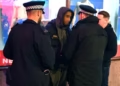
The Alex Pretti videos run for roughly two minutes and capture an encounter on 13 January during volatile community protests. Officers in an unmarked vehicle appear to stop as Pretti approaches, shouting and briefly kicking a tail light while the car pulls away. Moments later, an armed agent exits the vehicle and tackles him to the ground. Several officers then converge, restraining Pretti amid shouting from nearby residents. The footage does not show what initially prompted the confrontation, a gap that has become central to public discussion.

Shortly after being restrained, Pretti appears to break free and stands nearby as agents leave the scene. His coat is pulled off during the scuffle, revealing what looks like a firearm tucked into his waistband. Family representatives later confirmed he held a valid permit for a concealed handgun and never reached for it. Observers note that the video shows no attempt by Pretti to use the weapon, a detail that has shaped legal arguments and public reaction.
The family of Alex Pretti confirmed to journalists that he is the man seen in the footage. Their attorney, Steve Schleicher, said the earlier incident could not justify the later killing. He argued that the videos show Pretti posing no immediate threat during the January confrontation. Schleicher’s statement has been echoed by civil rights advocates who say the material demonstrates a pattern of aggressive enforcement rather than isolated misjudgment.
Witness accounts add further detail to what the Alex Pretti videos depict. A separate recording published by a local newspaper shows officers tackling Pretti with considerable force. The bystander who filmed that clip said he was slammed hard onto the ground. As the officers depart, the witness asks if Pretti is all right. Pretti replies calmly, asking whether everyone present is safe. The exchange has been cited as evidence of his composure following the incident.
Another recording, posted online the same day, captures the broader atmosphere in the neighbourhood. Cars honk and residents blow whistles to warn others of federal agents nearby. The sounds convey widespread anger and fear linked to immigration enforcement operations underway at the time. The location is just four blocks from where another resident, Renee Good, had been killed by an officer the previous week, adding to tensions within the community.
Throughout the incident shown in the Alex Pretti videos, officers are seen deploying teargas and pepper balls into the crowd while restraining him. Residents gather quickly, shouting at agents and demanding explanations. Local journalists on the scene reported more than one hundred people observing and protesting federal activity that day. One woman was reportedly pulled from her car after an officer smashed her window, while others alleged rough treatment without warning.
State representative Aisha Gomez was present during the confrontation and later described being shoved by officers without explanation. She also said she witnessed another man tackled and carried away. Her account aligns with the chaotic scenes visible in the footage. Gomez’s comments have contributed to calls for an independent inquiry into the conduct of federal agents operating in the city.
Federal authorities have acknowledged the existence of the footage. A spokesperson for the Department of Homeland Security said the agency is reviewing the material. No further details were provided about the scope or timeline of that review. Officials have not clarified whether the earlier confrontation will factor into investigations surrounding Pretti’s death.
City leaders have urged focus on the circumstances of the fatal shooting itself. Minneapolis mayor Jacob Frey said the earlier incident should not distract from examining what happened on the day Pretti was killed. Speaking at a televised town hall, Frey stressed that accountability depends on understanding the immediate events leading to the use of lethal force. His comments reflect a broader official stance that separates the two encounters.
The shooting has already been surrounded by controversy. Initial statements from federal officials claimed Pretti was brandishing a gun and intended to harm officers. Those assertions were later contradicted by video from the day of the shooting, which appears to show Pretti holding a mobile phone instead. The discrepancy has damaged trust and intensified scrutiny of official narratives.
In a statement released after his death, Pretti’s family condemned what they described as false claims about their son. They insisted he was unarmed in the moments before being shot and urged the public to consider the visual evidence. Their appeal has resonated widely, with activists and legal experts citing the importance of video documentation in modern accountability efforts.

The emergence of the Alex Pretti videos has also reignited debate over the role of federal agents in local communities. Critics argue that aggressive tactics escalate tensions and endanger both residents and officers. Supporters of enforcement counter that agents face unpredictable threats during volatile operations. The footage has become a focal point in this national conversation, illustrating the fine line between authority and restraint.
Legal analysts say the videos may influence civil proceedings, even if their relevance to criminal investigations remains contested. They note that patterns of behaviour can inform judgments about training, supervision, and policy. For Pretti’s family, the recordings represent a crucial piece of context that humanises their loss and challenges official accounts.
As the review by federal authorities continues, public attention shows little sign of fading. Community leaders have called for transparency and calm, urging residents to allow investigations to proceed. At the same time, protests continue to demand answers and reforms. The Alex Pretti videos stand as a stark reminder of how quickly encounters can escalate and how powerfully recorded images shape public understanding.
Related News:
 Two National Guard Soldiers Critically Injured Near White House
 Putin Intensifies Territorial Demands Before US Talks
 Trump to Recheck Green Cards from 19 Nations After DC Attack
 US Defence Chief on Drug Boat Strike: “Did Not See Survivors”
 American Mother Extradited From UK to U.S. on Murder Charges
 Russia losses Ukraine war peace talks intensify amid rising deaths
 US Cities Erupt in Protests Against Trump’s Venezuela Military Action
 Trump Escalates Minnesota Immigration Surge Amid Rising Tensions
 Trump Says US Must ‘Own’ Greenland to Block Russia, China
 Greenland Faces Pivotal Summit Over Arctic Power Struggle
 US Clears Nvidia AI Chip Sales to China in Policy Shift
 Trump Threatens Strong Action If Iran Executes Protesters
 Trump Receives Machado’s Nobel Medal in White House Meeting
 Trump Aide Sparks Fury as Greenland Dispute Intensifies
 EU Says US Ties Have Suffered ‘Big Blow’ After Greenland Crisis
 Arizona border shooting leaves suspect hospitalised after agent pursuit
 British Woman in Iran ‘Losing Hope’ Amid Ongoing Detention
 Top Christmas Books Reads: Classics to Cozy Romcoms
 Just Stop Oil Protesters Convicted Amid Climate Defence Row
 BBC to Apologise Over Edited Trump Speech Amid Backlash
 Britain deploys RAF specialists to assist Belgium with drone threats
 Palace May Restore Hyphen to Andrew Mountbatten-Windsor’s Name
 US Senate Passes Funding Bill to End Historic Shutdown
 Suicide Bombing at Islamabad Court Kills 12, Injures Dozens
 Hitler’s DNA Confirms He Truly Had Only One Testicle
 US Justice Department Files Lawsuit Against California Over Partisan Voting Maps
 Greene Pushes Epstein Files Amid Trump Fallout
 Trump Deploys DHS to Charlotte in Major Arrest Operation
 December Run-Off in Chile as Election Produces No Winner
 Zelenskyy Signs Fighter Jet Deal Amid Russian Drone Attacks
 Orban Says Ukraine Has ‘No Chance’ as EU Support Continues
 Canada Passes Carney’s First Budget in Tight Parliamentary Vote
 Israeli Strike Kills 13 Near Palestinian Camp in Lebanon
 Shadow Fleet at Sea: Europe’s Battle Against Illicit Oil Shipping
 Tiny Curacao Makes History as Smallest Nation to Reach World Cup
 Haiti Qualifies for World Cup Despite Coach Never Visiting Country
 Deadly Russian Strikes Hit Western Ukraine, 20 Killed in Ternopil
 Pentagon Officials in Ukraine to Discuss War End
 Ukraine Peace Plan: Zelensky Ready for Dialogue
 Vietnam Battles Deadly Floods as Rains Continue
 Venezuela Threatens Nobel Winner Machado with Fugitive Status
 At Least Three Dead in Bangladesh Earthquake
 Royal Navy Shadows Russian Warships Entering the Channel
 Israel Confirms Hamas Returned Dror Or’s Body
 US Suspends Afghan Immigration After White House Shooting
 Georgians Defy Government Crackdown After Year of Protests
 Southern Lebanon reels as Israeli strikes shatter communities
 Mbappe Scores 4 as Real Madrid Edge Olympiakos
 US National Guard Member Killed in DC Shooting
 Sri Lanka Floods Leave 56 Dead, Dozens Missing
 Tokyo court rules Japan’s same-sex marriage ban constitutional
 ‘Extinct’ Antelope Returns to Sahara, Bringing Hope
 EU plans $105bn Ukraine aid using frozen Russian assets
 Global campaign launched to free Palestinian leader Barghouti
 Facebook Slow to Remove Bondi Attack Praise, Anti-Hate Group Claims
 Australian Cruise Ship Freed After Reef Grounding in Papua New Guinea
 Zelenskyy Accuses Russia of Sabotaging Peace Talks
 Albanese Opens Door to Bondi Royal Commission Amid Rising Pressure
 Capitol Attack Anniversary Sparks Deep Political Divide
 Iran Protesters Defy Crackdown as Violent Clashes Intensify
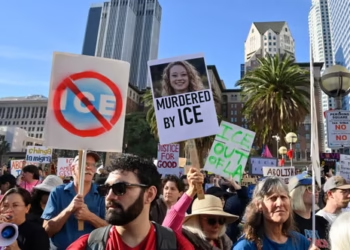 Homeland security agents deployed amid Minneapolis protests
 Minneapolis mayor demands state access to Renee Good probe
 Trump Weighs Response to Iran Crackdown as Tehran Says Communication Open With US
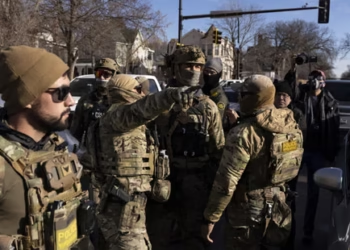 Minnesota Sues Trump Administration Over ICE Surge
 Trump targets Iran trade with 25% tariff warning
 Portland man pleads not guilty after Border Patrol shooting
 Gulf states warn Trump Iran strikes risk wider Middle East war
 Machado Trump medal gesture reshapes Venezuela power struggle
 Greenland defence seen as shared Nato duty amid troop arrivals
 EU weighs response amid Greenland tariff crisis with Trump
 Syria President Declares Victory as Ceasefire Reached with SDF
 US Considers Asylum for British Jews Amid Rising Antisemitism
 Sydney Shark Attack Surge Shocks Australia Beaches
 ICE street raids expose a chilling future for public freedoms
 Thousands Flee Cambodia Scam Centres Amid Global Pressure
 Andrew Hastie Emerges as Leadership Rival to Ley
 ‘A long time coming’: US table tennis finds its moment
 Minneapolis pushes back against ICE’s federal crackdown
 Starmer China visit raises human rights pressure on Beijing
 US Launches Multi-Day Air Drills Amid Rising Iran Tensions