Tensions between global superpowers are rising, and the UK is positioning itself alongside the United States as strategic rivalries with China intensify. As part of these preparations, the Royal Air Force’s Voyager fleet has been playing a critical role in ensuring rapid deployment, logistical support, and air mobility for potential military operations.
Journalists from the English Chronicle were given rare access on board an RAF Voyager, the air-to-air refuelling and transport aircraft central to Britain’s strategic mobility. The mission: to witness firsthand how the UK is preparing for a potential conflict in the Asia-Pacific region, where tensions over trade, territorial disputes, and military posturing have escalated in recent years.

The Voyager, known officially as the Airbus A330 MRTT, is designed to provide air-to-air refuelling for fighter jets and transport capabilities for troops, equipment, and supplies. In scenarios where Britain and its allies may confront global threats, such as those posed by China’s military assertiveness in the South China Sea and Taiwan Strait, the Voyager allows the UK to project power rapidly across vast distances.
An RAF officer explained:
“The Voyager is the backbone of our operational reach. It allows fighters, bombers, and transport aircraft to operate far from the UK without worrying about fuel limitations. In any potential conflict scenario, this aircraft is absolutely vital.”
The aircraft can carry up to 291 passengers, 37 tonnes of cargo, and refuel up to 111,000 pounds of fuel per sortie, making it a formidable enabler for both combat and humanitarian missions.
As part of UK-US defence cooperation, RAF Voyagers regularly train with American aircraft and personnel. The integration ensures that British forces can operate seamlessly alongside US air assets in the event of conflict. Recent exercises have involved long-range deployments, mid-air refuelling drills, and coordination of tactical missions in regions where China’s influence is expanding.
A senior RAF strategist noted:
“Our interoperability with the US military is key. By training together, we reduce the risk of miscommunication, increase operational efficiency, and prepare for contingencies in high-risk areas.”
These exercises underscore the growing strategic alignment between the UK and the US, reflecting a shared concern over China’s rapid military modernisation, territorial claims, and global influence campaigns.
For crew and personnel, life on board an RAF Voyager involves long hours, strict routines, and constant vigilance. Passengers, including journalists on this rare visit, are briefed on safety protocols, emergency procedures, and operational roles.
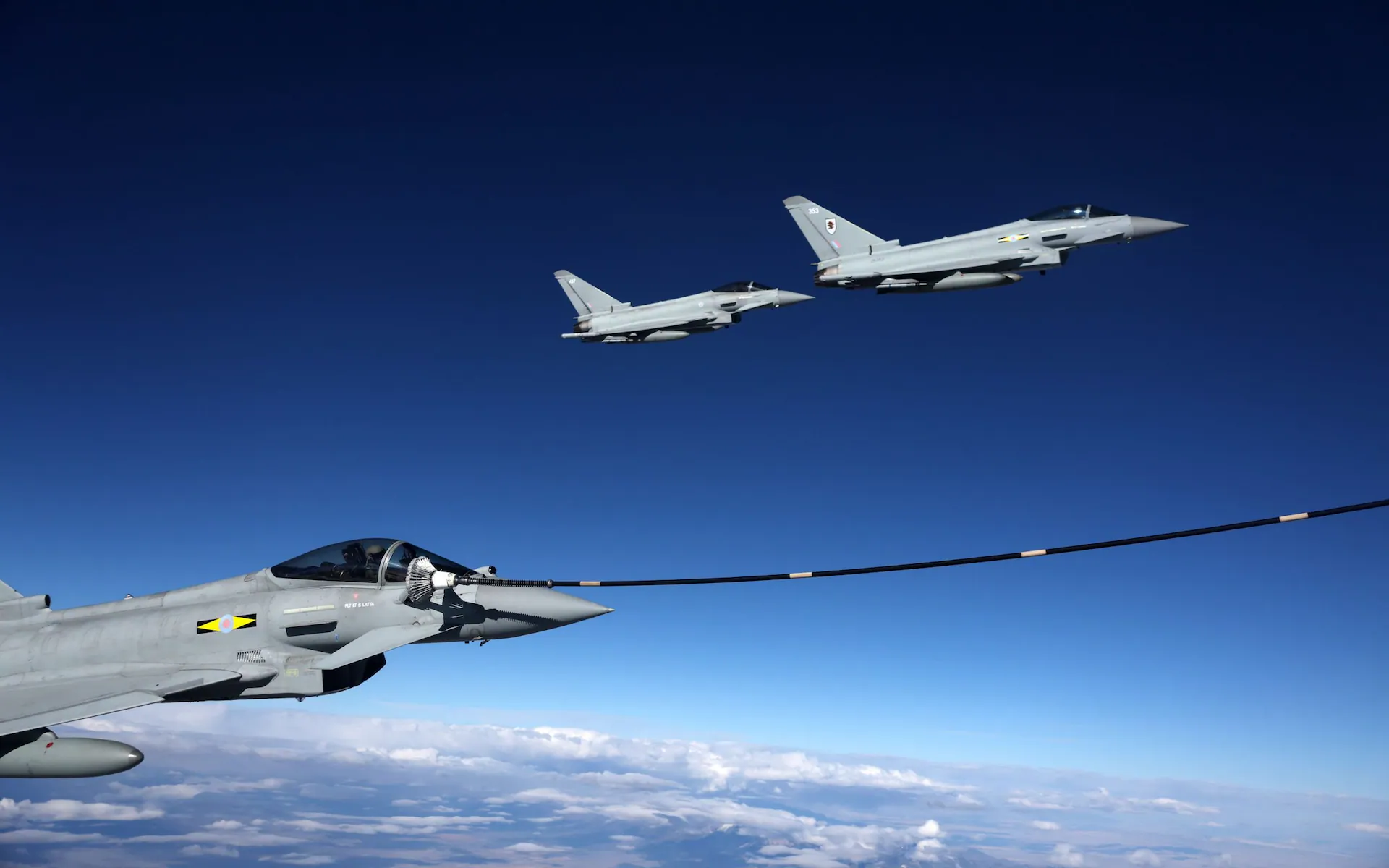
The Voyager crew demonstrated the intricacies of mid-air refuelling, where precision and coordination are critical. Fighter jets connect to the tanker mid-flight at altitudes exceeding 20,000 feet, with mere inches separating aircraft travelling at hundreds of miles per hour.
One pilot described the experience:
“It’s a mix of technical skill, training, and trust. There’s no room for error. Lives, aircraft, and mission success depend on everyone doing their job perfectly.”
The aircraft’s cabin also provides a glimpse into life during extended operations. Sleeping quarters, meal areas, and briefing stations allow crews to remain operationally ready during flights that can last upwards of 12 hours.
While the UK government insists it is not seeking war, officials acknowledge that military preparedness is crucial amid rising tensions in Asia. Analysts point to a combination of territorial disputes, Taiwan’s strategic position, trade competition, and cyber and intelligence confrontations as factors driving the need for readiness.
British defence sources say that exercises involving Voyagers and allied forces are designed to ensure that air, sea, and land forces can respond swiftly to any escalation. This includes rapid deployment of fighter squadrons, humanitarian support for allies, and secure logistics for prolonged operations in contested regions.
Operating in the Asia-Pacific presents unique challenges. Distances are vast, requiring careful fuel planning, crew rotations, and coordination with allied airfields and bases. Voyagers are central to overcoming these challenges, offering both refuelling and transport capabilities in a single platform.
Military analysts note that maintaining readiness for a potential conflict with China involves not just technology and hardware, but also extensive planning, intelligence gathering, and diplomacy. The Voyager’s role is a reminder that strategic mobility is just as important as firepower in modern conflicts.
The prospect of military confrontation with China is politically sensitive in the UK. While defence officials stress that exercises are precautionary, some commentators warn of public unease over rising tensions and the risk of escalation. The UK government has emphasised that its deployments and training missions are defensive and designed to protect international norms, trade routes, and allied partners.
Nonetheless, the visibility of RAF Voyagers in international exercises sends a clear message to both allies and potential adversaries that the UK remains committed to global security partnerships.
For those on board, the mission is not merely about strategy; it is also about professionalism, teamwork, and readiness. Crew members highlighted the sense of responsibility that comes with operating such a critical asset:
“Every flight could be operationally significant. Even when it’s an exercise, we train as if it were real. That mindset ensures we are ready for any eventuality.”
The Voyager’s operational versatility also allows it to support humanitarian missions, evacuation operations, and disaster relief, demonstrating its importance beyond purely military scenarios.
RAF Voyagers participate in multinational exercises that include fighter intercepts, aerial surveillance, and integrated logistics operations. Cooperation with US forces, as well as regional allies, allows the UK to project influence while maintaining interoperability with partner nations.
Such exercises are not just about readiness—they also serve as a strategic signal. Demonstrating advanced air mobility and joint operational capability communicates commitment to allies and deterrence to potential adversaries.

Being on board an RAF Voyager provides a rare window into the complexity, skill, and strategy behind Britain’s military preparedness amid growing global tensions. While the UK insists that it seeks peace, the ability to operate effectively alongside US forces in potential theatres of conflict, such as the Asia-Pacific, underscores the seriousness with which it views the current geopolitical environment.
The Voyager symbolizes not only technological prowess but also the human skill, discipline, and planning necessary to navigate one of the most challenging strategic landscapes in modern history. As Britain and its allies continue to monitor developments in China, these aircraft—and the crews that operate them—will remain a cornerstone of the UK’s ability to respond swiftly, decisively, and responsibly.
Related News:
 UK Must Act with Courage and Clarity on Israel-Palestine Conflict, Says Foreign Affairs Committee Report
 The Ketamine Crisis in the UK is a Silent Epidemic Leaving Users with Lifelong Pain
 London Set to Honour Euro 2025 Champions as Lionesses Take Victory Parade Through the Capital
 Targeted Attack in Bury Sparks Murder Investigation as Community Awaits Justice
 Princess of Wales Launches Animated Video Series to Support Early Childhood Development
 Heartbreak in the New Forest as Shetland Ponies Vanish, Community on Edge
 Fire Contained at Edinburgh’s Arthur’s Seat After Overnight Battle by Firefighters
 Premier League Supercomputer Predicts Tough Season for Man Utd Amid Three-Team Title Battle
 UK Weather: Heat Alerts Extended as Temperatures Set to Reach 30°C This Weekend
 Merseyside Police Helicopter Crew Cleared After Low-Altitude Pursuit of Suspect
 Education Leaders Call for End to Compulsory GCSE Resits in English and Maths
 Thousands of New School Nursery Places to Be Rolled Out Across England
 Tanni Grey-Thompson Faces Abuse Over Opposition to Assisted Dying Bill
 Rising Food Bank Dependence Highlights Deepening Hardship Across the UK
 Birmingham Bin Strike Enters Sixth Month as Negotiations Stall
 TfL Invites RMT to Resume Talks as London Tube Strikes End
 Over 40% of Private Renters Forced to Ration Energy to Afford Bills, Study Reveals
 Systemic Racism in Maternity Care Continues to Endanger Black Women in England, MPs Warn
 One in Three GPs in England Do Not Work in NHS, Raising Concerns Over Access to Care
 Northern Ireland Faces Fears of Prolonged Race Riot “Permacrisis”
 Nigel Farage Unveils Controversial Immigration and Welfare Plans at Reform UK Press Conference
 Great Britain’s Energy Operator Commits to Strengthening Grid to Prevent Blackouts
 Scottish Teenager’s Petition on Single-Use Plastics Gains Parliamentary Support
 White Low-Income Pupils in England Show Lowest Levels of School Engagement, Study Finds
 Ed Miliband Warns UK Government on X, Citing Elon Musk as a “Dangerous Influence”
 No Evidence Found to Substantiate Alleged Rape in Oxfordshire Churchyard, Police Confirm
 UK House Price Growth Slows as Buyers Exercise Caution Ahead of Autumn Budget
 Kemi Badenoch Unveils ‘Golden Rule’ to Halve Spending Cuts for Deficit Reduction at Tory Conference
 Massive London Poundland Fire Engulfs High Street
 Sussexes Warn on Children’s Phone Use Echoing Princess of Wales
 Paedophile Singer Ian Watkins Dies After Prison Attack
 Prince Andrew told Epstein “we are in this together”
 Former Premier League Referee David Coote Pleads Guilty to Child Image Offence
 UK border officers deployed to Balkans to tackle migrant smuggling
 UK MPs warn of repeat riots over online misinformation
 New V-Level qualification to transform post-16 education
Giuffre’s bombshell memoir names Prince Andrew 88 times in shocking revelations
New V-Level qualification to transform post-16 education
Giuffre’s bombshell memoir names Prince Andrew 88 times in shocking revelations
 Real living wage set to rise nearly 7% for UK workers in 2026
 M&S and Morrisons Lead Christmas Supermarket Taste Test
 New Prostate Cancer Drug Set to Halve Death Risk in England
 Army Barracks to House Migrants as Hotels Phase Out
 Reeves Faces Setback as Labour May Miss Homes Target
 Kate Winslet to Narrate Film Highlighting King’s Environmental Mission
 Trump’s UK Ambassador Urges North Sea Drilling to Strengthen US Ties
 UK Bans Fake Numbers: Scammers Lose Their Trick
 M&S Profits More Than Halve After Cyber-Attack
 Patients to Test Health at Home to Ease NHS Winter Pressure
 Millionaires group urge Reeves to introduce wealth tax to ‘lift kids out of poverty’
 Reeves rejects £1bn plea for NHS redundancy payouts
 Northern Lights may illuminate UK skies this week
 PM Condemns Leaks, Vows Loyalty to Ministers and Stability
 Major Rent Reform Ends No-Fault Evictions in England
 Stroke Patient Mistaken for Drunk, Care Delayed
 Inside the Helpline Protecting Missing Children in the UK
 Boots Showstopper Beauty Bundle Outshines Many Advent Calendars This Holiday Season
 PlayStation PS5 Deals Hit Lowest Prices Ahead of Black Friday
 Five-Year-Old Dies After Rare Tonsil Surgery Complication
 Starmer Says Labour’s Economic Plan Needs Years to Deliver
 England delays four mayoral elections amid criticism
 Zelenskyy in London: Peace Push Intensifies
 UK unemployment rises to four-year high of 5.1% before budget
 Wiltshire Police Use Lasso to Catch Rampaging Village Goat
 Historic £100-Weekly Pension Boost Brings Relief for UK Mineworkers
 Children to Receive Home Vaccines as England Acts
 Cambridge College Faces Backlash Over Private School Recruitment
 Celebrity Campaign Highlights SMA Screening Failures
 Bereaved Fathers Gain New Paternity Leave Rights in UK
 Woman Jailed for Life After Killing E-Bike Rider in Tragic Mistaken Identity Case
 UK Ministers Drop Foreign Student Targets for Global Education Push
 No Gas Boiler Ban as UK Warm Homes Plan Backs Heat Pumps
 Shinzo Abe’s killer receives life sentence in Japan
 Police response times face strict new national limits
 Devon hosts first high-density hydro power system
 Pornhub blocks new UK users over age checks dispute
 UK New Car Discounts Near £6,000 as Prices Are Slashed
 Pneumonia Surge Pushes England Emergency Cases Higher
 Labour Utterly Humiliated by Straight-Talking Mum Who Cut Through Keir Starmer’s Insanity
 Draft Severe Weather Plan Following Storm Flooding
 What is Groundwater Flooding and Why Dorset is Seeing ‘Historical Highs’
 ‘Daejaun Was Drawn Deeper Into Danger,’ Says Heartbroken Mother