Published: 10 February 2026. The English Chronicle Desk. The English Chronicle Online.
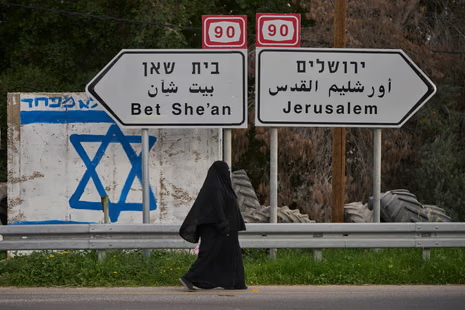
In a dramatic turn of geopolitics, Trump West Bank policy has emerged as a defining flashpoint in Middle East diplomacy this week, spotlighting global concern about new Israeli authority over the occupied territory. Within the first hundred words, the focus keyword Trump West Bank policy is highlighted to reflect the central theme shaping international reaction and diplomatic tensions. The United States, under the current administration, has publicly opposed any formal annexation of the West Bank, even as Israel’s security cabinet moved to deepen control and expand Jewish settlement rights in the region. Trump West Bank policy was reinforced by a White House official who said that maintaining stability in the West Bank territory remains crucial for broader peace objectives and Israel’s own security interests, a stance that surprised observers throughout diplomatic capitals.
Across the region and around the world, the Israeli decision has ignited widespread condemnation and fear that the long sought two-state solution is drifting further from reach. Saudi Arabia, Jordan and the United Arab Emirates joined others in denouncing the measures as violations of international law and as unilateral moves that could alter the demographic and geographic realities on the ground. Many critics view these steps as tantamount to de facto annexation, undermining both Palestinian aspirations and decades of diplomatic efforts. Trump West Bank policy has become a rallying point for those calling for restraint, as global leaders urge Israel to reconsider the sweeping reforms that have drawn such ire.

Israeli Prime Minister Benjamin Netanyahu’s government approved the policy changes without requiring further legislative approval, accelerating long-standing efforts to extend Israeli governance in areas historically administered by the Palestinian Authority. Among the decisions are eased restrictions on land sales to Jewish settlers, opening the land registry to facilitate acquisitions, and shifting planning authority in key West Bank cities like Hebron from Palestinian to Israeli control. These reforms, pushed by far-right ministers including Bezalel Smotrich and Israel Katz, have been presented domestically as strengthening ties to Jerusalem and bolstering national security. International critics counter that they will fragment Palestinian territory and harden divisions, leaving lasting scars on any future peace deal.
European capitals have also voiced strong disapproval, with governments stressing that the expansion of settlements and increased Israeli authority in the West Bank poses a direct threat to the viability of a sovereign Palestinian state. French President Emmanuel Macron earlier warned that rapid settlement growth represents an “existential threat” to Palestinian statehood and contradicts the collective vision for a negotiated peace. German officials echoed this concern, describing settlement expansion as a violation of international law that could jeopardise negotiations. Trump West Bank policy has been cited by foreign leaders as essential in counterbalancing unilateral moves that risk inflaming regional tensions.
In London, the United Kingdom condemned the Israeli security cabinet’s decision and joined regional partners urging an immediate reversal. British officials labelled any attempt to shift the status of the West Bank without mutual consent unacceptable under international norms. The UK has emphasised that any such unilateral measures undermine efforts to foster lasting peace and stability across the Middle East. Trump West Bank policy, as articulated by Washington, aligns in broad principle with these calls for restraint, even as the relationship between the US and Israel remains deeply strategic.
The United Nations Secretary-General voiced grave concern, noting that changes to governance in the West Bank erode the prospects for a two-state solution long endorsed by the international community. The UN and dozens of nations have reaffirmed that the West Bank, occupied by Israel since 1967, should form the core of any future Palestinian state. This long-standing consensus foregrounds Trump West Bank policy as a pivotal element in shaping whether diplomatic efforts can salvage meaningful negotiations. Many observers caution that the latest developments risk fostering grievances on all sides, threatening both security and humanitarian conditions.
Palestinian leaders have characterised the Israeli measures as a dangerous escalation and warn of broader repercussions if settlement expansion continues unchecked. They argue that such reforms not only entrench occupation but also signal an intention to preclude Palestinian statehood altogether. The Palestinian Authority has called for urgent international intervention, urging global powers to uphold legal standards and protect Palestinian rights. Trump West Bank policy is seen by some Palestinian officials as a critical lever for pressuring Israel to respect international statutes, although scepticism remains about how effectively this stance will translate into tangible change on the ground.

Amid mounting criticism, the White House has emphasised that its opposition is specifically directed at formal annexation, and not necessarily against all aspects of Israeli settlement activity. A White House official underscored that achieving peace will require careful diplomacy and cooperation, rather than unilateral decisions that could inflame hostilities. How this position will influence the upcoming meeting between Trump and Netanyahu remains a focal point for analysts, diplomats and regional leaders alike, as they watch closely to see whether Washington’s rebuke will curb further expansion or encourage new negotiations toward peace. Trump West Bank policy thus stands at the intersection of shifting geopolitical alignments, offering both a potential constraint on unilateral action and a spark for deeper debate over the future of this contested land.
Trump West Bank policy has resonated across diplomatic circles as nations weigh the implications for regional stability, justice and the long-term prospects for peace. As world leaders continue to respond to the Israeli government’s actions, the international community remains focused on preserving the foundations for a negotiated settlement and averting further conflict. How these dynamics unfold in the weeks ahead will be critical in shaping the contours of Middle Eastern geopolitics for years to come, with the West Bank continuing to symbolise both enduring division and the promise of reconciliation.
Related News:
 British Woman in Iran ‘Losing Hope’ Amid Ongoing Detention
 BBC Journalist Held and Interrogated in Vietnam
 UK University Suspends Human Rights Research Following Pressure from China
 UK University Faces Counter-Terror Probe Over China Pressure
 Abigail Spanberger Elected Virginia’s First Female Governor
 Mikie Sherrill Elected New Jersey’s Governor in Key Win
China-critical UK academics face ‘extremely heavy’ pressure from Beijing
Mikie Sherrill Elected New Jersey’s Governor in Key Win
China-critical UK academics face ‘extremely heavy’ pressure from Beijing
 British military receives first Ajax armoured vehicles – eight years late
 BBC to Apologise Over Edited Trump Speech Amid Backlash
 Britain deploys RAF specialists to assist Belgium with drone threats
 BBC director-general and news chief resign amid bias row
 Ukraine-Russia war latest: Putin’s troops exploit bad weather to force Kyiv withdrawal from multiple towns
 Trump Claims Victory as Longest Shutdown Ends
 New Epstein Files Spark Political Clash in Washington
 Hamas Fighters in Gaza Tunnels Stall Ceasefire Progress
 US Justice Department Files Lawsuit Against California Over Partisan Voting Maps
 South Sudan President Removes Vice-President Amid Political Uncertainty
 Berlin Reintroduces Military Service Amid Rising Security Concerns
 Greene Pushes Epstein Files Amid Trump Fallout
 Trump Deploys DHS to Charlotte in Major Arrest Operation
 December Run-Off in Chile as Election Produces No Winner
 Canada Passes Carney’s First Budget in Tight Parliamentary Vote
 Why Russian Liberals Push Strongly Pro-Israel Narratives
 Congress Approves Release of Epstein Files, Trump Expected to Sign
 Shadow Fleet at Sea: Europe’s Battle Against Illicit Oil Shipping
 Rama Rebukes Mahmood for Targeting Albanian Families
 Russian Vessel Used Lasers on RAF Pilots, UK Claims
 Pentagon Officials in Ukraine to Discuss War End
 US Military Team Visits Kyiv Amid War Talks
 WhatsApp Messages Expose Nathan Gill’s Bribery
 Venezuela Threatens Nobel Winner Machado with Fugitive Status
 Texas Governor Faces Lawsuit From CAIR
 Trump Envoy to Discuss Ukraine Peace at Kremlin
 Pope Leo XIV Begins Historic Trip to Turkey and Lebanon
 Zambia’s President Faces Stone-Throwing Anger Amid Challenges
 Georgians Defy Government Crackdown After Year of Protests
 India’s Labour Law Overhaul Sparks Fierce Debate
 Video shows Israeli troops kill Palestinians after surrender
 Trump to Recheck Green Cards from 19 Nations After DC Attack
 Carney’s Alberta Pipeline Deal Sparks Immediate Pushback
 Chinese & Japanese Boats Clash Near Disputed Islands
 Putin Meets US Envoy Amid Key Ukraine Peace Talks
 EU plans $105bn Ukraine aid using frozen Russian assets
 Global campaign launched to free Palestinian leader Barghouti
 UK Aid Cuts Could Undermine Global Influence, Experts Warn
 Thailand and Cambodia Agree Ceasefire After Weeks of Deadly Clashes
 Russia losses Ukraine war peace talks intensify amid rising deaths
 Zelenskyy Accuses Russia of Sabotaging Peace Talks
 Trump ‘Not Worried’ as China Conducts Massive Taiwan Wargame
 Khaleda Zia Laid to Rest with State Honour in Dhaka
 Maduro Faces Court in New York Over Drugs and Weapons Case
 Albanese Opens Door to Bondi Royal Commission Amid Rising Pressure
 Shock US Raid: Maduro Pleads Not Guilty in Manhattan Court
 Trump Escalates Minnesota Immigration Surge Amid Rising Tensions
 Venezuela Frees Political Prisoners in Major Peace Move
 Austrian Airlines Halts Tehran Flights Amid Political Unrest
 Iran Protesters Defy Crackdown as Violent Clashes Intensify
 Iran Leader Blames Protesters, Says They Serve Trump
 Trump Eyes Strong Military Options Amid Iran Protest Crackdown
 Trump Threatens Strong Action If Iran Executes Protesters
 Trump Policies Boost China’s Global Rise, Survey Finds
 Machado Trump medal gesture reshapes Venezuela power struggle
 Trump Receives Machado’s Nobel Medal in White House Meeting
 EU weighs response amid Greenland tariff crisis with Trump
 US Considers Asylum for British Jews Amid Rising Antisemitism
 ICE street raids expose a chilling future for public freedoms
 US Africa aid remarks spark anger after leaked State email
 Trump Launches “Board of Peace” Amid Global Diplomacy Push
 EU Says US Ties Have Suffered ‘Big Blow’ After Greenland Crisis
 Andrew Hastie Emerges as Leadership Rival to Ley
 Russia Strikes Kyiv and Kharkiv as Peace Talks Enter Day Two
 Pentagon Signals Reduced Role in Deterring North Korea
 Starmer China visit underscores clear-eyed national security stance
 Starmer China visit raises human rights pressure on Beijing
 Israel Moves to Bar MSF From Gaza Operations
 Mandelson resignation shakes Labour over Epstein row
 Cory Bernardi joins One Nation for SA election
 Saif al-Islam Gaddafi Reportedly Killed in Libya Shooting
 Trump Praises ‘Terrific’ Petro After White House Talks
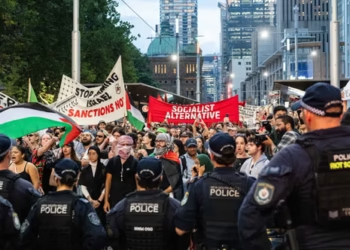 Sydney Protest Escalates and Elderly Woman Suffers Severe Injury