Published: 13 February 2026. The English Chronicle Desk. The English Chronicle Online
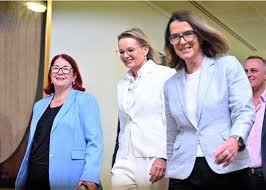
When Sussan Ley rose to the leadership of the Liberal Party of Australia, the moment was widely framed as historic. She had shattered a barrier that had stood for decades, becoming the first woman to lead the party since its founding. For supporters, it was a long-overdue breakthrough in a political culture often criticised for lagging behind social change. Yet for critics and analysts alike, her elevation raised a more troubling question: had she truly broken a glass ceiling, or had she stepped onto a glass cliff?
The distinction matters. The term “glass ceiling” describes the invisible structures that block women from reaching positions of power, while “glass cliff” refers to a more insidious phenomenon. Coined by academic Michelle Ryan and colleagues, it suggests women are more likely to be promoted to leadership roles during moments of crisis, when the risk of failure is highest. In such circumstances, they may be set up not only to lead, but to fall. Ley’s brief tenure, which ended when Angus Taylor defeated her in a party ballot and installed Jane Hume as his deputy, has reignited debate about whether Australian politics still struggles with gender equality at its highest levels.

Her leadership began under extraordinarily difficult conditions. The party had just suffered one of the worst electoral defeats in its modern history, leaving it fractured, demoralised and searching for direction. The task facing any new leader would have been formidable: rebuild unity among rival factions, reconstruct a policy platform rejected by voters and restore credibility with an electorate that had drifted away, particularly women. Years of allegations about misogyny during the Coalition’s previous period in government had damaged its standing, and regaining trust required both symbolic and substantive change. Ley stepped into the role promising to provide exactly that.
From the outset she acknowledged the magnitude of the challenge. In her first press conference as leader, she emphasised that she had been chosen not despite the crisis but because of it. She portrayed herself as a unifying figure capable of bridging ideological divides within the party. Her background seemed to support that claim. Representing a rural constituency yet considered a moderate voice, she could speak to conservative regional MPs while appealing to urban voters. Her two decades in parliament and five years in cabinet suggested experience, while her earlier life as a pilot and sheep musterer reinforced an image of resilience and unconventional determination. She argued that her entire career had been about breaking barriers and carving out space in male-dominated environments.
Nevertheless, scepticism persisted. Some party insiders privately suggested she was merely holding the leadership temporarily until a preferred candidate could consolidate support. Others contended that the circumstances of her selection mirrored classic glass-cliff dynamics: she was appointed at the most precarious moment, when expectations were high but the structural obstacles to success were immense. The internal tensions she inherited were deep-rooted, particularly the strained relationship with the National Party of Australia, the Liberals’ long-time coalition partner. Managing that alliance required delicate negotiation, yet disagreements repeatedly surfaced in public, fuelling perceptions of instability.
Policy proved another battleground. Ley had pledged to listen more closely to voters, especially on climate policy, signalling openness to recalibrating the party’s stance. But pressure from conservative colleagues soon mounted, and she ultimately retreated from a commitment to reach net-zero emissions by 2050. The reversal angered moderates and did little to placate hardliners, leaving her caught between factions. Critics argued that her consensual leadership style, intended to foster unity, instead invited constant internal challenges. Allies countered that she had been undermined by colleagues unwilling to grant her time to implement reforms.
Her tenure also coincided with sensitive national debates. After a high-profile attack in Bondi, she pressed for a royal commission into antisemitism, a move she described as necessary and principled. Opponents accused her of politicising tragedy, illustrating how even initiatives she viewed as constructive became sources of controversy. Meanwhile, disputes between the Liberals and Nationals erupted twice into public splits before being hastily repaired, reinforcing an image of dysfunction that further weakened her authority.
To some observers, these struggles had little to do with gender. Veteran commentator Niki Savva argued that attributing Ley’s difficulties primarily to sexism risked oversimplifying political reality. Leadership, she suggested, inevitably involves personal accountability, and outcomes depend on strategic judgment as much as structural bias. From this perspective, Ley’s fall reflected miscalculations and internal party dynamics rather than discrimination. Others, however, insisted that gender could not be dismissed so easily, pointing to patterns across political history in which women often assume leadership only after crises erupt.
The debate touches on a broader national conversation about representation. Although Australia has made progress in increasing female participation in politics, disparities remain evident, particularly within conservative parties. The Liberal Party, despite its long electoral dominance in past decades, has frequently been criticised for lagging behind rivals in promoting women to senior roles. Many members still recall the moment in 2018 when the widely respected Julie Bishop, then deputy leader for more than a decade and one of the country’s most popular politicians, was passed over in a leadership contest. For critics, that episode symbolised a persistent reluctance to entrust women with ultimate authority except under extraordinary pressure.
Ley herself rejected the notion that her appointment was symbolic or conditional. Writing shortly after taking office, she argued that leadership contests are decided by merit rather than biology, insisting she had earned her position. She acknowledged that women are sometimes left to “clean up the mess,” but maintained that such challenges should not diminish their achievements. Her supporters echoed that sentiment, portraying her selection as recognition of competence rather than tokenism. Yet the brevity of her leadership inevitably strengthened arguments from those who believe structural biases still shape political outcomes.
The leadership ballot that removed her was decisive, suggesting dissatisfaction within party ranks had grown substantial. Taylor’s victory margin signalled that many colleagues had concluded a change was necessary to revive electoral prospects. Whether that judgment was purely strategic or partly influenced by lingering doubts about female leadership remains impossible to prove definitively. Political decisions rarely have a single cause; they emerge from a web of calculations, ambitions and perceptions. Still, the symbolism of the first woman leader being ousted so quickly has proved impossible to ignore.
In the aftermath, discussion has shifted from the personalities involved to the system itself. Analysts are asking whether the conditions that produced Ley’s rise and fall reveal deeper structural issues in political culture. If women are more likely to be chosen during crises, does that reflect confidence in their abilities to manage turmoil, or does it indicate a willingness to place them in precarious positions? And when they falter, are they judged more harshly than male counterparts would be under similar circumstances? These questions extend far beyond a single party or country, resonating with debates about gender and leadership across democracies worldwide.

Ley’s story, though still unfolding, has already become a case study cited in discussions about representation and power. To admirers, she remains a trailblazer who reached the summit despite formidable odds. To detractors, she is an example of how political missteps can swiftly end even historic tenures. To scholars, she embodies the ambiguity of progress: proof that barriers can be broken, yet also evidence that new obstacles may await on the other side.
Ultimately, the significance of her rise and fall lies not only in what it reveals about one leader but in what it suggests about the evolving nature of political leadership itself. Whether her experience marks a temporary setback or a sign of deeper systemic challenges will depend on what happens next within her party and across the wider political landscape. For now, her brief time at the top has ensured that the debate over glass ceilings, glass cliffs and the realities of gender in power remains firmly in the public spotlight.
Related News:
 British Woman in Iran ‘Losing Hope’ Amid Ongoing Detention
 BBC Journalist Held and Interrogated in Vietnam
 UK University Suspends Human Rights Research Following Pressure from China
 UK University Faces Counter-Terror Probe Over China Pressure
 Abigail Spanberger Elected Virginia’s First Female Governor
 Mikie Sherrill Elected New Jersey’s Governor in Key Win
China-critical UK academics face ‘extremely heavy’ pressure from Beijing
Mikie Sherrill Elected New Jersey’s Governor in Key Win
China-critical UK academics face ‘extremely heavy’ pressure from Beijing
 British military receives first Ajax armoured vehicles – eight years late
 BBC to Apologise Over Edited Trump Speech Amid Backlash
 Britain deploys RAF specialists to assist Belgium with drone threats
 BBC director-general and news chief resign amid bias row
 Ukraine-Russia war latest: Putin’s troops exploit bad weather to force Kyiv withdrawal from multiple towns
 Trump Claims Victory as Longest Shutdown Ends
 New Epstein Files Spark Political Clash in Washington
 Hamas Fighters in Gaza Tunnels Stall Ceasefire Progress
 US Justice Department Files Lawsuit Against California Over Partisan Voting Maps
 South Sudan President Removes Vice-President Amid Political Uncertainty
 Berlin Reintroduces Military Service Amid Rising Security Concerns
 Greene Pushes Epstein Files Amid Trump Fallout
 Trump Deploys DHS to Charlotte in Major Arrest Operation
 December Run-Off in Chile as Election Produces No Winner
 Canada Passes Carney’s First Budget in Tight Parliamentary Vote
 Why Russian Liberals Push Strongly Pro-Israel Narratives
 Congress Approves Release of Epstein Files, Trump Expected to Sign
 Shadow Fleet at Sea: Europe’s Battle Against Illicit Oil Shipping
 Rama Rebukes Mahmood for Targeting Albanian Families
 Russian Vessel Used Lasers on RAF Pilots, UK Claims
 Pentagon Officials in Ukraine to Discuss War End
 US Military Team Visits Kyiv Amid War Talks
 WhatsApp Messages Expose Nathan Gill’s Bribery
 Venezuela Threatens Nobel Winner Machado with Fugitive Status
 Texas Governor Faces Lawsuit From CAIR
 Trump Envoy to Discuss Ukraine Peace at Kremlin
 Pope Leo XIV Begins Historic Trip to Turkey and Lebanon
 Zambia’s President Faces Stone-Throwing Anger Amid Challenges
 Georgians Defy Government Crackdown After Year of Protests
 India’s Labour Law Overhaul Sparks Fierce Debate
 Video shows Israeli troops kill Palestinians after surrender
 Trump to Recheck Green Cards from 19 Nations After DC Attack
 Carney’s Alberta Pipeline Deal Sparks Immediate Pushback
 Chinese & Japanese Boats Clash Near Disputed Islands
 Putin Meets US Envoy Amid Key Ukraine Peace Talks
 EU plans $105bn Ukraine aid using frozen Russian assets
 Global campaign launched to free Palestinian leader Barghouti
 UK Aid Cuts Could Undermine Global Influence, Experts Warn
 Thailand and Cambodia Agree Ceasefire After Weeks of Deadly Clashes
 Russia losses Ukraine war peace talks intensify amid rising deaths
 Zelenskyy Accuses Russia of Sabotaging Peace Talks
 Trump ‘Not Worried’ as China Conducts Massive Taiwan Wargame
 Khaleda Zia Laid to Rest with State Honour in Dhaka
 Maduro Faces Court in New York Over Drugs and Weapons Case
 Albanese Opens Door to Bondi Royal Commission Amid Rising Pressure
 Shock US Raid: Maduro Pleads Not Guilty in Manhattan Court
 Trump Escalates Minnesota Immigration Surge Amid Rising Tensions
 Venezuela Frees Political Prisoners in Major Peace Move
 Iran Protesters Defy Crackdown as Violent Clashes Intensify
 Iran Leader Blames Protesters, Says They Serve Trump
 Trump Eyes Strong Military Options Amid Iran Protest Crackdown
 Trump Threatens Strong Action If Iran Executes Protesters
 Trump Policies Boost China’s Global Rise, Survey Finds
 Machado Trump medal gesture reshapes Venezuela power struggle
 Trump Receives Machado’s Nobel Medal in White House Meeting
 EU weighs response amid Greenland tariff crisis with Trump
 US Considers Asylum for British Jews Amid Rising Antisemitism
 ICE street raids expose a chilling future for public freedoms
 US Africa aid remarks spark anger after leaked State email
 Trump Launches “Board of Peace” Amid Global Diplomacy Push
 EU Says US Ties Have Suffered ‘Big Blow’ After Greenland Crisis
 Andrew Hastie Emerges as Leadership Rival to Ley
 Russia Strikes Kyiv and Kharkiv as Peace Talks Enter Day Two
 Pentagon Signals Reduced Role in Deterring North Korea
 Starmer China visit underscores clear-eyed national security stance
 Starmer China visit raises human rights pressure on Beijing
 Israel Moves to Bar MSF From Gaza Operations
 Mandelson resignation shakes Labour over Epstein row
 Cory Bernardi joins One Nation for SA election
 Saif al-Islam Gaddafi Reportedly Killed in Libya Shooting
 Trump Praises ‘Terrific’ Petro After White House Talks
 Sydney Protest Escalates and Elderly Woman Suffers Severe Injury
 Tarique Rahman’s Rise Toward Bangladesh’s Top Job