Published: 13 February 2026. The English Chronicle Desk. The English Chronicle Online
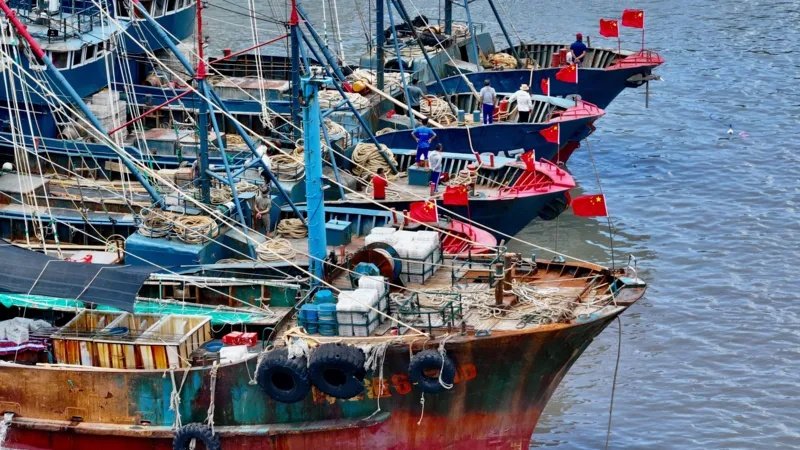
Authorities in Japan have seized a Chinese fishing vessel after it allegedly attempted to flee inspection in waters near Nagasaki Prefecture, an incident that threatens to inflame already strained relations with China and underscores the fragile state of diplomacy between the two regional powers.
According to Japan’s fisheries agency, the vessel was operating inside Japan’s exclusive economic zone when officials ordered it to stop for inspection. Instead of complying, the boat reportedly accelerated and attempted to escape, prompting authorities to pursue and ultimately detain it. The captain, identified as a 47-year-old Chinese national, was arrested, while the remaining ten crew members were also taken into custody for questioning. Officials described the vessel as a high-capacity “tiger net” fishing boat, a type known for its large-scale catch capability and often associated with industrial fishing operations rather than small-scale coastal activity.
The seizure marks the first time since 2022 that Japan’s fisheries enforcement body has detained a Chinese fishing vessel, a detail that immediately drew attention from analysts who view maritime incidents as barometers of broader geopolitical tensions. While fishing disputes are not uncommon in the region’s contested or overlapping maritime zones, enforcement actions that involve arrests tend to carry diplomatic consequences, particularly when relations between the countries are already tense.

Japan’s Chief Cabinet Secretary, Minoru Kihara, said authorities would continue to act decisively to deter illegal fishing by foreign vessels. His remarks signalled that Tokyo intends to maintain a firm posture on maritime enforcement despite the risk of political backlash. Officials emphasised that the action was strictly a matter of enforcing fisheries law, not a political provocation. Yet in the delicate arena of East Asian geopolitics, even routine enforcement can be interpreted as a strategic signal.
Beijing had not issued an official response at the time of the announcement, but past incidents suggest that maritime detentions involving Chinese nationals frequently trigger diplomatic protests. In previous cases, China has demanded the immediate release of detained fishermen and accused neighbouring states of overstepping their authority. Analysts say the absence of an immediate reaction may reflect ongoing internal deliberations about how strongly to respond without escalating tensions further.
The timing of the incident is especially sensitive. Relations between Tokyo and Beijing have been under strain since remarks made last November by Japan’s prime minister, Sanae Takaichi, regarding the possibility of military intervention if China attempted to take control of Taiwan by force. China views Taiwan as part of its territory and has long insisted that reunification is inevitable, refusing to rule out the use of military means. Takaichi’s comments were sharply criticised by Chinese officials, who described them as provocative and summoned Japan’s ambassador in protest. The diplomatic exchange marked one of the most serious verbal clashes between the two governments in recent years.
In the weeks that followed, tensions spilled into other areas of bilateral relations. Chinese authorities issued advisories urging citizens to reconsider travel or study plans in Japan, a move that analysts interpreted as both a political message and an economic lever. Tourism data suggested a noticeable decline in Chinese visitors, which in turn affected sectors such as retail and hospitality that rely heavily on foreign spending. Investors responded quickly, and shares in companies linked to tourism saw measurable declines, highlighting how diplomatic friction can ripple into financial markets.
Cultural exchanges also became casualties of the deteriorating relationship. Several performances by Japanese artists scheduled in China were cancelled, and the release of popular Japanese films was postponed. In a symbolic gesture that drew international media attention, the last two pandas on loan to Japan were returned to China, an act widely viewed as reflecting the chill in relations. While officials on both sides avoided framing these developments as retaliatory measures, the cumulative effect reinforced the perception of a deepening rift.
Against that backdrop, the seizure of the fishing vessel carries significance beyond its immediate legal context. Maritime encounters have historically been flashpoints in East Asia, where competing territorial claims and overlapping economic zones create frequent friction. Fishing boats, often operating near disputed waters, sometimes become entangled in geopolitical disputes even when their activities are primarily commercial. Governments must balance enforcing their laws with avoiding actions that could be interpreted as hostile or escalatory.
Experts note that fisheries enforcement is particularly sensitive because it touches on issues of sovereignty, resource security and national pride. For coastal nations, protecting fishing grounds is both an economic necessity and a matter of principle. At the same time, detaining foreign crews risks provoking nationalist sentiment in the fishermen’s home country. Such incidents can quickly become political symbols, especially when relations are already strained for unrelated reasons.
Supporters of Japan’s action argue that failing to enforce maritime regulations would undermine the rule of law and encourage further violations. They contend that any vessel operating within a country’s exclusive economic zone must comply with inspection requests, regardless of nationality. From this perspective, the pursuit and seizure of the Chinese boat was not an act of aggression but a routine exercise of jurisdiction. Critics, however, caution that enforcement decisions cannot be separated from geopolitical realities, particularly when they involve major powers with a history of rivalry.
The broader context of Sino-Japanese relations adds further complexity. The two nations share deep economic ties and significant trade flows, yet their relationship is often shadowed by historical grievances and strategic competition. Disputes over maritime boundaries, military posture and regional influence have periodically flared into diplomatic confrontations. Each new incident, even if minor in isolation, can reinforce existing suspicions and harden public opinion on both sides.

For Japan, maintaining stability in its surrounding waters is a strategic priority, especially as regional security concerns grow. For China, protecting its citizens abroad and asserting its maritime presence are equally important. The challenge for both governments lies in managing incidents like this one without allowing them to escalate into broader crises. Diplomatic channels, analysts say, will play a crucial role in determining whether the episode remains a contained legal matter or becomes another flashpoint in an already delicate relationship.
Observers are watching closely for Beijing’s official response, which could range from a routine request for consular access to a more forceful protest. Much may depend on how Japan handles the detained crew and whether the case proceeds through legal channels or is resolved through diplomatic negotiation. Past precedents suggest that such incidents are often settled quietly after initial tensions subside, but the current political climate makes predictions difficult.
Ultimately, the seizure highlights how even seemingly routine maritime enforcement can carry outsized significance in a region where strategic rivalry and national sensitivities run high. It illustrates the fine line governments must walk between upholding domestic law and preserving international stability. As both countries weigh their next moves, the world will be watching to see whether this latest encounter becomes a brief diplomatic ripple or the start of a larger wave.
Related News:
 British Woman in Iran ‘Losing Hope’ Amid Ongoing Detention
 BBC Journalist Held and Interrogated in Vietnam
 UK University Suspends Human Rights Research Following Pressure from China
 UK University Faces Counter-Terror Probe Over China Pressure
 Abigail Spanberger Elected Virginia’s First Female Governor
 Mikie Sherrill Elected New Jersey’s Governor in Key Win
China-critical UK academics face ‘extremely heavy’ pressure from Beijing
Mikie Sherrill Elected New Jersey’s Governor in Key Win
China-critical UK academics face ‘extremely heavy’ pressure from Beijing
 British military receives first Ajax armoured vehicles – eight years late
 BBC to Apologise Over Edited Trump Speech Amid Backlash
 Britain deploys RAF specialists to assist Belgium with drone threats
 BBC director-general and news chief resign amid bias row
 Ukraine-Russia war latest: Putin’s troops exploit bad weather to force Kyiv withdrawal from multiple towns
 Trump Claims Victory as Longest Shutdown Ends
 New Epstein Files Spark Political Clash in Washington
 Hamas Fighters in Gaza Tunnels Stall Ceasefire Progress
 US Justice Department Files Lawsuit Against California Over Partisan Voting Maps
 South Sudan President Removes Vice-President Amid Political Uncertainty
 Berlin Reintroduces Military Service Amid Rising Security Concerns
 Greene Pushes Epstein Files Amid Trump Fallout
 Trump Deploys DHS to Charlotte in Major Arrest Operation
 December Run-Off in Chile as Election Produces No Winner
 Canada Passes Carney’s First Budget in Tight Parliamentary Vote
 Why Russian Liberals Push Strongly Pro-Israel Narratives
 Congress Approves Release of Epstein Files, Trump Expected to Sign
 Shadow Fleet at Sea: Europe’s Battle Against Illicit Oil Shipping
 Rama Rebukes Mahmood for Targeting Albanian Families
 Russian Vessel Used Lasers on RAF Pilots, UK Claims
 Pentagon Officials in Ukraine to Discuss War End
 US Military Team Visits Kyiv Amid War Talks
 WhatsApp Messages Expose Nathan Gill’s Bribery
 Venezuela Threatens Nobel Winner Machado with Fugitive Status
 Texas Governor Faces Lawsuit From CAIR
 Trump Envoy to Discuss Ukraine Peace at Kremlin
 Pope Leo XIV Begins Historic Trip to Turkey and Lebanon
 Zambia’s President Faces Stone-Throwing Anger Amid Challenges
 Georgians Defy Government Crackdown After Year of Protests
 India’s Labour Law Overhaul Sparks Fierce Debate
 Video shows Israeli troops kill Palestinians after surrender
 Trump to Recheck Green Cards from 19 Nations After DC Attack
 Chinese & Japanese Boats Clash Near Disputed Islands
 Putin Meets US Envoy Amid Key Ukraine Peace Talks
 EU plans $105bn Ukraine aid using frozen Russian assets
 Global campaign launched to free Palestinian leader Barghouti
 UK Aid Cuts Could Undermine Global Influence, Experts Warn
 Thailand and Cambodia Agree Ceasefire After Weeks of Deadly Clashes
 Russia losses Ukraine war peace talks intensify amid rising deaths
 Zelenskyy Accuses Russia of Sabotaging Peace Talks
 Trump ‘Not Worried’ as China Conducts Massive Taiwan Wargame
 Khaleda Zia Laid to Rest with State Honour in Dhaka
 Maduro Faces Court in New York Over Drugs and Weapons Case
 Albanese Opens Door to Bondi Royal Commission Amid Rising Pressure
 Shock US Raid: Maduro Pleads Not Guilty in Manhattan Court
 Trump Escalates Minnesota Immigration Surge Amid Rising Tensions
 Venezuela Frees Political Prisoners in Major Peace Move
 Iran Protesters Defy Crackdown as Violent Clashes Intensify
 Iran Leader Blames Protesters, Says They Serve Trump
 Trump Eyes Strong Military Options Amid Iran Protest Crackdown
 Trump Threatens Strong Action If Iran Executes Protesters
 Trump Policies Boost China’s Global Rise, Survey Finds
 Machado Trump medal gesture reshapes Venezuela power struggle
 Trump Receives Machado’s Nobel Medal in White House Meeting
 EU weighs response amid Greenland tariff crisis with Trump
 US Considers Asylum for British Jews Amid Rising Antisemitism
 ICE street raids expose a chilling future for public freedoms
 US Africa aid remarks spark anger after leaked State email
 Trump Launches “Board of Peace” Amid Global Diplomacy Push
 EU Says US Ties Have Suffered ‘Big Blow’ After Greenland Crisis
 Andrew Hastie Emerges as Leadership Rival to Ley
 Russia Strikes Kyiv and Kharkiv as Peace Talks Enter Day Two
 Pentagon Signals Reduced Role in Deterring North Korea
 Starmer China visit underscores clear-eyed national security stance
 Starmer China visit raises human rights pressure on Beijing
 Israel Moves to Bar MSF From Gaza Operations
 Mandelson resignation shakes Labour over Epstein row
 Cory Bernardi joins One Nation for SA election
 Saif al-Islam Gaddafi Reportedly Killed in Libya Shooting
 Trump Praises ‘Terrific’ Petro After White House Talks
 Sydney Protest Escalates and Elderly Woman Suffers Severe Injury
 Tarique Rahman’s Rise Toward Bangladesh’s Top Job
 Glass Cliff Debate After Ley’s Ouster