Published: 16 February 2026. The English Chronicle Desk. The English Chronicle Online.
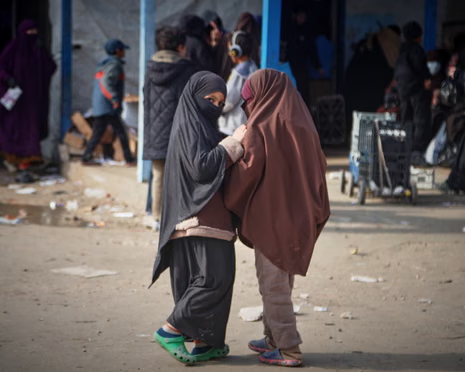
The long-running saga of Australians detained in Syria entered a new chapter this week, as Australian families held in a remote detention facility were released in preparation for their return home. The development surrounding these Australian families has drawn renewed attention to the complex legal, humanitarian, and security questions that have shadowed their fate for years. Video footage emerging from north-east Syria showed women and children gathering belongings and boarding small vans, their faces partially hidden, as they prepared to depart the camp that had defined their lives since 2019.
The group of 34 women and children had been living in the Roj camp, a detention facility near the Iraqi border administered by the Kurdish-led Syrian Democratic Forces. Many among them are wives, widows, and children of deceased or imprisoned fighters associated with Islamic State. Some of the youngest children were born inside the camp and have never known life beyond its guarded perimeter.
Administrators at Roj confirmed to local media that eleven Australian families were cleared to travel towards Damascus ahead of an anticipated repatriation. Yet confusion soon followed. Reports from Syria indicated that the convoy was halted after authorities in Damascus reportedly refused permission for onward travel. The sudden reversal underscored the fragile political terrain surrounding the Australian families and highlighted the uncertain path they must navigate before reaching Australian soil.
Every individual in the group holds Australian citizenship and therefore retains the legal right to enter the country. However, officials in Canberra reiterated that the federal government did not organise the release or facilitate the attempted journey. A spokesperson stated that the government’s position remains unchanged, emphasising that any returning individual suspected of criminal conduct could face investigation and prosecution upon arrival.

The situation has reignited debate across Australia about the balance between national security and humanitarian responsibility. For years, successive governments resisted calls to repatriate women and children detained in camps across north-east Syria. Human rights advocates argued that the indefinite detention of Australian families without charge or trial contravened international norms. They described deteriorating camp conditions as life-threatening, particularly for children vulnerable to disease and harsh winters.
Roj camp itself has long been described as austere and insecure. Tents are worn and overcrowded. Outbreaks of influenza and dysentery spread quickly through close quarters. During winter months, heating fuel becomes scarce, and medical services remain limited. One Australian child reportedly suffered frostbite during a previous cold season, underscoring the risks faced by minors who have never been accused of wrongdoing.
International concern over detention camps intensified after the territorial defeat of Islamic State in 2019. Tens of thousands of suspected fighters and their families were confined in camps and prisons under the watch of the Syrian Democratic Forces. The United States, which funds much of the security infrastructure in the region, has repeatedly urged foreign governments to retrieve their citizens. Senior American military officials have warned that prolonged detention without resolution risks turning camps into breeding grounds for extremism.
At a United Nations conference last year, the commander of US Central Command cautioned that inaction would compound long-term security threats. He urged nations to accept responsibility for their nationals rather than leaving them in unstable detention environments. The message was clear: delay could allow radical ideologies to fester among populations with little hope or oversight.
Australia has previously conducted limited repatriation operations. In 2019, eight orphaned children were brought home. In 2022, four women and thirteen children returned under a government-supervised mission. Those operations were accompanied by stringent security assessments and close coordination with domestic law enforcement agencies. Officials have consistently maintained that public safety remains the paramount concern.
Despite that stance, critics argue that the unmanaged movement of Australian families across volatile borders poses greater risks than an organised return. In October last year, two women and four children escaped from al-Hawl camp and travelled independently to Lebanon, where they obtained Australian passports before boarding a commercial flight home. Their journey illustrated how informal returns can occur without structured oversight.
The current episode appears to fit within a broader regional shift. Over recent weeks, detention facilities across north-east Syria have rapidly emptied. The sprawling al-Hawl camp, once home to more than 25,000 residents affiliated with Islamic State from dozens of countries, has seen most inhabitants relocated or released. Syrian authorities in Damascus have transferred many families to a new site in Aleppo, where prefabricated housing and basic services reportedly replace locked gates and barbed wire.
Observers note that Damascus seems to be adopting a different approach from the Kurdish administration that previously managed these camps. Indefinite detention without trial is increasingly viewed as untenable. However, rights groups caution that transfers to Iraqi prisons of suspected male fighters raise fresh concerns about due process and prison conditions.
Within Australia, the debate surrounding the Australian families remains politically sensitive. Previous plans to repatriate remaining detainees were reportedly delayed amid fears of electoral backlash in key constituencies. While many of those detained originate from Victoria, concerns have been voiced in western Sydney communities about potential security implications.
Humanitarian organisations continue to emphasise the distinction between adult decision-making and childhood innocence. The chief executive of Save the Children Australia stated that children caught in the conflict have already lost formative years and deserve the opportunity to rebuild their lives safely. He stressed that leaving Australian families stranded without viable pathways home increases uncertainty and undermines structured reintegration efforts.
Security agencies, meanwhile, affirm that monitoring continues. Officials indicate that any returning individual will undergo thorough assessment, including potential prosecution if evidence warrants. Australia’s legal framework provides for terrorism-related offences, and courts retain the authority to impose penalties where criminal conduct is proven beyond reasonable doubt.
The broader geopolitical landscape complicates matters further. The Syrian conflict has entered a new phase following shifts in territorial control and international alliances. The United States-led coalition has transferred thousands of detainees to Iraq in recent months, marking the end of certain detention arrangements. Yet questions persist about transparency and judicial oversight within Iraqi facilities.

For the Australian families awaiting clarity, the immediate future remains uncertain. Their release from Roj camp signals progress, yet their halted journey demonstrates the fragility of diplomatic coordination in a region shaped by years of war. Each step toward repatriation requires cooperation among local authorities, international partners, and Australian agencies.
Public opinion in Australia is divided. Some citizens view repatriation as a necessary assertion of legal responsibility toward nationals, regardless of alleged affiliations. Others argue that any return must proceed with utmost caution to safeguard communities. The government continues to emphasise that national security considerations override all other priorities.
As this story unfolds, it reflects the enduring consequences of conflicts that stretch far beyond battlefields. The children at the centre of the Australian families narrative were born into circumstances they did not choose. Their futures now hinge on decisions taken in distant capitals and shaped by competing political pressures.
What remains clear is that indefinite detention in unstable environments offers no sustainable solution. Whether through structured repatriation or legal proceedings abroad, resolution must eventually replace limbo. For Australia, the challenge lies in balancing justice, compassion, and security in equal measure.
Related News:
 British Woman in Iran ‘Losing Hope’ Amid Ongoing Detention
 BBC Journalist Held and Interrogated in Vietnam
 UK University Suspends Human Rights Research Following Pressure from China
 UK University Faces Counter-Terror Probe Over China Pressure
 Abigail Spanberger Elected Virginia’s First Female Governor
 Mikie Sherrill Elected New Jersey’s Governor in Key Win
China-critical UK academics face ‘extremely heavy’ pressure from Beijing
Mikie Sherrill Elected New Jersey’s Governor in Key Win
China-critical UK academics face ‘extremely heavy’ pressure from Beijing
 British military receives first Ajax armoured vehicles – eight years late
 BBC to Apologise Over Edited Trump Speech Amid Backlash
 Britain deploys RAF specialists to assist Belgium with drone threats
 BBC director-general and news chief resign amid bias row
 Ukraine-Russia war latest: Putin’s troops exploit bad weather to force Kyiv withdrawal from multiple towns
 Trump Claims Victory as Longest Shutdown Ends
 Hamas Fighters in Gaza Tunnels Stall Ceasefire Progress
 US Justice Department Files Lawsuit Against California Over Partisan Voting Maps
 South Sudan President Removes Vice-President Amid Political Uncertainty
 Greene Pushes Epstein Files Amid Trump Fallout
 Trump Deploys DHS to Charlotte in Major Arrest Operation
 December Run-Off in Chile as Election Produces No Winner
 Canada Passes Carney’s First Budget in Tight Parliamentary Vote
 Why Russian Liberals Push Strongly Pro-Israel Narratives
 Congress Approves Release of Epstein Files, Trump Expected to Sign
 Shadow Fleet at Sea: Europe’s Battle Against Illicit Oil Shipping
 Rama Rebukes Mahmood for Targeting Albanian Families
 Russian Vessel Used Lasers on RAF Pilots, UK Claims
 Pentagon Officials in Ukraine to Discuss War End
 US Military Team Visits Kyiv Amid War Talks
 WhatsApp Messages Expose Nathan Gill’s Bribery
 Venezuela Threatens Nobel Winner Machado with Fugitive Status
 Texas Governor Faces Lawsuit From CAIR
 Trump Envoy to Discuss Ukraine Peace at Kremlin
 Pope Leo XIV Begins Historic Trip to Turkey and Lebanon
 Zambia’s President Faces Stone-Throwing Anger Amid Challenges
 Georgians Defy Government Crackdown After Year of Protests
 India’s Labour Law Overhaul Sparks Fierce Debate
 Video shows Israeli troops kill Palestinians after surrender
 Trump to Recheck Green Cards from 19 Nations After DC Attack
 Chinese & Japanese Boats Clash Near Disputed Islands
 Putin Meets US Envoy Amid Key Ukraine Peace Talks
 EU plans $105bn Ukraine aid using frozen Russian assets
 Global campaign launched to free Palestinian leader Barghouti
 UK Aid Cuts Could Undermine Global Influence, Experts Warn
 Thailand and Cambodia Agree Ceasefire After Weeks of Deadly Clashes
 Russia losses Ukraine war peace talks intensify amid rising deaths
 Zelenskyy Accuses Russia of Sabotaging Peace Talks
 Trump ‘Not Worried’ as China Conducts Massive Taiwan Wargame
 Khaleda Zia Laid to Rest with State Honour in Dhaka
 Maduro Faces Court in New York Over Drugs and Weapons Case
 Albanese Opens Door to Bondi Royal Commission Amid Rising Pressure
 Shock US Raid: Maduro Pleads Not Guilty in Manhattan Court
 Trump Escalates Minnesota Immigration Surge Amid Rising Tensions
 Venezuela Frees Political Prisoners in Major Peace Move
 Iran Protesters Defy Crackdown as Violent Clashes Intensify
 Iran Leader Blames Protesters, Says They Serve Trump
 Trump Eyes Strong Military Options Amid Iran Protest Crackdown
 Trump Threatens Strong Action If Iran Executes Protesters
 Trump Policies Boost China’s Global Rise, Survey Finds
 Machado Trump medal gesture reshapes Venezuela power struggle
 Trump Receives Machado’s Nobel Medal in White House Meeting
 EU weighs response amid Greenland tariff crisis with Trump
 US Considers Asylum for British Jews Amid Rising Antisemitism
 ICE street raids expose a chilling future for public freedoms
 US Africa aid remarks spark anger after leaked State email
 Trump Launches “Board of Peace” Amid Global Diplomacy Push
 EU Says US Ties Have Suffered ‘Big Blow’ After Greenland Crisis
 Andrew Hastie Emerges as Leadership Rival to Ley
 Russia Strikes Kyiv and Kharkiv as Peace Talks Enter Day Two
 Pentagon Signals Reduced Role in Deterring North Korea
 Starmer China visit underscores clear-eyed national security stance
 Starmer China visit raises human rights pressure on Beijing
 Israel Moves to Bar MSF From Gaza Operations
 Mandelson resignation shakes Labour over Epstein row
 Cory Bernardi joins One Nation for SA election
 Saif al-Islam Gaddafi Reportedly Killed in Libya Shooting
 Trump Praises ‘Terrific’ Petro After White House Talks
 Sydney Protest Escalates and Elderly Woman Suffers Severe Injury
 Tarique Rahman’s Rise Toward Bangladesh’s Top Job
 Glass Cliff Debate After Ley’s Ouster
 Japan Seizes Chinese Boat Amid Rising Tensions
 Sydney Protest Clash Triggers Police Probe