
Published: 05 December 2025. The English Chronicle Desk. The English Chronicle Online
Jew-hatred is “running amok” in Britain, according to the United States’ envoy tasked with combating anti-Semitism, who issued a stark warning about rising hostility towards Jewish communities on both sides of the Atlantic. The remarks, delivered during a high-profile visit to London, have intensified debate over the scale of the problem and the responsibility of governments to respond decisively.
The comments came from Donald Trump’s appointed envoy on anti-Semitism, who described the current climate as deeply troubling. Speaking at a policy forum attended by diplomats, faith leaders and security experts, the envoy said that recent incidents in Britain reflected a broader surge in anti-Jewish hatred that demands urgent action.

While acknowledging that the United Kingdom has historically been a country where Jewish communities have flourished, the envoy warned that the situation had deteriorated sharply in recent months. “We are seeing anti-Semitism running amok in places where it should never take root,” the official said, pointing to incidents of vandalism, harassment and online abuse.
British authorities have recorded a rise in reported anti-Semitic incidents over the past year, particularly in the wake of geopolitical tensions in the Middle East. Community leaders say Jewish schools, synagogues and cultural institutions have faced heightened security threats, prompting increased police patrols and protective measures.
The envoy emphasised that anti-Semitism often mutates and adapts, spreading rapidly through social media platforms and extremist networks. “Hatred travels faster than ever before,” the official said, arguing that digital platforms must bear greater responsibility for curbing incitement and misinformation.
The remarks have sparked mixed reactions in the UK. Some Jewish advocacy groups welcomed the intervention, saying it underscored the seriousness of the issue and the need for international solidarity. They argue that rising hostility has left many British Jews feeling vulnerable, particularly during periods of international conflict when tensions spill onto domestic streets.
However, some British political figures cautioned against what they described as sweeping characterisations of the country. They insisted that while anti-Semitism remains a grave concern, Britain retains robust legal frameworks and active community initiatives aimed at combating hate crimes.
Under UK law, anti-Semitic abuse and incitement to racial hatred are criminal offences. Police forces across England and Wales have repeatedly pledged zero tolerance for hate crimes. Government ministers have also reiterated commitments to the International Holocaust Remembrance Alliance (IHRA) definition of anti-Semitism, which has been adopted by many public bodies.
The envoy’s comments come at a politically sensitive moment. Transatlantic relations have seen renewed engagement on security and counter-extremism cooperation. By raising the issue publicly, the Trump administration signalled that combating anti-Semitism remains a priority of US foreign policy.
During the visit, the envoy met with British officials and representatives of Jewish organisations to discuss intelligence-sharing, education programmes and strategies to counter radicalisation. Discussions reportedly included enhanced cooperation between law enforcement agencies and monitoring of extremist networks.
Community leaders in London described the meeting as constructive but sobering. One representative noted that while Britain has strong civil society institutions, the scale and speed of online hatred pose unprecedented challenges. “The threats are not always visible until they escalate,” the representative said.
Human rights experts note that anti-Semitism, like other forms of hatred, often intensifies during periods of polarised political debate. The line between criticism of government policy and hostility towards a religious or ethnic group can become dangerously blurred. Analysts warn that political rhetoric must be handled with care to avoid inflaming tensions.
The envoy also highlighted educational initiatives as a critical tool in combating prejudice. Holocaust education, interfaith dialogue and youth engagement programmes were described as essential pillars in building resilience against extremist narratives. “We cannot rely on law enforcement alone,” the official said. “This is about culture, education and leadership.”
In Britain, several charities and watchdog groups monitor anti-Semitic incidents and provide support to victims. They have reported a surge in online harassment, including threats and conspiracy-driven content targeting Jewish individuals and institutions. Security funding for places of worship has been increased in recent years, reflecting official recognition of the threat environment.
Critics of the envoy’s language argue that phrases such as “running amok” risk oversimplifying a complex issue. They contend that while vigilance is necessary, alarmist framing could inadvertently amplify fear. Supporters counter that strong language is warranted when confronting hate crimes and that complacency poses a greater danger.

The broader international context cannot be ignored. Across Europe and North America, Jewish communities have reported spikes in hostility linked to geopolitical crises and domestic political tensions. Governments are grappling with how to balance free speech protections with efforts to curb hate speech and extremist propaganda.
As debate continues, one point commands near-universal agreement among policymakers and community leaders alike: anti-Semitism has no place in a democratic society. Whether through legislative enforcement, community engagement or international cooperation, addressing the resurgence of anti-Jewish hatred remains a pressing challenge.
The envoy’s warning has ensured that the issue will remain firmly in the public spotlight. For Britain, the task now is to demonstrate that vigilance, unity and effective policy can counter the forces of intolerance before they take deeper root.
Related News:
 Tasers Introduced in UK Prisons to Combat Rising Violence and Protect Staff
 MPs Warn Thousands Still Face Poverty Despite Labour’s Welfare Reform Retreat
 UK Government Unveils Tough Crackdown on Social Media Ads Promoting Illegal Channel Crossings
 Police Prepare for Potential Disorder as Far-Right Groups Promote Anti-Migrant Protests Across England
 Mass Arrests in London as Protest Defies Ban on Palestine Action
 Police Advised to Disclose Ethnicity of Suspects in High-Profile Cases
UK police plans to reveal suspects’ ethnicity spark fears of “dog-whistle politics”
Police Advised to Disclose Ethnicity of Suspects in High-Profile Cases
UK police plans to reveal suspects’ ethnicity spark fears of “dog-whistle politics”
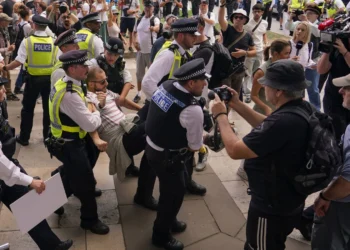 UK Police Face ‘Chronic Pressure’ Amid Surge in Protests Over Asylum and Gaza
 Urgent Action Needed on Windrush Compensation as Survivors Speak of “Waiting to Die”
 Graffiti Targeting Angela Rayner Removed After Resident Foots the Bill
 Peter Mandelson Referred to Jeffrey Epstein as ‘My Best Pal’ in 50th Birthday Letter
 Calls Grow to Suspend Boris Johnson’s £115,000 Allowance After Revelations From “Boris Files”
 Peter Mandelson’s Letter to Jeffrey Epstein Sparks Renewed Scrutiny
 UK Home Office to Launch French Beach Signage to Warn Asylum Seekers of Risks
 Father’s Tip Leads to Arrest in Charlie Kirk Murder Case
 Zarah Sultana Seeks Legal Action After Bitter Clash with Jeremy Corbyn Over Party Membership Funds
 Anti-Immigration Protesters and Counter-Protesters Clash in Glasgow
Channel Crossings Surge: Over 1,000 People Arrive in the UK in Small Boats in a Single Day
Anti-Immigration Protesters and Counter-Protesters Clash in Glasgow
Channel Crossings Surge: Over 1,000 People Arrive in the UK in Small Boats in a Single Day
 UK Recognises State of Palestine in Push to Preserve Hope for Peace
 Far-Right Facebook Groups Fuel Radicalisation in the UK, Investigation Reveals
 Metropolitan Police Considers Requiring Officers to Declare Freemasonry Membership
 Jailed Georgian Opposition Leaders Warn UK of Iranian Links to Ruling Party
 UK Police to Gain New Powers to Manage Repeated Protests, Home Office Announces
 Stephen Lawrence’s Father Demands Justice Before Killer’s Parole
 Starmer Condemns 7 October Student Protests as ‘Un-British’
 Blair and Clegg Hosted Private Dinner with Tech Leaders
 Boris Johnson Breached Rules on Post-Office Business Contacts
 Zarah Sultana and Jeremy Corbyn Reunite Amid New Party Plans
 UK Charities Warn Rising Hate Threatens Staff Safety
 Human Rights Groups Challenge UK-France “One in, One Out” Deal
 Southport rioter dies in cell after prison disciplinary charge
 Prince Andrew met alleged Chinese spies during Pitch@Palace China trips
 Kosovo agrees to host Britain’s refused asylum seekers
 Sex offenders to lose parental rights for children born of rape
 China Spy Case Hearing Reveals Key Gaps in Prosecution
 Reform Councillor Defects to Tories Over ‘Uncomfortable’ Policies
 FBI Director Kash Patel Defends Girlfriend Amid Government Jet Claims
 French Taxi Driver Cleared in David Lammy Theft Case After Fare Dispute
 UK University Faces Counter-Terror Probe Over China Pressure
 Company linked to Michelle Mone owes £39m in tax
 Met Police Culture Makes Racial Harm ‘Inevitable’
 Eleven Arrested After Pro-Palestine Protest at Villa Match
Boris Johnson accused of undermining BBC leadership
Eleven Arrested After Pro-Palestine Protest at Villa Match
Boris Johnson accused of undermining BBC leadership
 Remaining rebel Labour MPs have whip restored
 ‘Reckless’ cuts to victims’ services will cost more than they save
 BBC Faces Backlash as Reform UK Withdraws from Film
 Wes Streeting Denies Leadership Plot Against Starmer
 British state supplied victims to ‘worst sex offender in history’
 Ukraine-Russia war latest: Putin’s troops exploit bad weather to force Kyiv withdrawal from multiple towns
 New Epstein Files Spark Political Clash in Washington
 Ukraine Energy Corruption Scandal Hits Zelensky’s Inner Circle
 New review urges UK to repatriate Shamima Begum, others from Syria
 Victims’ commissioner Baroness Newlove dies aged 63
 Hasina Rejects Allegations Ahead of Bangladesh Tribunal Verdict
 Indian authorities demolish Kashmir home linked to Red Fort blast
 Navy cuts scrap key landing upgrade for UK F-35B jets
 Greene Pushes Epstein Files Amid Trump Fallout
 UK Candidate Moved to Safe House After Election Threats
 Ex-PM Hasina Gets Death Penalty for Crimes Against Humanity
 UN Security Council Approves Trump’s Gaza Peace Plan
 South African Detained After Neo-Nazi Rally in Australia
 Sheikh Hasina Sentenced to Death Over Protest Crackdown
 Philippines Flood Fund Scandal: Top Ministers Step Down
 Trump Signs Bill Releasing Justice Department Files on Epstein
 WhatsApp Messages Expose Nathan Gill’s Bribery
 Venezuela Threatens Nobel Winner Machado with Fugitive Status
 Most Tories Expect to Support a Farage-Led Government
 BBC Chairman Faces Scrutiny Over Bias Claims
 Ex-Classmate Accuses Farage of Dishonesty on Racism Claims
 Trump Envoy to Discuss Ukraine Peace at Kremlin
 Video shows Israeli troops kill Palestinians after surrender
 Ex-Brexit MEP Rejects Claim of Pro-Russia Payments
 Guinea-Bissau President Flees After Military Coup
 Jordan Bardella: France’s Young Presidential Contender
 ‘It’s a Complete Scandal’: Aristocrat’s Fight for Prison Children
 Police response times face strict new national limits
 Files Link Andrew to Epstein Dinner After Prison Release
 Emails Show Epstein Funded Mandelson’s Husband After Jail
 Police Probe Mandelson Over Alleged Epstein Leak
 Saif al-Islam Gaddafi Reportedly Killed in Libya Shooting