
Published: 18 February 2026. The English Chronicle Desk. The English Chronicle Online
For many adoptive parents, the joy of welcoming a child into their family can become overshadowed by the realities that follow — especially when children come with deep trauma from severe neglect or abuse. One adoptive mother from north Wales, identified only as Anna to protect her daughter’s privacy, says her life “has been lived in crisis” for more than 15 years as she struggled to cope with her child’s complex needs. Her story, shared in a BBC report this week, has shone a spotlight on a growing crisis in the UK’s adoption and post‑adoption support system — one that cost her not just her career and her marriage, but her physical and mental wellbeing, too.
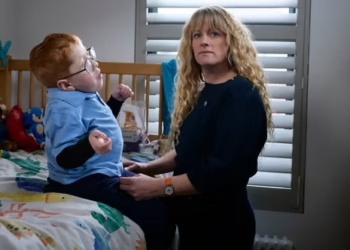
Anna’s daughter was taken into care after suffering severe early‑life trauma, and she and her partner adopted her when she was young. At first, they believed they could offer healing and stability — but they were unprepared for the extent of her behavioural and emotional needs, which include autism with a Pathological Demand Avoidance (PDA) profile. Anna says her daughter has been physically aggressive at times, leaving the family constantly alert, exhausted and unable to find peace at home.

Despite their commitment and love for their child — “we do have some lovely, connected moments,” she says — the pressures became overwhelming. Professionals often focused on whether parental discipline was “good enough,” rather than offering meaningful support tailored to the child’s trauma history, leaving Anna feeling blamed and isolated. Many families like hers end up spiralling without the help they desperately need, told repeatedly to “just get on with it” while deliberate, trauma‑responsive support remains scarce.
For Anna, the personal cost was profound. Years of fighting for appropriate therapeutic help affected her employment; time off work became more frequent, and she eventually had to give up her career. Her relationship also suffered under the weight of constant crisis management, ultimately leading to its breakdown. This personal and economic toll is echoed in growing calls across the UK from adoptive parents and campaign groups for systemic reform to the post‑adoption support framework.
Experts warn that adoption breakdown — when an adoptive placement fails and a child returns to care or is moved elsewhere — is the tip of a deeper problem: inconsistent support and scarce specialist resources for families caring for traumatised children. Local authorities and adoption agencies do not always collect clear or consistent data, making it difficult to understand the scale of breakdowns or plan effective interventions. Advocates argue this data gap means many families “fall through the cracks” and that the true size of the issue is likely much larger than official figures suggest.
Crucially, many adoptive families say that training and support offered at the time of placement is simply not enough preparation for the reality of parenting children with complex attachments, behavioural challenges or neurodivergent profiles. Adoptive children are far more likely than typical children to have experienced early trauma, which affects everything from emotional regulation to trust, learning and relationships. Without tailored interventions — such as trauma‑informed therapy, respite care, specialist schooling support and urgent mental health services — parents describe feeling abandoned by a system that initially praised them for “saving a child.”
Anna is far from alone in her experience. Across the UK, many adoptive parents report similar struggles with access to meaningful help decades after adoption took place. Childhood trauma, attachment disorder and sensory processing challenges can persist and even worsen without the right therapeutic framework, meaning parents often become informal caregivers for children with needs equating to severe disability — yet without comparable support.
Some professionals and campaign groups argue that UK adoption policy is built on an outdated assumption that love alone will heal trauma, leaving behind critical questions about how to support families after placement. They call instead for a trauma‑responsive, recovery‑focused model of care that acknowledges the long‑term impacts of early life experiences, including neglect, abuse and separation from birth families.
There are organisations in the UK, such as PAC‑UK and Adoption England, that provide post‑adoption counselling and peer support. These services aim to give adoptive parents a space to share experiences and access specialised guidance — but waiting lists are long, funding is limited, and many families still struggle to gain access at the most critical moments. With demand rising, supporters of reform argue that provision must be expanded, properly funded and integrated into statutory services to prevent further breakdowns and to protect the wellbeing of both parents and children.

Anna’s story has struck a chord with many across social media and advocacy circles, not just for the personal heartbreak but for what it reveals about a system that too often celebrates the adoption moment without investing in what comes next. For these families, the journey does not end at placement — it often marks the beginning of a long, complex and under‑resourced phase of care that tests resilience, community support and public services.
As policymakers, families and child welfare specialists grapple with these issues, there is increasing urgency for reforms that go beyond recruitment and matching of adoptive parents to address the post‑placement realities of trauma, behavioural complexity and mental health support. For Anna, the impact of these failures will stay with her for a lifetime — a stark reminder that adoption breakdown is not just a statistic, but a deeply human crisis.
Related News:
 Illegal Skin Lightening Cream Being Sold in UK Butchers, Watchdog Warns
 Concerns Mount Over Accuracy of At-Home Health Tests as Study Calls for Stricter Regulation
 The Ketamine Crisis in the UK is a Silent Epidemic Leaving Users with Lifelong Pain
 UK Launches World-First Gonorrhoea Vaccine Amid Record Infection Surge
 Woman Warned She Might Need Leg Amputation to Survive After Liquid Brazilian Butt Lift
 AI Tools Used by English Councils Found to Downplay Women’s Health Issues, Raising Concerns Over Gender Bias in Care
 Cats Develop Dementia Similarly to Humans, Study Finds
 Alarming rise in abusive teen relationships in the UK sparks urgent warnings
 Inquest Finds Agency Worker Failings Led to Unlawful Death of Vulnerable 14-Year-Old
 Shocking Rise in Children’s Exposure to Violent Online Pornography Raises Alarm
 Baby Food Manufacturers Given 18 Months to Improve Nutrition and Labelling
 Why E-Bikes and E-Scooters Are Making Streets a ‘Nightmare’ for Blind People
 Millions in the UK at Higher Risk of Heart Failure and Stroke Due to Air Pollution, Study Warns
 Norfolk Hospital Ranked Worst in England as NHS League Tables Return
 More Than Half of UK Births Now Involve Medical Intervention
 UK Graduates in Healthcare Report Highest Satisfaction with Degree Choices
 Systemic Racism in Maternity Care Continues to Endanger Black Women in England, MPs Warn
 One in Three GPs in England Do Not Work in NHS, Raising Concerns Over Access to Care
 UK Doctors Guilty of Sexual Misconduct Continue Practising Amid Weak Sanctions, Research Finds
 Heavy Drinkers Lead Growth in Non-Alcoholic and Low-Alcohol Market
 Starmer Unveils Plan for NHS “Online Hospital” to Tackle Waiting Lists
 Questions Remain as Rugby Legend Lewis Moody Faces Motor Neurone Disease Diagnosis
 Eligibility Confusion Over COVID Vaccination Leaves Pharmacies Struggling Across the UK
 Women Challenge Meta Over Targeted Ads After Miscarriage
 Mum’s Final Wish: Donating Her Body to Science
 Genetic Tests May Predict Return of Blood Cancer
 £18 Prostate Cancer Test Could Save Thousands of Lives
 Pregnant Women in England Face Rising Risk of Severe Birth Injury
 One in 12 Secondary Pupils Sent to Isolation Weekly
 M&S and Morrisons Lead Christmas Supermarket Taste Test
New Prostate Cancer Drug Set to Halve Death Risk in England
M&S and Morrisons Lead Christmas Supermarket Taste Test
New Prostate Cancer Drug Set to Halve Death Risk in England
 UK Health Leaders Push for Urgent Tobacco & Vape Bill
 Hospice Cuts Raise Alarm Across England Amid Funding Crisis
 Celebrities and Charities Demand UK Government Act on Child Poverty
 Patients to Test Health at Home to Ease NHS Winter Pressure
 London’s Childlessness Crisis: Schools Closing as Families Shrink
 Shouting Works Best to Deter Gulls, UK Study Finds
 Reeves rejects £1bn plea for NHS redundancy payouts
 Stroke Patient Mistaken for Drunk, Care Delayed
 UK launches major AI drive to fight deadly superbugs
 ‘Traumatic Wait’: Northern Ireland Women Face Breast Cancer Delays
 Coffins Now Too Large to Cremate Amid Rising Obesity Crisis
 Five-Year-Old Dies After Rare Tonsil Surgery Complication
 Fibromyalgia Patients Struggle as NHS Fails to Provide Care
 “Enough is Enough”: Local MP Vows to Fight Rainham Quarry Plans
 More Patients Now Contacting GPs Online, Data Shows
 GPs Failing Frail Elderly: Only 1 in 6 Assessed – NAO
 NHS braces for worst winter crisis amid rising flu cases
 Ministers to back regulation of England’s funeral industry
 Teen Nicotine Pouch Use Sparks Growing Health Alarm
 AI Helps NHS Cut A&E Waiting Times This Winter
 Minor A&E Visits Surge Across England as Hospitals Face Pressure
 Children to Receive Home Vaccines as England Acts
 Salt Intake England: Crisps Comparison Sparks Health Alarm
 Local Fish Could Boost UK Health and Economy Significantly
 Offenders to Receive Health Support During Probation Appointments
 NHS Violence Crisis: Staff Face Daily Assaults
 Celebrity Campaign Highlights SMA Screening Failures
 Robo-Vaccination Could Transform Fight Against Bovine TB
 UK Glaucoma Rise Signals Looming Eye Health Crisis by 2060
 UK ADHD medication use triples over 13 years, landmark study finds
 Reform UK Health Plan ‘Would Cost £1.7bn’, Streeting Says
 NHS boosts bowel screening accuracy with FIT reform
 Nottingham survivor warns of repeat attacks without mental health reform
 Study Finds One in Seven England Takeaways Are Dark Kitchens
 Deadly Cancer Postcode Lottery Limits NHS Care
 Pneumonia Surge Pushes England Emergency Cases Higher
 Labour Utterly Humiliated by Straight-Talking Mum Who Cut Through Keir Starmer’s Insanity
 Royal Family LIVE: ‘Pariah’ Andrew Mountbatten-Windsor Sparks Fresh Revolt Among Staff
 Renters Furious as Decent Homes Standard Delayed Until 2035
 The Victorian aristocrat who became Britain’s first Muslim lord
 Motorists Could Face ‘Mandatory’ Driving Ban for Road Offences Under Tougher Laws
 Royal Mail Blames Poor Weather and Sickness for Delayed Deliveries
 Disability and LGBT Hate Crimes Set to Become Aggravated Offences
 Snow and Rain Warnings as Cold Snap Continues in the UK
 Flooding May Worsen Before It Improves as More Rain Forecast for the UK
 Teacher Who Lied About Cambridge Degree Banned From Profession
 UK MPs Demand Ban on Brazilian Butt Lifts
 Last‑ditch Call to Save Police Front Counters in London
 Deaf Woman Killed After Night Out With Strangers, Court Hears