
Published: 25 February 2026. The English Chronicle Desk. The English Chronicle Online.
Almost half of Britons admit they delay or entirely avoid contacting their GP when ill, according to recent survey results. The findings reveal that 48% of adults across the UK did not seek help from their family doctor over the past year, either postponing or abandoning attempts to get medical advice entirely. Many respondents explained that their decision stemmed from concerns about struggling to secure a timely GP appointment, leaving them to manage their illnesses alone. Over a quarter, 27%, reported attempting to treat themselves or simply waiting for symptoms to resolve, despite medical professionals warning that delaying care can pose serious health risks. This growing hesitation underscores why GP access is becoming a critical concern for healthcare policy.
This survey highlights a growing public anxiety over access to vital NHS services, including GP appointments, accident and emergency care, hospital treatment, and emergency ambulance responses. Polling conducted by Ipsos for the Health Foundation thinktank found that three in ten participants did not expect to be offered a GP appointment at a convenient time, while 17% felt contacting their surgery would be difficult or inconvenient. The results underscore concerns about patient access to general practice, which remains the frontline of the health service. GP access is therefore essential for preventing more serious health problems and ensuring timely care.
Professor Victoria Tzortziou Brown, chair of the Royal College of GPs, emphasised the risks of delaying care. She said it is worrying that patients might postpone treatment because they assume securing an appointment will be difficult, reminding the public that timely GP access is essential for preventing more serious health problems. A separate poll by Savanta for the Liberal Democrats showed that one-third of Britons had avoided going to A&E in the past two years, anticipating long waiting times before receiving treatment.

Helen Maguire, a health spokesperson for the Liberal Democrats, said these findings are deeply concerning. She pointed to vulnerable groups, such as elderly individuals and parents of sick children, who may suffer at home due to a lack of confidence in the NHS’s accessibility. The thinktank also warned that the government’s plan to shift significant healthcare services from hospitals to community settings, part of a ten-year NHS transformation plan, may need reassessment if public confidence remains low. Persistent concerns about general practice and A&E services suggest that policymakers should reconsider priorities to ensure safe and timely care for patients. Ensuring reliable GP access remains one of the most urgent priorities in these reforms.
The Ipsos survey, conducted in December with 2,214 adults, painted a stark picture of public perception about the NHS. Access to GP services and faster emergency care were identified as the top priorities for the public, reflecting widespread dissatisfaction with current service levels. Only 32% of respondents considered the NHS’s overall performance to be good, while 42% believed care standards had worsened over the past year. Moreover, 47% feared the service would deteriorate further in the coming year, with only 15% expecting any improvement. These figures suggest that confidence in the government’s health policies is also low, with just 15% approving the actions taken to revive services in their respective nations, compared to 54% expressing disagreement.
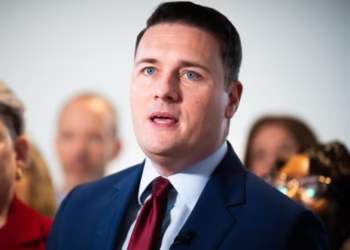
Health Secretary Wes Streeting, alongside his counterparts in Edinburgh and Cardiff, faces a significant challenge in addressing public dissatisfaction. The recent release of the GP contract for 2025-26 seeks to ensure that patients with urgent medical needs can be seen on the same day. The contract also allocates £300 million to hire 1,600 additional doctors in England, aiming to relieve some pressure on overstretched surgeries. While the measures are intended to improve patient access, doctors have raised concerns about the practicality of delivering same-day urgent care alongside regular practice duties. Improving GP access is critical, but must be balanced with realistic expectations and available staffing.
Dr Katie Bramall, chair of the British Medical Association’s GP committee, criticised the contract process, highlighting that it bypassed negotiation with the BMA, breaking from a long-standing practice. Bramall warned that the plan risks creating unrealistic expectations of unlimited same-day urgent care while placing additional barriers around specialist referrals. She stressed that family doctors are already under immense pressure, managing increasing workloads while keeping surgeries operational amid a climate of staff shortages and rising demand. Strengthening GP access without overburdening practices remains one of the sector’s most difficult challenges.
Experts emphasise that improving access to GPs and A&E is not solely a matter of funding, but also requires careful planning to ensure sustainable care delivery. Patients’ experiences of difficulty in contacting their GP can exacerbate health inequalities, particularly for those with chronic conditions or limited digital access. The Health Foundation’s survey revealed that public pessimism about the NHS is widespread, with many fearing that ongoing staffing shortages and pressure on emergency departments will lead to further deterioration in care quality. Prioritising GP access is therefore essential to restoring trust and ensuring equitable healthcare for all.
The reluctance of almost half of the public to contact their GP also has implications for preventative healthcare. Delays in seeking medical advice can prevent early detection of serious conditions, including cardiovascular disease, diabetes, and cancer, potentially increasing long-term treatment costs and strain on hospital services. Healthcare analysts suggest that the government must prioritise improving appointment availability and patient communication to rebuild confidence in primary care services.
Meanwhile, political leaders face mounting pressure to respond to public concerns. The Liberal Democrats have urged immediate action to restore trust in the NHS, emphasising the need for transparent communication and practical solutions to reduce waiting times. Patients have expressed frustration over difficulties securing appointments, citing instances where they were advised to wait days or weeks despite urgent symptoms. Many have highlighted that the perception of inaccessibility discourages people from seeking care at all, creating a vicious cycle of delayed treatment and worsening health outcomes.

The situation also underscores the role of digital health initiatives, which the government has promoted to improve efficiency. Online appointment booking and remote consultations aim to reduce delays, but critics argue that these solutions are insufficient when staffing shortages and high demand limit practical availability. Medical professionals caution that digital tools must complement, not replace, physical access to GPs and emergency care, particularly for vulnerable populations.
Public confidence in the NHS hinges on both perception and delivery of services. Surveys indicate that patients value timely access above all, with GP availability and prompt emergency response forming the cornerstone of public trust. Policymakers are urged to listen to these concerns and develop strategies that balance resource allocation with realistic expectations for care. Without decisive action, the survey suggests that GP access challenges could continue to rise, undermining broader NHS reform objectives.
The findings make clear that healthcare access remains the most pressing concern for Britons. While government initiatives aim to expand capacity and provide additional funding, challenges persist in translating policy into tangible improvements for everyday patients. Observers note that rebuilding trust in the NHS requires sustained effort, clear communication, and practical reforms to ensure that urgent and routine care are consistently available across the country.
In conclusion, the survey highlights the serious implications of nearly half the population avoiding GP contact. Delays and self-management of illnesses not only risk individual health but also signal systemic pressures within the NHS that must be addressed. Political leaders, healthcare providers, and policymakers face an urgent need to restore confidence, improve access, and ensure that GP access remains reliable for the public now and into the future.
Related News:
 Mother dies after black market weight loss injection
 Young Woman Missed 13 Times by GPs Before Bowel Cancer Diagnosis
 Hospice Cuts Raise Alarm Across England Amid Funding Crisis
 How Bringing Forests Into Preschools Boosts Children’s Health
 The diet that can significantly ease symptoms of IBS
 Celebrities and Charities Demand UK Government Act on Child Poverty
 Long A&E waits causing heartbreaking suffering, charity says
 Experts Warn on Home Birth Risks, Call for Skilled Midwives
 Lancashire council plans to close care homes and day centres
 Britain could face worst flu season on record, NHS warns
 Experts Urge Legal Right to Timely Cancer Care
 Patients to Test Health at Home to Ease NHS Winter Pressure
 London’s Childlessness Crisis: Schools Closing as Families Shrink
 NHS Takes Over Nuffield Hospital in ‘Windfall’ for London Care
 North Sea oil workers must lose weight or face job loss
 Crisis charity to become landlord amid UK housing emergency
 No link found between paracetamol in pregnancy and autism
 UK Disability Pay Gap Means Millions Work for Free From Today
 Shouting Works Best to Deter Gulls, UK Study Finds
 Reeves rejects £1bn plea for NHS redundancy payouts
 NHS trust fined after woman takes life in mental health unit
 Leading doctors issue warning amid ‘bad’ flu season
 UK Centres Used Risky Heart Pump Despite Safety Fears
 Reeves Rejects £1bn NHS Payout Plea from Streeting
 New Campaign Trains Vets to Spot Farmers’ Health Risks
 Stroke Patient Mistaken for Drunk, Care Delayed
 ‘Traumatic Wait’: Northern Ireland Women Face Breast Cancer Delays
 Boris Johnson Oversaw Toxic No 10 Culture, Covid Inquiry Finds
 Welsh Government Christmas 2020 Lockdown Criticised
 Coffins Now Too Large to Cremate Amid Rising Obesity Crisis
 Thinktank Urges Smaller Hospitals to End NHS ‘Permacrisis’
 David Cameron Reveals Prostate Cancer Diagnosis, Advocates Screening
 NHS paediatric leave parents waiting months for answers
 Catherine urges end to stigma around addiction
 11 Best Supermarket Wines Chosen by Experts and Sommeliers
 Inquiry Opens Into Disgraced Surgeon Eljamel Scandal
 Five-Year-Old Dies After Rare Tonsil Surgery Complication
 Fibromyalgia Patients Struggle as NHS Fails to Provide Care
 More Patients Now Contacting GPs Online, Data Shows
 Streeting launches review into mental health and ADHD diagnoses
 Flu cases in Scotland more than double in a week
 People in England’s Poorest Areas Face Higher Lung Health Emergencies
 MND Patients Die Waiting for Home Adaptations in England
 Minor A&E Visits Surge Across England as Hospitals Face Pressure
 Children to Receive Home Vaccines as England Acts
 UK children to get chickenpox jab with MMRV vaccine
 UK Enforces Junk Food Ad Ban Before 9pm
 Salt Intake England: Crisps Comparison Sparks Health Alarm
 Weight Loss Jabs Linked to Rapid Weight Regain, New Study Shows
 Patients Collapsing in NHS Corridors, Watchdog Warns
 Offenders to Receive Health Support During Probation Appointments
 NHS Violence Crisis: Staff Face Daily Assaults
 Celebrity Campaign Highlights SMA Screening Failures
 NHS corridor care crisis sparks fears over patient safety
 Jess’s Rule Urges GPs to Rethink Persistent Symptoms
 UK Glaucoma Rise Signals Looming Eye Health Crisis by 2060
 UK ADHD medication use triples over 13 years, landmark study finds
 Reform UK Health Plan ‘Would Cost £1.7bn’, Streeting Says
 NHS boosts bowel screening accuracy with FIT reform
 UK loses measles-free status amid deaths and jab decline
 Nottingham survivor warns of repeat attacks without mental health reform
 UK vets face reforms to tackle high pet care costs
 Small risk warning raised over weight-loss jabs in UK review
 Study Finds One in Seven England Takeaways Are Dark Kitchens
 Deadly Cancer Postcode Lottery Limits NHS Care
 Pneumonia Surge Pushes England Emergency Cases Higher
 Streeting moves on doctor pay to end strike dispute
 UK reports baby formula toxin poisoning cases across the country
 Children of Close-Relative Parents Face Higher Mortality Risk in England
 North London measles outbreak hits young children
 UK MPs Demand Ban on Brazilian Butt Lifts
 Campaign Demands NHS Action on Placenta Accreta Diagnosis
 NHS Bone Cement Shortage Threatens Surgeries
 NHS Negligence Ruling Raises Payout Costs
 Placenta Accreta Warning as Hunt Urges Action
 Systemic Racism in Maternity Care Continues to Endanger Black Women in England, MPs Warn
 M&S and Morrisons Lead Christmas Supermarket Taste Test
 Reeves Faces Setback as Labour May Miss Homes Target
 UK Job Vacancies Hit Five-Year Pandemic Low
 UK Youth Unemployment Surges Amid Tax Changes