Published: 25 February 2026. The English Chronicle Desk. The English Chronicle Online.
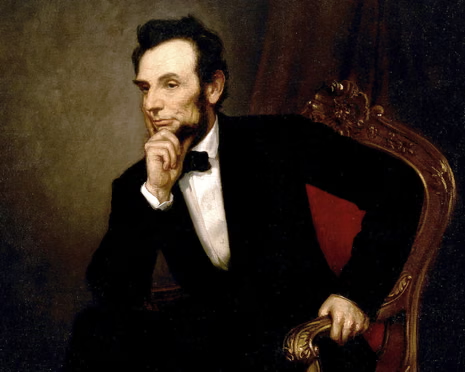
Abraham Lincoln is widely celebrated as one of history’s greatest leaders, yet his political manoeuvring remains less explored. Historian Matthew Pinsker, a professor at Dickinson College, examines Lincoln’s role as a partisan strategist in his latest work, Boss Lincoln: The Partisan Life of Abraham Lincoln, and on his Substack, What Would Lincoln Do?. Pinsker argues that understanding Lincoln’s political calculations offers lessons for contemporary leaders navigating today’s democratic crises. His research portrays Lincoln not merely as a moral figure but as a shrewd politician who carefully balanced principle with practical strategy.
Taking office in 1861, Lincoln faced a disintegrating Union, with states seceding and the threat of civil war looming over the nation. Pinsker highlights that Lincoln’s leadership was inseparable from his partisan identity, describing him as a politician deeply invested in party organisation and electoral success. The historian emphasises that Lincoln’s effectiveness stemmed from his ability to combine ethical convictions with tactical thinking, often operating independently of his cabinet’s immediate counsel. Unlike popular portrayals of him as a solitary moral hero, Lincoln navigated the murky waters of political compromise, negotiation, and party loyalty.
In conversation with NPR, Pinsker draws comparisons between Lincoln and modern figures, particularly reflecting on contrasting approaches to the White House. He recounts Lincoln’s irritation over his wife Mary Todd Lincoln overspending on renovations, noting his belief that the White House belonged to the public. In contrast, he comments on former President Donald Trump’s opulent redesigns, suggesting that Lincoln’s philosophy prioritised public responsibility over personal indulgence. Pinsker emphasises that such contrasts underscore Lincoln’s awareness of institutional stewardship, demonstrating how his partisan sensibilities informed ethical governance.

Lincoln’s engagement with the judiciary further illustrates his political acumen. When discussing the Supreme Court, Pinsker explains that Lincoln recognised it as the ultimate arbiter of the law, yet he strategically pursued change through elections rather than confrontation. He cites Lincoln’s response to the infamous Dred Scott decision, which denied Black people citizenship. Lincoln encouraged citizens to elect representatives capable of reforming the bench, showing a patient understanding of democratic mechanisms. Pinsker suggests that such long-term thinking distinguishes Lincoln’s political style, combining principle with an enduring commitment to institutional integrity.
Pinsker is careful not to overstate historical analogies, noting that contemporary scandals, such as the revelations around Jeffrey Epstein and prominent figures, have no direct precedent in Lincoln’s era. Yet, he maintains that Lincoln’s moral compass would have dictated decisive action against any cabinet member whose conduct violated ethical norms. Pinsker’s analysis underscores the distinction between moral leadership and opportunistic politics, framing Lincoln as a figure capable of operating within complex systems while adhering to his fundamental values.
Boss Lincoln builds upon Pinsker’s previous scholarship, including Lincoln’s Sanctuary: Abraham Lincoln and the Soldiers’ Home, and provides a nuanced examination of Lincoln as a party leader and strategist. Pinsker’s work spans Lincoln’s time as a Whig congressman, his instrumental role in the formation of the Republican Party, and his presidency during the Civil War. The book reveals the painstaking research involved, drawing upon newly discovered documents and digitised archives, which illuminate Lincoln’s behind-the-scenes negotiations, planning, and political calculations. Pinsker emphasises that even seemingly minor correspondence can shed light on his intricate approach to governance.
A pivotal moment highlighted in Boss Lincoln is the Blind Memorandum of August 1864, written three months before the presidential election. In this document, Lincoln anticipated the possibility of electoral defeat and outlined contingency plans to cooperate with a victorious Democratic successor. He ensured the preservation of the Union, demonstrating remarkable foresight and political independence. Pinsker asserts that this episode exemplifies Lincoln’s ability to operate autonomously, orchestrating outcomes without relying on consensus, yet maintaining a careful balance between transparency and secrecy with his cabinet.
Pinsker critiques popular portrayals of Lincoln’s political manoeuvring, especially the depiction of bribery in Steven Spielberg’s 2013 film Lincoln. He argues that historical evidence contradicts these dramatizations, revealing Lincoln’s reliance on persuasion and strategic planning rather than coercion. By focusing on authentic episodes like the Blind Memorandum, Pinsker presents a Lincoln who exercises disciplined political judgement, blending tactical skill with moral integrity. This perspective offers fresh insights into his leadership style, highlighting the subtle strategies required to navigate partisan divides and sustain democratic institutions.
The book also spotlights individuals who played critical yet overlooked roles in shaping Lincoln’s political trajectory. Anna Dickinson, a young Quaker orator, is credited with bolstering Lincoln’s influence in Congress through a highly publicised speech in January 1864. Pinsker emphasises her significance, noting that Dickinson’s endorsement helped consolidate support for Lincoln within his party and strengthened his leadership against internal challengers. By examining such episodes, Pinsker illustrates the importance of political alliances, public persuasion, and the contributions of figures beyond the immediate circle of cabinet members.
Digital archival research has transformed Pinsker’s approach, enabling him to cross-reference scattered documents and reconstruct the nuances of Lincoln’s decision-making. He notes that modern historians benefit from digitisation, which allows connections to be drawn across vast troves of material, revealing Lincoln’s strategy as both meticulous and adaptive. This methodology uncovers the ways in which Lincoln leveraged personal correspondence, public endorsements, and party infrastructure to navigate a highly volatile political environment. Pinsker’s work demonstrates that Lincoln’s genius was not solely in moral leadership but in mastering the art of political negotiation and the practicalities of governance.

In addition to historical insights, Pinsker’s scholarship encourages reflection on contemporary politics. He asserts that studying Lincoln’s partisan manoeuvring can inform present-day leaders about the interplay between ethical leadership and strategic decision-making. Lincoln’s ability to reconcile principle with practical political strategy offers lessons for navigating divided societies, managing institutional constraints, and fostering public trust. Pinsker’s research emphasises that understanding historical figures in their political context enriches our comprehension of governance, highlighting the enduring relevance of Lincoln’s methods.
Ultimately, Boss Lincoln presents Abraham Lincoln as a consummate politician whose partisanship was inseparable from his commitment to national unity. Pinsker demonstrates that Lincoln’s achievements arose from disciplined strategy, moral courage, and an acute understanding of the political landscape. By delving into newly unearthed documents, underexplored public endorsements, and nuanced personal correspondence, Pinsker reveals a leader whose mastery of politics was as vital as his moral vision. The book invites readers to reconsider Lincoln not only as a moral icon but as a pragmatic strategist whose partisan skill ensured the preservation of democracy.
Pinsker’s scholarship reminds us that leadership involves balancing ideals with political realities, a lesson as relevant in the twenty-first century as it was during the Civil War. By foregrounding Lincoln’s partisan acumen, Boss Lincoln illuminates the subtle strategies, ethical deliberations, and human dimensions that underpinned one of history’s most consequential presidencies. Through meticulous research and insightful analysis, Pinsker offers a portrait of a president whose political mastery continues to resonate, providing inspiration for contemporary leaders facing complex challenges.
Related News:
 Green Party Surges Past Labour in Latest UK Poll
 Army Officers Orders to Cut Ties with Men-Only Clubs
 Trump’s UK Ambassador Urges North Sea Drilling to Strengthen US Ties
 French Taxi Driver Cleared in David Lammy Theft Case After Fare Dispute
 Labour immigration crackdown could cost UK £4.4bn
BBC to Apologise Over Edited Trump Speech Amid Backlash
Labour immigration crackdown could cost UK £4.4bn
BBC to Apologise Over Edited Trump Speech Amid Backlash
 Britain deploys RAF specialists to assist Belgium with drone threats
 Millionaires group urge Reeves to introduce wealth tax to ‘lift kids out of poverty’
 Starmer Faces Growing Dissent as Labour MPs Weigh Leadership Challenge
 Reeves rejects £1bn plea for NHS redundancy payouts
 PM Condemns Leaks, Vows Loyalty to Ministers and Stability
 Major Rent Reform Ends No-Fault Evictions in England
 Peers Flood Assisted Dying Bill with 942 Amendments
 Senator John Fetterman Hospitalized After Fall from Heart Flare-Up, Keeps Sense of Humor
 US Justice Department Files Lawsuit Against California Over Partisan Voting Maps
 Greene Pushes Epstein Files Amid Trump Fallout
 Trump Deploys DHS to Charlotte in Major Arrest Operation
 December Run-Off in Chile as Election Produces No Winner
 Canada Passes Carney’s First Budget in Tight Parliamentary Vote
 Shadow Fleet at Sea: Europe’s Battle Against Illicit Oil Shipping
 Pentagon Officials in Ukraine to Discuss War End
 Venezuela Threatens Nobel Winner Machado with Fugitive Status
 Most Tories Expect to Support a Farage-Led Government
 Labour MP claims devolution bill is ‘blatant discrimination’ against Cornwall
 Millions Face Higher Taxes Under Reeves New Budget
 Georgians Defy Government Crackdown After Year of Protests
 US National Guard Member Killed in DC Shooting
 ICC to Rule on Duterte’s Provisional Release
 Jordan Bardella: France’s Young Presidential Contender
 Starmer Says Labour’s Economic Plan Needs Years to Deliver
 EU plans $105bn Ukraine aid using frozen Russian assets
 Culture secretary to review Telegraph takeover by Daily Mail owner
 Khaleda Zia Death in Bangladesh: First Female PM Dies at 80
 Russia losses Ukraine war peace talks intensify amid rising deaths
 Albanese Opens Door to Bondi Royal Commission Amid Rising Pressure
 Trump Escalates Minnesota Immigration Surge Amid Rising Tensions
 Iran Protesters Defy Crackdown as Violent Clashes Intensify
 Homeland security agents deployed amid Minneapolis protests
 Plans to Limit Jury Trials Face Retreat After Mounting Opposition
 Trump Threatens Strong Action If Iran Executes Protesters
 US Senate rejects resolution limiting Trump military powers
 Machado Trump medal gesture reshapes Venezuela power struggle
 Right Must Unite After Jenrick Defection, Urges Rees-Mogg
 EU weighs response amid Greenland tariff crisis with Trump
 UK Ministers Drop Foreign Student Targets for Global Education Push
 MPs warn AI financial risks threaten UK stability
 No Gas Boiler Ban as UK Warm Homes Plan Backs Heat Pumps
 Shinzo Abe’s killer receives life sentence in Japan
 Lords Vote Piles Pressure on Starmer Over Social Media Ban
 Sussan Ley leadership milestone shakes Liberal future
 EU Says US Ties Have Suffered ‘Big Blow’ After Greenland Crisis
 Andrew Hastie Emerges as Leadership Rival to Ley
 Satire Can Skewer Trump, But It Won’t Save Democracy
 Reform UK Health Plan ‘Would Cost £1.7bn’, Streeting Says
 Police response times face strict new national limits
 Labour policing overhaul sparks fears over growing central control
 Tories criticised after Braverman defection sparks mental health row
 Starmer warns of toxic division politics in Reform challenge
 Starmer China visit raises human rights pressure on Beijing
 Keir Starmer Signals UK China Reset With Xi Visit Possibility
 Cambridge Faces Scrutiny Over Arms Investment Transparency
 Israel Moves to Bar MSF From Gaza Operations
 Palantir contracts face UK halt calls over transparency
 Australia’s Opposition Coalition Reunites After Rift
 Nurses’ families fear breakup under UK immigration crackdown
 Labour Lord Doyle Apologises Over Paedophile Ties in Political Storm
 Cabinet Secretary Shake-Up Triggers Due Diligence Warning
 Tarique Rahman’s Rise Toward Bangladesh’s Top Job
 Starmer Faces Inquiry Calls Over Thinktank Probe
 Australian Families Leave Syrian Camp for Home
 Trump Attacks UK-California Energy Pact
 Farage to Name Jenrick as Reform Chancellor Pick
 Civil Service Pay: Union Urges Ministers to End ‘Barking Mad’ Limits
 Antonia Romeo appointment sparks criticism
 Trump and Chagos Deal Rift Over Iran Strikes
 Andrew Arrest Sparks Republic Debate in Australia
 Global corruption crisis: Who Washington shields
 Farage Chagos Islands Row Sparks Fury
 Reform UK targets workers’ rights repeal
 Russian Trade Routed Through British Islands Exposed