Published: 26 February 2026. The English Chronicle Desk. The English Chronicle Online.
The bitter Your Party leadership contest reaches its decisive moment this Thursday. After months of turmoil, members will finally learn who controls the movement’s future. The Your Party leadership vote has exposed deep fractures between its founders. Supporters now hope clarity will replace the public rancour dominating headlines since summer.
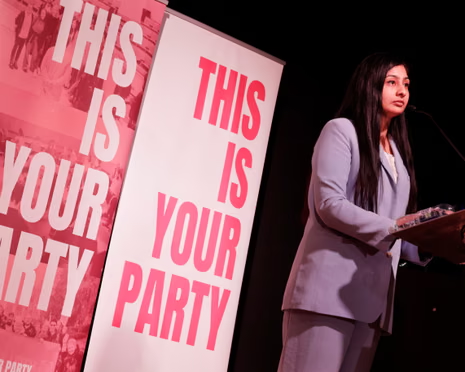
The party was co-founded by Jeremy Corbyn and Zarah Sultana in July last year. It promised a bold socialist alternative to the cautious leadership of Labour Party. Within weeks, hundreds of thousands expressed interest in joining the ambitious project.
Yet unity soon gave way to mistrust and internal confrontation. Disputes erupted over membership systems, party governance, and control of substantial funds. The Your Party leadership struggle became increasingly personal and highly visible online.
Tensions were on full display earlier this month in Cambridge. At an event hosted at the Missing Sock venue, members crowded into a packed meeting room. Mr Corbyn began outlining his vision beneath soft lighting and expectant faces. Suddenly the electricity failed, plunging the room into darkness mid-speech. Illuminated by phone torches, he continued speaking without hesitation.
When questions opened, tempers quickly flared among rival supporters. A back-and-forth exchange drowned out thoughtful debate about policy direction. Video footage later circulated widely across social media platforms. One voice warned dissenters they would be forcibly removed from speaking.
Just days later, further scenes unfolded elsewhere in Cambridge. Members confronted Ms Sultana outside a separate event. They claimed they had been denied entry to hear her speak. Critics accused her camp of favouring loyalists over open participation.

These incidents encapsulate the profound divisions shaping the Your Party leadership battle. At stake is control of the central executive committee, known as the CEC. Twenty-four seats are being contested under a collective leadership structure.
Two dominant slates have emerged during the campaign. Mr Corbyn’s grouping, called The Many, seeks strategic discipline and unified messaging. Ms Sultana’s Grassroots Left emphasises participatory democracy and activist energy.
Insiders describe fundamentally different visions for the party’s purpose. One senior figure close to Mr Corbyn said the future truly hangs in balance. The Your Party leadership result may determine whether the movement stabilises or fractures further.
Independent candidate Stuart Hill criticised the process during campaigning. He argued ordinary members struggled to gain meaningful participation. According to him, the contest has been overshadowed by high-profile personalities.
Mr Hill warned that either victor might ultimately walk away. He suggested both leaders are strongly driven by conviction and personal determination. Others share frustration at what they view as avoidable infighting.
An ex-member described the situation as deeply unserious and disheartening. For many supporters, hopes of swift electoral momentum have faded. Public disputes have overshadowed policy development and grassroots organising.
The party originally attracted remarkable online interest. Around 800,000 people reportedly registered curiosity during its launch phase. It was framed as a response to centralised control within mainstream politics.
However, by September, unity had fractured dramatically. Ms Sultana unveiled a new digital membership portal via social media. She encouraged supporters to sign up as paying members for £55.
Mr Corbyn publicly distanced himself from that system. He labelled it a false membership structure and urged caution. Ms Sultana responded by accusing unnamed figures of fostering a sexist environment.
The controversy soon reached regulatory attention. The Information Commissioner’s Office reviewed the portal’s launch. While taking no further action, it indicated potential concerns requiring referral.
Meanwhile, parliamentary alliances began to strain. Two members of the Independent Alliance departed citing persistent infighting. Their exit fuelled speculation about organisational fragility.
Disagreements also emerged over structural governance. Mr Corbyn favoured a single recognised leader for clarity. Ms Sultana championed a collective model reflecting grassroots traditions.
Financial questions have further complicated the Your Party leadership race. A dispute centres on donations handled by MOU Operations Ltd. The company reportedly received substantial sums earlier this year.
Ms Sultana is understood to control that entity solely. Around £600,000 of approximately £850,000 has been transferred to party accounts. She argues remaining funds should cover potential legal or administrative costs.
A separate pool of roughly £500,000 remains unresolved. That money followed the unauthorised membership portal launch in September. Representatives of MOU Operations say they are ready to transfer all funds.
They claim repeated attempts to clarify mechanics have gone unanswered. The matter is expected to be presented to the newly elected CEC. Observers believe swift resolution will be essential for credibility.
Speculation surrounds what happens if one faction dominates decisively. Some suggest Mr Corbyn and allied MPs could depart if defeated. His spokesperson declined to entertain hypothetical outcomes publicly.
They emphasised his long-term aim of building a mass socialist alternative. Allies of Ms Sultana insist she remains committed to party unity. They argue internal debate is a healthy sign of growth.
Supporters of The Many counter that discipline ensures electoral viability. They believe focused messaging could win targeted constituencies. Names such as Shockat Adam and Ayoub Khan are mentioned in strategy discussions.
Nevertheless, analysts caution that reputational damage may linger. Public perception has shifted from optimism to scepticism. Rebuilding trust could require months of careful organisation.
The Your Party leadership contest therefore carries symbolic weight beyond internal mechanics. It reflects broader tensions within Britain’s contemporary left. Questions about democracy, authority, and digital mobilisation remain unresolved.
Members voting this week face a consequential choice. They must decide which vision better secures long-term sustainability. Both camps insist they represent authentic socialist values.
For some grassroots activists, collective leadership feels empowering. They view hierarchical structures as remnants of traditional party politics. Others fear excessive decentralisation risks incoherence and public confusion.
In Westminster circles, observers watch with cautious interest. Any new left formation could influence marginal constituencies. Yet credibility depends on organisational competence and financial transparency.
Social media commentary has often amplified disagreements sharply. Online exchanges sometimes overshadow measured policy discussion. That dynamic has intensified the Your Party leadership narrative.

Despite discord, enthusiasm persists among committed members. Meetings continue to draw sizeable crowds across university towns and urban centres. Many believe political renewal requires experimentation and courage.
The coming announcement may not silence all disagreements. If both founders secure CEC positions, tensions could persist internally. However, a clear mandate might enable pragmatic compromise.
Senior insiders privately acknowledge the steep road ahead. Electoral viability demands disciplined campaigning and coherent messaging. The public rarely forgives movements perceived as chaotic.
Still, history shows new parties often endure turbulent beginnings. Internal debate can refine ideology and strengthen organisational resilience. Whether that proves true here remains uncertain.
For now, attention turns to Thursday’s declaration. Ballots will reveal which slate commands majority support. The Your Party leadership decision could redefine Britain’s left landscape.
Whatever the outcome, supporters hope rancour gives way to renewal. A united strategy may yet harness earlier enthusiasm. Failure to reconcile differences could prompt further fragmentation.
In this decisive week, members carry the burden of expectation. Their choice will echo beyond committee rooms and social media threads. The future of this fledgling movement stands delicately poised.
Related News:
 British Woman in Iran ‘Losing Hope’ Amid Ongoing Detention
 BBC Journalist Held and Interrogated in Vietnam
 Green Party Surges Past Labour in Latest UK Poll
 Celebrities and Charities Demand UK Government Act on Child Poverty
 Trump’s UK Ambassador Urges North Sea Drilling to Strengthen US Ties
 FBI Director Kash Patel Defends Girlfriend Amid Government Jet Claims
 French Taxi Driver Cleared in David Lammy Theft Case After Fare Dispute
 MPs Press Rachel Reeves to Hike Gambling Taxes
 Boris Johnson accused of undermining BBC leadership
 ‘Reckless’ cuts to victims’ services will cost more than they save
 Millionaires group urge Reeves to introduce wealth tax to ‘lift kids out of poverty’
 Starmer Faces Growing Dissent as Labour MPs Weigh Leadership Challenge
 Reeves rejects £1bn plea for NHS redundancy payouts
 Farage appointee to lead Reform youth accused of anti-British views
 Politics latest: Starmer ‘will fight any leadership coup’ as Streeting denies attempt to oust Labour PM
 PM Condemns Leaks, Vows Loyalty to Ministers and Stability
 Major Rent Reform Ends No-Fault Evictions in England
 Peers Flood Assisted Dying Bill with 942 Amendments
 England’s Special Needs Support Faces Breaking Point
 MoD warned over Excel risks before Afghan data breach
 UK Asylum Overhaul Sparks Debate Over Human Rights and Deportations
 UK Candidate Moved to Safe House After Election Threats
 Mahmood Defends Tough Overhaul of UK Asylum System
 UK Warns China After MI5 Issues Espionage Alert
 Labour Faces Historic Decline in Wales
 Rama Rebukes Mahmood for Targeting Albanian Families
 PM Highlights UK Business at G20 in South Africa
 Kate Forbes: Motherhood Harder Than Politics
 Most Tories Expect to Support a Farage-Led Government
 Labour MP claims devolution bill is ‘blatant discrimination’ against Cornwall
 Millions Face Higher Taxes Under Reeves New Budget
 Peers Get Extra Time to Debate Assisted Dying Bill
 Planned Palestinian Flag Raising at Belfast City Hall Faces Delay Amid Legal Concerns
 Starmer Says Labour’s Economic Plan Needs Years to Deliver
 Culture secretary to review Telegraph takeover by Daily Mail owner
 Andy Burnham Apologises for Past LGBTQ+ Police Discrimination
 Plans to Limit Jury Trials Face Retreat After Mounting Opposition
 Jenrick Reform defection deepens Tory civil war
 Right Must Unite After Jenrick Defection, Urges Rees-Mogg
 UK Ministers Drop Foreign Student Targets for Global Education Push
 MPs warn AI financial risks threaten UK stability
 MPs warn AI financial risks threaten UK stability
 No Gas Boiler Ban as UK Warm Homes Plan Backs Heat Pumps
 Hugh Grant Joins Call for Under-16 Social Media Ban in UK
 Shinzo Abe’s killer receives life sentence in Japan
 Lords Vote Piles Pressure on Starmer Over Social Media Ban
 Planned Troubles Board Game Sparks Outrage in Northern Ireland
 Reform UK Health Plan ‘Would Cost £1.7bn’, Streeting Says
 Police response times face strict new national limits
 Labour policing overhaul sparks fears over growing central control
 Tories criticised after Braverman defection sparks mental health row
 Burnham Westminster return hopes fade amid Labour rift
 Starmer warns of toxic division politics in Reform challenge
 Starmer China visit raises human rights pressure on Beijing
 Labour Must Revive High Streets to Avoid Election Collapse
 Calls Grow for King Charles to Apologise for Crown’s Role in Slavery
 Starmer Signals UK Return to EU Defence Pact Talks
 Palantir contracts face UK halt calls over transparency
 Labour Thinktank Row Deepens Over Journalist Probe Claims
 Sarwar call shakes Labour as No 10 calms fears
 Labour Lord Doyle Apologises Over Paedophile Ties in Political Storm
 Palestine Action Verdict Sparks Debate on Activist Tactics
 Cabinet Secretary Shake-Up Triggers Due Diligence Warning
 Starmer Faces Inquiry Calls Over Thinktank Probe
 Royal Mail Delivery Crisis Deepens Amid Weather Chaos
 Labour Together probe scandal sparks fresh Cabinet Office investigation
 Farage to Name Jenrick as Reform Chancellor Pick
 Farage Unveils Reform UK Frontbench Team
 NHS Negligence Ruling Raises Payout Costs
 Civil Service Pay: Union Urges Ministers to End ‘Barking Mad’ Limits
 Antonia Romeo appointment sparks criticism
 Trump and Chagos Deal Rift Over Iran Strikes
 Andrew Mountbatten-Windsor Arrest After FBI Radar
 Farage Chagos Islands Row Sparks Fury
 Trump Tariffs Threat Spark UK and EU Alarm
 Gasfield Deal Sparks Debate Over Fracking in Lincolnshire
 Reform UK targets workers’ rights repeal
 Ministers Urged to Ban Crypto Political Donations
 Mandelson Denounces Arrest Over ‘Baseless’ Fleeing Claims
 Russian Trade Routed Through British Islands Exposed