Published: 26 February 2026. The English Chronicle Desk. The English Chronicle Online.
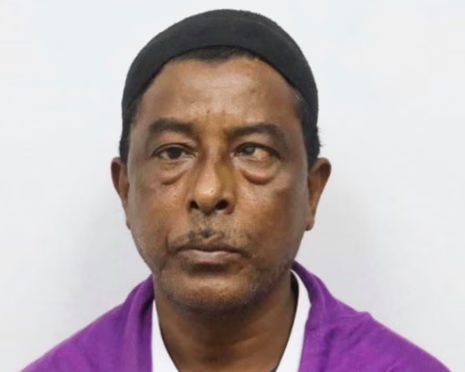
In a deeply troubling episode that has drawn national attention and fresh debate over immigration enforcement, a nearly blind refugee was found dead on a city street in Buffalo, New York, after being left there by United States Border Patrol agents. The heartbreaking discovery of 56‑year‑old refugee Nurul Amin Shah Alam has sparked outrage from local officials and refugee advocates, who describe his treatment as unspeakably callous and a preventable tragedy. Shah Alam, originally from Burma and legally in the United States as a refugee, had vanished after his release from custody earlier this month, only to be found unresponsive on a cold evening in late February.
Shah Alam had been living in Buffalo since arriving in December 2024 with his wife and two young sons, trying to build a new life after fleeing persecution in his homeland. Having limited vision in one eye and nearly blind in the other, he navigated each day with courage and vulnerability, speaking little to no English and unable to read or use a phone. These limitations compounded his isolation in an unfamiliar country and ultimately contributed to his last, fateful moments.

The sequence of events that preceded his death began more than a year earlier, in February 2025, when Shah Alam wandered away from his neighbourhood during a walk and became disoriented. He ended up on the porch of a private home, holding a curtain rod he had purchased and used as a makeshift walking stick. Unable to understand police commands due to language barriers and his visual impairment, he did not drop the rod quickly enough, leading to a confrontation in which officers used a taser and physical force before placing him in custody.
Buffalo police charged Shah Alam with assault, trespassing, and possession of a weapon, charges his attorney said were based on misunderstanding rather than malice. The accusation of weapon possession revolved solely around the curtain rod he had used as a cane, highlighting a tragic misunderstanding rooted in communication and disability challenges. His family chose not to bail him out at the time, fearing that doing so might lead to his transfer to immigration detention far from Buffalo.
After months confined in the Erie County Holding Center and a plea deal that reduced his charges, Shah Alam was granted bail on 19 February 2026. At that point, U.S. Border Patrol took custody of him in relation to an immigration detainer that had been placed on his record. What happened next has become the centre of a fierce public outcry. Instead of being transported to a safe and known location or having his family and attorney notified of his release, agents reportedly dropped him off at a Tim Hortons coffee shop about five miles from his home and left him to fend for himself with no support or contact information.
No one in his immediate circle was told of his release from custody, leading family members and legal representatives to search desperately as soon as it became clear he was missing. His attorney filed a missing persons report with Buffalo police, but confusion over his whereabouts led to his case being temporarily closed, with at least one officer mistakenly believing he had been taken by Immigration and Customs Enforcement. That decision delayed search efforts during critical hours and days, compounding the tragedy.
Tragically, it was not until Tuesday evening, 24 February 2026, when local officers responded to a call about a deceased person on Perry Street, that Shah Alam’s body was identified by the Erie County Medical Examiner and his family informed. Authorities have said homicide detectives are investigating the circumstances of his death in the days following his release, though early reports indicate that exposure and homicide have been ruled out by the medical examiner.
In the days since Shah Alam’s body was discovered, public comment has been swift and forceful. Buffalo’s mayor described his death as “preventable,” condemning the actions of federal immigration officials as inhumane and a dereliction of duty. Critics argue that abandoning a man with such serious disabilities without communication or assistance was fundamentally negligent and emblematic of deeper systemic issues within border enforcement. “A vulnerable man… was left alone on a cold winter night with no known attempt to leave him in a safe, secure location,” the mayor said.

Advocates for refugees and civil liberties have echoed these concerns, stressing that this case demonstrates not merely a lapse in procedure but a profound moral failure. Refugee support networks, legal representative organisations, and human rights observers have called for a thorough independent inquiry into border patrol protocols, especially regarding individuals with disabilities, language barriers, and deep vulnerabilities. They argue such measures are essential to ensure that tragedies like this cannot happen again.
Meanwhile, federal officials from U.S. Customs and Border Protection have offered a staunchly different account, indicating that Shah Alam “chose” to accept what was described as a “courtesy ride” to the coffee shop and that agents believed at the time he showed no signs of distress or need for special assistance. This statement has done little to quell criticism, with opponents pointing to his clear limitations and lack of family contact as indicators that his welfare was not sufficiently considered.
Shah Alam’s death has rekindled broader discussions about immigration enforcement policies in the United States, particularly in how vulnerable individuals such as refugees, people with disabilities, and non‑English speakers are treated within the system. For many observers, his story underscores deep human costs that can arise from procedural oversights and highlights an urgent need for reform that places compassion and dignity at the centre of enforcement practices.
In Buffalo and beyond, people continue to mourn Shah Alam’s passing, reflecting on the fragile intersection of human frailty and institutional responsibility. His surviving wife and two sons now face life without a devoted husband and father, and a community remains determined to seek answers and accountability. As investigations continue and conversations expand around this heartbreaking event, many hope that his legacy might catalyse meaningful change and prevent future tragedies.
Related News:
 Two National Guard Soldiers Critically Injured Near White House
 Putin Intensifies Territorial Demands Before US Talks
 Trump to Recheck Green Cards from 19 Nations After DC Attack
 US Defence Chief on Drug Boat Strike: “Did Not See Survivors”
 American Mother Extradited From UK to U.S. on Murder Charges
 Russia losses Ukraine war peace talks intensify amid rising deaths
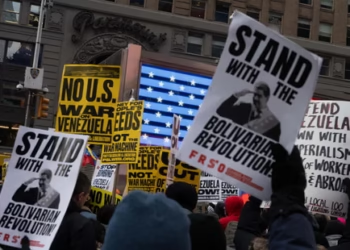 US Cities Erupt in Protests Against Trump’s Venezuela Military Action
 Trump Escalates Minnesota Immigration Surge Amid Rising Tensions
 Trump Says US Must ‘Own’ Greenland to Block Russia, China
 Greenland Faces Pivotal Summit Over Arctic Power Struggle
 US Clears Nvidia AI Chip Sales to China in Policy Shift
 Trump Threatens Strong Action If Iran Executes Protesters
 Trump Receives Machado’s Nobel Medal in White House Meeting
 Trump Aide Sparks Fury as Greenland Dispute Intensifies
 EU Says US Ties Have Suffered ‘Big Blow’ After Greenland Crisis
 Arizona border shooting leaves suspect hospitalised after agent pursuit
 Videos reveal earlier clash before Alex Pretti shooting
 Thousands Protest ICE Operations in Nationwide US Day of Action
 Epstein Files Reveal Trump Officials’ Emails with Financier
 Thousands Protest ICE in New York Against Trump Deportation Campaign
 ‘Painful Times’ as Melinda Gates Responds to Epstein Files
 Trump Praises ‘Terrific’ Petro After White House Talks
 Just Stop Oil Protesters Convicted Amid Climate Defence Row
 BBC to Apologise Over Edited Trump Speech Amid Backlash
 Britain deploys RAF specialists to assist Belgium with drone threats
 Palace May Restore Hyphen to Andrew Mountbatten-Windsor’s Name
 Greene Pushes Epstein Files Amid Trump Fallout
 Trump Deploys DHS to Charlotte in Major Arrest Operation
 December Run-Off in Chile as Election Produces No Winner
 Zelenskyy Signs Fighter Jet Deal Amid Russian Drone Attacks
 Orban Says Ukraine Has ‘No Chance’ as EU Support Continues
 Canada Passes Carney’s First Budget in Tight Parliamentary Vote
 Israeli Strike Kills 13 Near Palestinian Camp in Lebanon
 Shadow Fleet at Sea: Europe’s Battle Against Illicit Oil Shipping
 Tiny Curacao Makes History as Smallest Nation to Reach World Cup
 Haiti Qualifies for World Cup Despite Coach Never Visiting Country
 Deadly Russian Strikes Hit Western Ukraine, 20 Killed in Ternopil
 Pentagon Officials in Ukraine to Discuss War End
 Ukraine Peace Plan: Zelensky Ready for Dialogue
 Venezuela Threatens Nobel Winner Machado with Fugitive Status
 Royal Navy Shadows Russian Warships Entering the Channel
 US Suspends Afghan Immigration After White House Shooting
 Georgians Defy Government Crackdown After Year of Protests
 Southern Lebanon reels as Israeli strikes shatter communities
 US National Guard Member Killed in DC Shooting
 Tokyo court rules Japan’s same-sex marriage ban constitutional
 ‘Extinct’ Antelope Returns to Sahara, Bringing Hope
 EU plans $105bn Ukraine aid using frozen Russian assets
 Facebook Slow to Remove Bondi Attack Praise, Anti-Hate Group Claims
 Australian Cruise Ship Freed After Reef Grounding in Papua New Guinea
 Albanese Opens Door to Bondi Royal Commission Amid Rising Pressure
 Iran Protesters Defy Crackdown as Violent Clashes Intensify
 Homeland security agents deployed amid Minneapolis protests
 Trump Weighs Response to Iran Crackdown as Tehran Says Communication Open With US
 Minnesota Sues Trump Administration Over ICE Surge
 Trump targets Iran trade with 25% tariff warning
 Portland man pleads not guilty after Border Patrol shooting
 Gulf states warn Trump Iran strikes risk wider Middle East war
 Machado Trump medal gesture reshapes Venezuela power struggle
 EU weighs response amid Greenland tariff crisis with Trump
 Sydney Shark Attack Surge Shocks Australia Beaches
 Thousands Flee Cambodia Scam Centres Amid Global Pressure
 Andrew Hastie Emerges as Leadership Rival to Ley
 UK New Car Discounts Near £6,000 as Prices Are Slashed
 Israel Moves to Bar MSF From Gaza Operations
 Tragic Ski Lift Accident Claims Australian Snowboarder
 Headline: Measles Alert: Dr Oz Urges Americans to Vaccinate
 Portugal Election Delivers Socialist Win as Far Right Surges
 Nurses’ families fear breakup under UK immigration crackdown
 Australian Families Leave Syrian Camp for Home
 SA Police Intensify Search in Gus Lamont Case
 Trump Attacks UK-California Energy Pact
 Iran Says ‘Guiding Principles’ Agreed With US at Nuclear Talks
 Eight Skiers Found Dead After California Avalanche
 Trans Youth Care Crisis: NY Hospital Ends Gender‑Affirming Treatment
 Trump and Chagos Deal Rift Over Iran Strikes
 Andrew Arrest Sparks Republic Debate in Australia
 Global corruption crisis: Who Washington shields
 Farage Chagos Islands Row Sparks Fury
 Gold Rush in Gugulethu Leaves South Africans Desperate for Work and Hope