Published: 26 February 2026. The English Chronicle Desk. The English Chronicle Online.
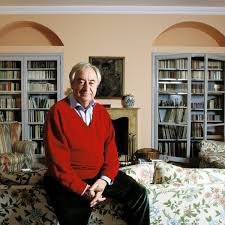
Cees Nooteboom, the Dutch writer celebrated for his cosmopolitan perspective, has died at ninety-two. His presence, whether in literature or public life, exuded a refined elegance that mirrored the cultured sophistication of a European man of letters. Nooteboom resided in an elegant 1731 merchant’s house in Amsterdam but spent much of his summers on the sunlit island of Menorca, where he found both inspiration and solace. Over his prolific career, he published nearly sixty works, encompassing fiction, poetry, and travel writing, and earned numerous accolades, including the 2009 Prijs der Nederlandse Letteren, a lifetime award for Dutch-language writers. Despite this recognition, he often reminded readers that he was “a child of the war, and after that the cold war,” reflecting a lifetime shaped by historical turbulence and personal loss.
Born in The Hague, Nooteboom experienced a childhood marked by frequent moves following his parents’ separation, shaping a restless curiosity about the world beyond. His family name, he quipped, meant “nut-tree: hard outside, tasty within,” reflecting his own complex exterior and rich interior life. Sent to austere Catholic schools run by Franciscan and Augustinian monks, he rebelled against their strict discipline but cherished the classical education in Latin and Greek literature they provided. His early professional life included work at a Hilversum bank, where he secretly read William Faulkner, cultivating an early literary sensibility that would later bloom into a celebrated career.
The scars of war left an indelible mark on Nooteboom’s psyche and creative vision. From his family’s apartment in The Hague, he witnessed the devastating bombings of nearby Rotterdam in 1940. In 1945, RAF bombs killed his father during the “hunger winter,” a famine claiming over twenty thousand Dutch lives. These experiences of trauma and loss informed his reflective, often melancholic prose, which he described as a means to navigate and transform chaos into narrative order. “I have not remembered chaos,” he later wrote. “I found my way out of all that in my books.”
Following the war, Nooteboom pursued travel with a fervent desire to escape the greyness of postwar Netherlands. Hitchhiking through Italy and Provence, he developed the experiences that shaped his debut novel, Philip and the Others (1954), a work that launched his career. Settling in Amsterdam, he became an influential journalist, covering pivotal historical events across Europe. In 1956, he rushed to Budapest with just ten minutes to pack, witnessing the Soviet suppression of the Hungarian revolution for Het Parool. Later, he reported from Paris in 1968 and Berlin in 1989, documenting key moments in twentieth-century European history with remarkable insight and narrative clarity.

His wanderlust extended far beyond Europe. In 1957, he sailed to Suriname to finance his marriage to Fanny Lichtveld, embracing the life of a global traveller and observer. His journalism career flourished through work with Elsevier, De Volkskrant, and the upmarket Avenue magazine. Nooteboom’s early fiction, such as the 1963 novel The Knight Has Died, displayed playful narrative ingenuity, while his poetry explored deeper, more experimental terrain. He described poetry as a venture into uncharted territories, allowing him to probe the human experience in ways fiction could not achieve.
Menorca became both a refuge and a laboratory for his literary craft. From the mid-1960s, he spent half the year on the island, observing local life and landscapes that informed his meditative travel writing. He developed a profound attachment to Spain, captivated by its art, culture, and expansive plains. His personal life reflected his restless spirit: after divorcing in 1964, he spent fifteen years with Dutch pop star and actor Liesbeth List and later married photographer Simone Sassen, whose work complemented his literary vision.
His global travels produced a remarkable corpus of literature spanning continents and cultures. Following a seventeen-year hiatus from fiction, he returned with Rituals (1980), a novel blending Japan’s cultural immersion with intricate narrative structure and lyrical melancholy. Subsequent works, including In the Dutch Mountains (1984), The Following Story (1991), All Souls’ Day (1998), and Lost Paradise (2004), consolidated his reputation as a storyteller of remarkable sophistication. The Following Story reached over half a million readers as the featured free Boekenweekgeschenk, illustrating Nooteboom’s rare ability to combine literary artistry with popular appeal.
International recognition came with its own complexities. While Nooteboom is now read in thirty-eight languages, including Chinese, Korean, Hebrew, and Hindi, he initially faced scepticism at home. Jane Fenoulhet, emerita professor of Dutch studies at University College London, observed that his cosmopolitan and meditative style met domestic wariness until international acclaim encouraged broader appreciation. Among his most celebrated works, Roads to Santiago (1992) remains a signature travelogue, offering learned, digressive explorations across Spain through twenty-five uniquely observed “detours.”
His academic engagements included teaching posts at Berkeley and Berlin, where he chronicled the fall of the Berlin Wall in 1989. Nooteboom often reflected that travel was a means to discover subjects for writing, noting with satisfaction that he had succeeded profoundly. His 2002 collection, Nomad’s Hotel, compiled highlights from decades of travel reportage, blending personal insight with cultural observation. Later works such as Tombs (2007) and Letters to Poseidon (2012) combined elegiac reflection with his enduring love of European art and intellectual history, offering readers a graceful farewell to a lifetime immersed in culture.
Recognition continued into his later years. In 2020, he received Spain’s Formentor prize, a testament to his engagement with European literary traditions and global consciousness. Despite his admiration for Europe’s cultural ideals, Nooteboom remained attentive to its failings, particularly regarding its response to the refugee crisis. He famously commented on the photograph of a drowned Syrian child, lamenting that Europe’s promises often fell short for those most in need. His writing consistently articulated postwar hopes for a shared European identity while acknowledging the fragile realities that could undermine such aspirations.

Cees Nooteboom’s legacy is defined by his extraordinary synthesis of historical awareness, literary sophistication, and worldly observation. His writing transformed trauma into art, wanderlust into profound insight, and personal experience into universal reflection. Across decades, his novels, poetry, and travel narratives embodied a cosmopolitan vision enriched by erudition, curiosity, and elegance, capturing the complexities of Europe and the wider world. Even as he navigated the trials of history and personal loss, his work retained a distinctive warmth and clarity, offering readers both intellectual stimulation and emotional resonance.
His death marks the conclusion of a life lived with remarkable engagement in literature, travel, and cultural discourse. Nooteboom leaves behind a global readership that has come to know the world through his perceptive eyes, embracing distant landscapes, artistic traditions, and human encounters. His enduring influence on Dutch and international literature ensures that his legacy, much like his beloved travels, will continue to inspire and provoke reflection for generations to come.
Nooteboom’s achievements reflect the power of literature to transcend borders, illuminate human experience, and cultivate empathy. He embodied the spirit of a European intellectual, navigating the contradictions of modern history while celebrating art, culture, and the endless pursuit of knowledge. In both life and writing, Cees Nooteboom exemplified the enduring values of curiosity, reflection, and elegance, leaving a body of work that resonates across cultures, generations, and languages.
Related News:
 High-speed Spain train crash leaves nation in mourning
 EU weighs response amid Greenland tariff crisis with Trump
 EU Says US Ties Have Suffered ‘Big Blow’ After Greenland Crisis
 EU launches Grok AI probe into X over explicit images
 Scotland–France Ferry Revival Tied to Dunkirk’s Green Rebirth
 Thousands Left Without Heating in Ukraine Amid Russia Strikes
 Russia sanctions hit economy hard, says EU envoy
 TikTok Design Faces EU Crackdown Over Addictive Features
 Italy Arrests Protesters Amid Milan Olympic Chaos
 Portugal Election Delivers Socialist Win as Far Right Surges
 UK and Germany urge rearmament drive
 Bodø/Glimt stun Inter in unforgettable Champions League triumph
 Champions League Thrills as Atalanta and Galatasaray Advance
 Mandelson Faces EU Inquiry Over Epstein Links
 Hungary Faces Political Tension Over the Ukraine Crisis
 Romania Gambling Crackdown: Cities Can Ban Betting Shops
 Cyprus Drone Strike Sparks Europe’s Strong Response
 ‘Earthquake for France’: Marseille May Vote Far-Right
 Explosion Damages Jewish School in Amsterdam
 Spain Shuts Airspace to US Military Over Iran Conflict
 Italy Faces Third Successive World Cup Absence After Loss
 Spain Faces Backlash Over Xenophobic Chants in Egypt Draw
 Italian Town Buys Mussolini Villa to Keep Away Fascist Fans
 Sporting’s New Star Luis Suárez Ready to Sink Arsenal
 Hungary election: Orbán faces biggest test amid scandal
 Atlético Madrid Outlast Barcelona in Epic European Clash
 Rat Poison Found in Baby Food Sparks Major Recall Row
 Meta Faces Landmark EU Breach Over Child Safety Rules
 Border Chaos: UK Travellers Face Massive EU Delays
 Frenkie de Jong on Barcelona loyalty and World Cup pain
 Ukraine strikes Tuapse as oil disaster worsens
 Alex Zanardi dies at 59, a symbol of resilience
 Asylum deal sparks fears over Syria deportations
 Global order shifts amid Trump-era turmoil
 Arteta urges Arsenal to step up in Atlético semi-final
 Ceasefire Standoff Deepens in Ukraine War
 France Faces Record Presidential Crowded Race Amid Far-Right Surge
 Norway Doubles Down on Oil and Gas for Europe Energy Security
 Bad Weather Threatens Hantavirus Cruise Ship Evacuation
 Putin Declares Russia Victory at Scaled Victory Day Parade
 Greece Probes Mystery Explosive Drone in Ionian Waters
 Ex-Chief of Staff Named in Major Ukraine Corruption Probe
 Macron Reimagines African Ties at Landmark Kenya Summit
 Romania’s Judicial Crisis: A System Under Siege
 Chaos at Valdebebas: Florentino Pérez Calls for Elections
 UEFA Resists FIFA’s New Red Card Rules for Next Season
 Hybrid village stores fight rural decline
 Bernardo Silva Leaves Manchester City After Iconic Era
 Pope Meets Families in Italy Toxic Waste Zone
 Zelenskyy warns over Oreshnik threat as Kyiv hit
 Cannes filmmakers split over AI’s role in cinema
 Former ICC prosecutor condemns US sanctions
 Irish Gangland Figure Fails in Dublin Election Bid
 Russia Hits Kyiv With Hypersonic Ballistic Missile
 Europe Swept by Historic May Heatwave
 EU Debate Looms Over Restricting New Member Veto Rights
 Hungary Targets Oligarchs with Proposed Landmark Wealth Tax
 Deadly Russian Air Raids Strike Across Ukraine
 EU Leadership Gathers in Tivat to Renew Balkan Ties
 Papal Visit Offers Political Lifeline to Spanish Premier
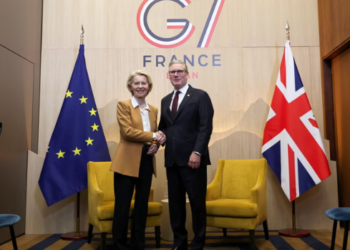 EU and UK Set July Date for Critical Post-Brexit Summit
 Lib Dems Demand Bold EU Reset to Salvage British Economy
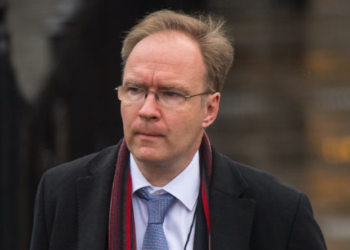 Labour’s Flawed Brexit Strategy Exposed by Top Diplomat
 The Fear Gap: Why Europe Feels Less Safe Than It Is
 Monaco Bombing: Oligarch Attack Rocks Safe Principality
 Airlines Demand Freeze on EU Border System as Chaos Peak Looms
 Angela Merkel’s Portrait Unveiled: A Quiet Berlin Story
 Spyware Targets MEP Investigating Pegasus Abuses
 UK Nations Brace for Potential Breakup Amid Reform Surge
 Severn Trent CEO Reward Package Doubled Despite Public Anger
 BMA Faces Unprecedented Staff Cuts Amidst Severe Financial Turmoil
 Le Pen to Run for President Despite Embezzlement Conviction
 Meta Under Fire: The Battle Over Addictive Social Media Design
 England and Norway Fans Turn Miami Into World Cup Carnival
 A New Era Begins: Spain and Gibraltar Border Fence Falls
 Wildfires Force Mass Evacuations in France And Spain
 Farage Defends £5m Gift Amid Threats
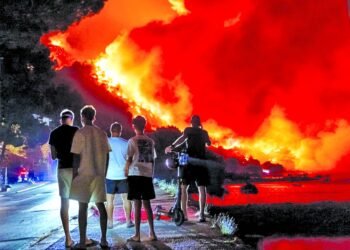 Wildfires rage across Europe as hundreds arrested in France
 Trump and Tehran Find Common Ground in Landmark Ceasefire
 National Energy Grant Proposed to Slash UK Household Bills