Published: 26 February 2026. The English Chronicle Desk. The English Chronicle Online.
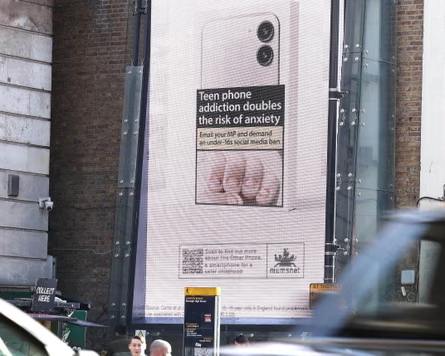
The call for a Mumsnet social media ban has ignited fresh national debate. The parenting platform has unveiled a striking advertising drive demanding under-16s be barred from social media entirely. Health-style warnings dominate the campaign, echoing the stark imagery once seen on cigarette packets. The initiative forms part of Mumsnet’s wider Rage Against the Screen movement. It argues that children face serious psychological risks from addictive digital platforms.
Large billboards and sponsored posts present blunt statements about potential harm. One message claims three hours of daily social media raises self-harm risk. Another asserts that teenage phone addiction doubles the likelihood of anxiety disorders. Further warnings link heavy usage with eating disorders and suicidal behaviour. The campaign urges parents and supporters to contact their MPs immediately. Its central demand is clear and uncompromising: legislate a complete under-16s ban.
Mumsnet founder Justine Roberts announced the campaign’s official launch this week. She described families witnessing harm unfold in real time. According to her, compulsive scrolling is stealing sleep and damaging confidence. She argued companies knowingly design platforms to maximise user engagement. In her view, parents cannot compete with systems engineered for addiction. The Mumsnet social media ban, she insisted, addresses structural failures rather than parental shortcomings.
Roberts rejected suggestions that improved guidance alone could solve the crisis. She labelled that argument a convenient fiction protecting powerful technology firms. Parents, she said, are watching anxiety levels rise relentlessly. Self-esteem among teenagers appears increasingly fragile and easily shaken. The campaign aims to pressure politicians into decisive regulatory action. Its tone reflects mounting frustration within Britain’s parenting community.

Research conducted among Mumsnet users in spring 2025 highlights widespread concern. Ninety-two percent of surveyed parents worried about mental health impacts. More than sixty percent believed their child showed signs of addiction. Many respondents described daily battles over screen time limits. Others spoke of mood swings and withdrawal when devices were removed. These findings provided momentum for the Mumsnet social media ban campaign.
Voices beyond the platform have echoed similar anxieties. Sedona Jamieson, a university student, publicly supported the initiative. She recalled becoming unwell at fifteen with anxiety and depression. Seeking help online, she instead encountered harmful so-called recovery spaces. She described exposure to pro-anorexia, self-harm and suicide content. Rather than comfort, she found material that deepened her distress. Her testimony underscores concerns about vulnerable teenagers navigating complex digital ecosystems.
Jamieson emphasised that adolescent brains remain developmentally sensitive. Young users may struggle to critically assess harmful material. She argued platforms must prioritise safeguarding and responsible moderation. Her experience illustrates the darker corners critics fear children access easily. It also highlights the emotional intensity shaping public opinion.
Political leaders are beginning to respond to mounting pressure. Prime Minister Keir Starmer recently promised swift measures addressing youth online safety. He said reforms would arrive in months rather than years. However, he stopped short of endorsing a blanket prohibition. Government sources indicate consultation remains ongoing and complex. Officials are examining age limits, design standards and enforcement mechanisms.
Children’s Commissioner for England offered cautious commentary on the proposal. Dame Rachel de Souza declined to endorse the campaign directly. She warned that bans alone cannot guarantee children’s safety. Enforcement, she noted, presents significant practical challenges. There is also risk young people migrate to less regulated online spaces. Her remarks reflect broader concerns about unintended consequences.
A government spokesperson acknowledged deep parental unease nationwide. Ministers, the statement said, are determined to get policy right. A consultation is reviewing age thresholds and safer platform design. The possibility of restrictions similar to the Mumsnet social media ban remains under consideration. Officials plan to outline proposals during the summer. They emphasise listening to parents, teachers and young people alike.
Mental health professionals have also entered the conversation. The Royal College of Psychiatrists described child wellbeing as a public health priority. In a formal statement, the college referenced growing evidence. Early and unrestricted access may carry lasting psychological consequences. Associations with suicidal thoughts and emotional dysregulation are increasingly documented. Experts stress the need for better funded adolescent mental health services.
The college argued online environments can expose children prematurely. Developmentally unprepared users may struggle processing extreme content. Researchers continue exploring relationships between algorithms and vulnerability. Psychiatrists advocate compelling companies to share anonymised platform data. Greater transparency, they believe, would strengthen evidence-based policymaking. Such proposals complement, rather than replace, regulatory debate.
Critics of a total ban question its feasibility and fairness. Some digital rights groups warn of overreach and censorship. They argue education and digital literacy should remain central strategies. Others highlight that social media also offers support communities. For isolated teenagers, online spaces sometimes provide vital connection. Policymakers therefore face a delicate balancing act.
Nevertheless, the emotional power behind the Mumsnet social media ban remains striking. Parents describe dinner tables dominated by silent scrolling. Teachers report concentration difficulties linked to late-night usage. Youth workers observe self-worth shaped by algorithmic validation. The campaign’s stark imagery seeks to capture that cumulative anxiety. It deliberately mirrors public health messaging once directed at tobacco companies.
Supporters argue the analogy is justified and urgent. They see parallels between addictive design and historical nicotine marketing. Both, they contend, targeted young consumers for profit. Technology firms dispute that characterisation and highlight safety investments. They point to parental controls and age verification tools. Yet critics question whether voluntary measures truly suffice.
International comparisons further complicate the British debate. Some countries have introduced partial restrictions on youth access. Others rely heavily on parental consent frameworks. Evidence regarding effectiveness remains mixed and evolving. The United Kingdom now confronts a pivotal policy crossroads. Decisions taken this year could shape a generation’s digital upbringing.

For many families, urgency outweighs abstract policy theory. Stories of self-harm and anxiety resonate deeply and personally. Parents fear invisible harms accumulating behind bedroom doors. Campaigners insist the Mumsnet social media ban offers clarity and protection. Opponents counter that technology literacy and open dialogue matter equally. Both sides acknowledge children deserve safety and opportunity.
As summer approaches, attention will turn toward Westminster’s proposals. Will ministers adopt sweeping restrictions or incremental safeguards? Public consultations suggest no simple consensus has emerged. Yet the intensity of debate reflects shifting cultural attitudes. Few now dismiss concerns about youth mental health online. The conversation has moved decisively into mainstream political territory.
Whatever legislative path emerges, families seek reassurance and action. They want platforms held accountable for design choices. They also need accessible mental health services for struggling teenagers. The coming months will test political resolve and regulatory creativity. In that context, the Mumsnet social media ban has already reshaped discussion. It has forced Britain to confront difficult questions about childhood, technology and responsibility.
Related News:
 British Woman in Iran ‘Losing Hope’ Amid Ongoing Detention
 BBC Journalist Held and Interrogated in Vietnam
 Green Party Surges Past Labour in Latest UK Poll
 Celebrities and Charities Demand UK Government Act on Child Poverty
 Trump’s UK Ambassador Urges North Sea Drilling to Strengthen US Ties
 FBI Director Kash Patel Defends Girlfriend Amid Government Jet Claims
 French Taxi Driver Cleared in David Lammy Theft Case After Fare Dispute
 Boris Johnson accused of undermining BBC leadership
 ‘Reckless’ cuts to victims’ services will cost more than they save
 Millionaires group urge Reeves to introduce wealth tax to ‘lift kids out of poverty’
 Starmer Faces Growing Dissent as Labour MPs Weigh Leadership Challenge
 Reeves rejects £1bn plea for NHS redundancy payouts
 Politics latest: Starmer ‘will fight any leadership coup’ as Streeting denies attempt to oust Labour PM
 PM Condemns Leaks, Vows Loyalty to Ministers and Stability
 Major Rent Reform Ends No-Fault Evictions in England
 Peers Flood Assisted Dying Bill with 942 Amendments
 England’s Special Needs Support Faces Breaking Point
 MoD warned over Excel risks before Afghan data breach
 UK Asylum Overhaul Sparks Debate Over Human Rights and Deportations
 UK Candidate Moved to Safe House After Election Threats
 UK Warns China After MI5 Issues Espionage Alert
 Labour Faces Historic Decline in Wales
 Rama Rebukes Mahmood for Targeting Albanian Families
 PM Highlights UK Business at G20 in South Africa
 Kate Forbes: Motherhood Harder Than Politics
 Most Tories Expect to Support a Farage-Led Government
 Labour MP claims devolution bill is ‘blatant discrimination’ against Cornwall
 Millions Face Higher Taxes Under Reeves New Budget
 Peers Get Extra Time to Debate Assisted Dying Bill
 Planned Palestinian Flag Raising at Belfast City Hall Faces Delay Amid Legal Concerns
 Starmer Says Labour’s Economic Plan Needs Years to Deliver
 Culture secretary to review Telegraph takeover by Daily Mail owner
 Andy Burnham Apologises for Past LGBTQ+ Police Discrimination
 Plans to Limit Jury Trials Face Retreat After Mounting Opposition
 Jenrick Reform defection deepens Tory civil war
 Right Must Unite After Jenrick Defection, Urges Rees-Mogg
 UK Ministers Drop Foreign Student Targets for Global Education Push
 MPs warn AI financial risks threaten UK stability
 MPs warn AI financial risks threaten UK stability
 No Gas Boiler Ban as UK Warm Homes Plan Backs Heat Pumps
 Hugh Grant Joins Call for Under-16 Social Media Ban in UK
 Shinzo Abe’s killer receives life sentence in Japan
 Lords Vote Piles Pressure on Starmer Over Social Media Ban
 Planned Troubles Board Game Sparks Outrage in Northern Ireland
 Reform UK Health Plan ‘Would Cost £1.7bn’, Streeting Says
 Police response times face strict new national limits
 Labour policing overhaul sparks fears over growing central control
 Tories criticised after Braverman defection sparks mental health row
 Burnham Westminster return hopes fade amid Labour rift
 Starmer warns of toxic division politics in Reform challenge
 Starmer China visit raises human rights pressure on Beijing
 Labour Must Revive High Streets to Avoid Election Collapse
 Calls Grow for King Charles to Apologise for Crown’s Role in Slavery
 Starmer Signals UK Return to EU Defence Pact Talks
 Palantir contracts face UK halt calls over transparency
 Labour Thinktank Row Deepens Over Journalist Probe Claims
 Sarwar call shakes Labour as No 10 calms fears
 Labour Lord Doyle Apologises Over Paedophile Ties in Political Storm
 Palestine Action Verdict Sparks Debate on Activist Tactics
 Cabinet Secretary Shake-Up Triggers Due Diligence Warning
 Starmer Faces Inquiry Calls Over Thinktank Probe
 Royal Mail Delivery Crisis Deepens Amid Weather Chaos
 Labour Together probe scandal sparks fresh Cabinet Office investigation
 Farage to Name Jenrick as Reform Chancellor Pick
 Farage Unveils Reform UK Frontbench Team
 NHS Negligence Ruling Raises Payout Costs
 Civil Service Pay: Union Urges Ministers to End ‘Barking Mad’ Limits
 Antonia Romeo appointment sparks criticism
 Trump and Chagos Deal Rift Over Iran Strikes
 Andrew Mountbatten-Windsor Arrest After FBI Radar
 Farage Chagos Islands Row Sparks Fury
 Trump Tariffs Threat Spark UK and EU Alarm
 Gasfield Deal Sparks Debate Over Fracking in Lincolnshire
 Reform UK targets workers’ rights repeal
 Ministers Urged to Ban Crypto Political Donations
 Mandelson Denounces Arrest Over ‘Baseless’ Fleeing Claims
 Russian Trade Routed Through British Islands Exposed
 Mandelson Arrest: Met Apologises to Hoyle
 Palestine Action ban appeal moves forward
 Reeves Must Back Defence Plan or Face Dismissal, Says Unite Chief