Published: 27 February 2026. The English Chronicle Desk. The English Chronicle Online.
The latest round of US-Iran nuclear talks has ended without agreement, deepening fears of conflict. After days of tense diplomacy in Geneva, negotiators departed with no breakthrough on Iran’s nuclear programme. The outcome leaves Washington weighing military options amid growing regional instability. Observers say the failed US-Iran nuclear talks have heightened anxieties across the Middle East and beyond.
Iran’s Foreign Minister, Abbas Araghchi, insisted that meaningful progress had been achieved. He described the discussions as intense and among the longest rounds ever held. Omani mediators echoed his cautious optimism and suggested technical meetings could resume soon. Yet diplomats close to the process admitted that fundamental disagreements remain unresolved.
At the centre of the impasse lies Iran’s insistence on its right to enrich uranium. Tehran regards domestic enrichment as a sovereign entitlement and national symbol. Washington, however, seeks permanent guarantees that enrichment will never lead to weaponisation. The gulf between these positions proved impossible to bridge during the latest US-Iran nuclear talks.

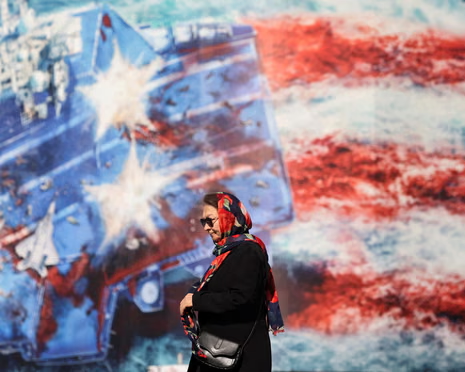
American officials have not publicly declared the negotiations a failure. Still, the tone in Washington has shifted markedly in recent days. President Donald Trump has overseen a substantial military buildup across the region. Two aircraft carrier strike groups now operate within striking distance of Iran. Additional submarines and refuelling aircraft have also been deployed.
The White House maintains that military preparations are purely precautionary. However, analysts argue the scale of the deployment signals serious contingency planning. Any strike would represent the largest US intervention in the region for decades. That prospect has injected urgency into already fraught US-Iran nuclear talks.
Iranian officials strongly rejected reports suggesting they would abandon uranium enrichment entirely. They also dismissed claims that highly enriched uranium stockpiles would be transferred abroad. One senior official described such proposals as wholly unacceptable and politically impossible. Tehran insists that any compromise must preserve national dignity and security.
The talks in Geneva unfolded indirectly, with Omani diplomats shuttling between delegations. The American team was led by special envoy Steve Witkoff, a close ally of President Trump. Sources indicated that Washington found Iran’s proposals insufficient and vague. The second session reportedly ended sooner than expected, fuelling speculation of deadlock.
Oman sought to portray the atmosphere as constructive despite evident strains. Mediators spoke of creative ideas and unprecedented openness on both sides. They expressed hope that technical experts might narrow differences next week. Nonetheless, no tangible framework emerged from this phase of US-Iran nuclear talks.
Another contentious issue concerns Iran’s stockpile of uranium enriched to 60 percent purity. According to the International Atomic Energy Agency, approximately 400 kilograms remain unaccounted for. That quantity, experts note, could theoretically yield several nuclear weapons. Iran denies any military intent and argues its programme remains peaceful.
The fate of lower-enriched uranium also complicates negotiations. Estimates suggest Iran possesses thousands of kilograms enriched to 20 percent or below. Tehran proposes down-blending this material under international supervision inside the country. Washington has floated the possibility of exporting the stockpile to a third country.
The debate recalls the framework established under the 2015 agreement brokered during Barack Obama’s presidency. That accord, formally known as the Joint Comprehensive Plan of Action, permitted limited enrichment under strict monitoring. President Trump withdrew the United States from the deal during his first term. Since then, mistrust has deepened on both sides.
Iran also refuses to allow inspectors to assess reported damage at key nuclear sites. Last year, President Trump claimed that facilities at Fordow, Natanz and Isfahan were effectively destroyed. Tehran disputes the extent of that damage and has limited access for international monitors. This lack of transparency further complicates the stalled US-Iran nuclear talks.
Meanwhile, US Secretary of State Marco Rubio has broadened American demands. He has publicly argued that Iran’s ballistic missile programme cannot remain off the table. Iranian officials reject this linkage, insisting missiles are defensive and unrelated to nuclear issues. The disagreement underscores widening gaps between negotiating agendas.
Domestically, President Trump faces mounting political scrutiny. Several Democratic lawmakers have demanded congressional oversight of any potential military action. They argue that a new conflict would require explicit legislative approval. Recent polling suggests a majority of Americans distrust further overseas interventions.
Within Iran, hardline factions caution against conceding too much under pressure. They frame the military buildup as coercion rather than diplomacy. Government spokespeople emphasise that negotiations must respect Iran’s sovereignty. Public opinion there appears wary of renewed confrontation but equally resistant to perceived humiliation.
Regional actors watch developments with acute concern. Gulf states fear retaliation if hostilities erupt. Israel continues to warn that Iran must never obtain nuclear weapons capability. European governments urge restraint while quietly preparing for possible escalation.
The director general of the IAEA, Rafael Grossi, has assumed a pivotal role. His technical assessments could determine whether future guarantees satisfy Washington. Grossi has repeatedly stressed the need for full access and credible verification. Without that assurance, American officials remain sceptical of Iranian pledges.
Despite hardened rhetoric, diplomatic channels have not entirely closed. Both sides indicated willingness to continue discussions at a technical level. Oman has offered to facilitate further indirect engagement in Vienna. The coming days may reveal whether diplomacy can still avert confrontation.

Yet time appears limited. Maintaining such a large military presence is costly and politically sensitive. Commanders prefer clarity over prolonged uncertainty in volatile theatres. The unresolved US-Iran nuclear talks therefore carry consequences extending beyond conference rooms.
Some analysts believe targeted strikes could be used to pressure Tehran. Others warn that even limited action risks spiralling retaliation. Iran possesses capabilities to disrupt shipping and target regional bases. Such escalation would have global economic and security repercussions.
Financial markets have already shown signs of unease. Oil prices fluctuated sharply following news of the stalled negotiations. Investors fear supply disruptions if conflict spreads across the Gulf. The diplomatic impasse thus resonates far beyond the immediate parties.
For now, the immediate future hinges on political calculations in Washington and Tehran. Each leadership must weigh domestic expectations against strategic risks. A return to comprehensive negotiations remains possible but uncertain. What is clear is that the collapse of these US-Iran nuclear talks has intensified an already precarious moment.
Diplomacy has often survived darker chapters between these adversaries. Still, mutual distrust runs deep after years of sanctions and recriminations. Rebuilding confidence would require concessions neither side seems ready to grant. The coming weeks may determine whether cooler heads prevail.
As uncertainty grows, ordinary citizens across the region brace for consequences. Memories of past conflicts linger vividly in public consciousness. Many hope renewed dialogue can replace the drumbeat of military preparations. The world now watches closely as the next chapter unfolds.
Related News:
 Top Christmas Books Reads: Classics to Cozy Romcoms
 Just Stop Oil Protesters Convicted Amid Climate Defence Row
 BBC to Apologise Over Edited Trump Speech Amid Backlash
 Britain deploys RAF specialists to assist Belgium with drone threats
 Palace May Restore Hyphen to Andrew Mountbatten-Windsor’s Name
 US Senate Passes Funding Bill to End Historic Shutdown
 US Justice Department Files Lawsuit Against California Over Partisan Voting Maps
 Greene Pushes Epstein Files Amid Trump Fallout
 Trump Deploys DHS to Charlotte in Major Arrest Operation
 December Run-Off in Chile as Election Produces No Winner
 Zelenskyy Signs Fighter Jet Deal Amid Russian Drone Attacks
 Orban Says Ukraine Has ‘No Chance’ as EU Support Continues
 Canada Passes Carney’s First Budget in Tight Parliamentary Vote
 Israeli Strike Kills 13 Near Palestinian Camp in Lebanon
 Shadow Fleet at Sea: Europe’s Battle Against Illicit Oil Shipping
 Tiny Curacao Makes History as Smallest Nation to Reach World Cup
 Haiti Qualifies for World Cup Despite Coach Never Visiting Country
 Deadly Russian Strikes Hit Western Ukraine, 20 Killed in Ternopil
 Pentagon Officials in Ukraine to Discuss War End
 Ukraine Peace Plan: Zelensky Ready for Dialogue
 Vietnam Battles Deadly Floods as Rains Continue
 Venezuela Threatens Nobel Winner Machado with Fugitive Status
 At Least Three Dead in Bangladesh Earthquake
 Royal Navy Shadows Russian Warships Entering the Channel
 Israel Confirms Hamas Returned Dror Or’s Body
 US Suspends Afghan Immigration After White House Shooting
 Two National Guard Soldiers Critically Injured Near White House
 Georgians Defy Government Crackdown After Year of Protests
 Southern Lebanon reels as Israeli strikes shatter communities
 Mbappe Scores 4 as Real Madrid Edge Olympiakos
 Sri Lanka Floods Leave 56 Dead, Dozens Missing
 Tokyo court rules Japan’s same-sex marriage ban constitutional
 ‘Extinct’ Antelope Returns to Sahara, Bringing Hope
 EU plans $105bn Ukraine aid using frozen Russian assets
 American Mother Extradited From UK to U.S. on Murder Charges
 Russia losses Ukraine war peace talks intensify amid rising deaths
 Facebook Slow to Remove Bondi Attack Praise, Anti-Hate Group Claims
 Australian Cruise Ship Freed After Reef Grounding in Papua New Guinea
 US Cities Erupt in Protests Against Trump’s Venezuela Military Action
 Albanese Opens Door to Bondi Royal Commission Amid Rising Pressure
 Trump Escalates Minnesota Immigration Surge Amid Rising Tensions
 Iran Protesters Defy Crackdown as Violent Clashes Intensify
 US Clears Nvidia AI Chip Sales to China in Policy Shift
 Trump Threatens Strong Action If Iran Executes Protesters
 Gulf states warn Trump Iran strikes risk wider Middle East war
 Machado Trump medal gesture reshapes Venezuela power struggle
 EU weighs response amid Greenland tariff crisis with Trump
 Syria President Declares Victory as Ceasefire Reached with SDF
 Sydney Shark Attack Surge Shocks Australia Beaches
 ICE street raids expose a chilling future for public freedoms
 Thousands Flee Cambodia Scam Centres Amid Global Pressure
 EU Says US Ties Have Suffered ‘Big Blow’ After Greenland Crisis
 Andrew Hastie Emerges as Leadership Rival to Ley
 Starmer China visit raises human rights pressure on Beijing
 US Launches Multi-Day Air Drills Amid Rising Iran Tensions
 Videos reveal earlier clash before Alex Pretti shooting
 China Executes 11 Linked to Myanmar Scam Networks
 UK New Car Discounts Near £6,000 as Prices Are Slashed
 Israel Moves to Bar MSF From Gaza Operations
 Tragic Ski Lift Accident Claims Australian Snowboarder
 Thousands Left Without Heating in Ukraine Amid Russia Strikes
 Trump Praises ‘Terrific’ Petro After White House Talks
 Portugal Election Delivers Socialist Win as Far Right Surges
 Sydney Protest Escalates and Elderly Woman Suffers Severe Injury
 Tarique Rahman’s Rise Toward Bangladesh’s Top Job
 Australian Families Leave Syrian Camp for Home
 SA Police Intensify Search in Gus Lamont Case
 Trump Attacks UK-California Energy Pact
 Kim Jong-un Unveils Housing for War Families
 Trump and Chagos Deal Rift Over Iran Strikes
 Andrew Arrest Sparks Republic Debate in Australia
 Global corruption crisis: Who Washington shields
 El Mencho Killed as Mexico Faces Violence
 Farage Chagos Islands Row Sparks Fury
 Gold Rush in Gugulethu Leaves South Africans Desperate for Work and Hope
 Greenpeace $345m Ruling Sparks Appeal Battle
 Hilary Knight speaks out on Trump’s recent hockey remarks
 Trump Speech Sparks Intense Debate Across Divided America
 Jacinda Ardern Moves To Australia Following Her US Fellowships
 Has Europe truly learned from the failures of 2022?