Published: 27 February 2026. The English Chronicle Desk. The English Chronicle Online.
The Gorton and Denton byelection closed with voters choosing between Greens, Labour, and Reform UK.
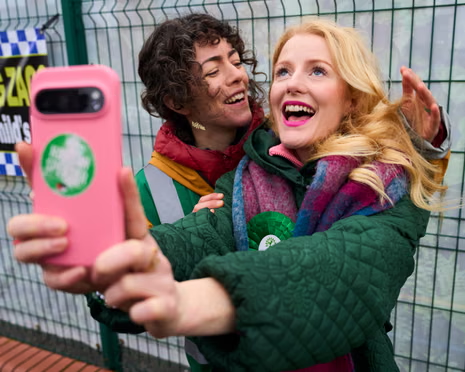
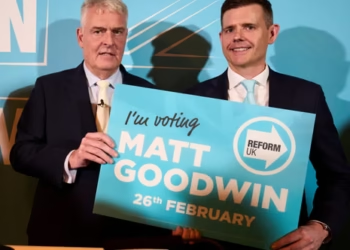
Voters in Gorton and Denton, south-east Manchester, turned out amid one of the most unpredictable byelections in recent British political history. Polls closed after a campaign defined by sharp attacks and high stakes, with Labour defending a majority of over thirteen thousand votes. The Greens, led locally by Hannah Spencer, and Reform UK, with Matt Goodwin as their candidate, both campaigned aggressively to appeal to disenchanted voters.
The Green party leader, Zack Polanski, expressed confidence ahead of voting, claiming that his party was “neck and neck” with Reform UK and could challenge Labour’s long-standing dominance. Polanski also suggested that if Reform were victorious, Labour would be forced to confront difficult questions about its appeal and strategy. His comments signalled the Greens’ belief that traditional loyalties were shifting in this constituency, making the contest more volatile than anyone had anticipated.

Labour, meanwhile, employed a strategy warning voters that supporting the Greens could inadvertently benefit Reform UK. This messaging echoed Labour’s previous miscalculations in the Caerphilly byelection, where repeated claims about stopping Reform led to a shocking defeat to Plaid Cymru. The party sought to consolidate its base, reminding left-leaning constituents of Labour’s historical reliability in securing progressive representation, despite growing challenges from newer political voices.
Labour’s candidate, Angeliki Stogia, a local councillor, emerged after former Manchester mayor Andy Burnham was barred from standing. This decision sparked debate about whether Labour’s internal processes were alienating core supporters. Reform UK’s Matt Goodwin, who gained attention as a GB News presenter and academic, faced criticism for past remarks regarding women, Muslims, and British citizenship, yet he continued to campaign on promises of political renewal and change. The Greens’ Spencer, a plumber and Trafford councillor, focused on progressive issues including environmental policies and local infrastructure improvements.
Professor Will Jennings, from the University of Southampton, described the Gorton election as emblematic of Britain’s increasingly fragmented political landscape, where previously secure seats can no longer be taken for granted. He highlighted that a Labour loss would deal a severe blow to the party’s strategy of appealing to moderate, right-leaning voters while retaining progressive support. According to Jennings, such a scenario could be considered “terminal” for Labour’s broader national ambitions and may have lasting implications for Keir Starmer’s leadership.
The stakes in Gorton and Denton were particularly high because Labour’s strategy nationally has aimed to recapture votes from both sides of the political spectrum. Analysts noted that a poor result here would signal a growing disconnection between the party leadership and its traditional supporters, who may feel increasingly marginalized by a focus on centrist or conservative-leaning policies. If Labour were to finish behind both Reform and the Greens, it would reflect a dramatic realignment in voter sentiment and a clear warning about the party’s national direction.
On the campaign trail, Starmer personally visited the constituency, launching an attack on the Greens’ proposed drug policies. He described their plans to legalise certain substances as “disgusting” and suggested that implementing them would transform public spaces into unsafe environments. Critics argued that such rhetoric was aimed more at galvanising Labour’s core supporters than engaging constructively with local concerns. Polanski called Starmer’s visit “spoiler behaviour,” claiming it demonstrated overconfidence and a misreading of the local electorate’s mood.
The Green party also publicly condemned Labour’s social media campaign, which linked the party to a list of illegal drugs alongside the message “Green party says YES.” Polanski described this as a desperate tactic from a government increasingly anxious about its electoral prospects. The strategy was widely perceived as an attempt to intimidate voters and undermine support for the Greens, though its effectiveness remained uncertain in the final stages of the campaign.
The Gorton election was triggered by Andrew Gwynne’s resignation on health grounds earlier this year. Gwynne, who had represented the constituency for many years, faced parliamentary investigation over offensive WhatsApp messages, adding a layer of controversy and uncertainty to the contest. His departure opened the door for an unprecedented competitive race, with all three parties seeking to establish dominance in a historically left-leaning seat. Nearly eighty percent of voters had supported left-of-centre parties in 2024, illustrating the stakes for Labour and the potential for political fragmentation.
Local observers emphasised that the outcome would have broader significance for Labour’s national strategy, particularly in light of upcoming local and devolved elections across England, Scotland, and Wales. A strong performance could temporarily stabilise the party, while a poor showing would intensify scrutiny of Starmer’s leadership and policy direction. The political climate in Gorton and Denton has come to symbolise the challenges facing traditional parties in adapting to voter realignment and emerging political alternatives.
Reform UK’s campaign centred on presenting itself as a credible alternative to both Labour and the Greens, despite its controversial leadership and public criticism of candidate statements. Supporters argued that the party offered pragmatic solutions to local issues and sought to capture voters dissatisfied with mainstream politics. Observers noted that Reform’s presence significantly complicated Labour’s path to victory, forcing both the Greens and Labour to reconsider messaging, strategy, and appeals to undecided constituents.
Election analysts predicted that results would be announced around 4am on Friday, following a tense night of counting and speculation. Many expected that turnout would reflect the constituency’s engagement with national debates, with voter decisions influenced by local priorities, leadership perceptions, and responses to campaign messaging. In this context, the Gorton election serves as a litmus test for evolving political dynamics in urban centres across the United Kingdom, providing insights into the balance of power among major and emerging parties.
Professor Jennings reiterated that the byelection’s outcome could reshape Labour’s approach to governance, signalling either validation or failure of current strategies. A defeat might embolden opposition parties, particularly the Greens, to assert influence on progressive issues, while a Labour victory could briefly reassure voters about the party’s resilience and adaptability. He emphasised that the results would carry implications beyond the constituency, influencing national political discourse and setting the tone for upcoming electoral contests.

As voters reflected on their choices, the Gorton election demonstrated the volatility and unpredictability of modern British politics. The contest highlighted tensions between maintaining traditional party loyalty and accommodating emergent voices, with implications for policy, leadership credibility, and public trust. Regardless of the outcome, this byelection underscored the necessity for parties to engage authentically with local electorates and the risks of underestimating challenger movements in historically secure constituencies.
With the final results pending, the Gorton election has already provided valuable insight into voter sentiment, campaign strategies, and political messaging in a changing landscape. The interplay between Labour, the Greens, and Reform UK has captured national attention, reflecting the high stakes and emotional investment of constituents. The outcome will not only determine representation in Gorton and Denton but also serve as a barometer for the future direction of British politics in urban constituencies.
The Gorton election exemplifies how modern electoral contests can defy expectations, challenge assumptions, and reshape party strategies for years to come. Observers noted that engagement levels, campaign tone, and candidate profiles would likely influence long-term perceptions of party credibility. As political analysts continue to evaluate the implications, it is clear that Gorton and Denton will be remembered as a defining moment in contemporary UK politics, providing lessons for leaders and parties nationwide.
Related News:
 British Woman in Iran ‘Losing Hope’ Amid Ongoing Detention
 BBC Journalist Held and Interrogated in Vietnam
 Green Party Surges Past Labour in Latest UK Poll
 Celebrities and Charities Demand UK Government Act on Child Poverty
 Trump’s UK Ambassador Urges North Sea Drilling to Strengthen US Ties
 FBI Director Kash Patel Defends Girlfriend Amid Government Jet Claims
 French Taxi Driver Cleared in David Lammy Theft Case After Fare Dispute
 ‘Reckless’ cuts to victims’ services will cost more than they save
 Millionaires group urge Reeves to introduce wealth tax to ‘lift kids out of poverty’
 Starmer Faces Growing Dissent as Labour MPs Weigh Leadership Challenge
 Reeves rejects £1bn plea for NHS redundancy payouts
 Politics latest: Starmer ‘will fight any leadership coup’ as Streeting denies attempt to oust Labour PM
 PM Condemns Leaks, Vows Loyalty to Ministers and Stability
 Major Rent Reform Ends No-Fault Evictions in England
 Peers Flood Assisted Dying Bill with 942 Amendments
 England’s Special Needs Support Faces Breaking Point
 MoD warned over Excel risks before Afghan data breach
 UK Asylum Overhaul Sparks Debate Over Human Rights and Deportations
 UK Candidate Moved to Safe House After Election Threats
 UK Warns China After MI5 Issues Espionage Alert
 Labour Faces Historic Decline in Wales
 Rama Rebukes Mahmood for Targeting Albanian Families
 PM Highlights UK Business at G20 in South Africa
 Kate Forbes: Motherhood Harder Than Politics
 Most Tories Expect to Support a Farage-Led Government
 Labour MP claims devolution bill is ‘blatant discrimination’ against Cornwall
 Millions Face Higher Taxes Under Reeves New Budget
 Peers Get Extra Time to Debate Assisted Dying Bill
 Planned Palestinian Flag Raising at Belfast City Hall Faces Delay Amid Legal Concerns
 Starmer Says Labour’s Economic Plan Needs Years to Deliver
 Culture secretary to review Telegraph takeover by Daily Mail owner
 Andy Burnham Apologises for Past LGBTQ+ Police Discrimination
 Plans to Limit Jury Trials Face Retreat After Mounting Opposition
 Jenrick Reform defection deepens Tory civil war
 Right Must Unite After Jenrick Defection, Urges Rees-Mogg
 UK Ministers Drop Foreign Student Targets for Global Education Push
 MPs warn AI financial risks threaten UK stability
 MPs warn AI financial risks threaten UK stability
 No Gas Boiler Ban as UK Warm Homes Plan Backs Heat Pumps
 Hugh Grant Joins Call for Under-16 Social Media Ban in UK
 Shinzo Abe’s killer receives life sentence in Japan
 Lords Vote Piles Pressure on Starmer Over Social Media Ban
 Planned Troubles Board Game Sparks Outrage in Northern Ireland
 Reform UK Health Plan ‘Would Cost £1.7bn’, Streeting Says
 Police response times face strict new national limits
 Labour policing overhaul sparks fears over growing central control
 Tories criticised after Braverman defection sparks mental health row
 Burnham Westminster return hopes fade amid Labour rift
 Starmer warns of toxic division politics in Reform challenge
 Starmer China visit raises human rights pressure on Beijing
 Labour Must Revive High Streets to Avoid Election Collapse
 Calls Grow for King Charles to Apologise for Crown’s Role in Slavery
 Starmer Signals UK Return to EU Defence Pact Talks
 Palantir contracts face UK halt calls over transparency
 Labour Thinktank Row Deepens Over Journalist Probe Claims
 Sarwar call shakes Labour as No 10 calms fears
 Labour Lord Doyle Apologises Over Paedophile Ties in Political Storm
 Cabinet Secretary Shake-Up Triggers Due Diligence Warning
 Starmer Faces Inquiry Calls Over Thinktank Probe
 Royal Mail Delivery Crisis Deepens Amid Weather Chaos
 Labour Together probe scandal sparks fresh Cabinet Office investigation
 Farage to Name Jenrick as Reform Chancellor Pick
 Farage Unveils Reform UK Frontbench Team
 NHS Negligence Ruling Raises Payout Costs
 Civil Service Pay: Union Urges Ministers to End ‘Barking Mad’ Limits
 Antonia Romeo appointment sparks criticism
 Trump and Chagos Deal Rift Over Iran Strikes
 Andrew Mountbatten-Windsor Arrest After FBI Radar
 Farage Chagos Islands Row Sparks Fury
 Trump Tariffs Threat Spark UK and EU Alarm
 Gasfield Deal Sparks Debate Over Fracking in Lincolnshire
 Reform UK targets workers’ rights repeal
 Ministers Urged to Ban Crypto Political Donations
 Mandelson Denounces Arrest Over ‘Baseless’ Fleeing Claims
 Russian Trade Routed Through British Islands Exposed
 Mandelson Arrest: Met Apologises to Hoyle
 Palestine Action ban appeal moves forward
 Reeves Must Back Defence Plan or Face Dismissal, Says Unite Chief
 NHS Maternity Units Cover Up Harmful Childbirth Errors
 Green Party Stuns Labour in Gorton and Denton Byelection