Published: 27 February 2026. The English Chronicle Desk. The English Chronicle Online.
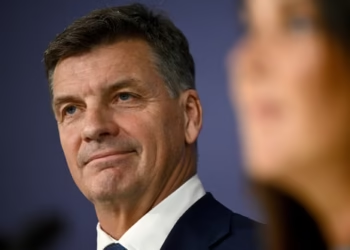
The Liberal party executive has reached a controversial agreement to permanently bury the review into their catastrophic 2025 election defeat. This surprising move effectively shields former leader Peter Dutton and current leader Angus Taylor from potentially damaging findings regarding their specific roles. Many party members now fear this decision will prevent necessary learning from the historic loss. The Liberal review was intended to provide a clear roadmap for the party to recover its standing with Australian voters. By keeping the document hidden, the executive has chosen to prioritize internal stability over transparent accountability. This decision marks a significant moment in the party’s long and storied political history.
The federal executive met on Friday to finalize the fate of the comprehensive report. Pru Goward and Nick Minchin conducted this critical Liberal review after the party suffered the worst result in over eighty years. The party released a brief statement acknowledging the election was a truly decisive defeat for their side. They stated they accept the verdict while emphasizing a need to strengthen the party for the future. However, the decision not to publish the findings has generated immediate and sharp criticism from various members. Many MPs believe that transparency is essential for the long-term health of the organization moving forward.

The autopsy release was initially scheduled for last year but faced significant delays throughout the process. Reports suggest Peter Dutton raised concerns about findings regarding him and his senior staff members. These findings reportedly touched upon his complicated relationship with the party’s central campaign head office. Observers have noted that the Liberal review might have highlighted systemic failures that leadership preferred to keep quiet. Some insiders claim that Angus Taylor wanted the document suppressed after he secured the party leadership position. Taylor and his deputy Jane Hume were responsible for the Coalition’s thin economic agenda during the campaign.
These two figures are currently serving as members of the powerful Liberal federal executive today. Their involvement in the decision to shelve the report has raised eyebrows among many political analysts. Sources familiar with the review confirmed that the findings reflected poorly on both Taylor and Hume. Taylor was deeply involved in the decision to oppose Labor’s tax cuts during the campaign period. Furthermore, Jane Hume was the primary voice behind a controversial work-from-home policy that faced widespread public backlash. Dutton later dumped that policy during the campaign, but the political damage had already been firmly done.
Hume’s earlier comments regarding foreign intelligence were also blamed for swinging votes against the Liberals significantly. This occurred primarily in seats with large numbers of voters from Chinese Australian communities across the country. The decision to keep the Liberal review private has sparked intense frustration among several party backbenchers. One anonymous MP stated that the new leadership team never wanted this report to be seen publicly. There is a palpable sense that the party is missing a chance to address its fundamental issues. Without this analysis, it becomes much harder for future candidates to understand the campaign’s various failures.
Some sources present at the Friday meeting argued that the decision was about a fresh start. They insisted that the move was not designed to protect Dutton, Taylor, or Hume from embarrassment. Instead, members of the executive allegedly wanted to avoid airing the party’s dirty laundry right now. The timing is particularly sensitive with a South Australian election looming on the political horizon shortly. There is also a federal byelection approaching in the seat previously held by Sussan Ley, named Farrer. Some members feared that releasing the report would create a distraction during these very important upcoming campaigns.

Another factor mentioned by one source involved the desire to avoid potential and costly legal fights. They drew direct comparisons to a recent high-profile court case involving internal party disputes in Victoria. Avoiding a legal battle with a former leader seems to be a priority for the current executive. Pru Goward expressed her deep regret that the Liberal review would not be released to the public. In a column, she stated that the document could have easily withstood any potential legal challenge. She emphasized that the party owns the report and has full control over its ultimate final fate.
Goward argued that without reading the report, future leaders cannot understand why the campaign faced such chaos. She highlighted that the party showed flat-footedness and offered only very limited policy options to voters. The recommendations within the Liberal review were designed to assist in avoiding any repetition of these mistakes. She maintained that the work was undertaken with the best of intentions for the party’s future. It is clear that the authors believe a strong center-right party is necessary for a healthy democracy. Despite these arguments, the executive remains committed to its path of keeping the findings completely under wraps.
This move leaves the party in a difficult position as they try to look toward the future. Many questions remain about how they will reconnect with voters without conducting an honest internal assessment. The decision to bury the findings reflects a strategy of moving on rather than looking back. Whether this approach helps the party recover or merely delays a reckoning remains to be seen. Supporters are left wondering if the organization has truly learned the lessons of the 2025 defeat. For now, the internal review remains a mystery, locked away from the eyes of the wider public.
Related News:
 Liberal Turmoil Threatens Victorian Election Hopes
 Hanson and Joyce Use Rinehart Jet to Tour Flooded Queensland
 Labor’s Hate Speech and Gun Laws Face Federal Roadblocks
 Nationals Crisis Meeting Threatens Coalition Stability
 Sussan Ley leadership milestone shakes Liberal future
 Andrew Hastie Emerges as Leadership Rival to Ley
 Morrison Faces Backlash Over Call to Regulate Islam in Australia
 David Littleproud and Sussan Ley to Discuss Coalition Future
 Jess Wilson Event Exit After Joyce Controversy
 Australia’s Opposition Coalition Reunites After Rift
 Liberal Party Faces Leadership Spill as Taylor Challenges Ley
 Angus Taylor Faces Immense Test with New Frontbench
 Green Party Surges Past Labour in Latest UK Poll
 Army Officers Orders to Cut Ties with Men-Only Clubs
 Trump’s UK Ambassador Urges North Sea Drilling to Strengthen US Ties
 French Taxi Driver Cleared in David Lammy Theft Case After Fare Dispute
 Labour immigration crackdown could cost UK £4.4bn
BBC to Apologise Over Edited Trump Speech Amid Backlash
Labour immigration crackdown could cost UK £4.4bn
BBC to Apologise Over Edited Trump Speech Amid Backlash
 Britain deploys RAF specialists to assist Belgium with drone threats
 Millionaires group urge Reeves to introduce wealth tax to ‘lift kids out of poverty’
 Starmer Faces Growing Dissent as Labour MPs Weigh Leadership Challenge
 Reeves rejects £1bn plea for NHS redundancy payouts
 PM Condemns Leaks, Vows Loyalty to Ministers and Stability
 Major Rent Reform Ends No-Fault Evictions in England
 Peers Flood Assisted Dying Bill with 942 Amendments
 Senator John Fetterman Hospitalized After Fall from Heart Flare-Up, Keeps Sense of Humor
 Greene Pushes Epstein Files Amid Trump Fallout
 Trump Deploys DHS to Charlotte in Major Arrest Operation
 December Run-Off in Chile as Election Produces No Winner
 Canada Passes Carney’s First Budget in Tight Parliamentary Vote
 Shadow Fleet at Sea: Europe’s Battle Against Illicit Oil Shipping
 Pentagon Officials in Ukraine to Discuss War End
 Venezuela Threatens Nobel Winner Machado with Fugitive Status
 Most Tories Expect to Support a Farage-Led Government
 Georgians Defy Government Crackdown After Year of Protests
 US National Guard Member Killed in DC Shooting
 ICC to Rule on Duterte’s Provisional Release
 Starmer Says Labour’s Economic Plan Needs Years to Deliver
 Khaleda Zia Death in Bangladesh: First Female PM Dies at 80
 Russia losses Ukraine war peace talks intensify amid rising deaths
 Albanese Opens Door to Bondi Royal Commission Amid Rising Pressure
 Trump Escalates Minnesota Immigration Surge Amid Rising Tensions
 Iran Protesters Defy Crackdown as Violent Clashes Intensify
 Homeland security agents deployed amid Minneapolis protests
 US Senate rejects resolution limiting Trump military powers
 Right Must Unite After Jenrick Defection, Urges Rees-Mogg
 EU weighs response amid Greenland tariff crisis with Trump
 Sydney Shark Attack Surge Shocks Australia Beaches
 UK Ministers Drop Foreign Student Targets for Global Education Push
 NSW Shark Attacks Surge, Authorities Urge Swimmers to Stay Out
 No Gas Boiler Ban as UK Warm Homes Plan Backs Heat Pumps
 Shinzo Abe’s killer receives life sentence in Japan
 Deadly NSW Shooting Leaves Three Dead, Gunman Escapes
 EU Says US Ties Have Suffered ‘Big Blow’ After Greenland Crisis
 Satire Can Skewer Trump, But It Won’t Save Democracy
 Police response times face strict new national limits
 Labour policing overhaul sparks fears over growing central control
 Starmer warns of toxic division politics in Reform challenge
 Keir Starmer Signals UK China Reset With Xi Visit Possibility
 Israel Moves to Bar MSF From Gaza Operations
 Palantir contracts face UK halt calls over transparency
 Nurses’ families fear breakup under UK immigration crackdown
 Cabinet Secretary Shake-Up Triggers Due Diligence Warning
 Australian Families Leave Syrian Camp for Home
 Trump Attacks UK-California Energy Pact
 Farage to Name Jenrick as Reform Chancellor Pick
 Civil Service Pay: Union Urges Ministers to End ‘Barking Mad’ Limits
 Antonia Romeo appointment sparks criticism
 Andrew Arrest Sparks Republic Debate in Australia
 NSW to Introduce Minimum Age for Ebike Riders
 Australian PM Says Former Prince Andrew Has Suffered ‘Extraordinary Fall’ but That Won’t Prompt Republic Referendum
 Farage Chagos Islands Row Sparks Fury
 Reform UK targets workers’ rights repeal
 Russian Trade Routed Through British Islands Exposed
 Boss Lincoln: The Partisan Politics of Abraham Lincoln
 Mandelson Arrest: Met Apologises to Hoyle
 ‘It’s a horrible feeling’: Loma Bropho’s Struggle to Secure Housing
 Germany Faces Backlash Over Scrapped Renewable Heating Mandate
 Trump Speech Sparks Intense Debate Across Divided America
 Has Europe truly learned from the failures of 2022?