Published: 02 March 2026. The English Chronicle Desk. The English Chronicle Online.
The Middle East airspace crisis has left hundreds of thousands of travellers stranded worldwide. Ongoing military strikes involving United States, Israel and Iran have triggered widespread closures. Airports across the region halted operations as tensions escalated rapidly over the weekend.
Flights were grounded or diverted after multiple governments shut their skies without warning. The disruption spread quickly beyond the immediate conflict zones. Travellers heading between Europe, Asia, and Africa faced sudden cancellations and rerouted journeys. Aviation analysts described the situation as one of the region’s most severe interruptions in years.
Authorities in Qatar, Syria, Iraq, Kuwait and Bahrain joined the sweeping airspace restrictions. Flights were also halted across parts of the United Arab Emirates following a temporary and partial closure. The decision immediately shut down major hubs in Dubai and Abu Dhabi.
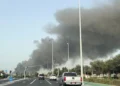
Dubai International Airport, the world’s busiest airport for international traffic, suspended operations. Zayed International Airport also reported disruptions after an incident linked to retaliatory strikes. In Dubai, damage was reported near the iconic Burj Al Arab hotel. Local officials confirmed injuries, although details remain limited as investigations continue.

Airlines across the globe scrambled to respond. Emirates, Qatar Airways and Etihad Airways suspended services through their regional hubs. These carriers typically move around 90,000 passengers daily through the affected airports. The scale of the Middle East airspace crisis quickly became apparent.
British carriers also faced serious operational challenges. British Airways and Virgin Atlantic cancelled numerous flights to Gulf destinations. At Heathrow Airport, nearly half of scheduled departures to the Middle East were grounded. Many passengers were advised not to travel to airports until further notice.
Flight tracking service Flightradar24 confirmed that thousands of aircraft were rerouted. A new notice to airmen extended the closure of Iranian airspace until Tuesday morning. Aviation corridors narrowed dramatically as airlines avoided conflict zones. The resulting congestion complicated planning for crews and aircraft positioning.
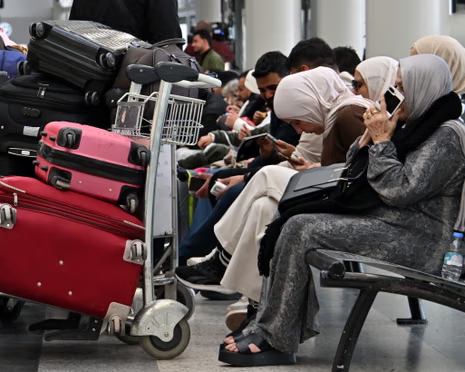
The human impact of the Middle East airspace crisis has been immediate and profound. Families found themselves separated across continents. Business travellers were stranded in transit hubs far from home. Holidaymakers watched carefully planned trips unravel within hours. Social media platforms filled with images of crowded terminals and delayed departure boards.
The UK government is now preparing one of the largest evacuation efforts in recent history. More than 76,000 British nationals have registered their presence across affected areas. Officials believe that over two thirds are currently in the United Arab Emirates. Many are tourists or short term visitors rather than permanent residents.
The Foreign Office has updated its travel advice repeatedly. It now advises against all travel to Iran, Israel and the Palestinian territories. It also recommends avoiding all but essential travel to several Gulf states. British nationals in Saudi Arabia are urged to remain at home. Those in Jordan, Oman, Lebanon and neighbouring countries have been told to exercise caution.
Planning a large scale evacuation presents enormous logistical challenges. Aircraft availability remains uncertain amid continuing airspace restrictions. Safe routes must be identified as regional tensions evolve. Government officials are exploring alternative corridors and staging points if conditions allow. However, they stress that any operation will depend on security assessments.
Industry experts warn that disruption could last several days or longer. Henry Harteveldt, president of Atmosphere Research Group, said travellers should prepare for delays. He described the situation as complex and fast moving. John Strickland, a UK based aviation analyst, emphasised the sheer scale of repositioning crews and aircraft.
Airlines face a difficult balancing act between safety and service continuity. Crews are subject to strict duty time regulations. Aircraft require precise scheduling and maintenance checks. When multiple hubs close simultaneously, global networks feel the strain immediately. Even routes far from the conflict zone can be affected by cascading delays.
Some carriers have already begun limited contingency measures. Austrian Airlines dispatched an evacuation flight to Muscat to retrieve staff. Other airlines are evaluating similar steps where safe passage is possible. Meanwhile, many passengers have been offered fee waivers to rebook without penalties. Yet uncertainty remains high.
The Middle East airspace crisis also intersects with broader regional tensions. Ongoing instability between Pakistan and Afghanistan further restricts available corridors. Airlines must chart longer paths over alternative territories. These detours increase fuel costs and extend journey times significantly.
For travellers in the UK, the situation remains fluid. Twenty four out of 56 scheduled departures from Heathrow to the region were cancelled on Sunday alone. Regional airports have also reported knock on effects. Passengers are urged to check airline websites regularly for updates.

Individual stories highlight the emotional toll behind the statistics. Jonathan Escott arrived at Newcastle Airport expecting to fly directly to Dubai. Instead, he learned that his Emirates flight had been cancelled abruptly. He returned to stay with family, uncertain when he could depart. Like many others, he expressed frustration at the lack of clarity.
Airlines insist that safety considerations guide every decision. They point to rapidly changing military developments across the region. Insurance requirements and risk assessments play crucial roles in route planning. While communication gaps frustrate passengers, carriers argue that unpredictability complicates precise updates.
Economic consequences may follow if closures persist. Dubai and Doha serve as vital transit points linking continents. Extended disruption could affect tourism, trade and cargo flows. Businesses reliant on just in time deliveries are already monitoring developments closely.
Despite the uncertainty, authorities urge calm and patience. Governments emphasise coordination with international partners. Aviation regulators are working to ensure consistent safety standards. For now, the priority remains protecting passengers and crews.
The Middle East airspace crisis has underscored how interconnected global travel truly is. A regional conflict can ripple across the entire aviation system within hours. As diplomatic efforts continue behind closed doors, travellers worldwide await clearer skies.
Related News:
 Just Stop Oil Protesters Convicted Amid Climate Defence Row
 BBC to Apologise Over Edited Trump Speech Amid Backlash
 Britain deploys RAF specialists to assist Belgium with drone threats
 Palace May Restore Hyphen to Andrew Mountbatten-Windsor’s Name
 US Senate Passes Funding Bill to End Historic Shutdown
 US Justice Department Files Lawsuit Against California Over Partisan Voting Maps
 Greene Pushes Epstein Files Amid Trump Fallout
 Trump Deploys DHS to Charlotte in Major Arrest Operation
 December Run-Off in Chile as Election Produces No Winner
 Zelenskyy Signs Fighter Jet Deal Amid Russian Drone Attacks
 Orban Says Ukraine Has ‘No Chance’ as EU Support Continues
 Canada Passes Carney’s First Budget in Tight Parliamentary Vote
 Israeli Strike Kills 13 Near Palestinian Camp in Lebanon
 Shadow Fleet at Sea: Europe’s Battle Against Illicit Oil Shipping
 Tiny Curacao Makes History as Smallest Nation to Reach World Cup
 Haiti Qualifies for World Cup Despite Coach Never Visiting Country
 Deadly Russian Strikes Hit Western Ukraine, 20 Killed in Ternopil
 Pentagon Officials in Ukraine to Discuss War End
 Ukraine Peace Plan: Zelensky Ready for Dialogue
 Vietnam Battles Deadly Floods as Rains Continue
 Venezuela Threatens Nobel Winner Machado with Fugitive Status
 Royal Navy Shadows Russian Warships Entering the Channel
 US Suspends Afghan Immigration After White House Shooting
 Two National Guard Soldiers Critically Injured Near White House
 Georgians Defy Government Crackdown After Year of Protests
 Southern Lebanon reels as Israeli strikes shatter communities
 Sri Lanka Floods Leave 56 Dead, Dozens Missing
 Tokyo court rules Japan’s same-sex marriage ban constitutional
 ‘Extinct’ Antelope Returns to Sahara, Bringing Hope
 EU plans $105bn Ukraine aid using frozen Russian assets
 American Mother Extradited From UK to U.S. on Murder Charges
 Russia losses Ukraine war peace talks intensify amid rising deaths
 Facebook Slow to Remove Bondi Attack Praise, Anti-Hate Group Claims
 Australian Cruise Ship Freed After Reef Grounding in Papua New Guinea
 US Cities Erupt in Protests Against Trump’s Venezuela Military Action
 Albanese Opens Door to Bondi Royal Commission Amid Rising Pressure
 Trump Escalates Minnesota Immigration Surge Amid Rising Tensions
 Iran Protesters Defy Crackdown as Violent Clashes Intensify
 US Clears Nvidia AI Chip Sales to China in Policy Shift
 Trump Threatens Strong Action If Iran Executes Protesters
 Gulf states warn Trump Iran strikes risk wider Middle East war
 Machado Trump medal gesture reshapes Venezuela power struggle
 EU weighs response amid Greenland tariff crisis with Trump
 Syria President Declares Victory as Ceasefire Reached with SDF
 Sydney Shark Attack Surge Shocks Australia Beaches
 ICE street raids expose a chilling future for public freedoms
 Thousands Flee Cambodia Scam Centres Amid Global Pressure
 EU Says US Ties Have Suffered ‘Big Blow’ After Greenland Crisis
 Andrew Hastie Emerges as Leadership Rival to Ley
 Starmer China visit raises human rights pressure on Beijing
 US Launches Multi-Day Air Drills Amid Rising Iran Tensions
 Videos reveal earlier clash before Alex Pretti shooting
 China Executes 11 Linked to Myanmar Scam Networks
 UK New Car Discounts Near £6,000 as Prices Are Slashed
 Israel Moves to Bar MSF From Gaza Operations
 Tragic Ski Lift Accident Claims Australian Snowboarder
 Thousands Left Without Heating in Ukraine Amid Russia Strikes
 Trump Praises ‘Terrific’ Petro After White House Talks
 Portugal Election Delivers Socialist Win as Far Right Surges
 Sydney Protest Escalates and Elderly Woman Suffers Severe Injury
 Tarique Rahman’s Rise Toward Bangladesh’s Top Job
 Australian Families Leave Syrian Camp for Home
 SA Police Intensify Search in Gus Lamont Case
 Trump Attacks UK-California Energy Pact
 Kim Jong-un Unveils Housing for War Families
 Dual Nationals Face Scramble for UK Passports as New Rules Come Into Force
 Trump and Chagos Deal Rift Over Iran Strikes
 Andrew Arrest Sparks Republic Debate in Australia
 Global corruption crisis: Who Washington shields
 El Mencho Killed as Mexico Faces Violence
 Farage Chagos Islands Row Sparks Fury
 Storm Hernando: Edinburgh Airport Flights Cancelled in US Travel Chaos
 Gold Rush in Gugulethu Leaves South Africans Desperate for Work and Hope
 Rolling Hills and Heritage: A Car-Free Break in Leicestershire
 Greenpeace $345m Ruling Sparks Appeal Battle
 Hilary Knight speaks out on Trump’s recent hockey remarks
 Trump Speech Sparks Intense Debate Across Divided America
 Has Europe truly learned from the failures of 2022?
 Social Media Trial: Woman Says Addiction Began at Six
 Berlin Bunker Transforms Into Powerful Ukraine Museum