Published: 2 March 2026 . The English Chronicle Desk.
The English Chronicle Online
Organisers of the Australian Grand Prix have expressed firm confidence that ongoing travel disruption linked to escalating tensions in the Middle East will have no material impact on the opening round of the 2026 Formula 1 season. Despite significant logistical challenges affecting global air routes, race officials insist that operational planning remains intact and that fans in Melbourne will experience the event as scheduled and without compromise.

The disruption follows a sudden escalation in regional hostilities after coordinated military action involving the United States and Israel against Iran, which triggered retaliatory strikes across the region. The conflict has prompted partial airspace closures and widespread rerouting of international flights, particularly through major transit hubs in Qatar and the United Arab Emirates. These hubs serve as critical connectors for European-based Formula 1 teams travelling to Asia-Pacific events.
According to race organisers, close to 1,000 Formula 1 personnel were required to modify their travel arrangements over the past 48 hours. Of those, approximately 500 individuals were expected to be transported from Europe to Australia via three charter aircraft arranged under the supervision of the sport’s central operations team. The rapid deployment of contingency planning has been described as both necessary and effective.
Speaking from Melbourne, Australian Grand Prix Corporation chief executive Travis Auld stated that the situation had required “some reshuffling of flights” but emphasised that the logistical responsibility rests primarily with Formula 1 management rather than local organisers. He noted that the international governing structure of the championship is accustomed to handling complex freight and personnel movement across continents under tight deadlines.
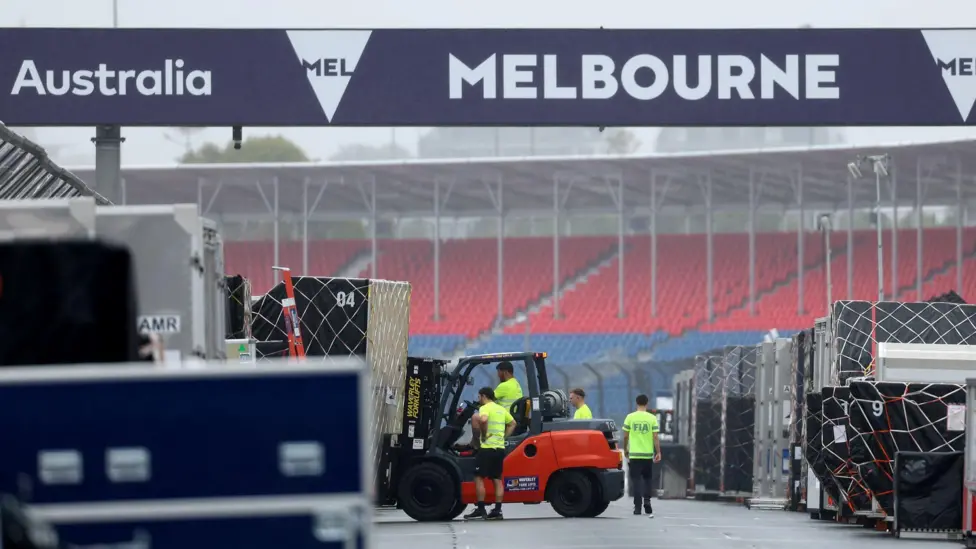
Albert Park, located in central Melbourne, has already completed the majority of its circuit preparations, with team freight and technical equipment reported to have arrived on schedule. Cargo logistics, often considered the most vulnerable component of global sporting events, were not significantly affected due to early shipping and diversified routing strategies implemented weeks in advance of the season opener.
Auld confirmed that, based on the latest operational briefings, all teams, drivers and essential staff are expected to be present before on-track sessions begin. He stressed that spectators would “not notice any difference,” underscoring the event’s readiness despite global turbulence. His remarks reflect a broader confidence within Formula 1’s administrative framework that contingency measures have insulated the Australian round from immediate risk.
Formula 1’s commercial rights holder also issued a statement acknowledging that it is “closely monitoring” the evolving geopolitical situation. While the first three races of the 2026 calendar—Australia, China and Japan—are geographically removed from the conflict zone, attention is already shifting toward April’s scheduled rounds in the Gulf region.
After Melbourne, the championship will travel to Shanghai and Suzuka before heading to Bahrain on 12 April and then to Saudi Arabia on 19 April. Both Gulf events are significant fixtures in the modern Formula 1 calendar and are backed by long-term commercial agreements. The Bahrain and Jeddah races have, in recent seasons, often been used as early-season showcases for the sport’s expanding Middle Eastern footprint.
At present, organisers maintain that those April rounds are several weeks away and that no immediate alterations have been announced. However, Formula 1’s leadership is understood to be evaluating potential implications should airspace restrictions persist or escalate. Calendar flexibility, while limited due to broadcast contracts and logistical sequencing, remains an operational consideration.
The championship’s immediate travel route includes the China and Japan Grands Prix, both of which are expected to proceed without disruption. These Asian rounds serve as transitional events before the sport re-enters the Middle Eastern circuit. Industry analysts suggest that the geographical sequencing may offer Formula 1 valuable time to assess regional stability before committing large-scale freight and personnel movements toward the Gulf.
The broader aviation sector has faced mounting strain as airlines reroute aircraft to avoid contested airspace. Extended flight times, crew rescheduling and aircraft repositioning have created a ripple effect across global networks. For a championship that relies on precision timing, the sudden closure of primary transit corridors presented a non-trivial operational test. Nevertheless, Formula 1’s long-standing experience in managing multi-continent logistics appears to have mitigated immediate fallout.
Behind the scenes, the sport’s freight operations involve highly coordinated shipping strategies combining air cargo, sea freight and pre-positioned equipment pools. Critical race infrastructure, including garage assemblies, pit equipment and broadcast technology, is often transported weeks in advance. Personnel movement, while essential, is more adaptable than hardware transport, allowing for charter solutions when commercial capacity tightens.
The Melbourne round holds symbolic importance as the curtain-raiser to a season that carries heightened competitive anticipation. Several teams have undergone structural changes during the winter break, and pre-season testing indicated tighter margins across the grid. The event is expected to draw substantial international attention, reinforcing Australia’s role as a strategic entry point for the Asia-Pacific sporting market.
Local authorities in Victoria have confirmed that security and crowd management preparations remain unchanged. Ticket sales reportedly remain strong, reflecting sustained enthusiasm for Formula 1 in Australia. The Grand Prix contributes significantly to the state’s tourism economy, with hospitality, accommodation and retail sectors benefiting from the influx of international visitors.
Auld acknowledged that the international governing body would continue evaluating contingency scenarios should the geopolitical environment deteriorate. While he refrained from speculating on specific alternatives, he indicated that Formula 1 routinely models calendar adjustments under extraordinary circumstances. Previous seasons affected by the COVID-19 pandemic demonstrated the sport’s capacity for rapid schedule restructuring when required.
For now, however, the official position remains unequivocal: the Australian Grand Prix will proceed as planned, with no visible disruption to the event’s operations. The paddock is assembling, freight is in place, and chartered personnel movements are nearing completion. From a spectator’s perspective, the competitive spectacle is expected to unfold uninterrupted against the backdrop of Albert Park.
The broader geopolitical context continues to evolve, and international attention remains fixed on diplomatic developments in the Middle East. Formula 1’s leadership has reiterated its commitment to monitoring the situation in coordination with relevant authorities and regional partners. While uncertainty lingers regarding the longer-term calendar outlook, the immediate focus remains on delivering a seamless season opener.

As engines prepare to ignite in Melbourne, the message from organisers is measured but firm: operational resilience has absorbed the shock of global travel disruption. Whether subsequent rounds will face additional scrutiny depends largely on developments far beyond the racetrack. For this weekend, however, Formula 1’s 2026 campaign appears set to begin without interruption.
Related News:
 Inland Australia Town Turns Streets into a Beach for Volleyball Contest
 England’s Euro Odyssey: A Tale of Grit, Glory and the Lionesses’ Miraculous March to the Final
 Raducanu’s Resurgence and Venus’s Record-Breaking Feat Highlight Washington Showdowns
 Glory for the Lionesses: England Crowned Women’s Euros Champions Again Amid National Calls for Bank Holiday
 Tottenham Takes On Newcastle
 Manchester City Announce Their Return in Style with Haaland Double and Debut Goals at Wolves
 FIFA Eyes Biennial Club World Cup from 2029, Plans Possible Expansion
 Kylian Mbappé Fires Real Madrid to Winning Start for Alonso Against Osasuna
 Brazil Dominate Chile 3-0 to Secure Second Place in World Cup Qualifiers
 Germany and Northern Ireland Set for Crucial World Cup Qualifier Clash in Cologne
 Merino Hat-Trick Inspires Spain to 6-0 Rout of Turkey in World Cup Qualifier
 Serbia Humiliated 0-5 by England in World Cup Qualifier
 Haaland Hits Five as Norway Crush Moldova 11-1 in World Cup Qualifier
 Gabriel Martinelli’s Spark Ignites Arsenal’s Champions League Campaign with Victory at Athletic Bilbao
 Man City 2-0 Napoli: Haaland Reaches 50 Champions League Goals After Red Card Turns Tide
 Rashford’s Brilliance Stuns Newcastle as Barcelona Claim Champions League Victory
 Tributes Pour In as Former Liverpool Women Manager Matt Beard Dies Aged 47
 Dembélé and Bonmatí Shine as Ballon d’Or Winners in Glittering Paris Ceremony
 Hannah Hampton Makes History as First Winner of Women’s Yashin Trophy at Ballon d’Or Awards
 Liverpool Vs outhampton Set for Carabao Cup Clash at Anfield
 Dramatic Derby: Sorloth Strikes as Atletico and Real Madrid Share the Spoils
 ICC Women’s World Cup 2025: India to Host as Pakistan Fixtures Moved to Neutral Venues
 Bournemouth Stun Fulham with Dramatic Comeback in Premier League Thriller
 Chaos at Ibrox as Martin’s Rangers Era Comes to an End
 Arsenal Showcase Depth and Flexibility as Arteta Eyes Title Challenge
 Ferguson Fires Scotland to Dramatic Comeback Win Over Greece
 England Thrash Wales as Rogers, Watkins and Saka Shine Bright
 Ruben Neves Strikes Late as Portugal Beat Ireland
 Tuchel Criticises ‘Silent Wembley’ After England Win
 Clarke’s Anger Overshadows Scotland’s Historic Win
 Kane’s Double Seals England’s World Cup Qualification
 Barnes Inspires Newcastle to Champions League Triumph Over Benfica
City shine with PlayStation-style football to overwhelm Villarreal
Barnes Inspires Newcastle to Champions League Triumph Over Benfica
City shine with PlayStation-style football to overwhelm Villarreal
 Fabio Wardley stuns Joseph Parker to earn Usyk title shot
 Tension and Turmoil at Aston Villa v Maccabi Match
 Lando Norris Dominates Brazil GP to Strengthen F1 Title Bid
 Ronaldo Confirms Final World Cup and Plans Retirement
 England Maintain Perfect World Cup Qualifying Record with Win Over Serbia
 Osimhen doubles as Nigeria reach CAF World Cup final
 Tears of Joy as Ireland Stun Hungary to Stay in World Cup Race
 Australia Fast Bowler Aims to Silence Joe Root in Perth
 Haaland Heroics and Portuguese Rampage Seal World Cup Qualification
 Irish Hero Parrott Says Goal Brought First Tears in Years
 Scotland Fans Reflect on France ’98 as World Cup Looms
 Nigeria Misses World Cup Again After Play-Off Loss
 Mark Wood Bowls Rapid Nets Spell, Ashes Test Hopes Rise
 Cardiff Nights Could Propel Wales to World Cup Glory
 Spain Qualify for 2026 World Cup After Dramatic Draw
 Scotland End 28-Year Wait With Stunning World Cup Qualification
 Cristiano Ronaldo Joins Trump, Bin Salman at State Dinner
 Tiny Curacao Makes History as Smallest Nation to Reach World Cup
 Haiti Qualifies for World Cup Despite Coach Never Visiting Country
 Scotland Fans Celebrate Historic World Cup Qualification
 Barcelona Returns to Camp Nou vs Athletic Bilbao
 India, Pakistan to Clash in T20 World Cup 2026 Group Match
 Mbappe Scores 4 as Real Madrid Edge Olympiakos
 Man City Lose, Champions League Risk
 Trump to attend 2026 FIFA World Cup draw in Washington
 Egypt and Iran urge Fifa to block Pride event at 2026 World Cup
 All You Need to Know About the 2026 Winter Olympics
 Two Britons Among Three Dead in French Alps Avalanche
 Cuban Cigar Festival Cancelled Amid US-Linked Energy Crisis
 Jet2 Hands Passengers Life Ban After Mid‑Air Brawl
 Dual Nationals Face Scramble for UK Passports as New Rules Come Into Force
 Bumper Ski Season but Avalanches Threaten Scotland’s Snowy Hills
 Austrian Climber Found Guilty After Girlfriend Froze to Death on Mountain
Major 7.1 Earthquake Strikes Off Malaysian Tourist Coast
Austrian Climber Found Guilty After Girlfriend Froze to Death on Mountain
Major 7.1 Earthquake Strikes Off Malaysian Tourist Coast
 Brit Killed in Horror Bus Crash as 18 Others Die and 25 Injured
Storm Hernando: Edinburgh Airport Flights Cancelled in US Travel Chaos
Brit Killed in Horror Bus Crash as 18 Others Die and 25 Injured
Storm Hernando: Edinburgh Airport Flights Cancelled in US Travel Chaos
 ‘Burned and Destroyed’: Locals and Tourists Describe Mexico Unrest
 Probe After Illness Kills 72 Tigers in Thailand
 More Than 5,000 Flights Cancelled as US East Coast Digs Out of Record Snow
 UK’s New Travel System: What It Is and How Dual Nationals Are Impacted
 Hilary Knight speaks out on Trump’s recent hockey remarks
 Brady Tkachuk Denies AI Video Claims After Olympic Gold
 Middle East Airspace Crisis Strands Thousands
 Kosgei Wins Tokyo Marathon in Record Time
 Flights Cancelled and New Travel Warnings Issued After Iran Strikes
 Iran, the US, and a World Cup That Starts in Three Months
 Islanders Advised on Travel to Middle East Amid Escalation