Published: 03 March 2026. The English Chronicle Desk. The English Chronicle Online.
Iran civilian deaths have passed 200 as fears deepen across the country. Rights groups report mounting casualties since the US-Israel conflict escalated last weekend. Families across Iran are bracing for further tragedy amid relentless bombardment. Reports verified by international outlets suggest the situation is deteriorating rapidly. The rising Iran civilian deaths figure now symbolises a nation caught between war and repression.
The Iranian Red Crescent Society said at least 555 people have died nationwide. However, the Norway-based human rights organisation Hengaw reported far higher numbers. Its latest update suggested the total death toll had reached 1,500 by day three. Among them were at least 200 civilians and 1,300 Iranian security personnel.
Hengaw voiced particular concern about escalating Iran civilian deaths in southern regions. Hormozgan province reportedly recorded the highest number of civilian fatalities. A missile strike allegedly hit a girls’ elementary school in Minab. More than 150 people were feared dead, including many children.

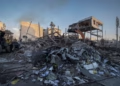
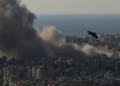
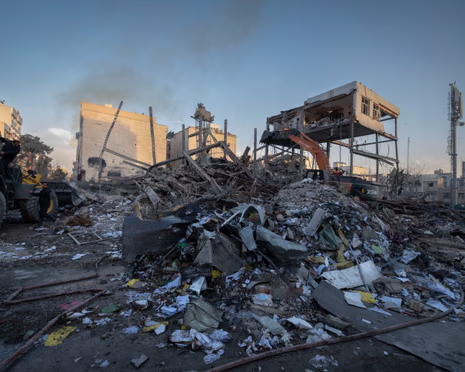
Independent verification remains challenging due to severe communication restrictions. Yet consistent accounts from residents and rights monitors indicate heavy bombardment. Joint US-Israeli strikes have targeted several major cities across Iran. Smoke has risen over urban skylines as explosions echo through residential districts.
Residents described receiving urgent messages on their mobile phones. According to Hengaw, people in Sanandaj received warnings from authorities. Sanandaj serves as the capital of Iranian Kurdistan in the northwest. The messages reportedly came from the intelligence wing of the Islamic Revolutionary Guard Corps.
The texts warned that public presence in the streets would be treated as cooperation. Authorities described such movement as aiding the enemy’s wider strategy. Officials claimed the measures aimed to prevent terrorist acts and unrest. Critics argue the warnings have effectively confined residents indoors.
Exiled news outlet IranWire also reported similar alerts sent to civilians. Recipients were allegedly warned against any movement in public areas. Many residents interpreted the texts as an attempt to deter protests. Others feared the warnings signalled imminent internal crackdowns.
A student in Tehran described overwhelming anxiety amid continued bombardment. She said internet services were once again severely restricted nationwide. Many Iranians struggled to connect with relatives and friends. The blackout has made independent reporting increasingly difficult.
She explained that people hoped to organise safely despite heavy bombing. However, streets quickly became dangerous due to airstrikes and patrols. Fear of encountering IRGC facilities heightened anxiety among civilians. Ordinary residents felt unsure which neighbourhoods might become targets.
Another Kurdish student shared concerns through a relative abroad. He claimed the alerts prevented residents from fleeing targeted areas. According to him, those attempting escape risked arrest on security charges. He alleged authorities might exploit civilian suffering for political leverage.
Such accounts remain difficult to confirm independently due to restrictions. Nevertheless, they reflect deep mistrust between many citizens and officials. Iran civilian deaths have intensified that mistrust in recent days. Civilians now fear both incoming bombs and internal reprisals.
Despite the near-total blackout, some communication has persisted. A few residents managed to contact relatives outside Iran. Others relayed information to international human rights groups. In Mahabad, electricity reportedly failed following airstrikes.
In Urmia, a prisoner contacted his family with reassurances. He said no executions had occurred in his ward on Monday. Windows were taped to reduce the sound of nearby explosions. Families remained anxious about conditions inside detention facilities.
Hiwa Bahrami of the Democratic Party of Iranian Kurdistan criticised state strategy. He argued military bases were placed within populated districts deliberately. Such positioning, he claimed, exposed civilians to grave risks. Tehran has not publicly responded to these specific allegations.
Meanwhile, many residents in the capital have attempted to leave. Tehran has witnessed continuous explosions and columns of smoke. Videos circulating online show damaged buildings in central districts. The emotional toll on inhabitants has been profound.
Matin, a former journalist based in Tehran, described conflicting emotions. He said many citizens longed for political change. Yet he admitted fear over the cost of external intervention. Iran civilian deaths have forced painful reflection among reform-minded Iranians.
He expressed sorrow at images of destruction within his city. While critical of authorities, he feared innocent casualties. The skyline filled with smoke left him deeply unsettled. He worried particularly about the safety of children.
Zhila, a filmmaker in Tehran, echoed similar sentiments. She spoke of economic hardship driven by sanctions and restrictions. Many young Iranians, she said, feel their futures are constrained. Nevertheless, she admitted feeling conflicted about the war’s direction.
She acknowledged past protests and attempts at reform. Yet she questioned whether external assistance would bring stability. Iran civilian deaths weighed heavily on her conscience. She described a society emotionally exhausted by repeated crises.
International reaction has been swift but cautious. Western governments have called for restraint and protection of civilians. Humanitarian organisations have urged safe corridors for evacuation. Diplomatic efforts continue behind closed doors.
The involvement of the United States and Israel has drawn global attention. Washington has not publicly detailed all operational objectives. Israeli officials maintain that strikes target military infrastructure. However, civilian neighbourhoods have inevitably suffered damage.
Iranian authorities accuse foreign powers of deliberate aggression. State media portray the conflict as an existential threat. Officials insist security measures are necessary for national survival. Critics counter that restrictions silence legitimate civilian voices.
As Iran civilian deaths continue to rise, uncertainty dominates daily life. Parents weigh whether to shelter or attempt escape. Businesses remain shuttered across many affected cities. Schools and universities have suspended classes indefinitely.
Health services face immense pressure amid the violence. Hospitals reportedly struggle with supplies and staffing. Medical workers confront the emotional burden of treating injured children. International aid access remains uncertain under current conditions.
Experts warn that prolonged conflict could deepen humanitarian challenges. Economic disruption may exacerbate food and fuel shortages. Infrastructure damage risks long-term consequences for urban centres. Psychological trauma will likely persist long after fighting subsides.
For now, many Iranians focus simply on survival. Each explosion reinforces fears of further Iran civilian deaths. Families cling to intermittent phone calls from loved ones. Every brief internet connection offers fragile reassurance.

The broader geopolitical implications remain unclear. Regional tensions have intensified sharply in recent days. Diplomatic observers fear potential escalation beyond Iran’s borders. Global markets have reacted nervously to the instability.
Yet at the heart of this unfolding crisis are ordinary citizens. Their stories convey fear, grief, and uncertain hope. Iran civilian deaths represent more than statistics in reports. They embody shattered families and interrupted futures.
As the conflict enters another uncertain phase, calls for restraint grow louder. International leaders face mounting pressure to seek de-escalation. Human rights groups continue documenting alleged violations carefully. Independent verification remains essential for accountability.
For readers in the United Kingdom, the crisis carries wider implications. Energy security, migration patterns, and diplomatic alliances may all shift. Yet humanitarian concern remains the immediate priority. Protecting civilians must stand above political calculations.
The coming days will likely prove decisive. Whether Iran civilian deaths continue rising depends on military and political choices. Civilians across Iran hope desperately for calm. Their safety now hinges on restraint from all sides.
Related News:
 Top Christmas Books Reads: Classics to Cozy Romcoms
 Just Stop Oil Protesters Convicted Amid Climate Defence Row
 BBC to Apologise Over Edited Trump Speech Amid Backlash
 Britain deploys RAF specialists to assist Belgium with drone threats
 Palace May Restore Hyphen to Andrew Mountbatten-Windsor’s Name
 US Senate Passes Funding Bill to End Historic Shutdown
 US Justice Department Files Lawsuit Against California Over Partisan Voting Maps
 Greene Pushes Epstein Files Amid Trump Fallout
 Trump Deploys DHS to Charlotte in Major Arrest Operation
 December Run-Off in Chile as Election Produces No Winner
 Zelenskyy Signs Fighter Jet Deal Amid Russian Drone Attacks
 Orban Says Ukraine Has ‘No Chance’ as EU Support Continues
 Canada Passes Carney’s First Budget in Tight Parliamentary Vote
 Israeli Strike Kills 13 Near Palestinian Camp in Lebanon
 Shadow Fleet at Sea: Europe’s Battle Against Illicit Oil Shipping
 Tiny Curacao Makes History as Smallest Nation to Reach World Cup
 Haiti Qualifies for World Cup Despite Coach Never Visiting Country
 Deadly Russian Strikes Hit Western Ukraine, 20 Killed in Ternopil
 Pentagon Officials in Ukraine to Discuss War End
 Ukraine Peace Plan: Zelensky Ready for Dialogue
 Vietnam Battles Deadly Floods as Rains Continue
 Venezuela Threatens Nobel Winner Machado with Fugitive Status
 Royal Navy Shadows Russian Warships Entering the Channel
 US Suspends Afghan Immigration After White House Shooting
 Two National Guard Soldiers Critically Injured Near White House
 Georgians Defy Government Crackdown After Year of Protests
 Southern Lebanon reels as Israeli strikes shatter communities
 Sri Lanka Floods Leave 56 Dead, Dozens Missing
 Tokyo court rules Japan’s same-sex marriage ban constitutional
 ‘Extinct’ Antelope Returns to Sahara, Bringing Hope
 EU plans $105bn Ukraine aid using frozen Russian assets
 American Mother Extradited From UK to U.S. on Murder Charges
 Russia losses Ukraine war peace talks intensify amid rising deaths
 Facebook Slow to Remove Bondi Attack Praise, Anti-Hate Group Claims
 Australian Cruise Ship Freed After Reef Grounding in Papua New Guinea
 US Cities Erupt in Protests Against Trump’s Venezuela Military Action
 Albanese Opens Door to Bondi Royal Commission Amid Rising Pressure
 Trump Escalates Minnesota Immigration Surge Amid Rising Tensions
 Iran Protesters Defy Crackdown as Violent Clashes Intensify
 US Clears Nvidia AI Chip Sales to China in Policy Shift
 Trump Threatens Strong Action If Iran Executes Protesters
 Gulf states warn Trump Iran strikes risk wider Middle East war
 Machado Trump medal gesture reshapes Venezuela power struggle
 EU weighs response amid Greenland tariff crisis with Trump
 Syria President Declares Victory as Ceasefire Reached with SDF
 Sydney Shark Attack Surge Shocks Australia Beaches
 ICE street raids expose a chilling future for public freedoms
 Thousands Flee Cambodia Scam Centres Amid Global Pressure
 EU Says US Ties Have Suffered ‘Big Blow’ After Greenland Crisis
 Andrew Hastie Emerges as Leadership Rival to Ley
 Starmer China visit raises human rights pressure on Beijing
 US Launches Multi-Day Air Drills Amid Rising Iran Tensions
 Videos reveal earlier clash before Alex Pretti shooting
 China Executes 11 Linked to Myanmar Scam Networks
 UK New Car Discounts Near £6,000 as Prices Are Slashed
 Israel Moves to Bar MSF From Gaza Operations
 Tragic Ski Lift Accident Claims Australian Snowboarder
 Thousands Left Without Heating in Ukraine Amid Russia Strikes
 Trump Praises ‘Terrific’ Petro After White House Talks
 Portugal Election Delivers Socialist Win as Far Right Surges
 Sydney Protest Escalates and Elderly Woman Suffers Severe Injury
 Tarique Rahman’s Rise Toward Bangladesh’s Top Job
 Australian Families Leave Syrian Camp for Home
 SA Police Intensify Search in Gus Lamont Case
 Trump Attacks UK-California Energy Pact
 Kim Jong-un Unveils Housing for War Families
 Trump and Chagos Deal Rift Over Iran Strikes
 Andrew Arrest Sparks Republic Debate in Australia
 Global corruption crisis: Who Washington shields
 El Mencho Killed as Mexico Faces Violence
 Farage Chagos Islands Row Sparks Fury
 Gold Rush in Gugulethu Leaves South Africans Desperate for Work and Hope
 Greenpeace $345m Ruling Sparks Appeal Battle
 Hilary Knight speaks out on Trump’s recent hockey remarks
 Trump Speech Sparks Intense Debate Across Divided America
 Has Europe truly learned from the failures of 2022?
 Social Media Trial: Woman Says Addiction Began at Six
 Berlin Bunker Transforms Into Powerful Ukraine Museum
 UK Personnel Near Iranian Missile Strike in Bahrain
 Trump Faces Questions Over Iran Conflict Plan