Published: 03 March 2026. The English Chronicle Desk. The English Chronicle Online.
The Gaza siege has tightened dramatically following Israel’s sudden military campaign against Iran. Crossings into the territory were closed indefinitely as hostilities began, leaving two million residents facing renewed hardship. Aid groups warn that food supplies could run out within days if access remains blocked. The Gaza siege is already pushing prices higher and reviving painful memories of last year’s famine.
After more than two years of conflict, Gaza’s economy remains shattered and fragile. Israeli forces control roughly sixty percent of the territory, limiting internal movement. Almost all food must be imported through tightly managed crossings. When those routes close, shelves empty quickly and markets descend into panic.
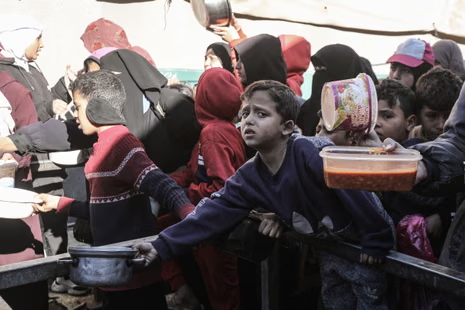
Humanitarian organisations report that stocks available last Saturday will last only days. The situation has placed enormous strain on kitchens feeding displaced families. José Andrés, founder of World Central Kitchen, said his teams cook one million hot meals daily. He warned publicly that operations would halt this week without fresh deliveries.
International food security experts echo those fears, describing a dangerously short supply. Fresh produce may last only seven days under current conditions. Community bakeries have flour reserves for about ten days. Aid parcels assembled for vulnerable households could run out within two weeks.

The closure follows Israel’s airstrikes on Iran, which escalated regional tensions sharply. Israeli authorities described the move as a necessary security measure. However, residents inside Gaza feel the immediate humanitarian consequences. Many remember the severe shortages experienced during last year’s blockade.
That earlier total siege, imposed in spring 2025, severely restricted shipments. The restrictions contributed to widespread hunger during the summer months. Aid distribution points became flashpoints of desperation and violence. Hundreds were reportedly killed while seeking food at centres run by the Gaza Humanitarian Foundation.
As news of the latest conflict spread, families rushed to markets. Panic buying began within hours of the announcement. Traders reported sudden spikes in demand for flour and sugar. Prices climbed steeply, reflecting limited availability and deep uncertainty.
A twenty five kilogram sack of flour now costs between eighty and one hundred shekels. Only a week ago, the same bag cost roughly thirty shekels. Cooking oil, sugar, and nappies have doubled in price. For families already exhausted financially, these increases feel devastating.
Sobhi Al-Zaaneen, a father of seven from northern Gaza, described deep anxiety. He said famine worries him more than shelling or airstrikes. Determined to protect his children, he decided to purchase extra supplies. Yet he knows many neighbours lack the means to follow his example.
Unemployment remains widespread after years of bombardment and displacement. Thousands lost homes, businesses, and savings during the fighting. Many rely entirely on humanitarian assistance for daily meals. Without cash reserves, stockpiling food becomes impossible for most households.
Um Mohammed Hijazi, displaced five times since the war began, faces that reality. Her family home was destroyed, leaving them dependent on aid. She says she cannot afford to buy extra food before prices climb further. The small supply she received recently may last only a few days.
Reports have circulated that some traders are withholding goods deliberately. Residents fear that storage is intended to drive further profit. In fragile markets, even rumours can intensify shortages rapidly. The psychological impact of the Gaza siege spreads faster than physical scarcity.
As the occupying power, Israel holds legal responsibilities under international law. Humanitarian law requires access to essential supplies for civilians. Jan Egeland of the Norwegian Refugee Council stressed that obligation publicly. He said security concerns do not negate duties toward vulnerable populations.
The Israeli authority overseeing aid flows is COGAT, formally known as the Coordination of Government Activities in the Territories. Officials said shipments were halted for security reasons amid regional escalation. Late on Monday, COGAT announced that the Kerem Shalom crossing would reopen gradually. The reopening would allow limited humanitarian supplies to enter under supervision.
Despite that statement, aid groups remain cautious about timelines and quantities. They note that even brief interruptions have severe consequences. Gaza lacks strategic stockpiles capable of cushioning sudden closures. Warehouses were destroyed during previous offensives, limiting storage capacity.
Bahaa Al-Amawi from the North Gaza Chamber of Commerce highlighted this vulnerability. He explained that no meaningful reserves were built during the ceasefire. Under current conditions, establishing such reserves is nearly impossible. Therefore, every announcement of closure triggers both psychological and commercial crises.
Israel maintains that existing stockpiles are adequate for now. Officials have not provided detailed figures supporting that assessment. Crossings with Jordan and Egypt remain open on Israel’s side. However, Gaza’s border with Egypt has been effectively sealed since May 2024.
Humanitarian experts warn that broader regional conflict complicates relief planning. Airspace disruptions and security alerts can delay deliveries significantly. Insurance costs for transport have also risen sharply. These factors combine to make consistent supply chains harder to sustain.
United Nations backed assessments in December painted a bleak picture. Nearly four in five Palestinians faced acute food insecurity then. Conditions have improved slightly during the ceasefire, but remain fragile. The renewed Gaza siege threatens to reverse those limited gains.
Inside tent camps, families speak openly about hunger returning. Many survived months of rationing and skipped meals last year. Parents recall dividing small portions among large families. Those memories now shape current fears and urgent buying behaviour.
Alaa Abu Rakba, who sells meat from a kiosk near his tent, described immediate impact. His small business depends on regular supply deliveries. When crossings close, wholesalers stop providing fresh goods. Income disappears almost overnight, leaving him unable to support his children.
He said he quickly bought flour, sugar, and oil as insurance. Experience taught him that waiting carries enormous risk. He would rather endure renewed shelling than starvation again. For him, the Gaza siege represents a deeper threat than distant military exchanges.
Analysts observe that regional escalation often sidelines humanitarian concerns. Attention shifts toward military objectives and diplomatic manoeuvres. Meanwhile, civilians in confined territories absorb the harshest consequences. In Gaza, restricted geography amplifies every external shock.
International pressure may influence the duration of current restrictions. Western governments have repeatedly urged sustained humanitarian access. Yet security calculations often dominate decision making during wartime. The balance between military aims and civilian protection remains delicate.

For residents, abstract debates offer little comfort. They measure time in remaining bags of flour and tins of beans. Each day without deliveries increases tension within crowded neighbourhoods. Children sense adult anxiety even when parents try to shield them.
If crossings reopen consistently, the immediate crisis could ease. Stable flows would calm markets and reduce speculation. However, uncertainty continues to define daily life. The Gaza siege has become both a physical blockade and a psychological burden.
As regional conflict unfolds, the humanitarian dimension demands urgent focus. Aid organisations insist that access must remain insulated from military escalation. Civilians cannot wait for political solutions to secure daily bread. For two million people, survival depends on predictable supply lines.
The coming days will test assurances from authorities and promises of gradual reopening. Markets, kitchens, and households watch closely for trucks crossing the border. In the shadow of wider war, Gaza’s fragile stability hangs by a thread. The Gaza siege, once again, stands at the centre of a mounting humanitarian emergency.
Related News:
 Middle East Flights Halted After Iran Strikes
 US Iran Operation: Sixth Service Member Killed
 Hezbollah Anger Erupts as War Returns to Beirut
 Just Stop Oil Protesters Convicted Amid Climate Defence Row
 BBC to Apologise Over Edited Trump Speech Amid Backlash
 Britain deploys RAF specialists to assist Belgium with drone threats
 Palace May Restore Hyphen to Andrew Mountbatten-Windsor’s Name
 US Senate Passes Funding Bill to End Historic Shutdown
 US Justice Department Files Lawsuit Against California Over Partisan Voting Maps
 Greene Pushes Epstein Files Amid Trump Fallout
 Trump Deploys DHS to Charlotte in Major Arrest Operation
 December Run-Off in Chile as Election Produces No Winner
 Zelenskyy Signs Fighter Jet Deal Amid Russian Drone Attacks
 Orban Says Ukraine Has ‘No Chance’ as EU Support Continues
 Canada Passes Carney’s First Budget in Tight Parliamentary Vote
 Israeli Strike Kills 13 Near Palestinian Camp in Lebanon
 Shadow Fleet at Sea: Europe’s Battle Against Illicit Oil Shipping
 Tiny Curacao Makes History as Smallest Nation to Reach World Cup
 Haiti Qualifies for World Cup Despite Coach Never Visiting Country
 Deadly Russian Strikes Hit Western Ukraine, 20 Killed in Ternopil
 Pentagon Officials in Ukraine to Discuss War End
 Ukraine Peace Plan: Zelensky Ready for Dialogue
 Vietnam Battles Deadly Floods as Rains Continue
 Venezuela Threatens Nobel Winner Machado with Fugitive Status
 Royal Navy Shadows Russian Warships Entering the Channel
 US Suspends Afghan Immigration After White House Shooting
 Two National Guard Soldiers Critically Injured Near White House
 Georgians Defy Government Crackdown After Year of Protests
 Southern Lebanon reels as Israeli strikes shatter communities
 Sri Lanka Floods Leave 56 Dead, Dozens Missing
 Tokyo court rules Japan’s same-sex marriage ban constitutional
 ‘Extinct’ Antelope Returns to Sahara, Bringing Hope
 EU plans $105bn Ukraine aid using frozen Russian assets
 American Mother Extradited From UK to U.S. on Murder Charges
 Russia losses Ukraine war peace talks intensify amid rising deaths
 Facebook Slow to Remove Bondi Attack Praise, Anti-Hate Group Claims
 Australian Cruise Ship Freed After Reef Grounding in Papua New Guinea
 US Cities Erupt in Protests Against Trump’s Venezuela Military Action
 Albanese Opens Door to Bondi Royal Commission Amid Rising Pressure
 Trump Escalates Minnesota Immigration Surge Amid Rising Tensions
 Iran Protesters Defy Crackdown as Violent Clashes Intensify
 US Clears Nvidia AI Chip Sales to China in Policy Shift
 Trump Threatens Strong Action If Iran Executes Protesters
 Gulf states warn Trump Iran strikes risk wider Middle East war
 Machado Trump medal gesture reshapes Venezuela power struggle
 EU weighs response amid Greenland tariff crisis with Trump
 Syria President Declares Victory as Ceasefire Reached with SDF
 Sydney Shark Attack Surge Shocks Australia Beaches
 Thousands Flee Cambodia Scam Centres Amid Global Pressure
 EU Says US Ties Have Suffered ‘Big Blow’ After Greenland Crisis
 Andrew Hastie Emerges as Leadership Rival to Ley
 Starmer China visit raises human rights pressure on Beijing
 Videos reveal earlier clash before Alex Pretti shooting
 China Executes 11 Linked to Myanmar Scam Networks
 UK New Car Discounts Near £6,000 as Prices Are Slashed
 Israel Moves to Bar MSF From Gaza Operations
 Tragic Ski Lift Accident Claims Australian Snowboarder
 Portugal Election Delivers Socialist Win as Far Right Surges
 Australian Families Leave Syrian Camp for Home
 SA Police Intensify Search in Gus Lamont Case
 Trump Attacks UK-California Energy Pact
 ‘I Would Scream in My Sleep’: Alawite Women from Syria Tell of Kidnap and Rape
 Iran Says ‘Guiding Principles’ Agreed With US at Nuclear Talks
 Trump and Chagos Deal Rift Over Iran Strikes
 Andrew Arrest Sparks Republic Debate in Australia
 Global corruption crisis: Who Washington shields
 Farage Chagos Islands Row Sparks Fury
 Gold Rush in Gugulethu Leaves South Africans Desperate for Work and Hope
 Greenpeace $345m Ruling Sparks Appeal Battle
 Hilary Knight speaks out on Trump’s recent hockey remarks
 Trump Speech Sparks Intense Debate Across Divided America
 Has Europe truly learned from the failures of 2022?
 Social Media Trial: Woman Says Addiction Began at Six
 Iran’s Regime Still Intact — Coming Days Will Test Its Survival
 Allies of US in the Gulf Bear Brunt of Iran Attacks
 UK Personnel Near Iranian Missile Strike in Bahrain
 Trump Faces Questions Over Iran Conflict Plan
 In Maps: Strikes Across Iran and the Middle East
 Months of Planning Behind US‑Israeli Mission to Target Iran’s Supreme Leader
 Iran Civilian Deaths Surge Past 200 Amid Fear