Published: 04 March 2026. The English Chronicle Desk. The English Chronicle Online.
The Pentagon has confirmed the identities of four American soldiers killed in a devastating Kuwait strike that has intensified fears of a widening regional conflict. The announcement came after a drone attack targeted a United States military base in Kuwait on Sunday. Officials described the incident as one of the most serious escalations in recent weeks. The Kuwait strike has sent shockwaves through military communities across the United States and its allies.
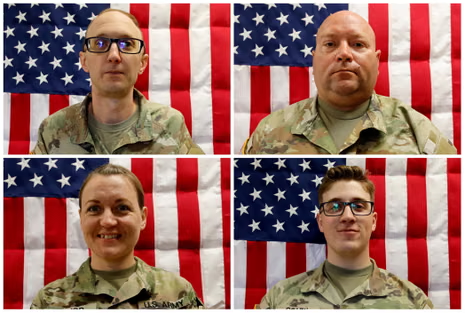
The United States Department of Defense released the names of Captain Cody Khork, 35, Sergeant Nicole Amor, 39, Sergeant Declan Coady, 20, and Sergeant Noah Tietjens, 42. Two additional service members who died in the same Kuwait strike have not yet been publicly identified. Authorities said their families are still being notified before further details are shared.
In a solemn statement, the Pentagon honoured the fallen as dedicated professionals who served with courage. Each soldier represented years of commitment and sacrifice within the armed forces. Their deaths have brought renewed attention to the risks faced by personnel stationed across the Middle East. Flags at several military facilities were lowered as tributes poured in nationwide.
The attack occurred amid intensifying hostilities involving the United States, Israel, and Iran. Since Saturday, coordinated strikes have been launched against multiple Iranian sites. Among those reportedly killed was Iran’s supreme leader, Ali Khamenei, during a strike on his compound. That development marked a dramatic turning point in an already volatile confrontation.

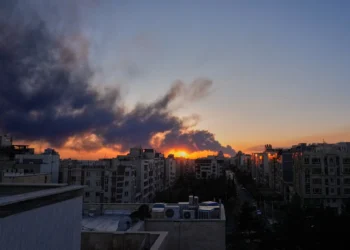
Iran responded swiftly with retaliatory missile and drone attacks across the region. Military installations in Israel and American facilities in neighbouring Gulf states were targeted. The Kuwait strike formed part of this broader retaliation, according to defence analysts. Explosions were reported near the perimeter of the base before emergency sirens sounded.
The US Army Reserve confirmed it will conduct a full investigation into the circumstances of the Kuwait strike. Officials emphasised that preliminary findings suggest a drone was used in the assault. Investigators are examining whether air defence systems were fully operational at the time. They are also reviewing intelligence assessments preceding the attack.
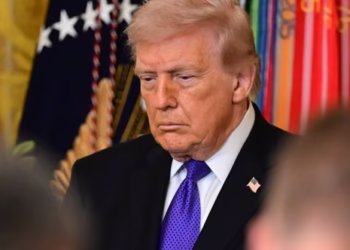
President Donald Trump addressed the nation in a video statement following the incident. He described the fallen soldiers as true patriots who made the ultimate sacrifice. He offered prayers for the wounded and gratitude to grieving families. The president also warned that further casualties could occur before the conflict concludes.
His remarks underscored the uncertainty surrounding the unfolding military campaign. While reaffirming commitment to strategic objectives, he acknowledged the human cost involved. Families of deployed personnel now face renewed anxiety as tensions persist. Military leaders have promised enhanced protective measures at vulnerable bases.
The regional toll has continued to mount on all sides. According to the Iranian Red Crescent, at least 787 people have died in Iran since the strikes began. Hospitals in several cities have reported overwhelming casualty numbers. Civilian infrastructure has also suffered extensive damage.
In Israel, officials confirmed at least 10 deaths from incoming missiles. Emergency responders worked through the night in affected neighbourhoods. The Israeli government vowed to maintain defensive operations. International observers have urged restraint to prevent further bloodshed.
The Kuwait strike has prompted swift diplomatic and logistical responses from Washington. The United States Department of State announced charter flights for Americans seeking to leave the region. Saudi Arabia and Egypt were among the initial departure points. Officials said more than 9,000 citizens have already been assisted.
An additional 3,000 Americans have requested support to return home. Authorities emphasised that commercial aviation remains available in several countries. Where flights are limited, ground transport to neighbouring states is being arranged. Special assistance has been expanded for those departing Israel.
Security experts say the Kuwait strike illustrates evolving battlefield tactics. Drone warfare has become increasingly precise and difficult to intercept. Bases once considered secure now face new vulnerabilities. Defence planners are reassessing protective strategies across overseas installations.
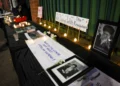
Within the United States, tributes have emerged from political leaders and local communities. Lawmakers from both parties expressed condolences to the families. Veterans’ organisations have organised memorial gatherings. The names of the fallen soldiers have resonated deeply across social media platforms.
Captain Khork was remembered by colleagues as a steady and compassionate leader. Sergeant Amor was described as fiercely dedicated to her unit. Sergeant Coady, only 20 years old, had recently begun his military career. Sergeant Tietjens brought decades of experience to his service.
The Kuwait strike has reignited debate in Washington over long-term military engagement in the region. Some lawmakers argue for recalibrating overseas deployments. Others insist that deterrence requires sustained presence. The administration maintains that operations aim to safeguard national security.
Allies have reacted cautiously to the escalating violence. European leaders have called for urgent diplomatic channels to reopen. Gulf states have strengthened security around key infrastructure sites. Financial markets have fluctuated amid fears of prolonged instability.
Military analysts note that targeted strikes against senior Iranian leadership figures represent a significant shift. The reported death of Ali Khamenei has created a leadership vacuum within Tehran. Succession discussions are believed to be under way. Observers warn that internal uncertainty could fuel further aggression.
Meanwhile, humanitarian agencies continue to assess civilian needs. Medical supplies are being routed through neighbouring countries. Aid convoys face logistical obstacles due to damaged transport routes. International relief groups are urging safe corridors for assistance deliveries.
The emotional toll of the Kuwait strike is evident among service families. Support networks have mobilised to provide counselling and practical help. Community vigils have offered spaces for collective mourning. Many Americans are grappling with the renewed reality of wartime loss.

At the Pentagon, officials stress that force protection remains a top priority. Additional air defence systems are reportedly being deployed. Intelligence sharing with regional partners has intensified. Commanders are reviewing contingency plans for further escalation.
Diplomatic observers believe the coming days will be critical. Any miscalculation could widen the conflict beyond current borders. Behind closed doors, negotiations may still be possible. Public rhetoric, however, remains firm on all sides.
For now, attention remains focused on the lives lost in the Kuwait strike. Their service and sacrifice stand at the heart of this unfolding chapter. As investigations continue, families await answers and accountability. The broader region braces for what may come next.
The names released this week serve as a stark reminder of conflict’s human cost. Each story reflects dedication, ambition, and devotion to duty. Across the Atlantic, many in the United Kingdom watch events with concern. Stability in the Middle East carries global implications.
As the situation develops, officials promise transparency and continued updates. The Pentagon has pledged to honour the fallen with full military recognition. In communities across America, memories of the soldiers endure. The Kuwait strike has left an indelible mark on an already turbulent year.
Related News:
 Just Stop Oil Protesters Convicted Amid Climate Defence Row
 BBC to Apologise Over Edited Trump Speech Amid Backlash
 Britain deploys RAF specialists to assist Belgium with drone threats
 Palace May Restore Hyphen to Andrew Mountbatten-Windsor’s Name
 US Senate Passes Funding Bill to End Historic Shutdown
 US Justice Department Files Lawsuit Against California Over Partisan Voting Maps
 Greene Pushes Epstein Files Amid Trump Fallout
 Trump Deploys DHS to Charlotte in Major Arrest Operation
 December Run-Off in Chile as Election Produces No Winner
 Zelenskyy Signs Fighter Jet Deal Amid Russian Drone Attacks
 Orban Says Ukraine Has ‘No Chance’ as EU Support Continues
 Canada Passes Carney’s First Budget in Tight Parliamentary Vote
 Israeli Strike Kills 13 Near Palestinian Camp in Lebanon
 Shadow Fleet at Sea: Europe’s Battle Against Illicit Oil Shipping
 Tiny Curacao Makes History as Smallest Nation to Reach World Cup
 Haiti Qualifies for World Cup Despite Coach Never Visiting Country
 Deadly Russian Strikes Hit Western Ukraine, 20 Killed in Ternopil
 Pentagon Officials in Ukraine to Discuss War End
 Ukraine Peace Plan: Zelensky Ready for Dialogue
 Vietnam Battles Deadly Floods as Rains Continue
 Venezuela Threatens Nobel Winner Machado with Fugitive Status
 Royal Navy Shadows Russian Warships Entering the Channel
 US Suspends Afghan Immigration After White House Shooting
 Two National Guard Soldiers Critically Injured Near White House
 Georgians Defy Government Crackdown After Year of Protests
 Southern Lebanon reels as Israeli strikes shatter communities
 Sri Lanka Floods Leave 56 Dead, Dozens Missing
 Tokyo court rules Japan’s same-sex marriage ban constitutional
 ‘Extinct’ Antelope Returns to Sahara, Bringing Hope
 EU plans $105bn Ukraine aid using frozen Russian assets
 American Mother Extradited From UK to U.S. on Murder Charges
 Russia losses Ukraine war peace talks intensify amid rising deaths
 Facebook Slow to Remove Bondi Attack Praise, Anti-Hate Group Claims
 Australian Cruise Ship Freed After Reef Grounding in Papua New Guinea
 US Cities Erupt in Protests Against Trump’s Venezuela Military Action
 Albanese Opens Door to Bondi Royal Commission Amid Rising Pressure
 Trump Escalates Minnesota Immigration Surge Amid Rising Tensions
 Iran Protesters Defy Crackdown as Violent Clashes Intensify
 US Clears Nvidia AI Chip Sales to China in Policy Shift
 Trump Threatens Strong Action If Iran Executes Protesters
 Gulf states warn Trump Iran strikes risk wider Middle East war
 Machado Trump medal gesture reshapes Venezuela power struggle
 EU weighs response amid Greenland tariff crisis with Trump
 Syria President Declares Victory as Ceasefire Reached with SDF
 Sydney Shark Attack Surge Shocks Australia Beaches
 ICE street raids expose a chilling future for public freedoms
 Thousands Flee Cambodia Scam Centres Amid Global Pressure
 EU Says US Ties Have Suffered ‘Big Blow’ After Greenland Crisis
 Andrew Hastie Emerges as Leadership Rival to Ley
 Starmer China visit raises human rights pressure on Beijing
 US Launches Multi-Day Air Drills Amid Rising Iran Tensions
 Videos reveal earlier clash before Alex Pretti shooting
 China Executes 11 Linked to Myanmar Scam Networks
 UK New Car Discounts Near £6,000 as Prices Are Slashed
 Israel Moves to Bar MSF From Gaza Operations
 Tragic Ski Lift Accident Claims Australian Snowboarder
 Thousands Left Without Heating in Ukraine Amid Russia Strikes
 Trump Praises ‘Terrific’ Petro After White House Talks
 Portugal Election Delivers Socialist Win as Far Right Surges
 Tarique Rahman’s Rise Toward Bangladesh’s Top Job
 Australian Families Leave Syrian Camp for Home
 SA Police Intensify Search in Gus Lamont Case
 Trump Attacks UK-California Energy Pact
 Trump and Chagos Deal Rift Over Iran Strikes
 Andrew Arrest Sparks Republic Debate in Australia
 Global corruption crisis: Who Washington shields
 Farage Chagos Islands Row Sparks Fury
 Gold Rush in Gugulethu Leaves South Africans Desperate for Work and Hope
 Greenpeace $345m Ruling Sparks Appeal Battle
 Hilary Knight speaks out on Trump’s recent hockey remarks
 Trump Speech Sparks Intense Debate Across Divided America
 Has Europe truly learned from the failures of 2022?
 Social Media Trial: Woman Says Addiction Began at Six
 UK Personnel Near Iranian Missile Strike in Bahrain
 Trump Faces Questions Over Iran Conflict Plan
 Iran Civilian Deaths Surge Past 200 Amid Fear
 US Iran Operation: Sixth Service Member Killed
 Herzog Asio meeting sparks security storm
 Trump rebukes Starmer over Iran strikes
 Middle East attacks intensify as Trump rejects Iran talks