Published: 05 March 2026. The English Chronicle Desk. The English Chronicle Online.
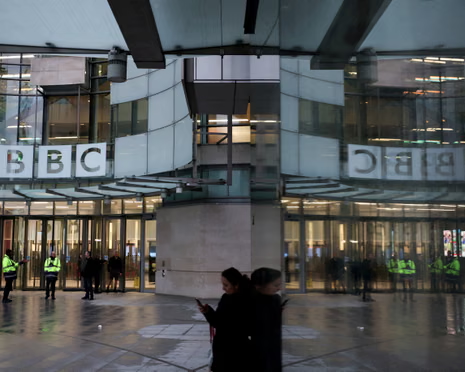
The future of the BBC charter reform has moved sharply into focus this week. Britain’s public broadcaster is preparing to demand sweeping constitutional changes. At the heart of its proposals lies a push for a permanent royal charter. Executives also want an end to political appointments on the BBC board. These changes aim to safeguard the corporation’s independence for generations.
The BBC charter reform proposals will be published as part of renewal talks. The current royal charter expires at the end of 2027. Negotiations with ministers traditionally take place every ten years. However, insiders argue this cycle creates instability and political pressure. They believe a permanent footing would remove existential uncertainty.
The move follows months of tension within the corporation’s leadership. In November last year, director general Tim Davie stepped down amid controversy. The head of BBC News, Deborah Turness, also resigned during the upheaval. Some staff members claimed political influence had shaped internal decisions. The resignations intensified scrutiny over governance structures.
Attention quickly turned to board member Robbie Gibb. Gibb previously served as communications chief to former prime minister Theresa May. He was appointed to the BBC board during Boris Johnson’s premiership. Critics alleged a so-called coup against senior leadership. Gibb has denied any improper interference.

The BBC itself insists its board operates collectively and transparently. Corporation chair Samir Shah dismissed suggestions of partisan manoeuvring. He rejected claims of a right-wing conspiracy within the organisation. Nonetheless, the perception of political involvement has proved damaging. Executives now accept that perception can erode trust.
A senior source pointed to extensive public consultation results. The broadcaster conducted its largest audience engagement exercise ever. Licence-fee payers overwhelmingly defended editorial independence. Many described impartiality as non-negotiable in a divided political climate. That feedback appears central to the BBC charter reform agenda.
The proposed changes aim to remove government-appointed board positions. Supporters argue this step would clarify governance and protect credibility. Under the current structure, ministers appoint several non-executive directors. Critics believe such appointments blur constitutional boundaries. A new system could involve independent panels or parliamentary oversight.
The call for permanence echoes suggestions made last year by James Harding. Harding argued Britain must shield public broadcasting from political volatility. He warned that populist movements could threaten funding stability. During a keynote address, he referenced the rise of Nigel Farage. Harding also cited developments in the United States under Donald Trump.
Harding cautioned against complacency in safeguarding public institutions. He suggested that defunding campaigns could mirror international precedents. Those remarks resonated with staff who fear future political shifts. They see structural reform as essential insurance against hostile governments. The BBC charter reform thus carries strategic urgency.
At present, the royal charter defines the BBC’s existence and obligations. It outlines editorial standards, governance arrangements, and funding principles. However, renewal negotiations can become politically charged. Funding settlements often involve intense bargaining with ministers. Some insiders describe the process as destabilising and distracting.
Comparisons have been drawn with the autonomy of the Bank of England. The central bank operates under a permanent charter framework. While it remains accountable, its existence is not renegotiated periodically. BBC advocates argue a similar model would strengthen resilience. They believe permanence would affirm the corporation’s constitutional role.
Financial pressures add urgency to the debate. Licence-fee non-payment has risen faster than earlier projections. Economic hardship and cultural shifts are reshaping audience behaviour. Younger viewers increasingly favour digital platforms over traditional broadcasting. This trend challenges the BBC’s universal funding model.
Global competition compounds those challenges. Streaming giant Netflix continues expanding its UK presence. Meanwhile, platforms like YouTube dominate online viewing habits. These companies operate on advertising or subscription revenues. Their financial resources dwarf most public broadcasters.
BBC executives have resisted calls to adopt similar funding structures. They argue advertising could compromise editorial integrity. A subscription model, they warn, would undermine universal access. Public service broadcasting depends on broad reach across demographics. Leaders insist universality remains core to the mission.
Yet there is growing acknowledgement that radical ideas merit exploration. Senior figures admit the media landscape has transformed dramatically. Technological disruption has fragmented audiences and revenue streams. Policymakers question whether the licence fee remains sustainable. The BBC charter reform debate therefore intersects with funding reform.
Commercial rivals often criticise the corporation’s scale and market impact. Some argue the BBC crowds out private investment. Others accuse it of political bias or outdated programming. These critiques feed into parliamentary debates about its future. The broadcaster must respond while preserving public trust.
Within the organisation, morale has fluctuated amid uncertainty. Staff members express concern about leadership turnover and public attacks. Many see structural reform as a path to stability. They believe governance clarity would empower creative ambition. Confidence in editorial independence remains a unifying principle.
The search for a new director general continues quietly. Former Google executive Matt Brittin is widely viewed as a leading contender. Observers say digital expertise will be crucial for the next phase. Whoever takes the helm will inherit complex negotiations. The BBC charter reform process will define their early tenure.
Political reaction is likely to be mixed across Westminster. Some MPs favour stronger parliamentary oversight mechanisms. Others may resist relinquishing appointment powers. Ministers traditionally view charter renewal as leverage. A permanent settlement would limit direct governmental influence.
For many observers, the debate reflects deeper questions about Britain’s democratic fabric. Public broadcasting has long served as a national forum. It provides trusted news, cultural programming, and educational content. Safeguarding that role requires careful constitutional design. The BBC charter reform conversation extends beyond institutional self-interest.
Audiences themselves appear increasingly engaged in the outcome. Consultation responses highlight strong emotional attachment to the BBC brand. Many contributors describe it as a unifying force. They value its global reputation for impartial journalism. Restoring confidence may depend on visible structural safeguards.
The coming months will test political will and institutional resolve. Negotiations are expected to intensify throughout 2026 and 2027. Parliamentary committees may examine governance models in detail. Media analysts predict robust public debate across the country. The outcome will shape British broadcasting for decades.
Supporters of reform emphasise continuity rather than revolution. They argue permanence would simply modernise constitutional foundations. Accountability mechanisms would remain firmly in place. Editorial standards would continue under independent regulation. The aim, they insist, is protection rather than privilege.

Critics, however, caution against unintended consequences. Some fear reduced ministerial oversight could weaken democratic checks. Others question whether governance reform alone ensures impartiality. Financial sustainability remains an unresolved puzzle. These tensions underscore the complexity of the BBC charter reform initiative.
As discussions unfold, the corporation faces immediate operational demands. Newsrooms continue covering global crises and domestic developments. Creative teams produce drama, documentaries, and educational programming. Daily output sustains millions of viewers and listeners. Institutional debates occur alongside ongoing public service.
Ultimately, the charter question touches Britain’s constitutional evolution. Institutions must adapt to social and technological change. The BBC seeks stability amid rapid transformation. Its proposals represent both defensive strategy and forward planning. Whether ministers embrace permanent reform remains uncertain.
What is clear, however, is the symbolic weight of this moment. The BBC charter reform debate encapsulates concerns about independence, trust, and accountability. It also reflects shifting political currents and media economics. Decisions taken now will resonate long into the future. For Britain’s national broadcaster, the stakes could scarcely be higher.
Related News:
 British Woman in Iran ‘Losing Hope’ Amid Ongoing Detention
 BBC Journalist Held and Interrogated in Vietnam
 Green Party Surges Past Labour in Latest UK Poll
 Celebrities and Charities Demand UK Government Act on Child Poverty
 Trump’s UK Ambassador Urges North Sea Drilling to Strengthen US Ties
 FBI Director Kash Patel Defends Girlfriend Amid Government Jet Claims
 French Taxi Driver Cleared in David Lammy Theft Case After Fare Dispute
 Boris Johnson accused of undermining BBC leadership
 ‘Reckless’ cuts to victims’ services will cost more than they save
 Millionaires group urge Reeves to introduce wealth tax to ‘lift kids out of poverty’
 Starmer Faces Growing Dissent as Labour MPs Weigh Leadership Challenge
 Reeves rejects £1bn plea for NHS redundancy payouts
 Politics latest: Starmer ‘will fight any leadership coup’ as Streeting denies attempt to oust Labour PM
 PM Condemns Leaks, Vows Loyalty to Ministers and Stability
 Major Rent Reform Ends No-Fault Evictions in England
 Peers Flood Assisted Dying Bill with 942 Amendments
 England’s Special Needs Support Faces Breaking Point
 MoD warned over Excel risks before Afghan data breach
 UK Asylum Overhaul Sparks Debate Over Human Rights and Deportations
 UK Candidate Moved to Safe House After Election Threats
 UK Warns China After MI5 Issues Espionage Alert
 Labour Faces Historic Decline in Wales
 PM Highlights UK Business at G20 in South Africa
 Kate Forbes: Motherhood Harder Than Politics
 Most Tories Expect to Support a Farage-Led Government
 Labour MP claims devolution bill is ‘blatant discrimination’ against Cornwall
 Millions Face Higher Taxes Under Reeves New Budget
 Peers Get Extra Time to Debate Assisted Dying Bill
 Starmer Says Labour’s Economic Plan Needs Years to Deliver
 Culture secretary to review Telegraph takeover by Daily Mail owner
 Andy Burnham Apologises for Past LGBTQ+ Police Discrimination
 Plans to Limit Jury Trials Face Retreat After Mounting Opposition
 Jenrick Reform defection deepens Tory civil war
 Right Must Unite After Jenrick Defection, Urges Rees-Mogg
 UK Ministers Drop Foreign Student Targets for Global Education Push
 MPs warn AI financial risks threaten UK stability
 MPs warn AI financial risks threaten UK stability
 No Gas Boiler Ban as UK Warm Homes Plan Backs Heat Pumps
 Hugh Grant Joins Call for Under-16 Social Media Ban in UK
 Shinzo Abe’s killer receives life sentence in Japan
 Lords Vote Piles Pressure on Starmer Over Social Media Ban
 Planned Troubles Board Game Sparks Outrage in Northern Ireland
 Reform UK Health Plan ‘Would Cost £1.7bn’, Streeting Says
 Police response times face strict new national limits
 Labour policing overhaul sparks fears over growing central control
 Tories criticised after Braverman defection sparks mental health row
 Burnham Westminster return hopes fade amid Labour rift
 Starmer warns of toxic division politics in Reform challenge
 Starmer China visit raises human rights pressure on Beijing
 Labour Must Revive High Streets to Avoid Election Collapse
 Calls Grow for King Charles to Apologise for Crown’s Role in Slavery
 Palantir contracts face UK halt calls over transparency
 Labour Thinktank Row Deepens Over Journalist Probe Claims
 Sarwar call shakes Labour as No 10 calms fears
 Labour Lord Doyle Apologises Over Paedophile Ties in Political Storm
 Cabinet Secretary Shake-Up Triggers Due Diligence Warning
 Starmer Faces Inquiry Calls Over Thinktank Probe
 Royal Mail Delivery Crisis Deepens Amid Weather Chaos
 Labour Together probe scandal sparks fresh Cabinet Office investigation
 Farage to Name Jenrick as Reform Chancellor Pick
 Farage Unveils Reform UK Frontbench Team
 NHS Negligence Ruling Raises Payout Costs
 Civil Service Pay: Union Urges Ministers to End ‘Barking Mad’ Limits
 Antonia Romeo appointment sparks criticism
 Trump and Chagos Deal Rift Over Iran Strikes
 Andrew Mountbatten-Windsor Arrest After FBI Radar
 Farage Chagos Islands Row Sparks Fury
 Trump Tariffs Threat Spark UK and EU Alarm
 Gasfield Deal Sparks Debate Over Fracking in Lincolnshire
 Reform UK targets workers’ rights repeal
 Ministers Urged to Ban Crypto Political Donations
 Mandelson Denounces Arrest Over ‘Baseless’ Fleeing Claims
 Russian Trade Routed Through British Islands Exposed
 Mandelson Arrest: Met Apologises to Hoyle
 Palestine Action ban appeal moves forward
 Reeves Must Back Defence Plan or Face Dismissal, Says Unite Chief
 NHS Maternity Units Cover Up Harmful Childbirth Errors
 Green Party Stuns Labour in Gorton and Denton Byelection
 Refugee Status Overhaul Sparks UK Debate
 Trump Rebukes Starmer Over Iran Strikes Row