Published: 05 March 2026. The English Chronicle Desk. The English Chronicle Online.
Australia is facing mounting pressure after a deadly US submarine strike sank an Iranian warship in the Indian Ocean. The government has declined to confirm whether any Australian personnel were aboard the American vessel during the attack. At least 87 sailors were killed when the Iranian frigate was torpedoed in international waters.
The incident has intensified scrutiny of Australia’s deepening military ties with the United States. It also raises serious questions about the extent of Canberra’s potential involvement in a rapidly escalating regional conflict. More than 50 Australian sailors and officers are currently embedded across the United States Navy’s attack submarine fleet.
These deployments form part of the AUKUS agreement, designed to prepare Australia for operating nuclear-powered submarines. Under the arrangement, Australian personnel train and serve on American vessels, particularly those based in Hawaii. According to the Royal Australian Navy, roughly one in ten crew members aboard US fast-attack submarines is Australian.
Defence sources cited in international reporting suggest two Australians may have been onboard the submarine involved in the US submarine strike. However, officials in Canberra have refused to verify those claims. The Pentagon has also not publicly confirmed the identity of the submarine.

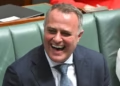
Foreign Minister Penny Wong addressed the issue during a tense Senate session in Canberra. She said operational matters concerning US submarines were the responsibility of the United States Navy. For security reasons, she added, Australia does not disclose specific information about deployed personnel.
Her remarks came after pointed questioning from Greens senator David Shoebridge. He asked whether any Australian Defence Force members were present when the submarine struck the Iranian frigate and survivors were reportedly left in the water. Wong responded that she had seen reports of the attack but would not comment on individual deployments.
The vessel that was sunk has been identified as the Islamic Republic of Iran Ship Dena. The frigate was reportedly returning from naval exercises in the Bay of Bengal when it was hit. Up to 180 personnel were believed to be onboard at the time.
United States defence officials described the attack in stark terms. US defence secretary Pete Hegseth told a Pentagon briefing that an American submarine had destroyed an Iranian warship with a torpedo. He described it as the first time since the Second World War that a US submarine had sunk an enemy vessel in combat.
Hegseth framed the strike as decisive and warned of further action. He suggested Iran’s leadership would face severe consequences following escalating hostilities in recent days. His comments have heightened fears of broader confrontation in the region.
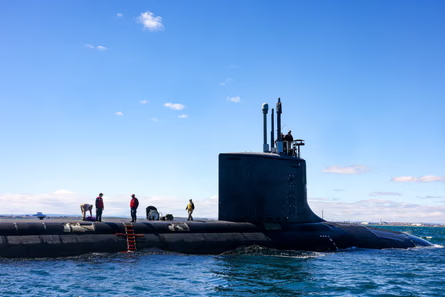
Defence trade publications reported that the submarine involved may have been the USS Minnesota, a Virginia-class vessel. The submarine rotated through HMAS Stirling in Western Australia last year as part of bilateral cooperation. The Pentagon has not confirmed that detail.
The Iranian frigate was reportedly sailing near the southern Sri Lankan city of Galle when it was struck. The area falls under the responsibility of the US Indo-Pacific Command, headquartered in Hawaii. Pearl Harbor is also home to many of the submarines hosting Australian trainees.
In October, Vice Admiral Mark Hammond told Senate estimates that more than 50 Australians were serving on US fast-attack submarines based in Pearl Harbor. He also confirmed that over 100 additional personnel were in training in the United States.
Defence Minister Richard Marles has previously highlighted the close partnership between Canberra and Washington. During a December visit to the US capital, he emphasised that hundreds of Australian service members are embedded across American defence forces. He described the cooperation as central to regional peace and stability.
Yet critics argue the secrecy surrounding the US submarine strike undermines democratic accountability. Emma Shortis, director of international and security affairs at the Australia Institute, said it was highly likely an Australian citizen was part of the submarine crew. However, she stressed that the public simply does not know.
Shortis warned that Australia’s deep integration into US military structures carries significant risks. She suggested it was possible Canberra did not receive advance notice of the strike. If that were true, she argued, it would raise further questions about sovereignty and oversight.
Iran’s foreign minister, Seyed Abbas Araghchi, condemned the attack as an atrocity. He said the United States would regret setting such a precedent far from its own shores. Tehran has vowed to respond at a time and place of its choosing.
Meanwhile, reports have emerged of increased allied military activity in the region. Two US P-8A Poseidon maritime patrol aircraft briefly stopped at RAAF Base Pearce in Western Australia earlier this week. The planes had travelled from Diego Garcia, a joint US-UK facility in the Indian Ocean.
Neither Canberra nor Washington disclosed the purpose of the stopover. The P-8A aircraft are typically used for surveillance and anti-submarine missions, though they can carry torpedoes. Their movements have fuelled speculation about coordination linked to the US submarine strike.
The broader context is a rapidly deteriorating security environment across the Indo-Pacific. Tensions between Washington and Tehran have surged following a series of confrontations at sea. The assassination of Iran’s supreme leader, Ayatollah Ali Khamenei, at the weekend has further inflamed rhetoric.
For Australia, the episode represents a delicate diplomatic balancing act. The nation remains a steadfast ally of the United States under longstanding security arrangements. At the same time, it must manage economic and diplomatic ties across Asia and the Middle East.
Public opinion at home may prove decisive. Many Australians support the AUKUS pact and the promise of advanced submarine capability. Others question the financial cost and strategic implications of deeper entanglement in American conflicts.

If Australians were onboard during the US submarine strike, it would mark the first direct involvement of Australian defence personnel in the present hostilities. Such a development could carry legal and political ramifications. It might also affect Australia’s standing in multilateral forums.
Legal scholars note that participation in offensive military action raises complex questions under international law. The classification of the waters, the status of the Iranian vessel, and the justification for force would all be scrutinised. Canberra’s silence leaves many of those issues unresolved.
In the Senate, Wong maintained that operational secrecy protects personnel and missions. She stressed that Australia continues to work closely with allies to promote regional stability. However, her refusal to confirm or deny Australian involvement has not quietened critics.
As the dust settles over the Indian Ocean, families of the Iranian sailors mourn their dead. Governments around the world are watching carefully for signs of escalation. The US submarine strike has become a flashpoint in an already volatile landscape.
For now, Australia’s official position remains measured and restrained. Yet the questions persist, both in parliament and among the public. Whether Australians were aboard that submarine may remain undisclosed, but the strategic consequences are already unfolding.
Related News:
 Just Stop Oil Protesters Convicted Amid Climate Defence Row
 BBC to Apologise Over Edited Trump Speech Amid Backlash
 Britain deploys RAF specialists to assist Belgium with drone threats
 Palace May Restore Hyphen to Andrew Mountbatten-Windsor’s Name
 US Senate Passes Funding Bill to End Historic Shutdown
 US Justice Department Files Lawsuit Against California Over Partisan Voting Maps
 Greene Pushes Epstein Files Amid Trump Fallout
 Trump Deploys DHS to Charlotte in Major Arrest Operation
 December Run-Off in Chile as Election Produces No Winner
 Zelenskyy Signs Fighter Jet Deal Amid Russian Drone Attacks
 Orban Says Ukraine Has ‘No Chance’ as EU Support Continues
 Canada Passes Carney’s First Budget in Tight Parliamentary Vote
 Israeli Strike Kills 13 Near Palestinian Camp in Lebanon
 Shadow Fleet at Sea: Europe’s Battle Against Illicit Oil Shipping
 Tiny Curacao Makes History as Smallest Nation to Reach World Cup
 Haiti Qualifies for World Cup Despite Coach Never Visiting Country
 Deadly Russian Strikes Hit Western Ukraine, 20 Killed in Ternopil
 Pentagon Officials in Ukraine to Discuss War End
 Ukraine Peace Plan: Zelensky Ready for Dialogue
 Vietnam Battles Deadly Floods as Rains Continue
 Venezuela Threatens Nobel Winner Machado with Fugitive Status
 Royal Navy Shadows Russian Warships Entering the Channel
 US Suspends Afghan Immigration After White House Shooting
 Two National Guard Soldiers Critically Injured Near White House
 Georgians Defy Government Crackdown After Year of Protests
 Southern Lebanon reels as Israeli strikes shatter communities
 Sri Lanka Floods Leave 56 Dead, Dozens Missing
 Tokyo court rules Japan’s same-sex marriage ban constitutional
 ‘Extinct’ Antelope Returns to Sahara, Bringing Hope
 EU plans $105bn Ukraine aid using frozen Russian assets
 American Mother Extradited From UK to U.S. on Murder Charges
 Russia losses Ukraine war peace talks intensify amid rising deaths
 Facebook Slow to Remove Bondi Attack Praise, Anti-Hate Group Claims
 Australian Cruise Ship Freed After Reef Grounding in Papua New Guinea
 US Cities Erupt in Protests Against Trump’s Venezuela Military Action
 Albanese Opens Door to Bondi Royal Commission Amid Rising Pressure
 Trump Escalates Minnesota Immigration Surge Amid Rising Tensions
 Iran Protesters Defy Crackdown as Violent Clashes Intensify
 US Clears Nvidia AI Chip Sales to China in Policy Shift
 Trump Threatens Strong Action If Iran Executes Protesters
 Gulf states warn Trump Iran strikes risk wider Middle East war
 Machado Trump medal gesture reshapes Venezuela power struggle
 EU weighs response amid Greenland tariff crisis with Trump
 Syria President Declares Victory as Ceasefire Reached with SDF
 Sydney Shark Attack Surge Shocks Australia Beaches
 ICE street raids expose a chilling future for public freedoms
 Thousands Flee Cambodia Scam Centres Amid Global Pressure
 EU Says US Ties Have Suffered ‘Big Blow’ After Greenland Crisis
 Andrew Hastie Emerges as Leadership Rival to Ley
 Starmer China visit raises human rights pressure on Beijing
 Videos reveal earlier clash before Alex Pretti shooting
 China Executes 11 Linked to Myanmar Scam Networks
 UK New Car Discounts Near £6,000 as Prices Are Slashed
 Israel Moves to Bar MSF From Gaza Operations
 Tragic Ski Lift Accident Claims Australian Snowboarder
 Thousands Left Without Heating in Ukraine Amid Russia Strikes
 Portugal Election Delivers Socialist Win as Far Right Surges
 Tarique Rahman’s Rise Toward Bangladesh’s Top Job
 Australian Families Leave Syrian Camp for Home
 SA Police Intensify Search in Gus Lamont Case
 Trump Attacks UK-California Energy Pact
 Trump and Chagos Deal Rift Over Iran Strikes
 Andrew Arrest Sparks Republic Debate in Australia
 Global corruption crisis: Who Washington shields
 Farage Chagos Islands Row Sparks Fury
 Gold Rush in Gugulethu Leaves South Africans Desperate for Work and Hope
 Greenpeace $345m Ruling Sparks Appeal Battle
 Hilary Knight speaks out on Trump’s recent hockey remarks
 Trump Speech Sparks Intense Debate Across Divided America
 Has Europe truly learned from the failures of 2022?
 Social Media Trial: Woman Says Addiction Began at Six
 UK Personnel Near Iranian Missile Strike in Bahrain
 Trump Faces Questions Over Iran Conflict Plan
 Iran Civilian Deaths Surge Past 200 Amid Fear
 US Iran Operation: Sixth Service Member Killed
 Herzog Asio meeting sparks security storm
 Trump rebukes Starmer over Iran strikes
 Middle East attacks intensify as Trump rejects Iran talks
 Iran-Iraq border airstrikes spark new tensions
 Petrol Prices Soar as Retailers Accused of Gouging Amid Global Tension