Published: 10 March 2026. The English Chronicle Desk. The English Chronicle Online.
Global energy markets experienced dramatic swings as oil prices dropped sharply after reassurance from former United States president Donald Trump regarding the escalating Iran conflict. Investors reacted quickly after signals suggested that the military confrontation involving the United States, Israel, and Iran might soon ease.
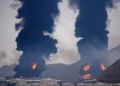
The sudden drop in oil prices followed one of the most volatile trading periods in recent years. The sharp fluctuations reflected growing anxiety over global energy supplies during escalating tensions across the Middle East. For a brief moment, traders feared the conflict could disrupt one of the world’s most important oil transport routes.
Earlier in the day, Brent crude surged to an alarming $119.50 per barrel, marking the highest level in four years. The rapid increase occurred as reports of escalating military strikes intensified fears of supply disruptions. Global markets reacted immediately, pushing energy prices sharply higher as uncertainty spread among investors.
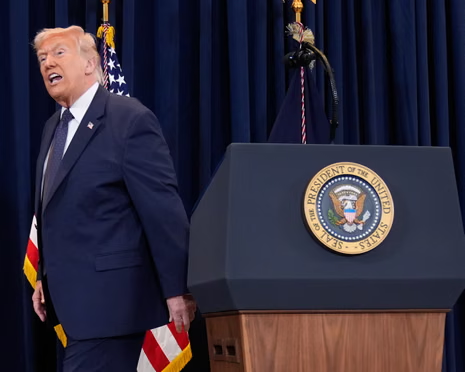
Within hours, however, oil prices dropped significantly after Trump made remarks suggesting the conflict could conclude sooner than expected. During an interview with CBS News, he described the war with Iran as “very complete, pretty much.” These comments appeared to calm investors who feared a prolonged confrontation across the region.

Markets responded almost immediately to these statements, causing Brent crude prices to fall sharply to approximately $91.58 per barrel. The swift decline illustrated how sensitive global energy markets remain to political developments and diplomatic signals.
The dramatic shift represented a remarkable reversal within a single day of trading activity. Analysts noted that geopolitical developments, particularly in energy-producing regions, often influence oil markets more strongly than economic indicators.
Although oil prices dropped after Trump’s remarks, uncertainty continued to dominate discussions among energy traders and policymakers. Markets remained cautious because later statements from Trump suggested the conflict might continue despite earlier reassurance.
Speaking later, Trump claimed the United States had achieved significant progress but acknowledged the situation remained unresolved. He stated that while the United States had “won in many ways,” the outcome had not yet fully achieved strategic goals.
Additional comments on social media introduced further ambiguity about the future of the conflict. Trump warned that any attempt by Iran to disrupt oil shipments would provoke an extremely forceful response from Washington.
He wrote that if Iran interfered with the flow of oil through the Strait of Hormuz, the United States would respond “twenty times harder.” This statement once again heightened concerns across global markets about potential disruptions to vital energy supplies.
The Strait of Hormuz represents one of the most critical energy corridors in the world. Roughly one fifth of the global oil supply transported by sea typically passes through this narrow maritime route each day.
For nearly a week, shipping through the strait has been heavily restricted due to military tensions. This disruption alone contributed significantly to the earlier surge in oil prices witnessed across international markets.
Iranian officials responded with strong warnings of their own regarding continued military operations. State media reported that Tehran would block all oil exports from the region if attacks by the United States and Israel persisted.
A spokesperson linked to Iran’s Islamic Revolutionary Guard Corps declared that not “one litre of oil” would leave the region if hostilities continued. Such rhetoric further underscored the fragile security environment surrounding global energy infrastructure.
The threat of restricted energy supplies has deeply concerned governments and businesses around the world. Even temporary disruptions in oil transport routes can trigger widespread economic consequences.
European leaders have begun discussing potential measures to secure maritime trade routes once the conflict stabilises. French president Emmanuel Macron suggested that several countries could deploy naval vessels to escort commercial ships.
These escort missions could help protect tankers and container vessels travelling through the Strait of Hormuz. Such operations aim to restore confidence in shipping lanes that support a significant portion of global energy trade.
Energy analysts emphasise that market reactions often amplify uncertainty during geopolitical crises. Investors quickly price potential supply disruptions into oil markets, sometimes producing dramatic spikes or declines.
The recent surge followed a familiar pattern observed during previous international crises. Markets frequently react sharply when military confrontations threaten vital energy infrastructure or shipping routes.
The conflict has also prompted discussions about global sanctions and their influence on oil supply. Trump indicated that the United States may temporarily ease certain oil-related sanctions to stabilise markets.
He explained that Washington might remove restrictions on some countries until the Strait of Hormuz fully reopens. The announcement suggested a willingness to adjust economic policy in order to protect global energy stability.
Although Trump did not specify the countries affected, analysts believe the decision could involve adjustments related to Russia. The remarks followed a recent conversation between Trump and Russian president Vladimir Putin.
Allowing increased Russian oil exports could complicate existing efforts to pressure Moscow over its invasion of Ukraine. Western governments previously imposed extensive sanctions aimed at limiting Russia’s energy revenues.
The temporary policy shift highlights the complex balance between geopolitical strategy and global economic stability. Governments often face difficult choices when international conflicts threaten vital commodity supplies.
Last week, the Trump administration permitted Indian oil refiners to purchase Russian crude for thirty days. The move followed earlier claims that India had agreed to halt such purchases entirely.
Trump previously suggested that cutting off Russian oil revenues could help bring an end to the war in Ukraine. However, the latest decision illustrates how energy shortages can force governments to reconsider previous commitments.
Although oil prices dropped from Monday’s extreme levels, they remain significantly higher than recent averages. Only weeks ago, global crude prices were trading far below the dramatic peaks recorded during the latest crisis.
Higher fuel costs have already triggered emergency responses from several governments worldwide. Authorities across Europe and Asia have introduced temporary measures to shield consumers from sudden price increases.
Countries including Croatia, Hungary, South Korea, and Thailand recently imposed caps on fuel prices. These policies aim to prevent rising transport and energy costs from placing excessive strain on households.
Other nations have adopted broader energy conservation strategies in response to market instability. Governments fear that prolonged supply disruptions could eventually affect electricity generation and transportation systems.
The Philippines introduced new restrictions designed to reduce fuel consumption across government departments. Officials were instructed to limit air conditioning use and reduce official travel wherever possible.
Bangladesh also introduced emergency energy-saving measures as concerns about supply shortages intensified. Authorities temporarily closed universities and brought forward the Eid al-Fitr holidays to conserve electricity and fuel.

These actions highlight how energy markets influence everyday life far beyond financial trading floors. Fluctuating oil prices affect transportation, manufacturing, agriculture, and household energy costs worldwide.
Energy experts believe markets will remain volatile until tensions in the Middle East ease significantly. Investors continue monitoring diplomatic signals, military developments, and shipping activity around the Strait of Hormuz.
Despite the recent decline, analysts warn that oil prices could rise again if hostilities escalate. Any disruption to maritime transport routes would immediately threaten global energy supplies.
For now, the sharp fall in oil prices reflects cautious optimism that the conflict might stabilise soon. Markets remain sensitive to every statement from political leaders involved in the crisis.
The dramatic events of the past day illustrate how geopolitics continues shaping the modern energy economy. Even brief military confrontations can send shockwaves across global financial markets.
As diplomacy, military operations, and economic decisions unfold, the world continues watching the volatile energy landscape. For investors and governments alike, stability in oil prices remains essential for economic confidence.
Related News:
 Just Stop Oil Protesters Convicted Amid Climate Defence Row
 BBC to Apologise Over Edited Trump Speech Amid Backlash
 Britain deploys RAF specialists to assist Belgium with drone threats
 Palace May Restore Hyphen to Andrew Mountbatten-Windsor’s Name
 US Senate Passes Funding Bill to End Historic Shutdown
 US Justice Department Files Lawsuit Against California Over Partisan Voting Maps
 Greene Pushes Epstein Files Amid Trump Fallout
 Trump Deploys DHS to Charlotte in Major Arrest Operation
 December Run-Off in Chile as Election Produces No Winner
 Zelenskyy Signs Fighter Jet Deal Amid Russian Drone Attacks
 Orban Says Ukraine Has ‘No Chance’ as EU Support Continues
 Canada Passes Carney’s First Budget in Tight Parliamentary Vote
 Israeli Strike Kills 13 Near Palestinian Camp in Lebanon
 Shadow Fleet at Sea: Europe’s Battle Against Illicit Oil Shipping
 Tiny Curacao Makes History as Smallest Nation to Reach World Cup
 Haiti Qualifies for World Cup Despite Coach Never Visiting Country
 Deadly Russian Strikes Hit Western Ukraine, 20 Killed in Ternopil
 Pentagon Officials in Ukraine to Discuss War End
 Ukraine Peace Plan: Zelensky Ready for Dialogue
 Vietnam Battles Deadly Floods as Rains Continue
 Venezuela Threatens Nobel Winner Machado with Fugitive Status
 Royal Navy Shadows Russian Warships Entering the Channel
 US Suspends Afghan Immigration After White House Shooting
 Two National Guard Soldiers Critically Injured Near White House
 Georgians Defy Government Crackdown After Year of Protests
 Southern Lebanon reels as Israeli strikes shatter communities
 Sri Lanka Floods Leave 56 Dead, Dozens Missing
 Tokyo court rules Japan’s same-sex marriage ban constitutional
 ‘Extinct’ Antelope Returns to Sahara, Bringing Hope
 EU plans $105bn Ukraine aid using frozen Russian assets
 American Mother Extradited From UK to U.S. on Murder Charges
 Russia losses Ukraine war peace talks intensify amid rising deaths
 Facebook Slow to Remove Bondi Attack Praise, Anti-Hate Group Claims
 Australian Cruise Ship Freed After Reef Grounding in Papua New Guinea
 US Cities Erupt in Protests Against Trump’s Venezuela Military Action
 Albanese Opens Door to Bondi Royal Commission Amid Rising Pressure
 Trump Escalates Minnesota Immigration Surge Amid Rising Tensions
 Iran Protesters Defy Crackdown as Violent Clashes Intensify
 US Clears Nvidia AI Chip Sales to China in Policy Shift
 Trump Threatens Strong Action If Iran Executes Protesters
 Gulf states warn Trump Iran strikes risk wider Middle East war
 Machado Trump medal gesture reshapes Venezuela power struggle
 EU weighs response amid Greenland tariff crisis with Trump
 Syria President Declares Victory as Ceasefire Reached with SDF
 Sydney Shark Attack Surge Shocks Australia Beaches
 Thousands Flee Cambodia Scam Centres Amid Global Pressure
 EU Says US Ties Have Suffered ‘Big Blow’ After Greenland Crisis
 Andrew Hastie Emerges as Leadership Rival to Ley
 Videos reveal earlier clash before Alex Pretti shooting
 UK New Car Discounts Near £6,000 as Prices Are Slashed
 Israel Moves to Bar MSF From Gaza Operations
 Tragic Ski Lift Accident Claims Australian Snowboarder
 Portugal Election Delivers Socialist Win as Far Right Surges
 Australian Families Leave Syrian Camp for Home
 SA Police Intensify Search in Gus Lamont Case
 Trump Attacks UK-California Energy Pact
 Trump and Chagos Deal Rift Over Iran Strikes
 Andrew Arrest Sparks Republic Debate in Australia
 Global corruption crisis: Who Washington shields
 Farage Chagos Islands Row Sparks Fury
 Gold Rush in Gugulethu Leaves South Africans Desperate for Work and Hope
 Greenpeace $345m Ruling Sparks Appeal Battle
 Hilary Knight speaks out on Trump’s recent hockey remarks
 Trump Speech Sparks Intense Debate Across Divided America
 Has Europe truly learned from the failures of 2022?
 Social Media Trial: Woman Says Addiction Began at Six
 UK Personnel Near Iranian Missile Strike in Bahrain
 Trump Faces Questions Over Iran Conflict Plan
 Iran Civilian Deaths Surge Past 200 Amid Fear
 US Iran Operation: Sixth Service Member Killed
 Herzog Asio meeting sparks security storm
 Trump rebukes Starmer over Iran strikes
 Middle East attacks intensify as Trump rejects Iran talks
 Iran-Iraq border airstrikes spark new tensions
 Petrol Prices Soar as Retailers Accused of Gouging Amid Global Tension
 Penny Wong silent on Australian crew in sub strike
 Australians on US Submarine in Iranian Warship Strike
 Oil Prices Surge Above $100 Amid Iran War
 Pete Hegseth Iran War Remarks Spark Alarm
 India T20 World Cup Triumph Seals Historic Title Defence