Published: 10 March 2026. The English Chronicle Desk. The English Chronicle Online.
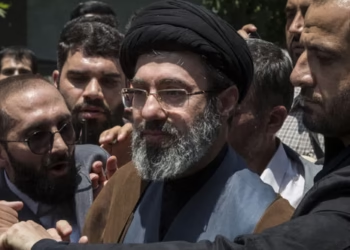
Crowds gathered in Tehran on Monday as Iran entered a dramatic new chapter. The emergence of Mojtaba Khamenei as supreme leader has divided the nation sharply. While state media broadcast scenes of loyalty, many Iranians quietly expressed fear about repression. The contrasting reactions revealed deep tensions following the death of the country’s longtime leader.
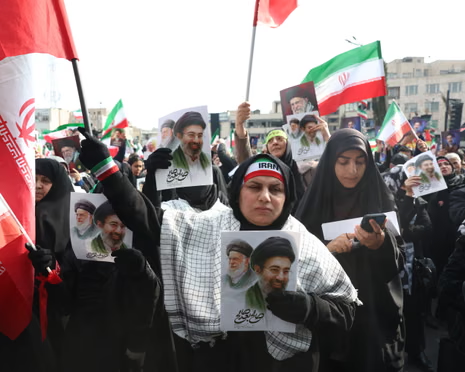
At around midday, large crowds assembled in Tehran’s well-known Enghelab Square. Demonstrators held banners bearing the image of slain leader Ayatollah Ali Khamenei. Alongside those banners appeared a new portrait now dominating state television screens. That portrait belonged to Mojtaba Khamenei, the son who has suddenly inherited power.
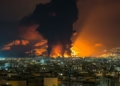
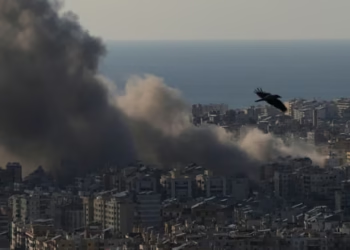
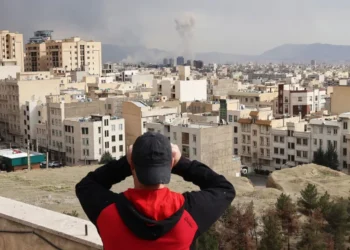
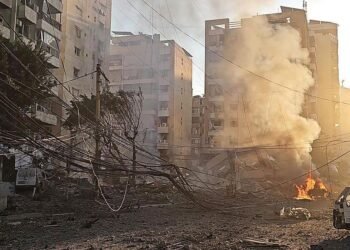
The rallies came even as airstrikes continued to hit areas of the capital. Sirens sounded across neighbourhoods while demonstrators chanted loyalty slogans. Some participants waved flags while repeating familiar revolutionary chants heard during previous political crises. State television presented these gatherings as a spontaneous national movement supporting the new leader.
Similar demonstrations were reported across several major Iranian cities. Crowds gathered in public squares while security forces monitored the rallies carefully. Participants shouted slogans condemning the United States and Israel during the televised events. State media commentators described the rallies as proof that national unity remains strong.

Yet these images contrasted sharply with scenes recorded just days earlier. When Ali Khamenei was killed in a joint United States and Israeli strike, celebrations erupted in parts of the country. Videos circulated online showing people dancing and cheering in streets across several cities. Many citizens blamed the late cleric for decades of repression and violence.
Ali Khamenei ruled Iran for thirty seven years after assuming power in 1989. His leadership oversaw harsh crackdowns on anti government demonstrations across multiple decades. Thousands of protesters were reportedly killed during violent confrontations with state security forces. These memories remain fresh for many Iranians who experienced those turbulent political struggles.
In the hours before the new leader’s announcement, other videos appeared on social media. Several recordings showed crowds chanting slogans opposing Mojtaba Khamenei in Tehran streets. Protesters shouted “Death to Mojtaba” in defiance of the political succession unfolding. Those scenes circulated widely online before authorities imposed severe internet restrictions nationwide.
The government introduced an internet blackout during the first day of escalating conflict. Access to international networks remains limited across most regions of Iran. Despite restrictions, some citizens have managed to send messages to friends abroad. These private communications reveal deep uncertainty about what the future might hold.
One university student from Mashhad described the atmosphere as tense and unpredictable. The student, identified only as Nima for security reasons, shared concerns through text messages. According to him, many people are waiting cautiously to see what developments follow. Some even speculate about possible external actions against the newly appointed leader.
Nima explained that Mojtaba Khamenei has always maintained a relatively low public profile. Despite limited appearances, he is believed to wield significant influence within powerful institutions. Observers frequently link him to the Islamic Revolutionary Guard Corps and the Basij militia. Those groups form the backbone of Iran’s powerful security establishment.
The Basij militia is widely known for its role in suppressing anti government protests. Many activists accuse its members of using violence against demonstrators across several decades. Because of these associations, critics view the new leadership with deep suspicion. They fear that repression may intensify under Mojtaba Khamenei’s authority.
Nima believes the new leader may prove even more uncompromising than his father. He said Mojtaba Khamenei enjoys strong connections with security institutions throughout the country. According to the student, those networks could consolidate further power around the new leader. That possibility worries many citizens already exhausted by years of political pressure.
State media reports suggest the attack that killed Ali Khamenei was devastating. The strike reportedly killed several members of the leader’s family as well. Among the reported victims were Mojtaba Khamenei’s wife and his son. Some rumours also claim the new supreme leader suffered injuries during the same strike.
Despite the ongoing war, authorities continue enforcing strict internal security measures nationwide. Iran’s prosecutor general recently issued a severe warning directed at citizens abroad. The statement declared cooperation with hostile foreign powers could bring harsh consequences. Officials warned that property confiscation and even execution might follow such accusations.
Another young protester living in western Tehran described a tense atmosphere across neighbourhood streets. He spoke anonymously using the name Farzad to avoid possible retaliation. According to him, security forces have patrolled the city continuously since Khamenei’s death. Motorcycles carrying Basij members reportedly move through streets chanting religious slogans.
Farzad said many members of these forces appear intensely angry after recent events. The loss of the supreme leader and his relatives has heightened emotions among supporters. He believes authorities may blame protesters for contributing to the conflict environment. That fear has discouraged public demonstrations despite widespread dissatisfaction among ordinary citizens.
Farzad also suggested the leadership decision sends a political message internationally. According to him, choosing Mojtaba Khamenei signals that Iran will not retreat under pressure. Hardline figures within the regime appear determined to continue confrontation despite external threats. Many citizens, however, fear that prolonged conflict will worsen daily life.
Supporters of the new leader portray his appointment as a continuation of revolutionary ideals. Pro government media outlets circulated symbolic images reinforcing that narrative across social networks. One widely shared illustration showed Ali Khamenei passing a folded national flag to his son. The image suggested a smooth transfer of authority within the leadership.
At one pro government rally, a university student spoke enthusiastically about the succession. Zahra Mirbagheri told international reporters that the appointment represented strength. She said foreign enemies had hoped Iran’s system would collapse after the assassination. Instead, supporters believe the leadership transition demonstrates resilience during an extremely dangerous period.
Nevertheless, critics argue the succession contradicts the ideological foundation of the Islamic Republic. The state emerged from the 1979 revolution that overthrew the monarchy of Shah Mohammad Reza Pahlavi. Revolutionary leaders promised to eliminate hereditary political authority in Iran permanently. The emergence of a father to son succession therefore raises uncomfortable questions.
Some activists have reacted with biting sarcasm to the leadership change. One Tehran based activist mockingly pledged loyalty to what they called the “new crown prince.” The comment reflected frustration that Iran might be drifting toward dynastic rule. Critics fear this perception could further erode the regime’s political legitimacy.

The activist also questioned the international strategy surrounding the recent military operation. They suggested the strike intended to weaken hardliners may produce the opposite outcome. According to that view, removing the older leader could empower even more rigid factions. Such consequences might influence both regional stability and global political dynamics.
For many citizens, the most immediate concern remains daily survival amid political uncertainty. Airstrikes, economic hardship, and strict security controls have created enormous pressure nationwide. Families struggle with shortages while fearing further escalation in the ongoing conflict. Amid these challenges, ordinary people continue waiting anxiously for signs of stability.
Whether Mojtaba Khamenei will consolidate power successfully remains an open question. His leadership begins during one of the most volatile moments in modern Iranian history. Supporters hope continuity will preserve the political system built over four decades. Critics worry the future may bring deeper repression and prolonged confrontation.
For now, the nation remains sharply divided between public loyalty and private anxiety. State television celebrates unity around the new leader with confident imagery. Yet private messages from inside the country reveal uncertainty and fear. Iran stands at a crossroads where the consequences of this transition could shape decades ahead.
Related News:
 Middle East Flights Halted After Iran Strikes
 UK Prepares Aircraft Carrier for Middle East Crisis
 Mojtaba Khamenei Chosen as Iran’s New Supreme Leader
 Tehran Oil Depot Strikes Darken City With Toxic Smoke
 British Woman in Iran ‘Losing Hope’ Amid Ongoing Detention
 BBC Journalist Held and Interrogated in Vietnam
 UK University Suspends Human Rights Research Following Pressure from China
 BBC to Apologise Over Edited Trump Speech Amid Backlash
 Britain deploys RAF specialists to assist Belgium with drone threats
 US Justice Department Files Lawsuit Against California Over Partisan Voting Maps
 Greene Pushes Epstein Files Amid Trump Fallout
 Trump Deploys DHS to Charlotte in Major Arrest Operation
 December Run-Off in Chile as Election Produces No Winner
 Canada Passes Carney’s First Budget in Tight Parliamentary Vote
 Shadow Fleet at Sea: Europe’s Battle Against Illicit Oil Shipping
 Pentagon Officials in Ukraine to Discuss War End
 Venezuela Threatens Nobel Winner Machado with Fugitive Status
 Trump Envoy to Discuss Ukraine Peace at Kremlin
 Georgians Defy Government Crackdown After Year of Protests
 India’s Labour Law Overhaul Sparks Fierce Debate
 EU plans $105bn Ukraine aid using frozen Russian assets
 Global campaign launched to free Palestinian leader Barghouti
 Russia losses Ukraine war peace talks intensify amid rising deaths
 Zelenskyy Accuses Russia of Sabotaging Peace Talks
 Albanese Opens Door to Bondi Royal Commission Amid Rising Pressure
 Trump Escalates Minnesota Immigration Surge Amid Rising Tensions
 Iran Protesters Defy Crackdown as Violent Clashes Intensify
 Trump Threatens Strong Action If Iran Executes Protesters
 Machado Trump medal gesture reshapes Venezuela power struggle
 Trump Receives Machado’s Nobel Medal in White House Meeting
 EU weighs response amid Greenland tariff crisis with Trump
 US Considers Asylum for British Jews Amid Rising Antisemitism
 ICE street raids expose a chilling future for public freedoms
 EU Says US Ties Have Suffered ‘Big Blow’ After Greenland Crisis
 Andrew Hastie Emerges as Leadership Rival to Ley
 Starmer China visit underscores clear-eyed national security stance
 Starmer China visit raises human rights pressure on Beijing
 Israel Moves to Bar MSF From Gaza Operations
 Trump Praises ‘Terrific’ Petro After White House Talks
 Sydney Protest Escalates and Elderly Woman Suffers Severe Injury
 Tarique Rahman’s Rise Toward Bangladesh’s Top Job
 Glass Cliff Debate After Ley’s Ouster
 Australian Families Leave Syrian Camp for Home
 Trump Attacks UK-California Energy Pact
 Kim Jong-un Unveils Housing for War Families
 Trump and Chagos Deal Rift Over Iran Strikes
 Andrew Mountbatten-Windsor Arrest After FBI Radar
 Andrew Arrest Sparks Republic Debate in Australia
 Global corruption crisis: Who Washington shields
 Duterte ICC Hearing Begins Amid Defiance
 Farage Chagos Islands Row Sparks Fury
 Trump Tariffs Threat Spark UK and EU Alarm
 The Dangerous Rise of Remigration Across Modern Europe
 Trump Speech Sparks Intense Debate Across Divided America
 Jacinda Ardern Moves To Australia Following Her US Fellowships
 US to offer passport services in West Bank settlements
 Has Europe truly learned from the failures of 2022?
 Health Funding Row Rocks US‑Africa Relations
 Iran’s Regime Still Intact — Coming Days Will Test Its Survival
 Allies of US in the Gulf Bear Brunt of Iran Attacks
 Hopes and Fears as US Iranians Take to Streets After Toppling of Supreme Leader
 Iran, the US, and a World Cup That Starts in Three Months
 Trump Faces Questions Over Iran Conflict Plan
 Nick Greiner Warns Over Election Review Fallout
 US Iran Operation: Sixth Service Member Killed
 Hezbollah Anger Erupts as War Returns to Beirut
 Why the US and Israel attacked Iran
 Israel Launches Fresh Strikes on Tehran & Beirut; US Warns “Hardest Hits” Ahead
 Israel Launches Ground Invasion of Lebanon Amid Widening Middle East War
 Herzog Asio meeting sparks security storm
 Middle East attacks intensify as Trump rejects Iran talks
 Trump Rebukes Starmer Over Iran Strikes Row
 Iran-Iraq border airstrikes spark new tensions
 US Senate Backs Trump War Powers Amid Iran Missile Barrage
 Macron Finds ‘Freedom Fries’ Redemption in Iran Crisis
 Thousands Protest Iran Strikes Outside US Embassy London
 US Bombers Arrive at RAF Base Amid Rising Iran Tensions
 Pete Hegseth Iran War Remarks Spark Alarm
 Kasasa Island Dispute Fuels Japan-China Tensions
 Nine Days of Strikes Reshape the Middle East