Published: 10 March 2026. The English Chronicle Desk. The English Chronicle Online.
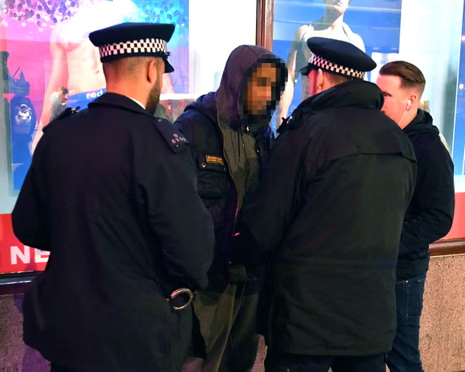
Black people in London are up to 48 times more likely than white residents to face stop and search, a comprehensive new study has revealed. The report, commissioned by the office of Mayor Sadiq Khan and conducted by King’s College London, examined data from 2023 and highlighted stark disparities across London’s most affluent boroughs. Researchers analysed 152,000 recorded stops to assess whether the police had reasonable grounds for applying this controversial power, finding alarming patterns in the treatment of black residents.
Stop and search powers have long sparked debate because of concerns about racial prejudice and disproportionate targeting. Across England and Wales, black people are roughly four times more likely to be stopped than white people, while for the Metropolitan Police the figure rises slightly to 3.7 times. Yet the research revealed that in some wealthy wards, the disparity is extreme, raising questions about fairness and policing practices in London.
In Richmond-upon-Thames, particularly East Sheen where average home prices exceed £1 million, black residents were stopped 48 times more frequently than white residents. Similarly, in Dulwich Village, black people represented only 5.6% of the population, yet were numerically stopped more often than white residents, with 58 searches compared with 21. Hampstead town in north London also saw black people stopped 38 times more frequently, highlighting a troubling concentration of disproportionate policing in affluent areas.
The study emphasised that the reasons officers gave for these stops were often vague or weak. In one case on the Strand, a central London officer cited a “furtive glance” and an “involuntary action” as justification to search a black man, ultimately finding no illegal items. Such examples illustrate the broader issue of low-quality grounds that can undermine public trust in law enforcement, particularly among minority communities.

Dr Yijing Li, a senior lecturer involved in the research, explained that the modelling revealed “clear evidence of unexplained disproportionality” across London. The study found that weaker grounds for stops correlated directly with negative public perception of police fairness, which in turn erodes confidence and trust in law enforcement institutions.
Among those who experienced stop and search, 65% of white people felt the process was procedurally fair, while only 37% of black people agreed. This disparity has a profound impact on community confidence. Individuals perceiving a fair stop retained relatively strong trust in the Metropolitan Police, with 67% expressing trust and 43% confidence. However, these numbers dropped sharply for those who felt unfairly treated, with fewer than one in four reporting trust or confidence in the force.
Mayor Sadiq Khan said the findings demonstrate “significant and unacceptable levels of disproportionality” that require immediate action. Khan announced the introduction of a mandatory annual report to monitor how stop and search powers are applied across the city, emphasising that both public safety and community trust depend on correct and fair usage. He stated that improving the application of these powers is crucial for safeguarding lives and maintaining confidence in policing.
The Home Office described the research as “innovative” and urged the Metropolitan Police to act promptly on the findings. Officials acknowledged the importance of addressing disproportionality to ensure policing practices remain equitable and evidence-based. The government’s response highlighted the need for ongoing monitoring and accountability, particularly in wards where extreme disparities have been documented.
The Metropolitan Police defended its use of stop and search, claiming that it has become more precise and effective in detecting crime since 2023. Officials noted that over 70% of Londoners support the use of stop and search when applied with accuracy, describing it as an essential tool for preventing violence and saving lives. They further noted that independent inspections in 2024 found 95% of stops met required standards, reflecting improvements in procedural compliance.
Community accountability measures have also been strengthened. Every London borough now hosts an independent scrutiny panel, and the Stop and Search Charter, published last year, was developed in collaboration with local communities. This charter outlines commitments to consistency, fairness, and transparency, aiming to reduce the disproportionate targeting of minority residents and ensure that stop and search powers are understood and trusted by the public.
Despite these reforms, the research emphasises that disproportionality remains concentrated in certain areas. Approximately 25 of London’s 679 council wards showed stop rates for black residents 20 times higher than white residents, while another 60 wards demonstrated at least tenfold disparities. These figures underline the need for targeted interventions and continuous evaluation of policing policies, particularly in high-income neighborhoods where disproportionate stops can undermine both trust and social cohesion.
The social and psychological impact of such stops is considerable. Experiencing or witnessing disproportionate targeting contributes to fear, resentment, and a sense of injustice, which can ripple across communities. Research suggests that perceptions of unfair treatment reduce cooperation with law enforcement, limit reporting of crime, and reinforce feelings of exclusion. As such, the study argues that reducing unnecessary stops and improving procedural fairness is not only a legal imperative but a social necessity for building stronger community relations.
Experts highlight the role of transparent data reporting in tackling disproportionality. Accurate collection and analysis of stop and search incidents allow for identification of high-risk areas, enable proper training of officers, and inform policies designed to address systemic biases. By monitoring both the grounds for stops and the outcomes, authorities can better understand the factors driving inequality and take evidence-based action to restore confidence in policing.

The report also underscores the broader context of racial disparities in criminal justice, including arrests, convictions, and sentencing, where black individuals often face disproportionate outcomes. Addressing stop and search disproportionality is therefore seen as a critical step in tackling systemic inequality and promoting fairer treatment across all levels of law enforcement. Advocates argue that implementing strict guidelines and accountability measures can help ensure that police powers are used responsibly and without prejudice.
Public debate over stop and search remains highly charged, with some arguing that the power is essential for preventing violent crime, while others view it as a tool that disproportionately targets minority communities. The research seeks to move this debate toward evidence-based policymaking, highlighting where improvements can be made and where enforcement practices may currently perpetuate inequality.
Ultimately, the findings illustrate a pressing need for reforms that balance public safety with fairness. Implementing consistent standards, improving transparency, and actively monitoring disproportionality are critical for ensuring that stop and search powers protect communities rather than eroding trust. As London continues to grow and diversify, these reforms will be central to fostering equitable policing and maintaining confidence in law enforcement institutions citywide.
The study offers a data-driven roadmap for policymakers and law enforcement to address structural disparities. By committing to ongoing evaluation, public reporting, and community engagement, authorities can reduce unjustified stops and build a foundation of trust and accountability. This approach also demonstrates that tackling disproportionate policing is both a moral and practical priority, vital to sustaining safety, cohesion, and fairness across London.
Related News:
 Mother dies after black market weight loss injection
 Young Woman Missed 13 Times by GPs Before Bowel Cancer Diagnosis
 Peterborough Mosques Tighten Security After Attack
 It’s time to come clean on the China spy case
 Five More Prisoners Freed by Mistake in Essex Week
 Nearly 48,000 Zombie Knives Removed from UK Streets in a Year
 Prince Andrew Stripped of Title: Giuffre Family Hails Historic Moment
 Afghan man charged with murder after west London knife attack
 Reform Councillor Defects to Tories Over ‘Uncomfortable’ Policies
 FBI Director Kash Patel Defends Girlfriend Amid Government Jet Claims
Trump Speaks on Prince Andrew’s Royal Scandal Fallout
FBI Director Kash Patel Defends Girlfriend Amid Government Jet Claims
Trump Speaks on Prince Andrew’s Royal Scandal Fallout
 Man Charged Over Cambridgeshire Train Stabbing
 Experts Warn on Home Birth Risks, Call for Skilled Midwives
 French Taxi Driver Cleared in David Lammy Theft Case After Fare Dispute
 UK Bans Fake Numbers: Scammers Lose Their Trick
 Just Stop Oil Protesters Convicted Amid Climate Defence Row
 Company linked to Michelle Mone owes £39m in tax
 Met Police Culture Makes Racial Harm ‘Inevitable’
 Southport Inquiry: Killer’s Parents Must Face Accountability
 British Grandmother to Return Home After Death Sentence in Bali
 Eleven Arrested After Pro-Palestine Protest at Villa Match
 Jailed UK climate protesters face extremist-style restrictions
 Boris Johnson accused of undermining BBC leadership
 Remaining rebel Labour MPs have whip restored
 How to get help when a child goes missing – call 999 urgently
 ‘Reckless’ cuts to victims’ services will cost more than they save
 BBC Faces Backlash as Reform UK Withdraws from Film
 Madeleine McCann Suspect Forced into Woodland Hideout After Release
 Wes Streeting Denies Leadership Plot Against Starmer
 British state supplied victims to ‘worst sex offender in history’
 Leading doctors issue warning amid ‘bad’ flu season
 UK Centres Used Risky Heart Pump Despite Safety Fears
 ‘Fever Pitch’ Screaming: Red Flags Before Sara Sharif’s Death
 Met Police Clarifies Scale of Grooming Gang Cases
 ‘Fake Admiral’ Sparks Outrage at Remembrance Event
 Criminal Gangs Pose as Truckers to Hijack UK Supply Chains
 Mum Calls for New Licence Rules After Teen Road Death
 UK Candidate Moved to Safe House After Election Threats
 Paralegal Fired After Exposé on Illegal Worker Scam
 Dan Wootton Rejects Catfishing Allegation in Court
 Mother Watches in Horror as Teen Daughter Dies on Tracks
 Serial Rapist and Former Cop Found Guilty Again
 Podcaster Faces Abuse Charges Over Controlling Behaviour
 Police Name Woman Who Died in Swindon as Murder Probe Continues
 Inside the Helpline Protecting Missing Children in the UK
 Most Tories Expect to Support a Farage-Led Government
 Swindon Counsellor Dies; Teen Arrested and Released
 Carer’s Allowance Chaos Draws Parallels With Post Office Scandal
 DWP to Reassess Hundreds of Thousands in Carer Allowance Scandal
 Gardener Guilty of Brutal Attack on Teacher Partner
 BBC Chairman Faces Scrutiny Over Bias Claims
 Ex-Classmate Accuses Farage of Dishonesty on Racism Claims
 15-Year-Old Arrested After Sheffield Shooting Leaves Teen Critical
 Inquiry Opens Into Disgraced Surgeon Eljamel Scandal
 Sudanese Family Vows to Stay After Racist Graffiti
 Ex-Brexit MEP Rejects Claim of Pro-Russia Payments
 Twelve Prisoners Released in Error, Two Still Missing
 Kent Reform Councillors Criticised Over Political Staff Spending
 Russell Brand Faces New Sexual Offence Charges Including Rape
 Teen Misidentified in Yorkshire Crash Sparks Family’s Ordeal
 Met Police Vetting Failures Let Serial Rapists Remain
 New Documentary Examines Teen’s Zombie Knife Murder
 Woman Jailed for Life After Killing E-Bike Rider in Tragic Mistaken Identity Case
 ‘It’s a Complete Scandal’: Aristocrat’s Fight for Prison Children
 Police response times face strict new national limits
 Record prison recalls rise sharply in England and Wales
 School vetting failure exposed by London abuse case
 Teen Girl Chased in Broad Daylight in Ipswich
 Man Arrested After University of Lancashire Student Found Dead
 Kingsbury stabbing probe led by counter-terror police
 Former Pupil Held After London School Stabbing
 Children to Receive Early Support After Knife Incidents
 London school stabbing: 13-year-old boy charged with attempted murder
 Epstein UK Flights Under Police Scrutiny
 Northampton Skate Park Stabbing Leaves Man Dead and Teen in Critical Condition
 Nottingham killer inquiry hears race claim
 Criminal Gangs Target UK Shops, Costing Retailers £400m
 Mother Says ‘I Hugged My Daughter’s Killer’ as They Cried Together in Prison
 Insulin Evidence in Letby Trial Under Scrutiny After Expert’s GMC Probe Emerges
 Undercover officer deceived women with ‘grotesque and cruel’ lies, spycops inquiry told