Published: 13 March 2026. The English Chronicle Desk. The English Chronicle Online.
A British tourist charged under cybercrime laws in Dubai has drawn global attention this week. Authorities in the United Arab Emirates confirmed that a 60-year-old visitor from London faces legal action after filming and sharing material linked to Iranian missile strikes. The British tourist charged case has quickly sparked debate among legal experts, journalists, and travellers about strict online laws in the Gulf state.
Officials said the man was one of 20 individuals charged following an investigation into videos related to the attacks. According to authorities, the group allegedly shared footage online that could disturb public security during heightened regional tensions. The British tourist charged incident highlights how quickly social media activity can trigger legal consequences in the Emirates.
The incident reportedly occurred while the man was visiting the city of Dubai, a destination famous for luxury tourism and influencer culture. Police said the video showed images connected to an Iranian missile strike that occurred during escalating regional hostilities. Even though the visitor reportedly deleted the footage after questioning, authorities later discovered the clip on his phone.

Legal support organisation Detained in Dubai revealed details about the case after being approached for assistance. The group frequently helps foreigners who encounter legal difficulties while living or travelling in the Gulf region. Its founder, Radha Stirling, warned that the case reflects strict interpretations of the Emirates’ cybercrime legislation.
Stirling explained that several people can face charges from a single video circulating online. Under local law, responsibility may extend beyond the original uploader to anyone interacting with the material. That means users who repost, comment on, or redistribute footage can also face prosecution.
Authorities claim the accused individuals used digital platforms to spread rumours or provocative material. Investigators argue that such posts might influence public opinion or disrupt national security during sensitive security situations. In many countries, restrictions on filming military operations or attacks are considered normal during conflicts.
However, the British tourist charged case has gained unusual attention because of Dubai’s global reputation as a social media hub. Influencers, vloggers, and travel bloggers regularly film daily life in the city for international audiences. That culture often encourages visitors to capture and share almost every moment online.
Legal observers say the situation creates confusion for tourists unfamiliar with local cybercrime regulations. Something considered ordinary online behaviour elsewhere may be treated very differently under Emirati law. For that reason, the British tourist charged story has become a cautionary tale for travellers.
Stirling noted that charges can sound extremely serious when written in official legal language. In practice, she explained, the alleged behaviour might involve something as simple as commenting on a viral video. The legal wording refers to broadcasting or circulating rumours or propaganda that may disturb public security.
Penalties for cybercrime violations in the Emirates can be severe for both residents and visitors. Convictions may carry prison sentences of up to two years alongside significant financial penalties. Fines can range from 20,000 to 200,000 dirhams, depending on the specific charges.
Foreign nationals convicted under these laws also face deportation once their sentence concludes. That possibility has increased concern among expatriate communities and frequent international travellers. Dubai hosts millions of visitors each year and is home to a large global workforce.
Stirling emphasised that legal risks may multiply if prosecutors apply several counts simultaneously. A person sharing multiple pieces of related content could theoretically face separate charges for each instance. Even accidental reposting might therefore result in cumulative penalties.
She said many people assume that widely shared media must be safe to distribute again. However, the legal framework in the Emirates does not necessarily follow that assumption. A clip circulating globally may still violate domestic regulations if shared within the country.
Journalists also face restrictions when covering military developments or security incidents in the region. News organisations sometimes send footage abroad before publishing it internationally. That process attempts to avoid legal complications under local regulations.
Once the material appears online, however, residents inside the country may still encounter legal risks. Simply sharing or discussing the same footage could potentially lead to accusations of spreading rumours. That dynamic makes the British tourist charged case especially significant.
The controversy arrives during heightened political tension across the Middle East. Recent missile and drone attacks have created security concerns among several Gulf governments. Authorities in the Iran have also imposed strict information controls during ongoing conflict conditions.
Governments across the region appear increasingly cautious about visual evidence from attacks. Images showing missile trajectories or interception points may reveal sensitive defence locations. Security officials worry such footage could expose strategic weaknesses or help adversaries analyse responses.
Neighbouring countries have adopted comparable restrictions during recent escalations. The government of Israel has limited publication of certain live images during missile alerts. Broadcasts revealing impact sites or defence systems are sometimes restricted for security reasons.
Authorities believe visual evidence can unintentionally reveal intelligence about military technology or response times. Even ordinary smartphone footage may capture useful details about interception systems or radar coverage. That concern partly explains the strict approach adopted by several governments.
International media organisations have struggled to report freely from some affected areas. The global news agency Agence France‑Presse recently described limitations faced by its journalists in Iran. Reporters were unable to access the site of a devastating strike in the southern town of Minab.
Iranian officials said more than 150 people died in that incident, including many children. Authorities claimed the strike involved a missile launched by the United States Armed Forces. Independent verification has been difficult because access to the location remains restricted.
Regional analysts believe governments are tightening media control as military tensions escalate. Officials fear that uncontrolled images could inflame public opinion or expose vulnerabilities. The British tourist charged case therefore reflects a wider environment of heightened information sensitivity.
Despite strict rules, videos of missile interceptions have circulated widely across social media platforms. Residents and tourists often capture dramatic footage of defence systems activating during attacks. Those clips can spread internationally within minutes through online networks.
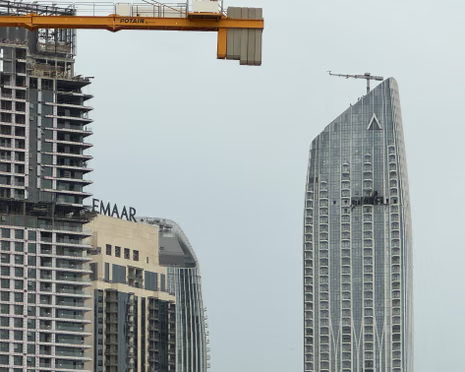
Dubai’s skyline has appeared frequently in such videos during recent missile alerts. Many viewers around the world watched interceptions above the city in real time. That global visibility contrasts sharply with strict local regulations governing publication.

Legal experts say travellers rarely realise how comprehensive cybercrime laws can be. The Emirates introduced expanded digital regulations several years ago to combat online misinformation. Authorities argue that strong enforcement helps maintain social stability and public order.
Critics counter that the laws can appear vague when applied to ordinary social media use. Terms such as rumours or provocative propaganda may be interpreted broadly by prosecutors. That flexibility sometimes leaves visitors uncertain about what behaviour might cross legal boundaries.
Tourism officials continue to emphasise that millions of visitors enjoy safe experiences in the country every year. However, experts advise travellers to research local digital laws carefully before sharing sensitive content. Understanding those rules could prevent unexpected legal complications.
The British tourist charged case has therefore become a reminder of the legal risks surrounding online activity abroad. What begins as a simple video recording can escalate quickly in sensitive political environments. As global conflicts increasingly unfold on social media, the boundaries between journalism, documentation, and ordinary sharing remain complex.
Authorities have not publicly released the British man’s name as legal proceedings continue. His case may now move through the Emirati judicial system in the coming months. Observers expect the outcome to influence future discussions about digital freedom and security laws in the Gulf.
For travellers and journalists alike, the lesson is increasingly clear. In regions facing security tensions, the smartphone camera carries legal weight as well as technological power. The British tourist charged incident shows how a brief recording can ignite international debate over freedom, security, and responsibility online.
Related News:
 Middle East Flights Halted After Iran Strikes
 US Iran Operation: Sixth Service Member Killed
 Hezbollah Anger Erupts as War Returns to Beirut
 Gaza Siege Deepens as Iran War Escalates
 Riyadh Drone Attack Escalates Regional War
 Middle East attacks intensify as Trump rejects Iran talks
 Iran-Iraq border airstrikes spark new tensions
 Iran-Iraq Border Strikes Spark New Front Fears
 Iran-Backed Militias Escalate Attacks Across Middle East
 UK Prepares Aircraft Carrier for Middle East Crisis
 Mojtaba Khamenei Chosen as Iran’s New Supreme Leader
 Tehran Oil Depot Strikes Darken City With Toxic Smoke
 Seventh US Service Member Killed in Iran Conflict Identified
 Mojtaba Khamenei Supporters Rally as Iranians Fear Repression
 Tehran Strikes Mark War’s Most Devastating Night
 Iran Defiance Grows Amid US-Israel War Pressure
 Hormuz Crisis Sparks Global Oil Market Fears
 Iranian Exile Factions Seek US Backing for Iran’s Future
 US-Israeli Strategy Shifts to Plan B in Iran War
 Injured Mojtaba Khamenei Elevated as Iran Leader
 US Missile Strike on Iran School Sparks Global Shock
 Iran Gulf attacks escalate as ships and airports targeted
 Iran Conflict: Trump’s Uncertain Path and Diplomatic Off-Ramp
 Ancient Heritage Sites Damaged in Recent Airstrikes
 Tehran Diary: Dark Days Under Relentless Bombardment
 BBC to Apologise Over Edited Trump Speech Amid Backlash
 Britain deploys RAF specialists to assist Belgium with drone threats
 Palace May Restore Hyphen to Andrew Mountbatten-Windsor’s Name
 Greene Pushes Epstein Files Amid Trump Fallout
 December Run-Off in Chile as Election Produces No Winner
 Zelenskyy Signs Fighter Jet Deal Amid Russian Drone Attacks
 Canada Passes Carney’s First Budget in Tight Parliamentary Vote
 Shadow Fleet at Sea: Europe’s Battle Against Illicit Oil Shipping
 Tiny Curacao Makes History as Smallest Nation to Reach World Cup
 Deadly Russian Strikes Hit Western Ukraine, 20 Killed in Ternopil
 Ukraine Peace Plan: Zelensky Ready for Dialogue
 Royal Navy Shadows Russian Warships Entering the Channel
 US Suspends Afghan Immigration After White House Shooting
 Georgians Defy Government Crackdown After Year of Protests
 Tokyo court rules Japan’s same-sex marriage ban constitutional
 ‘Extinct’ Antelope Returns to Sahara, Bringing Hope
 American Mother Extradited From UK to U.S. on Murder Charges
 Russia losses Ukraine war peace talks intensify amid rising deaths
 Facebook Slow to Remove Bondi Attack Praise, Anti-Hate Group Claims
 US Cities Erupt in Protests Against Trump’s Venezuela Military Action
 Albanese Opens Door to Bondi Royal Commission Amid Rising Pressure
 US Clears Nvidia AI Chip Sales to China in Policy Shift
 Gulf states warn Trump Iran strikes risk wider Middle East war
 EU weighs response amid Greenland tariff crisis with Trump
 Sydney Shark Attack Surge Shocks Australia Beaches
 EU Says US Ties Have Suffered ‘Big Blow’ After Greenland Crisis
 Videos reveal earlier clash before Alex Pretti shooting
 UK New Car Discounts Near £6,000 as Prices Are Slashed
 Israel Moves to Bar MSF From Gaza Operations
 Portugal Election Delivers Socialist Win as Far Right Surges
 Australian Families Leave Syrian Camp for Home
 ‘I Would Scream in My Sleep’: Alawite Women from Syria Tell of Kidnap and Rape
 Andrew Arrest Sparks Republic Debate in Australia
 Farage Chagos Islands Row Sparks Fury
 Hilary Knight speaks out on Trump’s recent hockey remarks
 Has Europe truly learned from the failures of 2022?
 Iran’s Regime Still Intact — Coming Days Will Test Its Survival
 Trump Faces Questions Over Iran Conflict Plan
 In Maps: Strikes Across Iran and the Middle East
 Iran Civilian Deaths Surge Past 200 Amid Fear
 The Third Day of the US‑Israeli War With Iran
 Herzog Asio meeting sparks security storm
 Trump rebukes Starmer over Iran strikes
 Civilian Deaths in Iran Pass 700 Amid Fear of Bombs and Regime Clampdown
 Petrol Prices Soar as Retailers Accused of Gouging Amid Global Tension
 Penny Wong silent on Australian crew in sub strike
 Australians on US Submarine in Iranian Warship Strike
 Thousands Protest Iran Strikes Outside US Embassy London
 Oil Prices Surge Above $100 Amid Iran War
 India T20 World Cup Triumph Seals Historic Title Defence
 Nine Days of Strikes Reshape the Middle East
 Trump Pressures Congress Over Save America Act
 Iranian Football Squad Asylum Drama Shocks Australia
 Goma Drone Attack Kills Three as Conflict Escalates
 Queensland Protest Laws Spark Free Speech Backlash