Published: March 17, 2026
The English Chronicle Desk
The English Chronicle Online
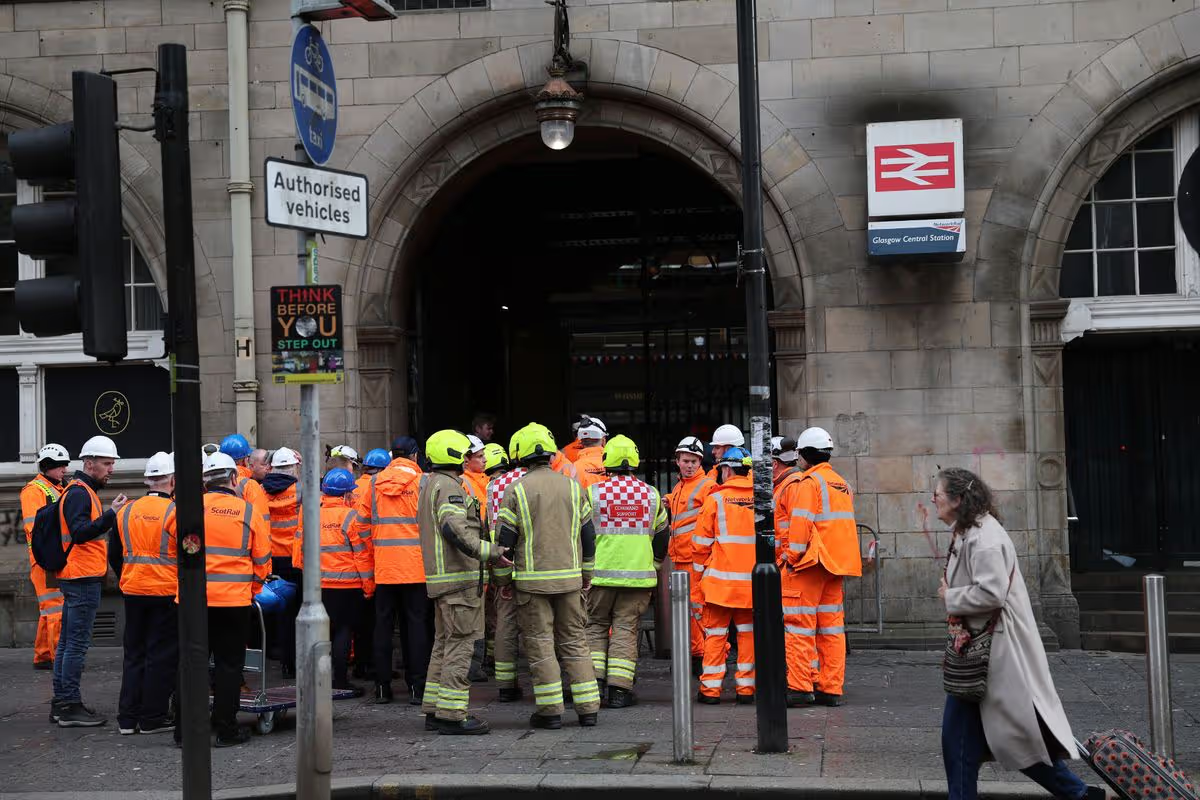
Glasgow Central Station is set to partially reopen on Wednesday following days of disruption caused by a major fire that tore through a historic building on Union Street, adjacent to Scotland’s busiest railway hub. The phased reopening marks a cautious return to normal operations after extensive safety concerns forced the closure of significant parts of the station.

The fire, which broke out on March 8, 2026, originated in a vape shop located within a Victorian-era building at the corner of Union Street and Gordon Street. The blaze rapidly escalated, engulfing the structure and leading to partial collapse, prompting emergency evacuations and widespread transport disruption across Glasgow’s rail network. More than 200 firefighters were deployed at the height of the incident as flames spread through the multi-storey building. ()
Although no casualties were reported, the scale of the damage was substantial. The building, known as Union Corner, was left structurally compromised, with large sections collapsing and posing an ongoing risk to surrounding infrastructure, including Glasgow Central Station itself. Authorities later confirmed that the remaining structure would require full demolition due to safety concerns. ()
In the immediate aftermath, Glasgow Central Station—particularly its high-level platforms—was closed as a precaution. Rail services were severely disrupted, affecting tens of thousands of passengers and forcing operators to reroute or suspend services entirely. The station, which handles a significant portion of Scotland’s rail traffic, experienced one of its most serious interruptions in recent years. ()
Following detailed structural assessments and coordination between emergency services, Glasgow City Council, and rail authorities, officials confirmed that parts of the station could safely resume operations. Network Rail announced that the low-level section of the station would reopen first, allowing limited services to restart while ongoing safety and demolition work continues nearby. ()
This partial reopening, scheduled for Wednesday, represents a critical step in restoring connectivity for commuters and regional travel. However, authorities have made clear that full service restoration will take additional time. The high-level platforms, which accommodate long-distance and intercity routes, remain closed pending further inspections and clearance of structural risks posed by the adjacent fire-damaged site.
Engineers and safety teams have been working under controlled conditions to assess the extent of any damage to the station’s infrastructure. Early indications suggest that while the station itself avoided catastrophic damage, issues such as water ingress and localized structural concerns require careful evaluation before full reopening can be authorised. ()
Transport officials have emphasized that passenger safety remains the overriding priority. The proximity of the fire-damaged building to the station has complicated recovery efforts, as unstable debris and the risk of further collapse necessitated the establishment of exclusion zones. These restrictions have limited access for engineers and delayed inspection processes.
Despite these challenges, progress has been steady. Network Rail and its partners have expressed confidence that a phased reopening strategy will allow services to resume incrementally without compromising safety standards. Officials have also acknowledged the patience of passengers and local businesses, many of whom have been significantly affected by the disruption.
The fire has had broader economic and social repercussions beyond the transport network. Dozens of small businesses housed within the Union Street building were destroyed or severely damaged, resulting in financial losses and displacement for owners and employees. Community-led fundraising efforts and government support initiatives have been mobilized to assist those affected, reflecting a wider response to the incident across Glasgow. ()
Political leaders have also weighed in on the incident, with commitments to provide financial assistance and support rebuilding efforts. The Scottish government has indicated that funding packages will be made available to aid recovery and revitalisation of the affected area, while local authorities have begun planning for redevelopment once demolition is complete.
The cause of the fire remains under investigation, though early reports suggest it may be linked to lithium-ion batteries within the vape shop where the blaze originated. This has prompted renewed scrutiny of safety regulations surrounding such businesses, particularly when operating within older, heritage-listed buildings that may lack modern fire protection systems. ()
As Glasgow Central Station begins its gradual reopening, the incident stands as a reminder of the vulnerabilities inherent in urban infrastructure, particularly when historic buildings are involved. The event has highlighted the importance of stringent safety standards, rapid emergency response, and coordinated recovery planning in mitigating the impact of such disasters.
For commuters, the reopening of the low-level station offers a degree of relief after days of disruption. However, travel plans are expected to remain affected in the short term, with passengers advised to check service updates and allow additional time for journeys.

The coming days will be critical in determining the timeline for full restoration of services. Engineers will continue their assessments, while demolition work at the Union Street site progresses under strict safety controls. Only once all risks have been mitigated will the high-level platforms be deemed safe to reopen.
In the meantime, the partial reopening represents a cautious but significant milestone in the city’s recovery from a fire that has left a lasting mark on both its infrastructure and its community.
Related News:
 Luxury Airbnb Cabins With Hot Tubs Must Be Demolished After Planning Ruling
 How to Exit Your Broadband Contract Without Paying Exit Fees
 Supreme Court Ruling on Car Finance Scandal Poised to Impact Millions of Motorists and Banks
 Chancellor Rachel Reeves Pushes for Sweeping Changes to Environmental Protections to Accelerate Development
 Inflation Latest: Cost of Living Expected to Rise Again in Key Figures Released Today
 Retail Sales See Uptick Amid Errors and Delays as ONS Faces Scrutiny
 UK House Prices Hit Record £299,331 as Market Shows Steady Growth
Shein UK Faces Allegations of Shifting Majority of Profits to Singapore to Reduce UK Tax
UK House Prices Hit Record £299,331 as Market Shows Steady Growth
Shein UK Faces Allegations of Shifting Majority of Profits to Singapore to Reduce UK Tax
 UK Mobile Retailers Lock Doors Amid Surge in Organised Phone Thefts
 UK Retail Sales Rise in August, but Tax Concerns Loom Over Festive Period
 Jaguar Land Rover Extends Production Halt Following Cyber-Attack
 UK Labour Market Shows Signs of Cooling as Wage Growth Slows and Redundancies Rise
 UK Wage Growth Remains High, But Cost of Living Pressures Bite
 British AI Startup Outshines Human Forecasters in Global Prediction Contest
 Vodafone Franchisees Sound Alarm: Mental Health Toll of Commission Cuts Revealed Years Before £120m Court Battle
 Great Britain’s Energy Operator Commits to Strengthening Grid to Prevent Blackouts
 UK Government Backs Return of International Rail Travel to Kent Stations
 Marks & Spencer Staff to Work on Boxing Day for First Time in Five Years Amid Cost-Cutting Measures
 Senior Tories Condemn Badenoch’s Vow to Repeal Climate Change Act as Catastrophic
 Wetherspoon vows to keep prices low amid soaring energy and tax costs
 He-Man Set for Big Comeback as UK Toy Industry Rides ‘Newstalgia’ Wave
 Delivery Apps Could Double the Cost of Your Groceries, Warns Consumer Watchdog
 UK House Price Growth Slows as Buyers Exercise Caution Ahead of Autumn Budget
 Kemi Badenoch Unveils ‘Golden Rule’ to Halve Spending Cuts for Deficit Reduction at Tory Conference
 Royal Mail Fined £21m for Delivery Failures
 Parents spending £5,000 on special school assessments in England
 China warns UK over delayed London mega embassy decision
 New V-Level qualification to transform post-16 education
 Pizza Hut to shut 68 sites after collapsing into administration
 Real living wage set to rise nearly 7% for UK workers in 2026
 Reeves Faces Setback as Labour May Miss Homes Target
 Trump’s UK Ambassador Urges North Sea Drilling to Strengthen US Ties
 ABF May Split Primark from Food Division Amid Tough Market
 M&S Profits More Than Halve After Cyber-Attack
 Tony Blair think tank warns Rachel Reeves must cut taxes if manifesto broken
 Millionaires group urge Reeves to introduce wealth tax to ‘lift kids out of poverty’
 Global markets drop amid tech sell-off and China slowdown
 Mossmorran Plant Closure Hits Cowdenbeath Hard
 Starmer Says Labour’s Economic Plan Needs Years to Deliver
 Virgin Media Fined £23.8m Over Telecare Safety Failures
 Rising Water Bills Lift Troubled Thames Back to Profit
 Historic £100-Weekly Pension Boost Brings Relief for UK Mineworkers
 UK Investment G7: Britain Records Lowest Level Under Starmer
MPs warn AI financial risks threaten UK stability
UK Investment G7: Britain Records Lowest Level Under Starmer
MPs warn AI financial risks threaten UK stability
 MPs warn AI financial risks threaten UK stability
 Households in England Face Rising Water Bills in April
 UK New Car Discounts Near £6,000 as Prices Are Slashed
 Study Finds One in Seven England Takeaways Are Dark Kitchens
 Pound Sinks and Borrowing Costs Rise as Starmer Fights for Job
 London Loses Its Grip on Ambitious Young Workers
 Row at David Lloyd Clubs Over £140-a-Month ‘Queue-Jumping’ Pass
 Major UK Clothing Firm Collapses into Administration — 109 Jobs at Risk
 UK economy struggles as growth stalls at 0.1% in late 2025
 Could Manchester Lead the UK’s Economic Revival?
 Royal Mail Blames Poor Weather and Sickness for Delayed Deliveries
 Lloyds Boss Accepts Concern Over Use of Staff Data in Pay Talks
 Dual Nationals Face Scramble for UK Passports as New Rules Come Into Force
 Jenrick: I’ll Back OBR but There’ll Be No More Cosy Consensus
 Store at Famous Shopping Village to Close After 18 Years Due to Rising Costs
 Bumper Ski Season but Avalanches Threaten Scotland’s Snowy Hills
 UK Job Vacancies Hit Five-Year Pandemic Low
 US Will Not Back Out of Tariff Deals with UK and Others, Says Trump Trade Representative
Storm Hernando: Edinburgh Airport Flights Cancelled in US Travel Chaos
US Will Not Back Out of Tariff Deals with UK and Others, Says Trump Trade Representative
Storm Hernando: Edinburgh Airport Flights Cancelled in US Travel Chaos
 UK Youth Unemployment Surges Amid Tax Changes
 Strong Rebound for UK Housing Market Sees 6% More Homes
 Reeves Must Back Defence Plan or Face Dismissal, Says Unite Chief
 Rolling Hills and Heritage: A Car-Free Break in Leicestershire
 Switching Energy Deal Can Save £200 as Price Cap Falls
 Hornby Sells Scalextric for £20m to Purbeck Capital Partners
 Islanders Advised on Travel to Middle East Amid Escalation
 UK house prices rise as market steadies
 Labour’s Employment Shake‑Up ‘Makes Britain Worse Than France’
 Limited Flights Leave UAE But Disruption Continues Amid Iran Strikes
 Bogus ‘Oxford Professor’ Jailed Over £880k Investment Scam
 Sarah Ferguson Loses Another £1.5m Amid Financial Struggles
 Courier Firm Bust After 14 Years as Evri Deliveries Face ‘Temporary Disruption’
 UK Fuel Tax Hike Plan to Be Kept Under Review Over Iran Conflict
 ‘Heating Oil Suppliers Are Holding Us to Ransom’ as Prices and Cancellations Surge
 Rare Glimpse of Historic Bridge Thanks to Low Tide
 UK Pushes NHS and MoD to Buy British Tech