Published: March 17, 2026
The English Chronicle Desk
The English Chronicle Online
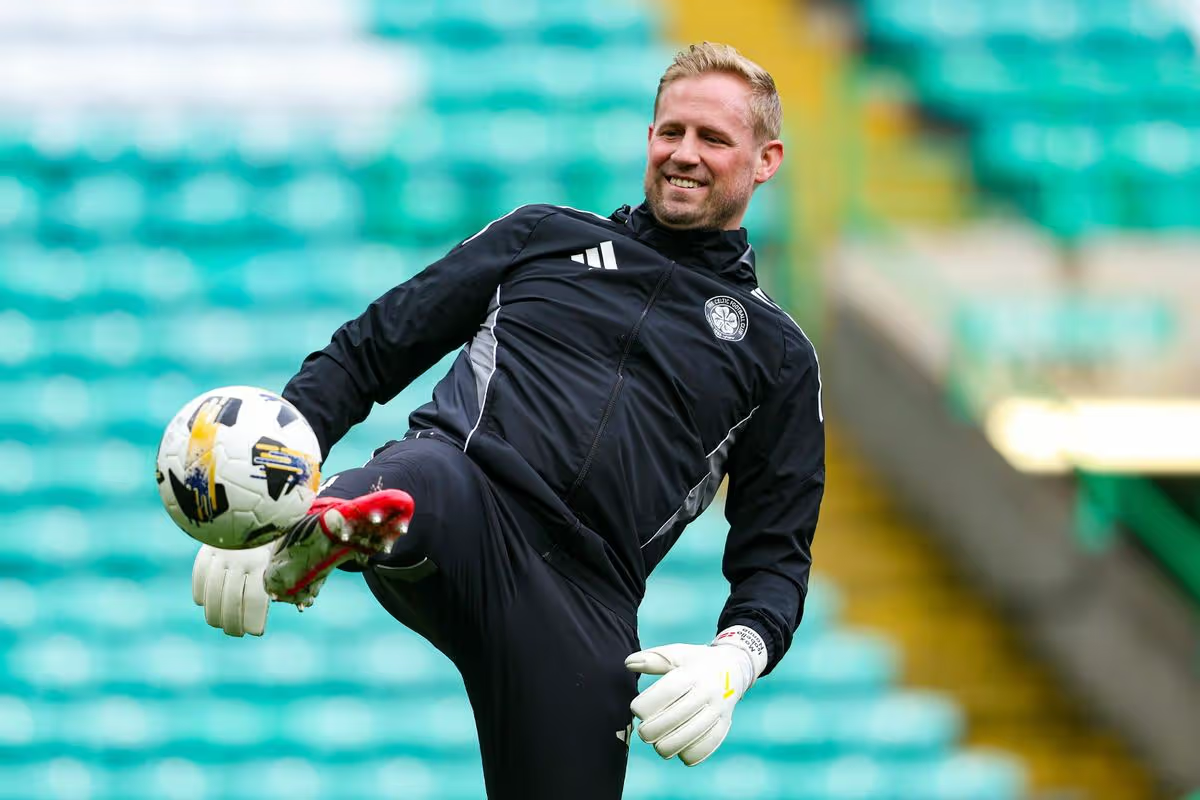
Concerns surrounding Kasper Schmeichel have intensified after the goalkeeper suffered an injury while on international duty, reigniting long-running tensions in Danish football circles and prompting renewed commentary from former national team figures.

The setback has prompted scrutiny over Schmeichel’s future involvement with both club and country, particularly given his age and workload as a senior professional. The incident has also revived discussion about squad management and player welfare within Denmark’s national team setup, where expectations remain high ahead of upcoming competitive fixtures.
Former Denmark international Tommy Gravesen voiced concern following the injury, suggesting that the latest issue could represent a significant turning point in Schmeichel’s career trajectory. Gravesen’s comments, widely circulated in Danish media, reflect apprehension about whether the goalkeeper can maintain the physical resilience required at the highest level.
Schmeichel has been a central figure in Denmark’s recent international campaigns, serving as a leader both on and off the pitch. His experience has made him a key presence in major tournaments, and his availability is often considered integral to the team’s defensive stability. Any prolonged absence therefore carries strategic implications for squad selection and tactical continuity.
The injury has also prompted renewed debate about the relationship between club commitments and international duty. Player fatigue, recovery protocols, and scheduling pressures have increasingly become focal points in elite football. With congested calendars and high-intensity competition across domestic and international levels, managing veteran players requires careful coordination between medical teams and coaching staff.
At club level, Schmeichel’s current situation adds further complexity. As a prominent goalkeeper with extensive top-flight experience, his leadership and shot-stopping ability remain critical assets. However, recurring injuries can influence selection decisions, contract planning, and long-term succession strategies within a squad.
Gravesen’s remarks about the possibility that “this might be the last of him” underscore the uncertainty that often surrounds injuries in professional sport. While such statements can sometimes reflect emotional reactions rather than definitive assessments, they highlight the precarious nature of athletic careers, particularly for players approaching the later stages of their playing years.
Within Denmark’s football community, reactions have been mixed. Some observers view the injury as a manageable setback, emphasizing modern rehabilitation techniques and sports medicine advances. Others are more cautious, pointing to the cumulative demands placed on experienced players who have competed at international level for many seasons.
National team officials have not publicly indicated any immediate structural changes in response to the injury, but contingency planning is standard practice in elite tournaments. Backup goalkeepers are typically integrated into training systems to ensure seamless transitions if required. Depth in the position remains a crucial component of squad resilience.
The broader context includes Denmark’s ambitions in forthcoming international competitions, where consistency in key positions is often decisive. Goalkeeping stability is particularly important in knockout formats, where marginal differences can determine progression. Schmeichel’s presence has historically provided assurance in high-pressure environments, making any absence strategically significant.
While the immediate focus remains on recovery, the episode has inevitably prompted reflection on career longevity and transition planning. For established internationals, managing workload and mitigating injury risk becomes increasingly central to extending competitive performance. Clubs and national federations alike must balance short-term objectives with long-term player welfare considerations.
As discussions continue, attention will turn to medical updates and rehabilitation progress. The outcome will determine whether Schmeichel can return swiftly to action or whether a more extended recovery period is required. Until further information emerges, speculation is likely to persist within media and fan circles.

For Denmark, the priority remains maintaining squad cohesion and competitive readiness. For Schmeichel, the coming weeks will be critical in assessing both immediate fitness and longer-term prospects. Gravesen’s intervention has amplified debate, but final judgments will depend on clinical evaluation and on-field recovery outcomes.
The situation underscores the volatility inherent in professional sport, where a single injury can influence narratives, selection strategies, and perceptions of career trajectory. As events develop, stakeholders across club and international levels will closely monitor progress before drawing definitive conclusions.
Related News:
 England’s Euro Odyssey: A Tale of Grit, Glory and the Lionesses’ Miraculous March to the Final
 Predicted Leicester Line-ups Reflect Cifuentes’ Tactical Plans Ahead of New Season
 Central London Gears Up for Lionesses’ Victory Parade as Thousands Prepare to Celebrate Historic Women’s Euros Win
 London Set to Honour Euro 2025 Champions as Lionesses Take Victory Parade Through the Capital
 Rangers Boss Russell Martin Launches Blistering Critique After Disappointing Draw with Motherwell
 Tottenham Takes On Newcastle
 Golden Glory Beckons: Ballon d’Or 2025 Nominee Frenzy Ignites Global Football Stage
 It’s Thanks to Gabby That I Caught My Prostate Cancer in Time’ – Kenny Logan Opens Up on His Battle and His Mission to Save Lives
 Rugby Confronts Safety Concerns with Smart Mouthguards at Women’s World Cup
 Premier League Supercomputer Predicts Tough Season for Man Utd Amid Three-Team Title Battle
 FIFA Eyes Biennial Club World Cup from 2029, Plans Possible Expansion
 Manchester United Face £300m Transfer Loss as Squad Value Highlights Long-Term Mismanagement
 Grimsby Stun Manchester United in Dramatic Penalty Shootout
 Guardiola Admits City ‘Forgot to Play’ After Shock Defeat to Brighton
 India Triumph in Dubai Amid Unexpected Twists
 Liverpool Vs outhampton Set for Carabao Cup Clash at Anfield
 Arsenal VS Newcastle Hearts with Dramatic Late Turnaround at St James’ Park
 Everton Held by West Ham as Bowen Cancels Out Keane’s Header in Nuno’s First Game
 ICC Women’s World Cup 2025: India to Host as Pakistan Fixtures Moved to Neutral Venues
 Mbappé Hat-Trick Powers Real Madrid to 5-0 Rout Over Kairat
 Monaco Hold Man City to Dramatic 2-2 Draw as Eric Dier Converts Late Penalty
 Arsenal Edge Past West Ham Amid Injury Concerns
 Chaos at Ibrox as Martin’s Rangers Era Comes to an End
 Arsenal Showcase Depth and Flexibility as Arteta Eyes Title Challenge
 Questions Remain as Rugby Legend Lewis Moody Faces Motor Neurone Disease Diagnosis
 Tuchel Critiques Wembley Atmosphere After England Victory, Sparks Debate on Fan Engagement
 Hyped by Zlatan, Hidden by Maldini: Italy’s Rising Star Francesco Camarda
 Son of ex-England footballer dies in tractor crash
 Brentford 3-2 Liverpool: Reds suffer fourth straight PL defeat
 Manchester United triumph as Mbeumo brace seals thrilling win
 Wolvaardt’s Masterclass Fires South Africa into First World Cup Final
 Granit Xhaka Rescue Earns Everton Draw at Sunderland
 Bellingham has ‘the edge’ among England No 10s
 Mary Earps’s Manchester United Return Faces Mixed Reception
 UK and Ireland Announce Venues for Euro 2028 Tournament
 Saka Solidifies Role as Tuchel’s Key England Lieutenant
 Former Lion Heskey Warns of Shortage of England Strikers
 Tiny Curacao Makes History as Smallest Nation to Reach World Cup
 Haiti Qualifies for World Cup Despite Coach Never Visiting Country
 Australia Face Big Changes as Cummins and Lyon Ruled Out of Ashes
 Van de Ven Tackle Leaves Isak with Fractured Leg
 ECB powerless to halt England’s recurring Ashes failures
 Stokes urges empathy for England players amid Ashes struggles
 Damien Martyn in Induced Coma After Meningitis Diagnosis
 Spin Bowling Struggles as Pace Dominates 2025 Ashes Series
 Anthony Joshua Released After Nigeria Car Crash
 Africa’s Superpowers Shine in Cup of Nations Quarter-Finals
 Raducanu Battles Injury as Britain Exit United Cup
 Nancy Sacked by Celtic as O’Neill Returns for Season
 Australia Dominates England: Smith, Head Crush Bowlers in Sydney
 Manchester United Fan Group Targets Jim Ratcliffe Over Club Chaos
 Geopolitical football: Iran, Trump and the World Cup clash
 Regragui condemns Afcon final chaos after dramatic defeat
 Brahim Díaz’s Panenka Fail Highlights Penalty Risks
 Mbappé’s Late Penalty Lifts Real Past Nine-Man Rayo
 Yamal and Rashford Shine as Barcelona Reach Copa Semis
 ICC Men’s T20 World Cup – Everything You Need to Know
 Is This Premier League Striker a Secret Maths Genius?
 Gasps and Disbelief at Malinin’s Home Rink as Olympic Dream Falters
 He Was Once a Teen ‘Superstar’. Why Did James Van Der Beek Need Help to Pay His Medical Bills?
 ALL GUNNS BLAZING: Arsenal vs Wigan LIVE SCORE – FA Cup Updates
 Swearing, Illicit Filming & Rule Changes – What Next in Curling Cheating Row?
 Bumper Ski Season but Avalanches Threaten Scotland’s Snowy Hills
 Managing Man Utd the ‘Ultimate Role’ – Carrick
 Pacquiao and Mayweather Agree Professional Rematch for September
 Hilary Knight speaks out on Trump’s recent hockey remarks
 Champions League Thrills as Atalanta and Galatasaray Advance
 The Norwegian Secret to Dominating the Winter Olympics
 Manchester United Face Huge Bill After Ruben Amorim Exit
 Birmingham City Owners Eye Expansion Into Rugby Union
 Australian GP Confident Amid Travel Disruption
 Can Chelsea Kick‑Start Faltering Palmer?
 Alonso Fears ‘Permanent Nerve Damage’ From Aston Martin’s Disastrous Car
 India T20 World Cup Triumph Seals Historic Title Defence
 Callum McGregor Injury Worry Sparks Celtic Star’s Outburst
 Iranian Footballers Escape Team Hotel to Seek Asylum
 Abramovich Chelsea Sale Cash Faces Jersey Probe
 Rangers Hit Moniker Fans Dread as Bold Title Race Claim Emerges
 Scotland World Cup Party in Boston Gets Green Light After Security Breakthrough
 Iranian Captain Departs Australia Amid Asylum Tension