Published: March 17, 2026
The English Chronicle Desk
The English Chronicle Online
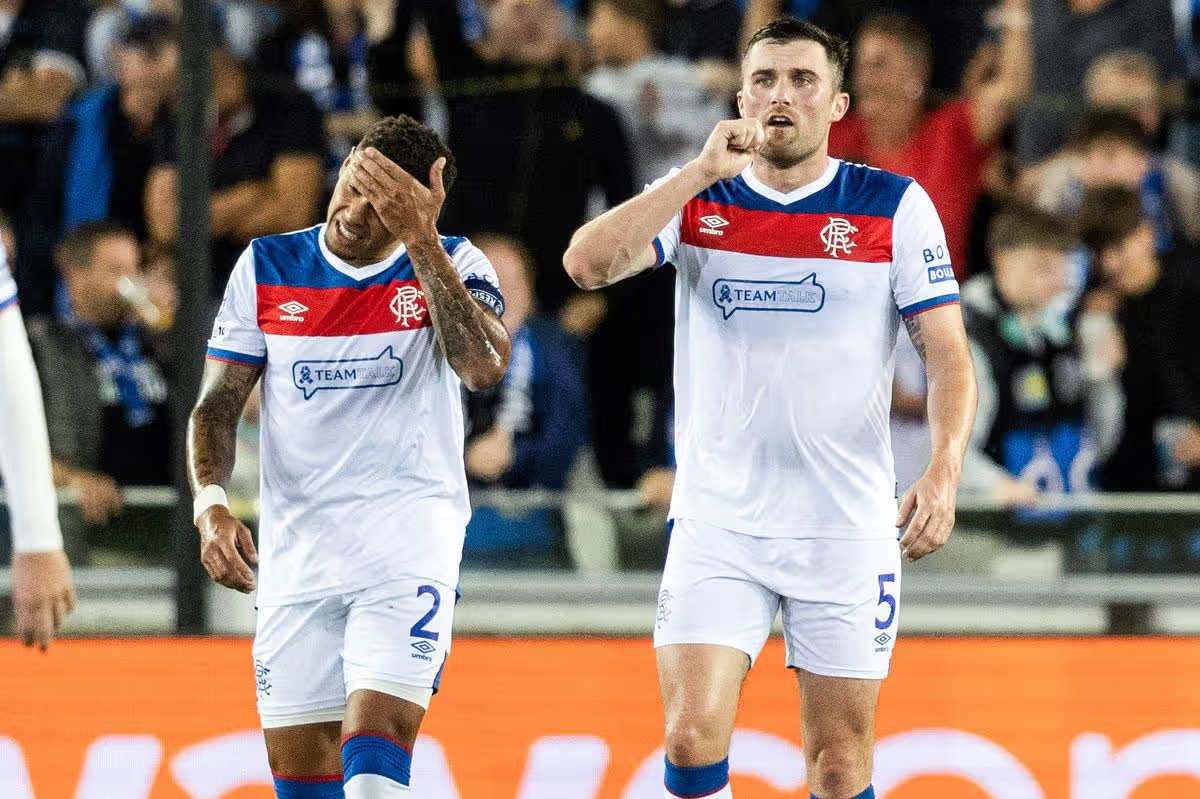
Scotland’s top-flight football competition has been ranked at the bottom among European leagues in a key performance area, according to recent comparative analysis of continental club results. The assessment highlights concerns over competitive depth and overall outcomes for Premiership clubs in European tournaments.

The findings suggest that teams from the Scottish Premiership have struggled to deliver consistent performances in continental competition, particularly when measured against clubs from smaller footballing nations. Analysts point to statistical indicators such as win ratios, progression rates in group stages, and aggregate scoring margins as contributing factors in the evaluation.
The report places Scotland’s league behind other European domestic competitions in the selected metric, noting that even clubs from traditionally lower-ranked associations have achieved comparatively stronger results in recent continental fixtures. This outcome has prompted debate among supporters and commentators about structural differences in league funding, player development, and competitive balance.
Observers argue that financial disparities remain a significant influence on European performance. Leagues with higher broadcasting revenues and deeper squad investment often maintain stronger representation in UEFA tournaments. In contrast, clubs operating within tighter budgets may face challenges in retaining talent and competing across multiple competitions simultaneously.
The analysis has reignited discussion about long-term strategic development within Scottish football, including youth systems, infrastructure investment, and talent retention. Some stakeholders emphasise that improved European performance could enhance league reputation, attract sponsorship, and strengthen international standing.
Despite the ranking, supporters note that individual clubs have occasionally produced notable results on the continental stage. However, consistency across all participating teams appears to have weighed heavily in the overall assessment.
Football analysts suggest that addressing the identified gap would likely require coordinated reforms, including enhanced financial planning, strategic recruitment, and continued investment in coaching standards. The competitive landscape of European football continues to evolve, and domestic leagues are increasingly evaluated on collective performance rather than isolated successes.

The ranking is expected to fuel further debate within the sport, particularly as clubs prepare for upcoming European campaigns. Whether the Premiership can improve its standing will depend on sustained structural development and competitive results in future seasons.
Related News:
 How All‑Time Great Casemiro Revived His Man Utd Career
 Is This Premier League Striker a Secret Maths Genius?
 He Was Once a Teen ‘Superstar’. Why Did James Van Der Beek Need Help to Pay His Medical Bills?
 England’s Brave New Era Runs Up Against Murrayfield Ghosts
 ‘It Was Silly From Me’ – ‘Brilliant’ Delap Recovers From Costly Error
 Adam Glenny’s 89th-Minute Penalty Secures Dungannon Swifts Win Over Cliftonville
 ALL GUNNS BLAZING: Arsenal vs Wigan LIVE SCORE – FA Cup Updates
 Tottenham Assistant Sacked After Just One Month as Tudor Reshapes Coaching Team
 Arsenal blow lead as Arteta rues Wolves draw
 Managing Man Utd the ‘Ultimate Role’ – Carrick
 How Ruthless Arsenal Exposed Tottenham’s Weaknesses
 Sesko and Lammens Allow Man Utd to Dream of Champions League
 Bodø/Glimt stun Inter in unforgettable Champions League triumph
 Champions League Thrills as Atalanta and Galatasaray Advance
 The One That Got Away — Carrick Returns to Tyneside
 Can Chelsea Kick‑Start Faltering Palmer?
 The Beautiful Game Is Broken. This Is Our Plan to Fix It
 Ex-SFA Chief Predicts Fixture Chaos for Rangers and Celtic
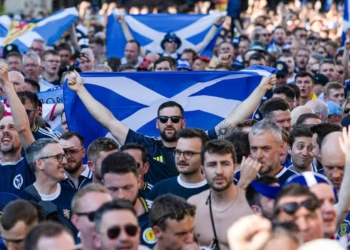 Scotland World Cup Party in Boston Gets Green Light After Security Breakthrough
 England’s Euro Odyssey: A Tale of Grit, Glory and the Lionesses’ Miraculous March to the Final
 London Set to Honour Euro 2025 Champions as Lionesses Take Victory Parade Through the Capital
 Tottenham Takes On Newcastle
 Golden Glory Beckons: Ballon d’Or 2025 Nominee Frenzy Ignites Global Football Stage
 It’s Thanks to Gabby That I Caught My Prostate Cancer in Time’ – Kenny Logan Opens Up on His Battle and His Mission to Save Lives
 Rugby Confronts Safety Concerns with Smart Mouthguards at Women’s World Cup
 Premier League Supercomputer Predicts Tough Season for Man Utd Amid Three-Team Title Battle
 Grimsby Stun Manchester United in Dramatic Penalty Shootout
 India Triumph in Dubai Amid Unexpected Twists
 Arsenal VS Newcastle Hearts with Dramatic Late Turnaround at St James’ Park
 Everton Held by West Ham as Bowen Cancels Out Keane’s Header in Nuno’s First Game
 Mbappé Hat-Trick Powers Real Madrid to 5-0 Rout Over Kairat
 Monaco Hold Man City to Dramatic 2-2 Draw as Eric Dier Converts Late Penalty
 Arsenal Edge Past West Ham Amid Injury Concerns
 Chaos at Ibrox as Martin’s Rangers Era Comes to an End
 Arsenal Showcase Depth and Flexibility as Arteta Eyes Title Challenge
 Questions Remain as Rugby Legend Lewis Moody Faces Motor Neurone Disease Diagnosis
 Hyped by Zlatan, Hidden by Maldini: Italy’s Rising Star Francesco Camarda
 Son of ex-England footballer dies in tractor crash
 Brentford 3-2 Liverpool: Reds suffer fourth straight PL defeat
 Wolvaardt’s Masterclass Fires South Africa into First World Cup Final
 Granit Xhaka Rescue Earns Everton Draw at Sunderland
 UK and Ireland Announce Venues for Euro 2028 Tournament
 Saka Solidifies Role as Tuchel’s Key England Lieutenant
 Former Lion Heskey Warns of Shortage of England Strikers
 Tiny Curacao Makes History as Smallest Nation to Reach World Cup
 Haiti Qualifies for World Cup Despite Coach Never Visiting Country
 Australia Face Big Changes as Cummins and Lyon Ruled Out of Ashes
 Van de Ven Tackle Leaves Isak with Fractured Leg
 ECB powerless to halt England’s recurring Ashes failures
 Damien Martyn in Induced Coma After Meningitis Diagnosis
 Spin Bowling Struggles as Pace Dominates 2025 Ashes Series
 Raducanu Battles Injury as Britain Exit United Cup
 Nancy Sacked by Celtic as O’Neill Returns for Season
 Australia Dominates England: Smith, Head Crush Bowlers in Sydney
 Manchester United Fan Group Targets Jim Ratcliffe Over Club Chaos
 Geopolitical football: Iran, Trump and the World Cup clash
 EU weighs response amid Greenland tariff crisis with Trump
 Regragui condemns Afcon final chaos after dramatic defeat
 EU Says US Ties Have Suffered ‘Big Blow’ After Greenland Crisis
 Yamal and Rashford Shine as Barcelona Reach Copa Semis
 ICC Men’s T20 World Cup – Everything You Need to Know
 Portugal Election Delivers Socialist Win as Far Right Surges
 Gasps and Disbelief at Malinin’s Home Rink as Olympic Dream Falters
 Macron Rebuked in Franco-German Defence Row
 Swearing, Illicit Filming & Rule Changes – What Next in Curling Cheating Row?
 Austrian Man Charged Over Foiled Taylor Swift Concert Attack Plot
 Pacquiao and Mayweather Agree Professional Rematch for September
 Louvre Museum Director Resigns Months After High‑Profile Heist
 Orbán Accuses Ukraine of Disrupting Oil Supplies to Hungary
 Hilary Knight speaks out on Trump’s recent hockey remarks
 Manchester United Face Huge Bill After Ruben Amorim Exit
 Macron Finds ‘Freedom Fries’ Redemption in Iran Crisis
 Finland Plans to Lift Decades‑Old Ban on Hosting Nuclear Weapons
 India T20 World Cup Triumph Seals Historic Title Defence
 Callum McGregor Injury Worry Sparks Celtic Star’s Outburst
 Abramovich Chelsea Sale Cash Faces Jersey Probe
 Ukraine War Becomes Flashpoint in Hungarian Election
 Iranian Captain Departs Australia Amid Asylum Tension
 Schmeichel Injury Sparks Denmark Debate
 Iran World Cup Move Talks Raise Global Concerns