Published: 27 March 2026. The English Chronicle Desk. The English Chronicle Online.
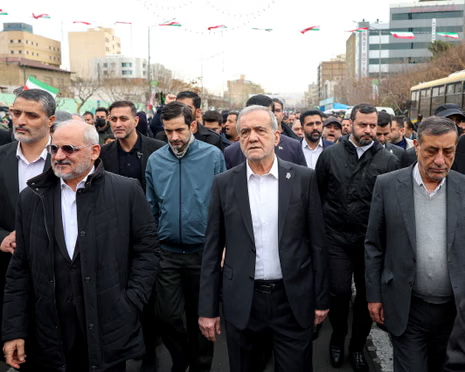
The internal life of a nation at war is often hidden behind layers of official propaganda and strict censorship. An Iranian keeping a diary expressing his doubts about the outcome of the conflict might seem like an act of quiet rebellion. This becomes even more remarkable when the writer is the son of the sitting president of the Islamic Republic. Yousef Pezeshkian is the forty-five-year-old son of Masoud Pezeshkian who was elected to lead the country in 2024. His personal reflections offer a rare window into the Iranian diary that is currently being written by the people. He is an assistant professor of physics who remains fiercely loyal to his father and the state. He claims he has not seen his father since the current hostilities began several weeks ago. His daily reflections on social media chart the progress of the war effort and its impact. He discusses how he believes the fight could be made more effective for the survival of Iran. The younger Pezeshkian reveals no official state secrets and insists that he possesses no classified information. He instead gathers his knowledge from television or social media like any other ordinary Iranian citizen. He questions the value of knowing information forty-eight hours before it is released to the public. Yet in a highly censored society he reveals the fluctuating hopes and fears of a supporter.

In one poignant entry he describes the surreal atmosphere of a rainy afternoon in the capital city. He notes the sound of missiles was heard while it was raining over the streets. The weather in Tehran had become pleasant and spring-like despite the violence occurring across the borders. He wished he had a camera to take pictures of the beautiful city views that day. He expressed a deep longing for a time when there was no war in the region. He wished he could bring his wife and children to walk in the city streets safely. This Iranian diary entry captures the cognitive dissonance felt by many residents living under the threat. He expresses anger about the internet blackout currently imposed by the Iranian government on its own people. He gripes about the censored news and the official apology his father issued to the Gulf states. These nations have recently been on the receiving end of Iranian missiles launched during the regional escalation. He recounts a conversation in an empty park where a friend shared a haunting premonition of destruction. The friend dreamed that a missile fell near their house a few nights before it happened. He took essential supplies and sent his children to their grandmother’s house for their safety. The next day the dream came true and their family home was completely destroyed by fire.
Pezeshkian adds that the hands of his friend were shaking while he told the tragic story. He tried to lighten the mood by asking what the fate of the war would be. They laughed together because even amid worries one can find an excuse to find some joy. He does however address the difficult decision-making processes regarding the future of the ongoing war effort. He reflects on the intense debates currently happening within the political and military circles of Iran. He asks how long they should fight and if the struggle should continue for ever. He wonders if they must wait until the complete destruction of Israel and the United States. He also considers if the war ends with the complete destruction or the surrender of Iran. He suggests that the leadership must review all possible end-of-war scenarios for the sake of survival. He asks which scenario is most likely and which one is truly desirable for the nation. Another entry states that correct decision-making requires access to accurate and timely information for the leaders. He adds that they must estimate their weapons supply capability to understand their true military standing. He asks how many months of fighting their missile stockpile and production capacity can actually support. He also wonders how many months the enemy has prepared itself for this specific type of war. He asks if their endurance will be greater or if the enemy will outlast them.
Pezeshkian is certain that the leaders of Iran are in the right regarding this global conflict. He asks which side lies and if Iran was truly seeking a nuclear bomb lately. He questions if Iran wanted to attack America or if the government killed forty thousand people. This is a seeming reference to the bloody crackdown on anti-government protests in early January. Death toll estimates from those protests range from the thousands to more than thirty-five thousand people. He asks why anyone should trust the other side when they constantly tell lies to them. He admits that the Iranian state has faults and has made many mistakes in the past. He acknowledges they are not infallible but insists their mistakes do not justify the enemy’s actions. This Iranian diary entry claims with certainty that God is not on the side of America. He admits that writing these daily reflections can be an exhausting task for his tired mind. Sometimes the words and thoughts he wants to express become like a buzzing mosquito near him. When he reaches out to catch them they fly away into the darkness of the night. He consumes the news like anyone else and sometimes hears rumours that spread through the city. He notes the news says they hit Kharg Island but only the military parts there. He believes the enemy wanted to threaten that they can strike any target they choose.

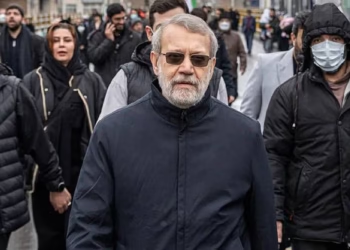
He acknowledges that the enemy can strike but notes that Iran will hit other places back. He wonders how far the tension can be escalated before a total collapse occurs in the region. Sometimes the news shakes him deeply like when reports of high-level assassinations begin to circulate online. News of the martyrdom of Ali Larijani and his son spread rapidly on various social media. He really did not want to believe the news of the death of the Basij commander. He writes that they must not allow the enemy to have another successful assassination attempt soon. If they cannot stop the Zionist assassination machine he fears they will be utterly defeated. This Iranian diary reflects the anxiety of a man who sees his world slowly crumbling down. His posts reveal he hears the constant criticism of the government and his father’s recent policies. He defends the decision on March seventh to apologise to the leaders of the Gulf states. He calls it an ethical duty and insists his father tried to improve regional relations. He finds it bitter that they must strike US bases in friendly countries to defend themselves. He does not know if their neighbours understand the difficult situation Iran is currently facing. He adds that after the war they will desperately need their neighbours to help rebuild.
Apart from endurance he believes it will be national unity that saves Iran from its enemies. He insists the nation is not on the verge of a morale collapse just yet. He believes they have the means to fight for several more months if they stay united. But his Iranian diary does allow for more personal and vulnerable moments for the readers. He admits that after nineteen days of war he finally cried several times in private. He had gone to see his grandmother who was unaware of the death of the leader. In the first week of the war they had not even told her the truth. She asked why they showed the leader’s picture everywhere in the city and on television. Later she found out the truth and mourned for all the martyrs of the nation. When she saw him she cried and he comforted her with a gentle smile. He told her that everything is normal and that nothing has truly changed for them. He said it is just war where they hit us and we hit back. But after he left her front door he collapsed in tears in the hallway. He wrote the final chilling words that nothing is normal in his country anymore. This Iranian diary serves as a testament to the heavy burden of the Iranian people. It shows the struggle between public duty and the private grief of a grieving son.
Related News:
 Middle East Flights Halted After Iran Strikes
 US Iran Operation: Sixth Service Member Killed
 Hezbollah Anger Erupts as War Returns to Beirut
 Gaza Siege Deepens as Iran War Escalates
 Riyadh Drone Attack Escalates Regional War
 Middle East attacks intensify as Trump rejects Iran talks
 Iran-Iraq border airstrikes spark new tensions
 Iran-Iraq Border Strikes Spark New Front Fears
 Iran-Backed Militias Escalate Attacks Across Middle East
 UK Prepares Aircraft Carrier for Middle East Crisis
 Mojtaba Khamenei Chosen as Iran’s New Supreme Leader
 Tehran Oil Depot Strikes Darken City With Toxic Smoke
 Seventh US Service Member Killed in Iran Conflict Identified
 Mojtaba Khamenei Supporters Rally as Iranians Fear Repression
 Tehran Strikes Mark War’s Most Devastating Night
 Iran Defiance Grows Amid US-Israel War Pressure
 Hormuz Crisis Sparks Global Oil Market Fears
 Iranian Exile Factions Seek US Backing for Iran’s Future
 US-Israeli Strategy Shifts to Plan B in Iran War
 Injured Mojtaba Khamenei Elevated as Iran Leader
 US Missile Strike on Iran School Sparks Global Shock
 Iran Gulf attacks escalate as ships and airports targeted
 Iran Conflict: Trump’s Uncertain Path and Diplomatic Off-Ramp
 Ancient Heritage Sites Damaged in Recent Airstrikes
 Tehran Diary: Dark Days Under Relentless Bombardment
 British Tourist Charged Over Dubai Missile Strike Video
 Gaza Detainee Abuse: Israel Drops Charges Against Soldiers
 Trump Iran War Stance Hardens as Conflict Widens
 Lebanon Ground Campaign Raises Occupation Fears
 Gulf Tensions Rise as Iran Alleges Covert Support
 Kabul hospital strike sparks deadly blame row
 Iran Threatens Total Destruction of Mideast Energy Grid
 Ghalibaf Iran: Survivor Emerges in Shifting Power Game
 Gulf Distrust Grows Over Rumoured US-Iran Peace Talks
 WHO Warns of Health Crisis Unfolding in Middle East
 Saudi Arabia Urging US to Keep Up Iran Attacks
 BBC to Apologise Over Edited Trump Speech Amid Backlash
 Britain deploys RAF specialists to assist Belgium with drone threats
 Greene Pushes Epstein Files Amid Trump Fallout
 December Run-Off in Chile as Election Produces No Winner
 Zelenskyy Signs Fighter Jet Deal Amid Russian Drone Attacks
 Shadow Fleet at Sea: Europe’s Battle Against Illicit Oil Shipping
 Tiny Curacao Makes History as Smallest Nation to Reach World Cup
 US Suspends Afghan Immigration After White House Shooting
 Georgians Defy Government Crackdown After Year of Protests
 ‘Extinct’ Antelope Returns to Sahara, Bringing Hope
 Facebook Slow to Remove Bondi Attack Praise, Anti-Hate Group Claims
 US Clears Nvidia AI Chip Sales to China in Policy Shift
 Gulf states warn Trump Iran strikes risk wider Middle East war
 EU weighs response amid Greenland tariff crisis with Trump
 Sydney Shark Attack Surge Shocks Australia Beaches
 EU Says US Ties Have Suffered ‘Big Blow’ After Greenland Crisis
 Videos reveal earlier clash before Alex Pretti shooting
 UK New Car Discounts Near £6,000 as Prices Are Slashed
 Israel Moves to Bar MSF From Gaza Operations
 Portugal Election Delivers Socialist Win as Far Right Surges
 Australian Families Leave Syrian Camp for Home
 ‘I Would Scream in My Sleep’: Alawite Women from Syria Tell of Kidnap and Rape
 Andrew Arrest Sparks Republic Debate in Australia
 Farage Chagos Islands Row Sparks Fury
 Hilary Knight speaks out on Trump’s recent hockey remarks
 Has Europe truly learned from the failures of 2022?
 Iran’s Regime Still Intact — Coming Days Will Test Its Survival
 Trump Faces Questions Over Iran Conflict Plan
 In Maps: Strikes Across Iran and the Middle East
 The Third Day of the US‑Israeli War With Iran
 Herzog Asio meeting sparks security storm
 Civilian Deaths in Iran Pass 700 Amid Fear of Bombs and Regime Clampdown
 Petrol Prices Soar as Retailers Accused of Gouging Amid Global Tension
 Penny Wong silent on Australian crew in sub strike
 Thousands Protest Iran Strikes Outside US Embassy London
 Oil Prices Surge Above $100 Amid Iran War
 Nine Days of Strikes Reshape the Middle East
 Trump Pressures Congress Over Save America Act
 Goma Drone Attack Kills Three as Conflict Escalates
 Queensland Protest Laws Spark Free Speech Backlash
 Trump Nato threats expose Iran strategy vacuum
 Israel Says Iran Security Chief Larijani ‘Killed’
 Australia Imposes Sudden Travel Ban on Iranian Visitors
 Trump Facing Backlash from Epstein Survivors Over Files