Published: March 31, 2026. The English Chronicle Desk.
The English Chronicle Online—Providing trusted news and professional analysis for the UK and Education.
A major confrontation between the government and the teaching profession has ignited at the National Education Union (NEU) annual conference, as delegates voted overwhelmingly to oppose and potentially boycott the introduction of a new mandatory reading test for Year 8 pupils. The motion, passed on Monday, March 30, instructs the union to survey its secondary school members to gauge their willingness to take industrial action—including a flat refusal to administer the assessments. Critics at the conference slammed the proposal as a return to the “exam factory” culture, with NEU General Secretary Daniel Kebede warning that “children don’t learn to love reading by being tested repeatedly.”

The dispute centers on Education Secretary Bridget Phillipson’s “TransformEd” strategy, which aims to introduce a statutory assessment for 13-year-olds to identify those falling behind in literacy during the “lost years” of early secondary school. While the government insists the results will not be published in league tables—mirroring the current Year 1 phonics check—the union argues that any national data collection inevitably leads to “punitive labeling” and a narrowing of the curriculum. “Teachers already know which students are struggling,” Kebede stated. “What they need is funding for small-group interventions, not another high-stakes hurdle that diverts time from actual teaching.”
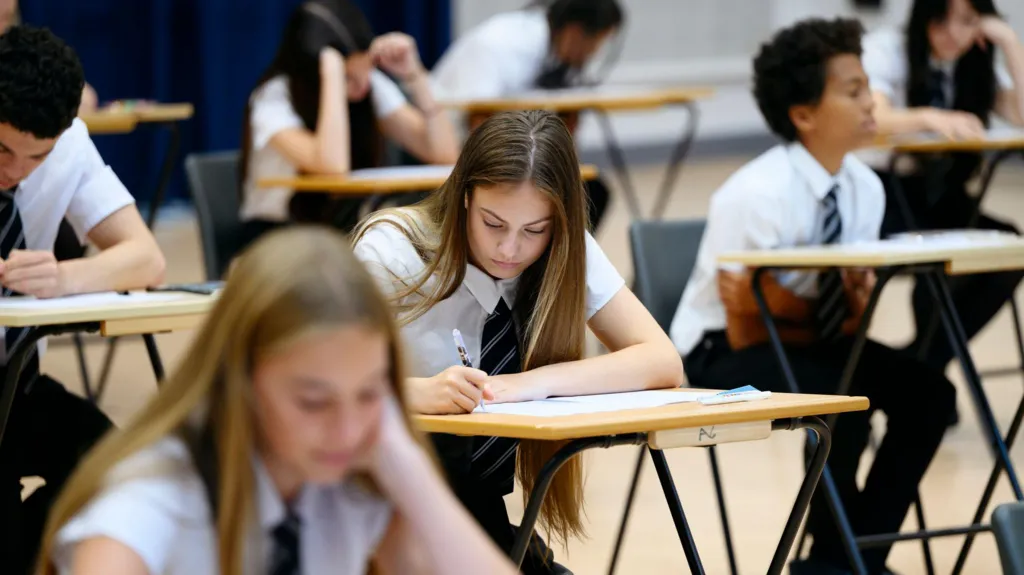
[Image: A classroom of students sitting a formal exam under the supervision of a teacher]
The proposed test is part of a wider curriculum overhaul that includes a “National Year of Reading 2026” and new oracy requirements. However, the timing of the mandate has drawn fire from across the sector. With the oil price at $116 and school budgets under intense inflationary pressure, headteachers’ unions, including the ASCL, have questioned why the government is prioritizing the “bureaucracy of testing” over addressing the recruitment and retention crisis. NASUWT General Secretary Patrick Roach echoed these concerns, noting that there is “no evidence base” to suggest that additional testing at age 13 improves long-term academic outcomes.

As the NEU prepares its ballot for a potential boycott, the Department for Education (DfE) has remained firm, labeling the union’s stance as “disappointing.” A DfE spokesperson argued that the test is a “vital tool” to ensure no child leaves school without the “passport to the rest of their lives” that literacy provides. With the first pilot tests scheduled for early 2027, the battle over Year 8 is fast becoming the defining conflict of the 2026 academic year. For parents and pupils, the looming boycott raises the prospect of yet more disruption to a secondary system still reeling from the “8 Million Dilemma” in social support and the ongoing fallout of the Easter road chaos.
Related News:
 UK Must Act with Courage and Clarity on Israel-Palestine Conflict, Says Foreign Affairs Committee Report
 Starmer and Trump to Meet in Scotland Amid Growing Gaza Ceasefire Pressure
 MPs Call on UK Government to Delay Biometric Visa Checks for Gaza Students Amid Humanitarian Crisis
 Radioactive Leak at UK’s Nuclear Warhead Base Sparks Outcry Over Safety and Secrecy
 ‘I’m collateral damage’: ex-minister Tulip Siddiq on her Bangladesh corruption trial
 Mutual Inconvenience: Why Alaska Was Chosen for the Trump-Putin Summit on Ukraine
 “I Don’t Expect to Live a Normal Life”: How a Leeds Teenager Became the Target of a Chinese Bounty
 Ministers Accused of Defamation Over Palestine Action Ban and Mass Arrests
 Is the UK Ready to Put Boots on the Ground in Ukraine? Assessing Military Capacity and Challenges
 Protests Expected as Israeli Arms Firms Join Global Defence Trade Fair in London
 UK Home Office to Launch French Beach Signage to Warn Asylum Seekers of Risks
 UK Immigration Figures: Separating Facts from Perceptions
 Far-Right Rally in London Draws Record Crowds Amid Clashes with Police
 Thousands Gather in London to Protest Donald Trump’s Second UK State Visit
 Trump Urges UK to “Call Out the Military” to Secure Borders Amid State Visit
 UK Recognises State of Palestine in Push to Preserve Hope for Peace
Trump’s UN Speech Criticises London and UK Policies, Draws Far-Right Attention
UK Recognises State of Palestine in Push to Preserve Hope for Peace
Trump’s UN Speech Criticises London and UK Policies, Draws Far-Right Attention
 UK Fighter Jet Purchase Could Breach Nuclear Treaty, Warns CND
 A Third of EU Citizens in UK Report Discrimination by Public Bodies Post-Brexit
 Jailed Georgian Opposition Leaders Warn UK of Iranian Links to Ruling Party
 Russia repeatedly targets UK military satellites, warns Space Command chief
 Pro-Palestine March to Proceed in London Despite Calls to Cancel After Manchester Attack
 UK Universities Warn Students Ahead of 7 October Pro-Palestine Protests
Starmer Considers Stricter Measures on Pro-Palestinian Protest Chants
UK Universities Warn Students Ahead of 7 October Pro-Palestine Protests
Starmer Considers Stricter Measures on Pro-Palestinian Protest Chants
 Public Trust in SNP Hits Historic Low Amid NHS Concerns
 Tony Blair Met Jeffrey Epstein at Downing Street in 2002
 Johnson Suggests Mandelson Linked to China Spy Controversy
 Witness statements reveal the CPS China spy row collapse in the UK
 Large scale Chinese spying in UK sparks political storm
 Nigel Farage Calls Vladimir Putin ‘A Very Bad Dude’
 Rachel Reeves signals welfare reform ahead of key budget
 Prince Andrew met alleged Chinese spies during Pitch@Palace China trips
 Kosovo agrees to host Britain’s refused asylum seekers
 Plaid Cymru Triumphs in Caerphilly, Ending Labour Century-Long Hold
 Rachel Reeves to lead UK trade push in Saudi Arabia amid rights debate
 British Woman in Iran ‘Losing Hope’ Amid Ongoing Detention
 Johnson Approved China’s London ‘Super-Embassy’ in 2018
 BBC Journalist Held and Interrogated in Vietnam
 BBC director-general and news chief resign amid bias row
 New review urges UK to repatriate Shamima Begum, others from Syria
 Rama Rebukes Mahmood for Targeting Albanian Families
 Russian Vessel Used Lasers on RAF Pilots, UK Claims
 Britain Demands Israel Reverse Ban on Aid Groups
 US Africa aid remarks spark anger after leaked State email
 Trump Pulls Canada from His Controversial ‘Board of Peace’ Plan
 Starmer China visit raises human rights pressure on Beijing
 Emails Show Epstein Funded Mandelson’s Husband After Jail
 Cory Bernardi joins One Nation for SA election
 Starmer Condemns ‘Depraved’ Russian Strikes on Ukraine
 Russia Trolls Savage ‘Finished’ Keir Starmer After Mandelson Scandal Explodes
 Starmer Weighs Fast-Tracking Defence Boost
 Britain’s Reliance on China Makes Us ‘Weak Link in the West’, Warn MPs
 Trump Warns Over Chagos Islands Deal
 Trump and Chagos Deal Rift Over Iran Strikes
 How Much Could Andrew’s Arrest Hurt the Royal Family?
 Andrew Mountbatten-Windsor Arrest After FBI Radar
 UK Has Not Given US Permission to Use RAF Bases for Iran Strikes
 Australian PM Says Former Prince Andrew Has Suffered ‘Extraordinary Fall’ but That Won’t Prompt Republic Referendum
 Farage Chagos Islands Row Sparks Fury
 Trump Tariffs Threat Spark UK and EU Alarm
 Town Vigil Marks Four Years of Ukraine War
 New Zealand Backs Removing Andrew From Royal Line of Succession
 Green Party Triumphs in Gorton and Denton By‑Election
 UK Allows US Base Use Amid Iran Tensions
 Britain’s Position and Trump Vows to Press On in Iran Conflict
 Starmer Speaks to Trump After UK Joins Defensive Operation
 UK Will Allow US to Use Bases to Strike Iranian Missile Sites, PM Says
 Cooper: Joining US Strikes on Iran ‘Not in Britain’s Interest’
 Sarwar Rejects Father’s Tribute to Iran’s Supreme Leader
 Muslim Group Wants Mosques to Be Used as Polling Stations Ahead of UK Elections
 Trump Rebukes Starmer Over Iran Strikes Row
 Manchester Students Mourn Ayatollah Amid Protest
 Minister Meets Crews Who Will ‘Take Out’ Iranian Drones
 UK Prepares Aircraft Carrier for Middle East Crisis
 UK–US Tensions Ease as Starmer and Trump Hold First Call Since Iran Row
 Gordon Brown urges court for crimes against children
 Yvette Cooper: UK Must Follow Principles, Not US Pressure
 Fox News Cut In Over Trump King Charles Claim
 UK Minister Denies Iran Missile Threat to Britain
 UK Forces Ready to Seize Russian Shadow Fleet Vessels