Published: 2 April 2026 . The English Chronicle Desk.
The English Chronicle Online—Providing definitive analysis of Britain’s post-Brexit evolution.
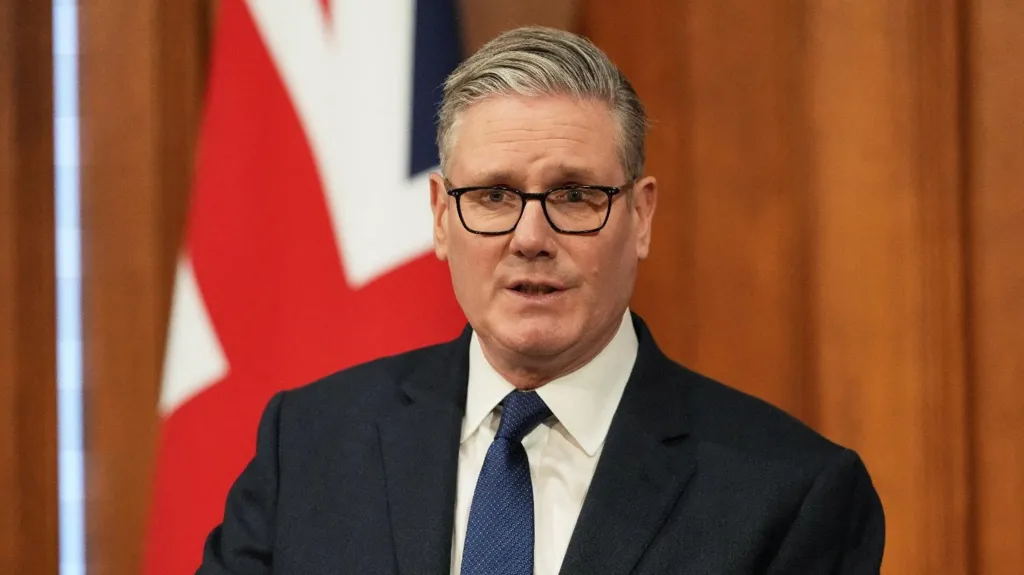
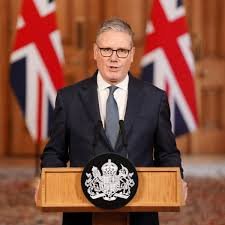
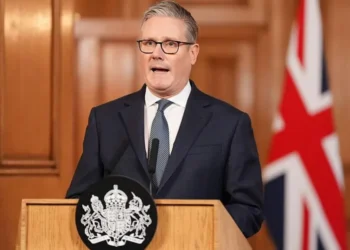
In a significant pivot for British foreign policy, Prime Minister Keir Starmer has called for a “closer, more ambitious” partnership with the European Union, arguing that the global instability wrought by the ongoing Iran war makes European alignment a matter of urgent national interest. Speaking at a Downing Street press conference on Wednesday, 1 April 2026, the Prime Minister suggested that the conflict—and the resulting deterioration of the “special relationship” with Washington—has created a “volatile path” that requires Britain to strengthen its security and economic ties with its closest neighbors.

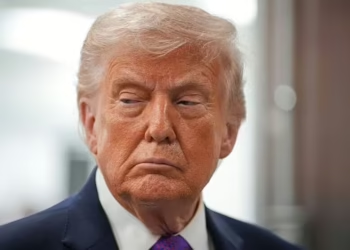
The Prime Minister’s remarks follow a series of public clashes with US President Donald Trump, who has frequently criticized the UK for refusing to join offensive strikes against Tehran. With the US President recently hinting at reconsidering NATO membership and labeling the alliance a “paper tiger,” Starmer insisted that the UK must “learn how to fight for itself” by fostering deeper cooperation within Europe. “The opportunities to strengthen our security and cut the cost of living are simply too big to ignore,” Starmer told reporters, adding that the “deep damage” caused by Brexit has left the UK uniquely vulnerable to the energy and supply chain shocks triggered by the closure of the Strait of Hormuz.
While Starmer maintained that Labour’s “red lines”—staying out of the single market and customs union—remain intact, he signaled a desire for a much broader agreement than previously discussed. Specifically, the UK is expected to push for a “dynamic alignment” framework at an upcoming Brussels summit, focusing on defense, energy emissions, and food standards. The Prime Minister’s goal is to move beyond the “stocktake” nature of last year’s meetings to establish a standing security council that would coordinate European defense independent of shifting political winds in Washington.
The economic impetus for this shift is becoming impossible to ignore. As petrol prices surge past $4 a gallon globally and UK energy bills face a projected 18% hike this July, Starmer framed closer EU ties as a defensive measure against “generational” economic define. He announced that Foreign Secretary Yvette Cooper will lead a 35-nation working group this week aimed at diplomatically reopening the Strait of Hormuz, a move that aligns the UK more closely with the de-escalation strategies of France and Germany than the “maximum pressure” campaign currently favored by the White House.

The announcement has already drawn sharp criticism from Reform UK and some Conservative benches, who accused the Prime Minister of using the Middle East crisis as a “backdoor” to re-entering the EU’s orbit. However, Starmer insisted that he is not “choosing” between the US and Europe, but rather acting in the British national interest. As the Artemis II crew orbits overhead and terrestrial conflicts redraw the map of 21st-century alliances, the UK’s “tilt toward Europe” marks a defining moment for the Starmer administration, suggesting that in a dangerous world, the Channel is once again becoming narrower than the Atlantic.
Related News:
 UK Must Act with Courage and Clarity on Israel-Palestine Conflict, Says Foreign Affairs Committee Report
 Starmer and Trump to Meet in Scotland Amid Growing Gaza Ceasefire Pressure
 MPs Call on UK Government to Delay Biometric Visa Checks for Gaza Students Amid Humanitarian Crisis
 Radioactive Leak at UK’s Nuclear Warhead Base Sparks Outcry Over Safety and Secrecy
 ‘I’m collateral damage’: ex-minister Tulip Siddiq on her Bangladesh corruption trial
 Mutual Inconvenience: Why Alaska Was Chosen for the Trump-Putin Summit on Ukraine
 “I Don’t Expect to Live a Normal Life”: How a Leeds Teenager Became the Target of a Chinese Bounty
 Ministers Accused of Defamation Over Palestine Action Ban and Mass Arrests
 Is the UK Ready to Put Boots on the Ground in Ukraine? Assessing Military Capacity and Challenges
 Protests Expected as Israeli Arms Firms Join Global Defence Trade Fair in London
 UK Home Office to Launch French Beach Signage to Warn Asylum Seekers of Risks
 UK Immigration Figures: Separating Facts from Perceptions
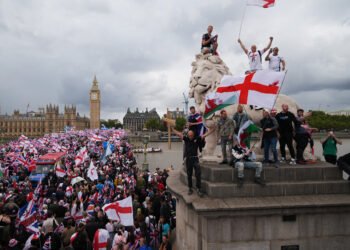 Far-Right Rally in London Draws Record Crowds Amid Clashes with Police
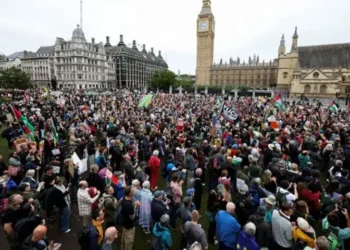 Thousands Gather in London to Protest Donald Trump’s Second UK State Visit
 Trump Urges UK to “Call Out the Military” to Secure Borders Amid State Visit
Trump’s UN Speech Criticises London and UK Policies, Draws Far-Right Attention
Trump Urges UK to “Call Out the Military” to Secure Borders Amid State Visit
Trump’s UN Speech Criticises London and UK Policies, Draws Far-Right Attention
 UK Fighter Jet Purchase Could Breach Nuclear Treaty, Warns CND
 A Third of EU Citizens in UK Report Discrimination by Public Bodies Post-Brexit
 Jailed Georgian Opposition Leaders Warn UK of Iranian Links to Ruling Party
 Russia repeatedly targets UK military satellites, warns Space Command chief
 Pro-Palestine March to Proceed in London Despite Calls to Cancel After Manchester Attack
 UK Universities Warn Students Ahead of 7 October Pro-Palestine Protests
Starmer Considers Stricter Measures on Pro-Palestinian Protest Chants
UK Universities Warn Students Ahead of 7 October Pro-Palestine Protests
Starmer Considers Stricter Measures on Pro-Palestinian Protest Chants
 Public Trust in SNP Hits Historic Low Amid NHS Concerns
 Tony Blair Met Jeffrey Epstein at Downing Street in 2002
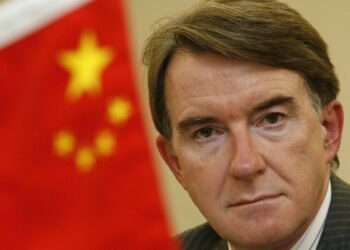 Johnson Suggests Mandelson Linked to China Spy Controversy
 Witness statements reveal the CPS China spy row collapse in the UK
 Large scale Chinese spying in UK sparks political storm
 Nigel Farage Calls Vladimir Putin ‘A Very Bad Dude’
 Rachel Reeves signals welfare reform ahead of key budget
 Prince Andrew met alleged Chinese spies during Pitch@Palace China trips
 Kosovo agrees to host Britain’s refused asylum seekers
 Plaid Cymru Triumphs in Caerphilly, Ending Labour Century-Long Hold
 Rachel Reeves to lead UK trade push in Saudi Arabia amid rights debate
 British Woman in Iran ‘Losing Hope’ Amid Ongoing Detention
 Johnson Approved China’s London ‘Super-Embassy’ in 2018
 BBC Journalist Held and Interrogated in Vietnam
 BBC director-general and news chief resign amid bias row
 New review urges UK to repatriate Shamima Begum, others from Syria
 Rama Rebukes Mahmood for Targeting Albanian Families
 Russian Vessel Used Lasers on RAF Pilots, UK Claims
 Britain Demands Israel Reverse Ban on Aid Groups
 US Africa aid remarks spark anger after leaked State email
 Trump Pulls Canada from His Controversial ‘Board of Peace’ Plan
 Starmer China visit raises human rights pressure on Beijing
 Emails Show Epstein Funded Mandelson’s Husband After Jail
 Cory Bernardi joins One Nation for SA election
 Starmer Condemns ‘Depraved’ Russian Strikes on Ukraine
 Russia Trolls Savage ‘Finished’ Keir Starmer After Mandelson Scandal Explodes
 Starmer Weighs Fast-Tracking Defence Boost
 Britain’s Reliance on China Makes Us ‘Weak Link in the West’, Warn MPs
 Trump Warns Over Chagos Islands Deal
 Trump and Chagos Deal Rift Over Iran Strikes
 How Much Could Andrew’s Arrest Hurt the Royal Family?
 Andrew Mountbatten-Windsor Arrest After FBI Radar
 UK Has Not Given US Permission to Use RAF Bases for Iran Strikes
 Australian PM Says Former Prince Andrew Has Suffered ‘Extraordinary Fall’ but That Won’t Prompt Republic Referendum
 Farage Chagos Islands Row Sparks Fury
 Trump Tariffs Threat Spark UK and EU Alarm
 Town Vigil Marks Four Years of Ukraine War
 New Zealand Backs Removing Andrew From Royal Line of Succession
 Green Party Triumphs in Gorton and Denton By‑Election
 UK Allows US Base Use Amid Iran Tensions
 Britain’s Position and Trump Vows to Press On in Iran Conflict
 Starmer Speaks to Trump After UK Joins Defensive Operation
 UK Will Allow US to Use Bases to Strike Iranian Missile Sites, PM Says
 Cooper: Joining US Strikes on Iran ‘Not in Britain’s Interest’
 Sarwar Rejects Father’s Tribute to Iran’s Supreme Leader
 Muslim Group Wants Mosques to Be Used as Polling Stations Ahead of UK Elections
 Trump Rebukes Starmer Over Iran Strikes Row
 Manchester Students Mourn Ayatollah Amid Protest
 Minister Meets Crews Who Will ‘Take Out’ Iranian Drones
 UK Prepares Aircraft Carrier for Middle East Crisis
 UK–US Tensions Ease as Starmer and Trump Hold First Call Since Iran Row
 Gordon Brown urges court for crimes against children
 Yvette Cooper: UK Must Follow Principles, Not US Pressure
 Fox News Cut In Over Trump King Charles Claim
 UK Minister Denies Iran Missile Threat to Britain
 UK Forces Ready to Seize Russian Shadow Fleet Vessels
 ‘Pigs Don’t Get Fatter by Being Weighed’: Teachers Vote to Boycott New Year 8 Reading Test