Published: 03 April 2026. The English Chronicle Desk. The English Chronicle Online.
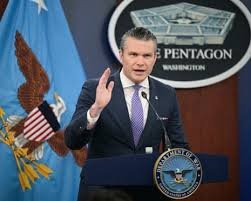
The landscape of American military security underwent a seismic shift this week following a major announcement. Defense Secretary Pete Hegseth officially signed a landmark memorandum on Thursday regarding personal weapon carry on bases. This directive permits military service members to request formal permission to carry their own private firearms. Such a change applies to various installations including naval yards and diverse military recruitment centers. Hegseth claims this new policy ensures that soldiers can defend themselves during any sudden attack. He believes that those who serve should not be left vulnerable while on federal property. This move addresses long-standing concerns regarding the safety of personnel within domestic military boundaries.
The full text of the official memo has not yet been released to the public. However, the core details suggest a significant loosening of the existing restrictive carry policies. Previously, personnel could only obtain permission to carry weapons on a strict case-by-case basis. Current regulations require all weapons to be registered with the specific base authorities immediately. Furthermore, any personal firearms must be stored inside an approved and highly secure device. Hegseth’s new order seeks to simplify this process and shift the burden of proof. It marks a departure from the traditional approach to arms management on American soil. This shift reflects a broader philosophical change within the current leadership at the Pentagon.

In a recent video shared across social media, Hegseth expressed his deep personal frustrations. He argued that current policies have turned military installations into dangerous gun-free zones for staff. This environment reportedly leaves those who live and work on bases vulnerable to external threats. His perspective resonates strongly with second amendment fundamentalists and active gun rights advocacy groups. Such organizations have previously filed numerous lawsuits against restrictive firearm policies across many different states. They argue that military members deserve the same rights as the civilians they protect. Hegseth has now positioned himself as a champion for these particular constitutional interpretations.
The Defense Secretary emphasized that uniformed service members are trained at the highest possible levels. He described these individuals as war fighters who are entrusted with the total safety of the nation. Hegseth asserted that these professionals are fully entitled to exercise their fundamental right to bear arms. He framed the ability to carry a weapon as a God-given right for all Americans. The Secretary believes that military training makes soldiers uniquely qualified to handle firearms responsibly. This rhetoric aligns with a vision of a more armed and ready domestic military presence. He maintains that the presumption should always favor the right of the individual soldier.
The new permission to carry will still align with specific state gun laws and regulations. Local policies regarding permit requirements and weapon types will continue to be strictly observed. Limits on the number of rounds of ammunition will also remain in full effect. If a superior officer denies a request to carry, they must provide a detailed explanation. This requirement ensures that denials are not arbitrary or based on personal biases of commanders. Hegseth wants a transparent process that prioritizes the rights of the individual service member. This creates a more standardized framework for firearm access across the entire military branch.
During his announcement, Hegseth cited several tragic incidents to justify the urgent policy change. He mentioned the devastating shooting at the Pensacola naval base back in December of 2019. The Secretary also noted a more recent August 2025 shooting at Fort Stewart in Georgia. A very recent attack at Holloman Air Force Base in New Mexico was also highlighted. Hegseth remarked that in these violent instances, mere minutes can feel like a lifetime. He believes that trained service members have the courage to make those short minutes count. His argument rests on the idea that immediate response saves lives during active shooter events.
This is certainly not the first time the federal government has addressed this sensitive issue. In November 2016, the Obama administration issued a directive creating a pathway for similar permissions. That specific move followed the tragic deaths of four people at a Tennessee recruitment center. Before that change, military members were largely prohibited from carrying personal firearms on any base. This prohibition had been the standard operating procedure for more than twenty years of service. Weapons were generally reserved for security duty or specific law enforcement investigations on the post. The recent directive by Hegseth represents a much more aggressive expansion of those rights.

Hegseth’s directive goes much further than previous attempts to reform the existing military carry rules. By making approval easier, the Pentagon is signaling a major shift in institutional culture. Requiring a thorough explanation for any denials adds a layer of accountability for base leadership. This ensures that the default position of the military is to trust its own members. Many supporters believe this will deter future attacks on what were previously soft targets. Critics, however, remain concerned about the potential for increased accidental shootings or internal conflicts. The debate over the safety of more guns on bases remains a polarized topic.
The reaction to the news has been swift and deeply emotional for many families. Mayra Guillen, sister of the late Specialist Vanessa Guillen, publicly showed her support for Hegseth. Vanessa was tragically killed by two fellow service members at Fort Hood in 2020. Mayra shared the statement and suggested her sister might be alive with a weapon. She noted that Vanessa was attacked inside an arms room and had no defense. This personal endorsement highlights the human element behind the complex legal and military policy. For some, this change is seen as a necessary tool for personal protection.
The implementation of this memo will likely face logistical challenges as bases adapt to changes. Security protocols will need to be updated to account for more armed personnel on site. There will also be a need for clear communication regarding state-specific firearm law variations. Commanders must now prepare to review a likely influx of carry requests from their units. The Pentagon will monitor the rollout to ensure that safety and discipline are maintained. This policy represents one of the most significant changes to base life in decades. It reflects a modern era where domestic security is treated with the same intensity as foreign combat.
As the policy takes effect, the eyes of the nation will be on the Pentagon. The success of this initiative will be measured by its impact on base safety. Many will be watching to see if the rate of violent incidents actually decreases. Others will look for any signs of increased risk within the military community itself. Hegseth remains confident that this move will empower soldiers and enhance overall national security. He views the right to carry as an essential component of a soldier’s identity. The transition marks a bold new chapter for the United States Department of Defense. Only time will tell how this policy affects the daily lives of those in uniform.
Related News:
 Capitol Attack Anniversary Sparks Deep Political Divide
 Trump Labels Renee Good a ‘Paid Agitator’ After Minneapolis ICE Killing
 Trump targets Iran trade with 25% tariff warning
 Trump Receives Machado’s Nobel Medal in White House Meeting
 Thousands Protest ICE Operations in Nationwide US Day of Action
 Epstein Files Reveal Trump Officials’ Emails with Financier
 Thousands Protest ICE in New York Against Trump Deportation Campaign
 US-Cuba Negotiations Shift as Oil Blockade Looms
 Ukraine war briefing: Zelenskyy offers help to Saudi Crown prince on combatting Iranian drones
 Two National Guard Soldiers Critically Injured Near White House
 US National Guard Member Killed in DC Shooting
 American Mother Extradited From UK to U.S. on Murder Charges
 Russia losses Ukraine war peace talks intensify amid rising deaths
 US Cities Erupt in Protests Against Trump’s Venezuela Military Action
 Trump Escalates Minnesota Immigration Surge Amid Rising Tensions
 Saudi Officials Report Zubaidi Flee Before Yemen Peace Talks
 UK Targets in New York Bomb Threat Hoax: Man Jailed
 Gambia Supreme Court Hears Case to Overturn FGM Ban
 Homeland security agents deployed amid Minneapolis protests
 Minneapolis mayor demands state access to Renee Good probe
 Minnesota Sues Trump Administration Over ICE Surge
 US Clears Nvidia AI Chip Sales to China in Policy Shift
 Trump Threatens Strong Action If Iran Executes Protesters
 US Senate rejects resolution limiting Trump military powers
 Portland man pleads not guilty after Border Patrol shooting
 Gulf states warn Trump Iran strikes risk wider Middle East war
 Machado Trump medal gesture reshapes Venezuela power struggle
 Greenland defence seen as shared Nato duty amid troop arrivals
 Geopolitical football: Iran, Trump and the World Cup clash
 Canada-China trade gains momentum in new strategic partnership
 Syria President Declares Victory as Ceasefire Reached with SDF
 Shinzo Abe’s killer receives life sentence in Japan
 EU Says US Ties Have Suffered ‘Big Blow’ After Greenland Crisis
 China General Under Investigation Amid Leadership Purge
 Philippines ferry disaster leaves 15 dead, dozens missing
 Minneapolis pushes back against ICE’s federal crackdown
 Arizona border shooting leaves suspect hospitalised after agent pursuit
 Videos reveal earlier clash before Alex Pretti shooting
 Cambridge Faces Scrutiny Over Arms Investment Transparency
 Trump Praises ‘Terrific’ Petro After White House Talks
 Fears of New Arms Race as US-Russia Nuclear Weapons Treaty Expires
 Epstein UAE Emails Shake British Royal Andrew’s Legacy
 Headline: Measles Alert: Dr Oz Urges Americans to Vaccinate
 Christchurch gunman seeks to vacate guilty plea
 Infantino Faces Russia Threat and Trump Concerns at Uefa Congress
 Nurses’ families fear breakup under UK immigration crackdown
 Concerns rise for Canberra boy amid Iran detention fears
 Iran Says ‘Guiding Principles’ Agreed With US at Nuclear Talks
 Trans Youth Care Crisis: NY Hospital Ends Gender‑Affirming Treatment
 Coca‑Cola lawsuit challenges male exclusion at corporate event
 Trump’s new tariff takes effect at lower than expected rate
 Hero Rescuer Saves Baby from Icy Chicago Lake
 Trump Probe Fallout: Patel Fires FBI Staff Tied to Documents Case
 Trump Faces Questions Over Iran Conflict Plan
 Talarico Secures Democratic Victory for US Senate in Texas
 Texas Senate seat fight heads to runoff as votes split
 Cooper and Whatley Win Primaries for North Carolina Senate
 Thousands Protest Iran Strikes Outside US Embassy London
 US Bombers Arrive at RAF Base Amid Rising Iran Tensions
 UK Prepares Aircraft Carrier for Middle East Crisis
 Pete Hegseth Iran War Remarks Spark Alarm
 Ukraine Sends Drone Experts to Defend US Bases in Jordan
 Abramovich Chelsea Sale Cash Faces Jersey Probe
 Yvette Cooper: UK Must Follow Principles, Not US Pressure
 Slovenia Election: A Nation at a Crossroads
 Jury Rules Meta and YouTube Liable for Addictive Design
 Saudi Arabia Urging US to Keep Up Iran Attacks
 The Woman Guarding Earth From the Threat of Asteroids
 IMF Predicts Global Economic Crisis Due to Gulf Unrest
 Germany Grapples With AI Abuse Following TV Star Scandal
 Exiled Tycoon Warns of New Russian Attacks on UK Soil
 Chain of Fire: US Bunker Busters Strike Major Iranian Ammo Depot in Isfahan
 LA 2028: Millions of Affordable Olympic Tickets Announced
 Trump Slams Europe as Transatlantic Tensions Boil Over
 The Draft Debate: Anxiety Rises as Iran Conflict Persists
 Inside the Deceptive Machine: A Former Producer Speaks Out
 Italy Faces Third Successive World Cup Absence After Loss
 Can Congress Stop US Sports Teams From Moving Cities?
 Spain Faces Backlash Over Xenophobic Chants in Egypt Draw
 A Global Voice For Justice: Stephen Lewis Dies At Age 88