Published: 03 April 2026. The English Chronicle Desk. The English Chronicle Online.
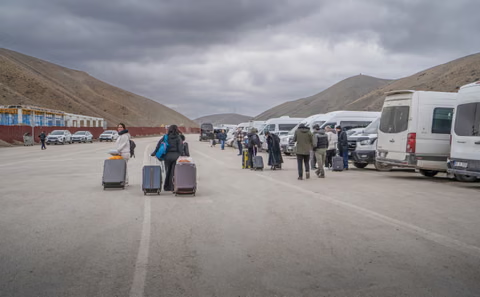
He could not help but splutter out a laugh at the sudden question. Amir, whose name has been changed for his safety, had just crossed the Kapıköy border. This mountain pass between snow-topped peaks is one of the few gateways to Turkey. Until a few weeks ago, this was a busy place for Iranian daytrippers and shoppers. They came across to the city of Van for shopping and discreet nightlife options. Back then, there were many reasons that an Iranian might give for this trip. Today, the lifeless black flag of the regime was visible behind his tired figure. This flag was raised a month ago after the death of leader Ali Khamenei. Amir smiled when he was asked about his primary motivation for leaving Iran now. He simply said the word boom because of the war and the nightly bombing. He was not bitter about the American and Israeli campaign against the local regime. Amir wants to get rid of the regime and thanked the current American president. He is a crypto currency trader by profession but has no means to work. The internet blackout imposed by the Iranian regime has destroyed his ability to earn. He hopes the bombing is working and destroying industrial areas and military base sites.

A pharmacologist from Tehran was travelling to see her three daughters in distant Europe. She intended to spend three months away from the anxiety of her home country. She stated that it is finally the right time for the local Iranian people. Most people are very tired of the revolution of the Islamic Republic of Iran. They believe the American president might finally change the regime after many difficult years. Kapıköy has not yet witnessed huge numbers of people fleeing from the Iranian side. According to the United Nations, close to 64,000 Iranians arrived throughout the past month. More than 48,000 Iranian nationals actually went back into the Islamic Republic recently as well. The current volume of movement remains notably lower than the levels seen before this conflict. Turkey has plans to manage mobility from the border in case of a mass influx. They have created a buffer zone and established tent cities for many displaced people. It has not been necessary yet, though there are four army and security checkpoints. Heavily armed soldiers in khaki can be seen on patrol by the quiet roadside. Salvador Gutiérrez is the chief of mission in Iran for the International Organization for Migration. He said people are moving internally within Iran toward the northern Caspian Sea provinces.
People have been coming back to Tehran and other cities in the recent days. Part-government-owned corporations have started to order people back to their desks for work. Many people have savings or are receiving support from their families while they wait. They are waiting to see what the final outcome of this situation will be. The American president has spoken of sending Iran back to the stone age tonight. He vowed to hit Iran extremely hard over the next two or three weeks. Gutiérrez said there have been interruptions to electricity, water, and fuel supply for citizens. If people struggle to access services, this may trigger much more significant onward movement. The International Organization for Migration estimates many residential units have been hit by strikes. This has affected 180,000 people who are now dealing with the dangers of war. The further economic hit is being felt hardest by the people at the border. Muhammed runs a travel business and was heading to Oman to find new work. He had to completely close his offices and told his staff to rest. He is sure that for one year he cannot do anything in Iran.
His house is near the airport where he hears big noises every single night. More than a hundred times they have heard the bombings near their family home. It was very hard for the first few days of the intense military campaign. After five days, the noise becomes normal to your mind despite the constant danger. He is not sure about the future but knows that war is not good. A woman on her way to Istanbul said she quaked at the falling bombs. It appeared only military targets were being struck near her home in east Tehran. People live day by day and go shopping but remain scared at night. She hopes for a change to the regime after a month without any internet. The sentiments of those passing through Kapıköy are often from the well-educated middle class. Selma Ghaemzadeh said her city of Maragheh had recently come under a heavy attack. She was proud that she lived in a strong and not a weak country. She was travelling with her parents and brother to do some shopping in Van. She could not imagine a permanent move away from her home in north Iran. It is not safe, but Iran is her country and feels right.

Many other travellers were far too scared to talk to the international media here. High-profile dissidents have been snatched and returned to Tehran from this city before. One woman in designer clothing stopped talking after being told to keep quiet. They feared being seen by people from the international Persian-language television stations nearby. There was similar reticence as the sleeper train from Tehran rolled into the station. It is not safe to talk here, according to one man disembarking the train. Others disembarking in the rain were less fearful about speaking to the waiting press. Soha is a computer programmer on her way to find work in Bangkok. She had no work due to the blackout and the bombs landing nearby. Safety was her biggest problem because a bomb hit very close to her house. Arash said there are no sirens or shelters for the people in his city. People are getting hurt when they go to the windows to watch bombs. Moji and his wife Sholeh said the east of Tehran was badly hit. They were off to the United States to stay with their adult sons. Moji is a retired accountant who knew of many people injured in attacks. He hopes for big changes but does not have much hope for the future.
It is a strange truth that many people are returning to Iran via Turkey. They often return to be closer to relatives who are currently in great peril. The Iranian men’s national football team passed through the border on Wednesday afternoon. They had played a friendly match against Costa Rica in the south of Turkey. Among others returning at the crossing were a couple who were doctors in Canada. The husband was heaving bags out of a car onto the dusty border road. He did not want to talk and suggested his wife keep quiet too. The woman insisted on speaking because she wanted to tell her personal story today. She was smartly dressed with a white scarf around her neck and spoke clearly. This war is affecting everybody and her mother passed away from the extreme stress. Her mother had a heart attack at sixty-five despite having no previous health problems. This war is affecting everyone either directly or through the loss of their parents. She said she would stay in Tehran as long as her father needed her. She wanted to tell her story before crossing back into the active war zone. These stories from the border show a nation caught between revolution and deep tragedy. The people of Iran continue to wait for a future they cannot yet see.
Related News:
 Ukraine war briefing: Zelenskyy offers help to Saudi Crown prince on combatting Iranian drones
 Ukraine Sends Drone Experts to Defend US Bases in Jordan
 Saudi Arabia Urging US to Keep Up Iran Attacks
 Diplomacy on the Brink: Pakistan’s Risky Peace Mission
 Trump Slams Europe as Transatlantic Tensions Boil Over
 High-Value Target: Iranian Strike Destroys US Radar Plane
 UN Warns Israeli Death Penalty Bill Could Be a War Crime
 Pakistan and China Propose Five-Part Peace Plan
 Trump Issues Stark Warning After Strike On Iran’s Largest Bridge
 George Clooney and Amal Clooney Receive French Citizenship
 Capitol Attack Anniversary Sparks Deep Political Divide
 Saudi Officials Report Zubaidi Flee Before Yemen Peace Talks
 UK Targets in New York Bomb Threat Hoax: Man Jailed
 Gambia Supreme Court Hears Case to Overturn FGM Ban
 Trump targets Iran trade with 25% tariff warning
 Rudd successor: Defence chief and former ministers considered
 US Senate rejects resolution limiting Trump military powers
 Venezuela regime claims release of political prisoners signals new era
 Gulf states warn Trump Iran strikes risk wider Middle East war
 Machado Trump medal gesture reshapes Venezuela power struggle
 Greenland defence seen as shared Nato duty amid troop arrivals
 Geopolitical football: Iran, Trump and the World Cup clash
 Canada-China trade gains momentum in new strategic partnership
 Trump Receives Machado’s Nobel Medal in White House Meeting
 Syria President Declares Victory as Ceasefire Reached with SDF
 US Considers Asylum for British Jews Amid Rising Antisemitism
 Trump slams UK ‘stupidity’ over Chagos Islands, eyes Greenland takeover
 Trump Tightens Grip on EU and UK Energy Supply
 Shinzo Abe’s killer receives life sentence in Japan
 China General Under Investigation Amid Leadership Purge
 Philippines ferry disaster leaves 15 dead, dozens missing
 Cambridge Faces Scrutiny Over Arms Investment Transparency
 Files Link Andrew to Epstein Dinner After Prison Release
 Epstein UAE Emails Shake British Royal Andrew’s Legacy
 Christchurch gunman seeks to vacate guilty plea
 Liberal Fallout: Taylor Challenge Casts Shadow Over Sussan Ley’s Leadership
 Infantino Faces Russia Threat and Trump Concerns at Uefa Congress
 Concerns rise for Canberra boy amid Iran detention fears
 Ukraine, Russia Meet in Geneva Ahead of War Anniversary
 Iran Says ‘Guiding Principles’ Agreed With US at Nuclear Talks
 Caribbean Leaders Urge Dialogue Amid US Oil Embargo on Cuba
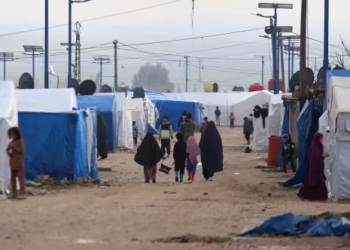 Anthony Albanese Must Uphold Rights for All Australians
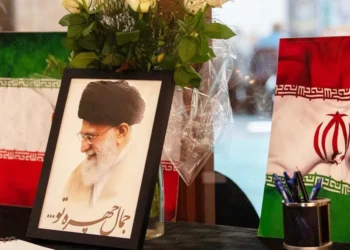 Months of Planning Behind US‑Israeli Mission to Target Iran’s Supreme Leader
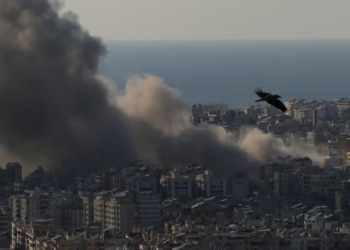 US Iran Operation: Sixth Service Member Killed
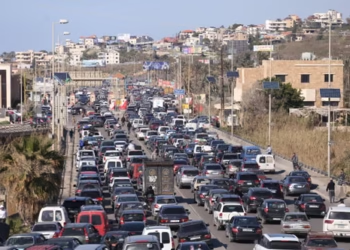 Hezbollah Anger Erupts as War Returns to Beirut
 Israel Launches Fresh Strikes on Tehran & Beirut; US Warns “Hardest Hits” Ahead
 Middle East attacks intensify as Trump rejects Iran talks
 DHS Probe Into Border Official Sparks National Debate
 Iran-Iraq border airstrikes spark new tensions
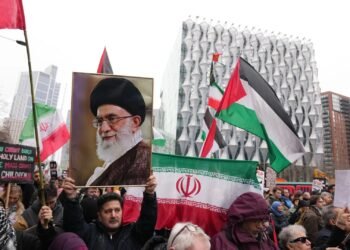 Thousands Protest Iran Strikes Outside US Embassy London
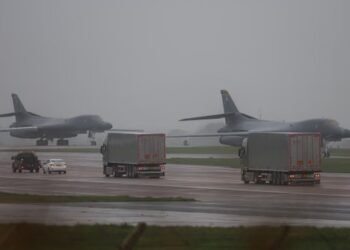 US Bombers Arrive at RAF Base Amid Rising Iran Tensions
 UK Prepares Aircraft Carrier for Middle East Crisis
 New Zealand Covid Response Praised Despite Lingering Scars
 Abramovich Chelsea Sale Cash Faces Jersey Probe
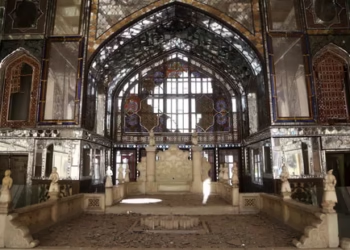 Ancient Heritage Sites Damaged in Recent Airstrikes
 Yvette Cooper: UK Must Follow Principles, Not US Pressure
 Trump Iran War Stance Hardens as Conflict Widens
 US Strike on IRIS Dena Strains Strategic Indian Security Ties
 Kabul hospital strike sparks deadly blame row
 Slovenia Election: A Nation at a Crossroads
 Ghalibaf Iran: Survivor Emerges in Shifting Power Game
 Jury Rules Meta and YouTube Liable for Addictive Design
 Gulf Distrust Grows Over Rumoured US-Iran Peace Talks
 WHO Warns of Health Crisis Unfolding in Middle East
 Trump Softens Cuba Oil Stance as Russian Tanker Nears
 The Woman Guarding Earth From the Threat of Asteroids
 Trump Threatens Iran With Total Infrastructure Destruction
 IMF Predicts Global Economic Crisis Due to Gulf Unrest
 Spain Shuts Airspace to US Military Over Iran Conflict
 California Defies Trump With Strict New AI Standards
 Germany Grapples With AI Abuse Following TV Star Scandal
 Exiled Tycoon Warns of New Russian Attacks on UK Soil
 Labor Under Fire Over Stalled University Fee Reform
 LA 2028: Millions of Affordable Olympic Tickets Announced
 Inside the Deceptive Machine: A Former Producer Speaks Out
 Italy Faces Third Successive World Cup Absence After Loss
 Turkey End Kosovo Dreams to Secure World Cup Return
 Starmer Urges Ambitious EU Ties Amid Middle East Conflict
 Spain Faces Backlash Over Xenophobic Chants in Egypt Draw
 A Global Voice For Justice: Stephen Lewis Dies At Age 88