Published: 6 April 2026 . The English Chronicle Desk. The English Chronicle Online—Analyzing the constitutional tug-of-war at the heart of American governance.
A growing “judicial resistance” is taking shape across the United States as federal district and appellate judges increasingly stall the Trump administration’s most aggressive executive actions. Legal experts and constitutional scholars suggest that while the Supreme Court remains a perceived ally of the White House, the nation’s lower courts are emerging as the frontline defense against what critics describe as a “war on the rule of law.” From blocking mass deportation logistics to halting the summary dismissal of civil servants, the “bench” is asserting its independence in a way not seen since the early days of the first Trump term.

In the last 30 days alone, federal judges in California, New York, and Hawaii have issued a series of nationwide preliminary injunctions that have effectively frozen several key administration pillars:
-
The “Schedule F” Freeze: A District Judge in D.C. granted a stay against the reclassification of 50,000 federal employees as “at-will” political appointees, ruling that the move bypassed established congressional civil service protections.
-
The Deportation “Tent Cities”: A federal judge in Arizona halted the construction of massive temporary detention facilities on federal land, citing violations of the National Environmental Policy Act (NEPA) and local land-use compacts.
-
The Impoundment Act: Multiple courts are currently hearing challenges to the White House’s decision to “freeze” Congressionally approved funds for green energy projects, a move judges have signaled may violate the 1974 Impoundment Control Act.
The administration has responded to these rulings with characteristic bluntness. Acting Attorney General Todd Blanche recently characterized the flurry of injunctions as “judicial activism by unelected bureaucrats in robes,” arguing that they are subverting the “clear mandate” given by voters.
-
The Loyalty Audits: Tensions peaked last week when the DOJ suggested it would investigate the “political leanings” of judges who consistently rule against the administration—a move the American Bar Association (ABA) labeled an “unprecedented threat to judicial independence.”
-
The “Forum Shopping” Counter-Strike: To bypass liberal-leaning circuits, the DOJ has strategically filed its own countersuits in the Fifth Circuit (Texas), seeking to create “circuit splits” that force the Supreme Court to intervene prematurely.
Perhaps most surprising to legal observers is that the pushback isn’t coming solely from Democratic appointees.
“What we are seeing is a constitutional reflex,” says Professor Lawrence Tribe. “Even judges appointed by the President himself are balking at the idea that executive orders can override settled statute. They are choosing the Robe over the Party.”
One notable example occurred in the Eleventh Circuit, where a Trump-appointed judge ruled that the administration’s “mass pardon” of Jan 6 defendants could not be applied retroactively to those currently facing separate state-level charges, citing the “sanctity of the dual-sovereignty doctrine.”
As the administration prepares for a “Summer of Enforcement,” the legal bottleneck is causing significant internal frustration. With the Artemis II crew returning from the Moon and the Iran conflict draining federal focus, the White House is eager to clear these domestic legal hurdles. However, as one senior judge in the Ninth Circuit recently wrote in an opinion: “The velocity of an administration’s ambition does not grant it permission to outrun the Constitution.”

The result is a Washington paralyzed by a “war of motions,” where every executive signature is met within hours by a judicial “stay.” For the American public, the coming months will determine whether the “Rule of Law” remains a rigid structure or a flexible instrument of the executive branch.
Key Judicial Battlegrounds: April 2026
| Policy Area | Status of Legal Challenge | Primary Court |
| Federal Job Reclassification | Injunction Granted | D.C. District Court |
| Border Wall/Tent Construction | Stayed Pending Review | 9th Circuit (CA/AZ) |
| Oil Blockade (Domestic Impact) | Multiple Suits Filed | 2nd Circuit (NY) |
| Environmental Deregulation | Active Hold | 4th Circuit (VA) |
| Education Dept. Dissolution | Discovery Phase | 1st Circuit (MA) |
Related News:
 US National Guard Member Killed in DC Shooting
 Trump to pause migration from ‘third-world countries’
 Franklin Turtle, Sabrina Carpenter Slam US Social Media Use
 US Senator Mark Kelly Sues Pentagon Chief Hegseth Over Demotion Threats
 Trump officials continue false claims after Alex Pretti shooting
 Partial US Government Shutdown Hits Homeland Security Funding
 Thousands Protest ICE Operations in Nationwide US Day of Action
 Starmer to Release Mandelson Files
 Inside Kyiv’s resolve as conflict nears five‑year mark
 US Partially Evacuates Beirut Embassy Amid Rising Iran Tensions
 Hillary Clinton Tells House Panel She Had No Idea of Epstein’s Crimes
 US Senate Vote Fails to Rein in Trump War Powers on Iran
 Trump Removes Kristi Noem From Homeland Security Role
 ‘Permit Paused’: DC Judge Halts Construction of Trump’s $100M ‘Patriot’ Ballroom
 Trump Moves to Restrict Mail-In Ballots via Executive Order
 Loyalty vs. Results: Trump Ousts Pam Bondi as Attorney General
 Democracy Under Guard: Police Surge Support as Threats Against MPs Hit Record Highs
 The “Protective Shield”: Who is Todd Blanche, the New Acting U.S. Attorney General?
 Trump Administration Dismisses 17 Immigration Judges, Sparking Debate Over Judicial Independence
 Tanni Grey-Thompson Faces Abuse Over Opposition to Assisted Dying Bill
 Mahmood Pledges Reform of Modern Slavery Laws After Court Blocks Deportation Appeal
 Digital ID Plans Ignite Debate Over £600m Treasury Tax Boost and Privacy Concerns
 Nigel Farage’s partner linked to Brussels fraud probe
 Johnson Approved China’s London ‘Super-Embassy’ in 2018
 French Taxi Driver Cleared in David Lammy Theft Case After Fare Dispute
 WASPI Women May Get Second Chance at Pension Redress
 Trump Urges Herzog to Grant Netanyahu Full Pardon
 Major Rent Reform Ends No-Fault Evictions in England
 Peers Flood Assisted Dying Bill with 942 Amendments
 US Justice Department Files Lawsuit Against California Over Partisan Voting Maps
 Trump Deploys DHS to Charlotte in Major Arrest Operation
 ICC to Rule on Duterte’s Provisional Release
 Russia losses Ukraine war peace talks intensify amid rising deaths
 Trump Escalates Minnesota Immigration Surge Amid Rising Tensions
 Homeland security agents deployed amid Minneapolis protests
 Plans to Limit Jury Trials Face Retreat After Mounting Opposition
 Trump Threatens Strong Action If Iran Executes Protesters
 European Leaders Condemn Trump Tariff Threat Over Greenland
 American democracy faces crisis after Trump’s return
 EU Says US Ties Have Suffered ‘Big Blow’ After Greenland Crisis
 Trump Praises ‘Terrific’ Petro After White House Talks
 Fears of New Arms Race as US-Russia Nuclear Weapons Treaty Expires
 Australia’s Opposition Coalition Reunites After Rift
 Nurses’ families fear breakup under UK immigration crackdown
 ‘Trump Will Be Gone in Three Years,’ Top Democrats Tell Europe
 Hillary Clinton Accuses Trump of Epstein Files ‘Cover-Up’ in BBC Interview
 US Civil Rights Leader Jesse Jackson Dies Aged 84
 Stephen Colbert Says CBS Spiked Interview With Democrat Over FCC Fears
 Last‑ditch Call to Save Police Front Counters in London
 Nine Arrested in France Over Death of Far‑Right Student
 Civil Service Pay: Union Urges Ministers to End ‘Barking Mad’ Limits
 Trump Directs US Govt to Prepare Release of Files on Aliens and UFOs
 Who is Abigail Spanberger, the Democrat set to give State of the Union response
 Trump Probe Fallout: Patel Fires FBI Staff Tied to Documents Case
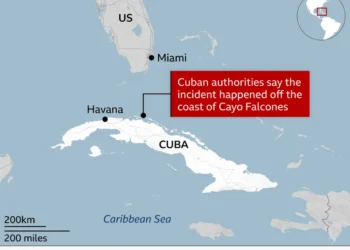 American Citizen Killed in Cuba Boat Shooting, U.S. Officials Say
 Trump Faces Questions Over Iran Conflict Plan
 Texas Senate seat fight heads to runoff as votes split
 Cooper and Whatley Win Primaries for North Carolina Senate
 US Senate Backs Trump War Powers Amid Iran Missile Barrage
 US Trade Court Orders Tariff Refunds in Setback for Trump Administration
 Labour MP’s Partner Arrested on Suspicion of Spying for China
 Police Scotland Pays £8m Compensation to Staff
 Thousands Protest Iran Strikes Outside US Embassy London
 US Bombers Arrive at RAF Base Amid Rising Iran Tensions
 UK Prepares Aircraft Carrier for Middle East Crisis
 Pete Hegseth Iran War Remarks Spark Alarm
 Proposed Law Leaves Gap for Children of Convicted Paedophiles
 Iran War Puts Trump at Political Risk Amid Rising Prices
 Queensland Protest Laws Spark Free Speech Backlash
 Trump’s Confidence Undimmed — But Every Iran Option Carries Risk
 Mandelson’s Phone Messages Requested in Files Release
 US Lawmaker Demands Testimony Over Sarah Ferguson’s ‘Close Epstein Ties’
 The Last of the Lords: Two Hereditary Peers to Retain Ceremonial Roles Amid Historic Ousting
 ‘Eye in the Sky’ Blinded: Photos Reveal Destroyed US Radar Jet at Saudi Base
 ‘Full and Immediate Access’: Netanyahu Reverses Palm Sunday Ban on Latin Patriarch
 Israel Enacts Death Penalty Law for Palestinians Following 12-Hour Debate
 ‘In Our Backyard’: FBI Labels Michigan Synagogue Attack as Hezbollah-Inspired Terrorism
 Can Congress Stop US Sports Teams From Moving Cities?
 Can King Charles Calm Trump on Key US Visit?
 Report Says Pezzullo Acted ‘Recklessly’ in Dealings