Published: 08 April 2026. The English Chronicle Desk. The English Chronicle Online.
The geopolitical landscape of the Middle East remains in a state of profound and agonizing flux today. Despite a major diplomatic breakthrough involving the United States and Iran, regional stability appears remarkably fragile. Israel has officially declared that its military operations in Lebanon will continue without any immediate pause. This decision comes directly after Donald Trump announced a significant two-week ceasefire regarding broader Iranian hostilities. The Israeli government maintains that this specific truce does not extend to its northern neighbor. Prime Minister Benjamin Netanyahu’s office clarified this stance amidst reports of ongoing local artillery strikes. This position creates a sharp contradiction with statements released by officials in Tehran and Islamabad. Pakistan has played a pivotal role in mediating these complex negotiations over the recent weeks.
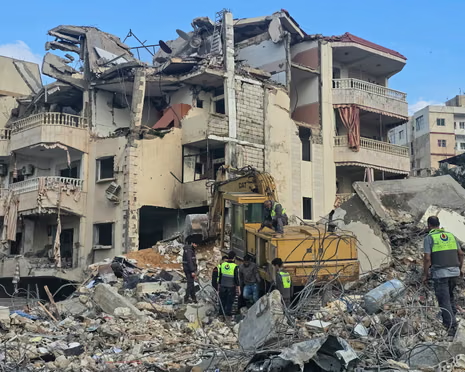
On Wednesday morning, a military spokesperson confirmed that operations against Hezbollah are currently still active. Israeli forces issued urgent warnings to civilians residing in the southern regions of the country. People were instructed to move north of the Zahrani River to avoid upcoming military targets. The human cost of this persistent conflict has already reached a truly devastating scale recently. More than fifteen hundred people have lost their lives during the last five weeks alone. Many of those casualties are civilians caught in the crossfire of this relentless regional war. The international community had hoped for a broader de-escalation following the recent American peace initiative. However, the disconnect between global diplomacy and local military action remains a significant hurdle now.

According to various reports, Iran’s proposed ten-point peace plan includes an end to all fighting. This plan was reportedly accepted by Donald Trump as a viable basis for further negotiations. Tehran considers Hezbollah a core component of the so-called axis of resistance across the region. Therefore, any comprehensive ceasefire would naturally include the cessation of hostilities on the Lebanese border. Yet, the American President did not explicitly mention Lebanon during his initial public ceasefire address. His remarks focused primarily on the direct relationship and tensions between Washington and Tehran instead. This omission has left many Lebanese citizens in a state of terrifying and deep uncertainty. They are unsure if the bombs will stop falling on their homes and city streets.
Netanyahu previously briefed his security cabinet on Sunday regarding the potential for a regional truce. He emphasized that a deal with Iran would not automatically translate into a Lebanese ceasefire. Israeli political and military leaders seem unified in their desire to continue this specific campaign. They believe the military objectives against Hezbollah have not yet been fully achieved on the ground. However, there are signs that wider diplomatic conversations were concluded without much direct Israeli input. The mediation efforts in Pakistan reached a conclusion between the United States and Iran recently. Trump reportedly called Netanyahu to inform him of the decision just before the public announcement. This sequence of events suggests a possible rift between the two traditional and close allies.
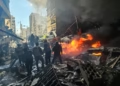
The internal political reaction within Israel has been swift and remarkably critical of the current leadership. Opposition leader Yair Lapid described the recent diplomatic developments as a total strategic disaster today. He argued that Israel was not even present at the table during these vital talks. This lack of representation concerns many who view national security as a top priority now. Lapid suggested that Netanyahu has failed to protect the core interests of the Israeli state. Meanwhile, the reality on the ground in Lebanon remains violent and increasingly deadly for residents. Just an hour before the Iran ceasefire began, an Israeli strike hit a coastal town. Eight people were killed and twenty-two were wounded in a strike near Saida’s cafes.
As the morning progressed, Israeli artillery continued to strike targets across the southern Lebanese landscape. Drone strikes were reported in the towns of Qana and al-Qleileh during the early hours. Hezbollah sources indicated that they had not launched any retaliatory attacks throughout the entire night. This silence from the militant group suggests a possible period of observation and strategic waiting. Another warning was issued to the residents of Tyre shortly after nine this morning. Such warnings usually precede heavy airstrikes on buildings within densely populated and busy urban areas. The Lebanese Ministry of Health continues to monitor the rising casualty figures with growing alarm. Every hour brings new reports of destruction from different parts of the embattled southern region.
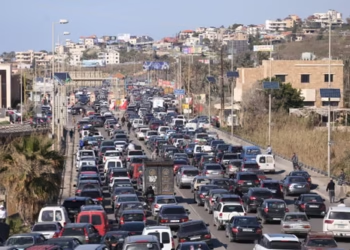
Sources in Lebanon suggest that Hezbollah will soon issue a formal response to these events. The group needs to clarify its position on the ceasefire and Netanyahu’s recent assertive claims. The ambiguity of the situation has created a logistical nightmare on the country’s main highways. Roads leading south were completely choked with heavy traffic as the sun began to rise. Many displaced residents were attempting to return to their homes despite the ongoing military risks. Hezbollah has urged caution, telling people to avoid certain villages occupied by Israeli ground troops. The desire to return home is battling with the fear of renewed and intense violence. Families are caught between the hope of peace and the reality of persistent warfare.
Digital communication platforms are currently filled with anxious messages from people trying to find clarity. WhatsApp groups are buzzing with rumors and conflicting reports about the actual scope of the truce. For many in Lebanon, the last five weeks have pushed their society to a breaking point. More than one million people have been forcibly displaced from their homes during this time. Many families are currently living on the streets or in overcrowded temporary shelters across Beirut. The infrastructure of the country is struggling to cope with this massive humanitarian crisis today. Every citizen is desperately parsing the news for any sign that the fighting might end. The psychological toll of this uncertainty is becoming as heavy as the physical destruction itself.
There was a brief period of calm reported in the northern parts of the region. Air raids on Israel stopped shortly before three thirty in the morning on Wednesday. This timing coincided with the formal announcement made by the Pakistani prime minister regarding the deal. No further incoming attacks have been reported on Israeli soil since that specific time. This suggests that some parties are adhering to the spirit of the international peace agreement. However, the continuation of strikes in Lebanon remains the primary obstacle to a total peace. The international community is watching closely to see if diplomacy can eventually override military force. The next few days will be critical for the future of the entire region.
The tension between international diplomatic goals and local security concerns is now being tested fully. Donald Trump’s administration seems focused on a grand bargain to reset relations with the Iranian state. Conversely, Israel views Hezbollah as a direct and existential threat that requires a military solution. Reconciling these two different perspectives will require immense diplomatic skill and perhaps more direct pressure. The people of Lebanon remain the most vulnerable participants in this high-stakes game of global chess. Their lives depend on whether the ceasefire can eventually be expanded to include their borders. Until then, the sound of artillery continues to echo through the hills of the south. The world waits to see if the promise of peace can become a reality.

The role of Pakistan as a mediator has surprised some seasoned observers of Middle Eastern politics. Their involvement highlights the changing nature of global diplomacy and the search for new neutral ground. This shift suggests that traditional power dynamics are evolving in the face of modern regional conflicts. The success of the ten-point plan could redefine how future wars are settled in Asia. However, the exclusion of key local actors like Israel could also lead to future instability. For a peace deal to last, all parties must eventually find common ground or compromise. The current situation serves as a stark reminder of how complex these historical grievances remain. Moving forward will require more than just signatures on a piece of paper in Islamabad.
As the sun sets on this historic day, the contrast in the region is striking. In some areas, there is a cautious sense of relief as the rockets have stopped. In southern Lebanon, the smell of smoke and the sound of drones still fill the air. The English Chronicle will continue to provide updates as this delicate situation develops further tonight. Our thoughts remain with the civilians on all sides who desire nothing more than safety. The path to a lasting peace is rarely straight or easy for those involved. Today is a significant step, but the journey is clearly far from over for Lebanon. We hope for a resolution that brings dignity and security to every person affected. This report confirms the ongoing complexity of a world seeking rest from endless war.
Related News:
 Ukraine war briefing: Zelenskyy offers help to Saudi Crown prince on combatting Iranian drones
 Ukraine Sends Drone Experts to Defend US Bases in Jordan
 Saudi Arabia Urging US to Keep Up Iran Attacks
 Diplomacy on the Brink: Pakistan’s Risky Peace Mission
 Trump Slams Europe as Transatlantic Tensions Boil Over
 High-Value Target: Iranian Strike Destroys US Radar Plane
 UN Warns Israeli Death Penalty Bill Could Be a War Crime
 Pakistan and China Propose Five-Part Peace Plan
 Trump Issues Stark Warning After Strike On Iran’s Largest Bridge
 Hope and Fear as Iranians Flee Across the Turkish Border
 The Price of Hubris: Trump, Netanyahu, and the ‘Easy’ War
 Capitol Attack Anniversary Sparks Deep Political Divide
 Saudi Officials Report Zubaidi Flee Before Yemen Peace Talks
 UK Targets in New York Bomb Threat Hoax: Man Jailed
 Gambia Supreme Court Hears Case to Overturn FGM Ban
 Trump targets Iran trade with 25% tariff warning
 Rudd successor: Defence chief and former ministers considered
 US Senate rejects resolution limiting Trump military powers
 Venezuela regime claims release of political prisoners signals new era
 Gulf states warn Trump Iran strikes risk wider Middle East war
 Machado Trump medal gesture reshapes Venezuela power struggle
 Greenland defence seen as shared Nato duty amid troop arrivals
 Geopolitical football: Iran, Trump and the World Cup clash
 Canada-China trade gains momentum in new strategic partnership
 Trump Receives Machado’s Nobel Medal in White House Meeting
 Syria President Declares Victory as Ceasefire Reached with SDF
 US Considers Asylum for British Jews Amid Rising Antisemitism
 Trump slams UK ‘stupidity’ over Chagos Islands, eyes Greenland takeover
 Trump Tightens Grip on EU and UK Energy Supply
 Shinzo Abe’s killer receives life sentence in Japan
 China General Under Investigation Amid Leadership Purge
 Philippines ferry disaster leaves 15 dead, dozens missing
 Cambridge Faces Scrutiny Over Arms Investment Transparency
 Epstein UAE Emails Shake British Royal Andrew’s Legacy
 Christchurch gunman seeks to vacate guilty plea
 Liberal Fallout: Taylor Challenge Casts Shadow Over Sussan Ley’s Leadership
 Infantino Faces Russia Threat and Trump Concerns at Uefa Congress
 Concerns rise for Canberra boy amid Iran detention fears
 Iran Says ‘Guiding Principles’ Agreed With US at Nuclear Talks
 Caribbean Leaders Urge Dialogue Amid US Oil Embargo on Cuba
 Anthony Albanese Must Uphold Rights for All Australians
 Months of Planning Behind US‑Israeli Mission to Target Iran’s Supreme Leader
 US Iran Operation: Sixth Service Member Killed
 Hezbollah Anger Erupts as War Returns to Beirut
 Middle East attacks intensify as Trump rejects Iran talks
 Iran-Iraq border airstrikes spark new tensions
 Thousands Protest Iran Strikes Outside US Embassy London
 US Bombers Arrive at RAF Base Amid Rising Iran Tensions
 UK Prepares Aircraft Carrier for Middle East Crisis
 New Zealand Covid Response Praised Despite Lingering Scars
 Abramovich Chelsea Sale Cash Faces Jersey Probe
 Yvette Cooper: UK Must Follow Principles, Not US Pressure
 Trump Iran War Stance Hardens as Conflict Widens
 US Strike on IRIS Dena Strains Strategic Indian Security Ties
 Kabul hospital strike sparks deadly blame row
 Slovenia Election: A Nation at a Crossroads
 Ghalibaf Iran: Survivor Emerges in Shifting Power Game
 Jury Rules Meta and YouTube Liable for Addictive Design
 Gulf Distrust Grows Over Rumoured US-Iran Peace Talks
 WHO Warns of Health Crisis Unfolding in Middle East
 Trump Softens Cuba Oil Stance as Russian Tanker Nears
 The Woman Guarding Earth From the Threat of Asteroids
 Trump Threatens Iran With Total Infrastructure Destruction
 IMF Predicts Global Economic Crisis Due to Gulf Unrest
 California Defies Trump With Strict New AI Standards
 Germany Grapples With AI Abuse Following TV Star Scandal
 Exiled Tycoon Warns of New Russian Attacks on UK Soil
 Labor Under Fire Over Stalled University Fee Reform
 LA 2028: Millions of Affordable Olympic Tickets Announced
 Inside the Deceptive Machine: A Former Producer Speaks Out
 Italy Faces Third Successive World Cup Absence After Loss
 Starmer Urges Ambitious EU Ties Amid Middle East Conflict
 Spain Faces Backlash Over Xenophobic Chants in Egypt Draw
 A Global Voice For Justice: Stephen Lewis Dies At Age 88
 Tragic End to Outback Search as Floods Claim a Life
 Ben Roberts-Smith Arrested Over Alleged War Crimes
 Reform UK Pledges To Halt Visas Over Reparations Demands
 US and Iran Agree to Two-Week Provisional Ceasefire
 Starmer visits Gulf as US and Iran agree ceasefire
 Gaza Child Arrives in UK for Life-Changing Care