Published: 09 April 2026. The English Chronicle Desk. The English Chronicle Online.
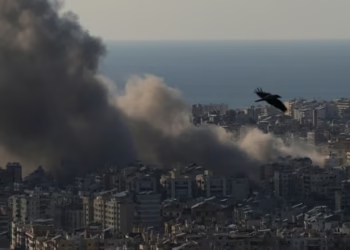
The landscape of the Middle East shifted violently today as Israel initiated its largest military offensive. Huge waves of airstrikes hit Lebanon while the world watched with a sense of profound shock. Initial reports confirm that at least two hundred and fifty-four people lost their lives today. Another eight hundred and thirty-seven individuals suffered various injuries during the intense and sudden aerial bombardment. This massive assault follows closely on the heels of a fragile ceasefire announced only hours earlier. Many people hoped the regional violence would finally subside after the recent diplomatic negotiations in Pakistan. However, the skies over Beirut quickly filled with dark smoke and the sound of heavy explosions. Warplanes targeted several buildings in the heart of the capital city throughout the long afternoon hours. Israel’s defence minister described the operation as a surprise strike against the militant group known as Hezbollah.
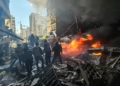
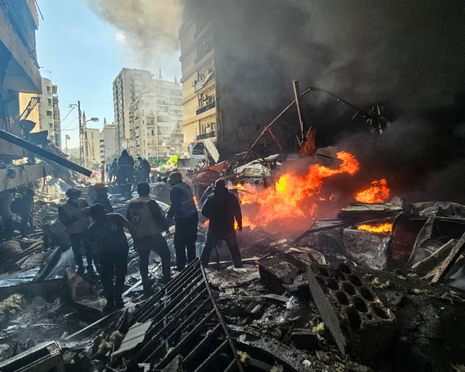
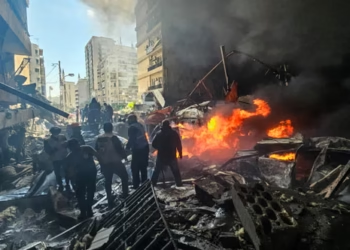
The physical devastation in the Lebanese capital appears to be both widespread and deeply distressing today. Cars sit crumpled on the streets while flaming wreckage blocks many of the city’s major thoroughfares. First responders are currently struggling to extinguish the numerous fires burning across the busy urban center. Israeli military officials claim they hit more than one hundred Hezbollah sites during this recent wave. The office of the Israeli prime minister clarified that the ceasefire does not include Lebanon. This statement directly contradicts the earlier announcement made by the mediator and Pakistani prime minister. President Trump also commented on the situation after remaining silent during the first few morning hours. He described the situation in Lebanon as a separate skirmish away from the main regional deal. This interpretation of the ceasefire agreement has caused significant confusion among many international diplomatic observers.

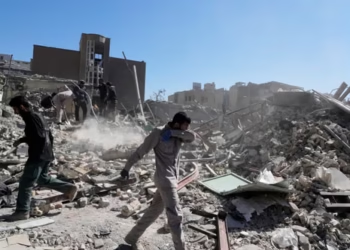
Hospitals across the country are now putting out urgent calls for life-saving blood donations tonight. The ministry of health urged all citizens to clear the streets for the passing ambulances. Emergency vehicles are trying to reach the injured through the heavy traffic and debris-filled roads. Many residents rushed back to their homes to check on the safety of their loved ones. A video surfaced showing a man running toward a destroyed building in the Chiyah neighbourhood. He was screaming that people were still trapped inside the ruins of the leveled structure. Heartbreaking pictures of children covered in grey rubble are now circulating widely on social media platforms. These images show the human cost of a war that many hoped was finally ending. Families are desperately trying to find their parents among the chaos of the many struck sites.
Shaden Fakih is a local calisthenics trainer who witnessed a strike in the central Barbour neighbourhood. She spoke about her friend Mahmoud who is not answering his phone since the building collapsed. Shaden expressed a deep sense of frustration and noted the situation is becoming truly ridiculous now. Her story reflects the anxiety felt by millions of people living under the threat of airstrikes. Iranian sources told the Tasnim news agency they might exit the ceasefire agreement very soon. They warned that Tehran will not stand by if Israel persists in violating the Lebanon truce. The crisis was discussed by the Iranian foreign minister and his counterpart from the Pakistani government. Despite these warnings, Israel Katz insisted that the two theatres of war remain entirely separate. He stated that the primary aim is to change the reality of life in southern Lebanon.
The Israeli government wants to remove any threats to residents living in the north of Israel. Katz went on to issue a direct and personal threat toward the leader of Hezbollah. He warned Naim Qassem that his group would pay a very heavy price for these actions. The defence minister suggested that the personal turn of the Hezbollah leader would come quite soon. An Arabic language spokesperson for the military suggested that strikes would now hit deeper into Beirut. Previously, the Israeli military had confined most of its strikes to the southern suburbs of Beirut. These areas are known for having high levels of support for the Hezbollah political movement. The spokesperson claimed that Hezbollah fighters were now repositioning themselves within various mixed urban neighbourhoods. He vowed that the military would pursue these fighters regardless of their specific geographical location.
Shortly after this announcement, another building was brought down in the Tallet al-Khayet neighbourhood. This specific area of west Beirut had not been targeted before in this current ongoing conflict. The suggestion that strikes could hit anywhere in the city has terrified the local civilian population. One resident in the Barbour district asked where they were supposed to go for safety now. They expressed a fear that Israel has finished with Iran and is now targeting Lebanon. This sense of dread is echoed by international officials who are watching the rising death toll. Volker Türk, the UN human rights chief, condemned the scale of the strikes as truly horrific. He noted that such carnage occurring right after a ceasefire agreement defies all rational belief. This violence places enormous pressure on a fragile peace that is desperately needed by all civilians.
The Red Cross expressed deep outrage over the devastating death and destruction in densely populated areas. They noted that Lebanon has once again been plunged into a state of panic and chaos. President Trump stated he was aware of the bombing but reiterated that Lebanon was excluded. He claimed that the presence of Hezbollah made it impossible to include the country in negotiations. When asked if the attacks were acceptable, he repeated that it was just a separate skirmish. Before this wave of strikes, Hezbollah had not launched any attacks since the ceasefire was announced. This was a significant pause in the fighting that began back on the second of March. Initially, Shehbaz Sharif said the agreement included an immediate ceasefire everywhere including the nation of Lebanon. This discrepancy between the Pakistani announcement and the Israeli actions has created a diplomatic nightmare.
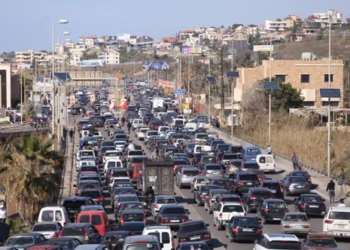
As dawn broke earlier today, the highways leading to the south were choked with heavy traffic. Residents were attempting to return to their homes after hearing news of the potential regional peace. However, Hezbollah urged people not to return to certain villages where Israeli troops were still present. The ten-point peace plan from Iran called for an end to war against all resistance components. For Tehran, this definition clearly includes the fighters of Hezbollah currently operating within the Lebanese borders. There were signs on Tuesday that the wider diplomatic conversation had concluded without direct Israeli input. Trump reportedly called Benjamin Netanyahu to inform him of the decision just before the public announcement. This move appears to have sidelined the Israeli leadership during the final stages of the talks.

The Israeli opposition leader Yair Lapid criticized Netanyahu for failing both politically and strategically today. He claimed that this situation represents the largest political disaster in the entire history of the state. Lapid noted that Israel was not even at the table for decisions concerning national security interests. Later in the day, Netanyahu stated that Israel remains prepared to confront Iran if it becomes necessary. He argued that the military still has many important objectives to complete within the region. The military continues to pursue the goal of completely disarming Hezbollah to ensure long-term border security. This five-week war has pushed the nation of Lebanon to a dangerous and critical breaking point. More than one million people have been forcibly displaced from their homes since the fighting started.
Many of these displaced families are now left living on the streets without any proper shelter. The ministry of health reported that over fifteen hundred people have died since the conflict began. Thousands more have been wounded by the relentless waves of airstrikes hitting cities and small villages. While air raids on Israel occurred early in the night, they stopped after the ceasefire news. No incoming attacks on Israeli territory have been reported since the early hours of the morning. This silence on one side of the border stands in stark contrast to the Lebanese fire. The world now waits to see if the ceasefire can survive this latest and deadliest escalation. Diplomacy remains the only hope for millions of people caught in the crossfire of this war. Without a clear agreement, the cycle of violence threatens to consume the entire region once again.
Related News:
 Middle East Flights Halted After Iran Strikes
 US Iran Operation: Sixth Service Member Killed
 Hezbollah Anger Erupts as War Returns to Beirut
 Gaza Siege Deepens as Iran War Escalates
 Riyadh Drone Attack Escalates Regional War
 Middle East attacks intensify as Trump rejects Iran talks
 Iran-Iraq border airstrikes spark new tensions
 Iran-Iraq Border Strikes Spark New Front Fears
 Iran-Backed Militias Escalate Attacks Across Middle East
 UK Prepares Aircraft Carrier for Middle East Crisis
 Mojtaba Khamenei Chosen as Iran’s New Supreme Leader
 Tehran Oil Depot Strikes Darken City With Toxic Smoke
 Seventh US Service Member Killed in Iran Conflict Identified
 Mojtaba Khamenei Supporters Rally as Iranians Fear Repression
 Tehran Strikes Mark War’s Most Devastating Night
 Iran Defiance Grows Amid US-Israel War Pressure
 Hormuz Crisis Sparks Global Oil Market Fears
 Iranian Exile Factions Seek US Backing for Iran’s Future
 US-Israeli Strategy Shifts to Plan B in Iran War
 Injured Mojtaba Khamenei Elevated as Iran Leader
 US Missile Strike on Iran School Sparks Global Shock
 Iran Gulf attacks escalate as ships and airports targeted
 Iran Conflict: Trump’s Uncertain Path and Diplomatic Off-Ramp
 Ancient Heritage Sites Damaged in Recent Airstrikes
 Tehran Diary: Dark Days Under Relentless Bombardment
 British Tourist Charged Over Dubai Missile Strike Video
 Gaza Detainee Abuse: Israel Drops Charges Against Soldiers
 Trump Iran War Stance Hardens as Conflict Widens
 Lebanon Ground Campaign Raises Occupation Fears
 Gulf Tensions Rise as Iran Alleges Covert Support
 Kabul hospital strike sparks deadly blame row
 Iran Threatens Total Destruction of Mideast Energy Grid
 Ghalibaf Iran: Survivor Emerges in Shifting Power Game
 Gulf Distrust Grows Over Rumoured US-Iran Peace Talks
 WHO Warns of Health Crisis Unfolding in Middle East
 Saudi Arabia Urging US to Keep Up Iran Attacks
 Iranian President’s Son Shares Wartime Hopes and Fears
 Iran Warns of US Ground Assault Amid Rising War Tension
 MAGA Anxiety and the Iran War: A Movement Divided at CPAC
 Trump Threatens Iran With Total Infrastructure Destruction
 Iran Drone Strike Hits Kuwaiti Oil Tanker in Dubai Port
 Albanese to Address Nation as War Sparks Economic Crisis
 Death, displacement and military duties: children plunged into crisis
 Trump’s Six-Week Iranian War: The High Cost of Ignorance
 Beirut Under Fire: Massive Israeli Strikes Shaking Lebanon
 Middle East Analysis: The Cost of a Fragile Peace
 Lebanon Must Join Ceasefire to Prevent Escalation, Says Cooper
 BBC to Apologise Over Edited Trump Speech Amid Backlash
 Britain deploys RAF specialists to assist Belgium with drone threats
 Greene Pushes Epstein Files Amid Trump Fallout
 December Run-Off in Chile as Election Produces No Winner
 Zelenskyy Signs Fighter Jet Deal Amid Russian Drone Attacks
 Shadow Fleet at Sea: Europe’s Battle Against Illicit Oil Shipping
 Tiny Curacao Makes History as Smallest Nation to Reach World Cup
 US Suspends Afghan Immigration After White House Shooting
 Georgians Defy Government Crackdown After Year of Protests
 ‘Extinct’ Antelope Returns to Sahara, Bringing Hope
 Sydney Shark Attack Surge Shocks Australia Beaches
 Portugal Election Delivers Socialist Win as Far Right Surges
 Australian Families Leave Syrian Camp for Home
 ‘I Would Scream in My Sleep’: Alawite Women from Syria Tell of Kidnap and Rape
 Hilary Knight speaks out on Trump’s recent hockey remarks
 Iran’s Regime Still Intact — Coming Days Will Test Its Survival
 In Maps: Strikes Across Iran and the Middle East
 The Third Day of the US‑Israeli War With Iran
 Herzog Asio meeting sparks security storm
 Civilian Deaths in Iran Pass 700 Amid Fear of Bombs and Regime Clampdown
 Petrol Prices Soar as Retailers Accused of Gouging Amid Global Tension
 Penny Wong silent on Australian crew in sub strike
 Thousands Protest Iran Strikes Outside US Embassy London
 Oil Prices Surge Above $100 Amid Iran War
 Nine Days of Strikes Reshape the Middle East
 Trump Pressures Congress Over Save America Act
 Goma Drone Attack Kills Three as Conflict Escalates
 Queensland Protest Laws Spark Free Speech Backlash
 Trump Nato threats expose Iran strategy vacuum
 Israel Says Iran Security Chief Larijani ‘Killed’
 Australia Imposes Sudden Travel Ban on Iranian Visitors
 Trump Facing Backlash from Epstein Survivors Over Files
 Report Says Pezzullo Acted ‘Recklessly’ in Dealings