Published: 10 April 2026. The English Chronicle Desk. The English Chronicle Online.
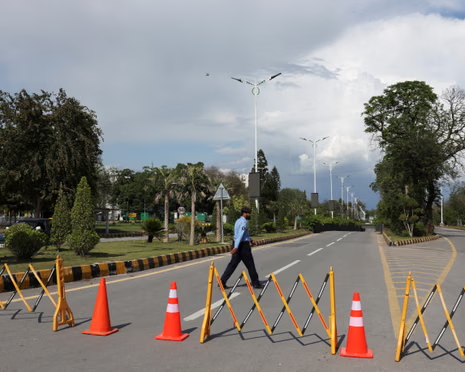
The quiet streets of Islamabad currently reflect the immense gravity of the upcoming diplomatic mission. Pakistan now stands at the very center of a global effort to restore lasting peace. Recent days have seen the capital city undergo a massive and highly visible security transformation. Elite army personnel and paramilitary rangers now patrol every corner of the important government districts. This heavy presence aims to protect the high-level delegations arriving from across the wide world. Many residents watch from their windows as the city prepares for this truly historic encounter. The atmosphere remains thick with a mix of cautious hope and very palpable nervous tension. Every official involved understands the massive stakes resting on these critical weekend negotiation sessions. A public holiday has cleared the roads to ensure the delegations move without any delay. The silence across the capital highlights the importance of the dialogue about to take place.
This diplomatic gathering follows a period of intense and devastating conflict within the Middle Eastern region. The violence began earlier this year when military strikes targeted several sensitive Iranian domestic locations. These initial attacks triggered a rapid and terrifying escalation that threatened to engulf the globe. Iran responded by closing the Strait of Hormuz which is a vital global shipping artery. This blockade caused energy prices to skyrocket and created a massive international economic shock. Families across the United Kingdom and Europe felt the immediate impact of these rising costs. The world watched in horror as the prospect of a much larger war loomed. Powerful rhetoric from the White House added to the sense of an impending global catastrophe. Many experts feared that modern civilization itself stood on the very brink of total ruin. However, the intervention of Pakistani leadership provided a much-needed path toward a temporary ceasefire.

Prime Minister Shehbaz Sharif and General Asim Munir worked tirelessly to secure this fragile truce. Their successful mediation on Tuesday night allowed the world to catch a collective deep breath. The two-week ceasefire agreement was hailed as a brilliant and significant victory for Pakistani diplomacy. It stopped the immediate rain of missiles and provided a window for these essential talks. However, the foundation of this peace remains incredibly brittle and subject to sudden change. Israel has continued its intense bombardment of Lebanon despite the official pause in direct hostilities. This ongoing violence creates a significant shadow over the planned meetings in the leafy capital. Iranian leaders have expressed deep concerns about negotiating while their regional allies face such fire. They insist that the scope of the ceasefire must include all active regional fronts. This dispute over the exact terms of the deal poses a major initial challenge.
Despite these heavy tensions, Pakistani officials insist the scheduled meetings will proceed as originally planned. They have adopted a role as quiet facilitators rather than vocal participants in the room. The goal is to provide a neutral and secure space for both sides to talk. Behind the scenes, Pakistani diplomats are working around the clock to keep everyone at the table. They have reportedly intervened several times to prevent new rounds of retaliatory military strikes. Their subtle influence has been credited with keeping the Iranian leadership engaged in the process. The world owes a debt to these silent efforts to maintain the current fragile calm. Everyone involved knows that a single mistake could reignite the entire regional powder keg. The focus remains entirely on ensuring the Saturday sessions begin without any further delays. Success in Islamabad could mean the difference between a new peace and total war.
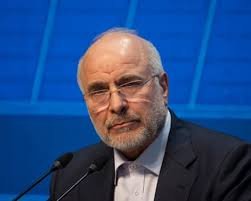
The American delegation arrives with a heavy burden of expectation from their domestic voting public. Vice President JD Vance leads a team that includes several high-profile and influential special envoys. Jared Kushner and Steve Witkoff bring their specific experience to this high-stakes diplomatic chess match. Their arrival in Islamabad marks a significant shift toward a possible negotiated political settlement. On the other side, Iran has sent a very senior and powerful group of officials. Foreign Minister Abbas Araghchi leads their team alongside the influential Speaker Mohammad Bagher Ghalibaf. Members of the Revolutionary Guard are also present to represent the military interests of Tehran. This combination of political and military figures suggests that Iran is taking talks very seriously. The presence of such heavy hitters indicates a genuine desire to find a way out. Both nations have suffered immensely during the short but brutal duration of this recent war.
The geography of the talks is also a matter of intense speculation and security. Several high-profile venues have been prepared to host these sensitive and secretive foreign discussions. The Serena Hotel has been completely cleared of regular guests to accommodate the visiting VIPs. Its surrounding streets are now under the strict control of the national military forces. Other potential sites include the Prime Minister’s Secretariat or a more secluded military installation. Security experts have created multiple layers of protection to prevent any outside interference or disruption. The secrecy surrounding the exact meeting room is a necessary part of the security protocol. Delegates need to feel safe to speak honestly away from the glare of cameras. Pakistan has spared no expense in providing a world-class environment for these critical encounters. The choice of venue will likely be revealed only after the talks have concluded.

Inclusion of other regional powers adds another layer of complexity to the weekend’s busy schedule. Delegations from Qatar and Saudi Arabia are also making their way to the Pakistani capital. These nations have also felt the direct impact of Iranian military capabilities during the conflict. Their presence suggests that any lasting peace must involve a wider regional security framework. Side meetings are expected to take place between these Gulf states and the main parties. These discussions could address the long-standing rivalries that fuel much of the regional instability. A successful outcome would likely require guarantees from all the major players in the area. Pakistan is uniquely positioned to bridge the gap between these different and often clashing interests. The world is watching to see if this South Asian nation can deliver peace. This role as a global mediator has significantly boosted the international standing of Pakistan.
As the sun sets over the Margalla Hills, the weight of history feels very heavy. The next forty-eight hours will determine the future of millions of lives across the world. A successful negotiation could lead to the reopening of the vital Strait of Hormuz soon. This would provide immediate relief to a global economy that is currently struggling to survive. It would also allow humanitarian aid to reach those most affected by the recent fighting. However, the path to a final agreement is filled with many difficult political obstacles. Both the United States and Iran have domestic audiences that demand a position of strength. Finding a compromise that allows both sides to claim a victory is the goal. The facilitators in Islamabad have their work cut out for them in the coming days. Yet, the mere fact that both sides are meeting is a reason for optimism.
The people of the United Kingdom and the international community wait for any positive news. Every small update from the English Chronicle Desk will be scrutinized for signs of real progress. The hope is that the warm hospitality of Islamabad can melt the icy relations. Diplomatic success here would be a testament to the power of dialogue over military force. It would prove that even the most bitter enemies can find a common ground. As the delegations settle in, the quiet of the city feels like a prayer. The world remains united in the hope that Sunday brings a message of lasting peace. For now, the focus remains on the brave diplomats who are stepping into the room. Their courage to talk is the first step toward healing a very broken world. Islamabad stands ready to host what might be the most important meeting of this century. Everyone is watching and everyone is waiting for the white smoke of a successful deal.
Related News:
 Ukraine war briefing: Zelenskyy offers help to Saudi Crown prince on combatting Iranian drones
 Ukraine Sends Drone Experts to Defend US Bases in Jordan
 Saudi Arabia Urging US to Keep Up Iran Attacks
 Diplomacy on the Brink: Pakistan’s Risky Peace Mission
 Trump Slams Europe as Transatlantic Tensions Boil Over
 High-Value Target: Iranian Strike Destroys US Radar Plane
 UN Warns Israeli Death Penalty Bill Could Be a War Crime
 Pakistan and China Propose Five-Part Peace Plan
 Trump Issues Stark Warning After Strike On Iran’s Largest Bridge
 Hope and Fear as Iranians Flee Across the Turkish Border
 The Price of Hubris: Trump, Netanyahu, and the ‘Easy’ War
 Israel Defies Ceasefire as Lebanon Operations Persist
 Middle East Peace Crisis: Ceasefire Strained by New Violence
 Pakistan Brokers Historic Peace Deal Amid Rising Tensions
 Netanyahu Vows Continued Lebanon Strikes Amid Peace Talks
 Capitol Attack Anniversary Sparks Deep Political Divide
 Saudi Officials Report Zubaidi Flee Before Yemen Peace Talks
 UK Targets in New York Bomb Threat Hoax: Man Jailed
 Gambia Supreme Court Hears Case to Overturn FGM Ban
 Trump targets Iran trade with 25% tariff warning
 US Senate rejects resolution limiting Trump military powers
 Gulf states warn Trump Iran strikes risk wider Middle East war
 Machado Trump medal gesture reshapes Venezuela power struggle
 Greenland defence seen as shared Nato duty amid troop arrivals
 Geopolitical football: Iran, Trump and the World Cup clash
 Canada-China trade gains momentum in new strategic partnership
 Trump Receives Machado’s Nobel Medal in White House Meeting
 Syria President Declares Victory as Ceasefire Reached with SDF
 US Considers Asylum for British Jews Amid Rising Antisemitism
 Trump slams UK ‘stupidity’ over Chagos Islands, eyes Greenland takeover
 Shinzo Abe’s killer receives life sentence in Japan
 China General Under Investigation Amid Leadership Purge
 Philippines ferry disaster leaves 15 dead, dozens missing
 Cambridge Faces Scrutiny Over Arms Investment Transparency
 Epstein UAE Emails Shake British Royal Andrew’s Legacy
 Christchurch gunman seeks to vacate guilty plea
 Liberal Fallout: Taylor Challenge Casts Shadow Over Sussan Ley’s Leadership
 Infantino Faces Russia Threat and Trump Concerns at Uefa Congress
 Concerns rise for Canberra boy amid Iran detention fears
 Iran Says ‘Guiding Principles’ Agreed With US at Nuclear Talks
 Caribbean Leaders Urge Dialogue Amid US Oil Embargo on Cuba
 Anthony Albanese Must Uphold Rights for All Australians
 Months of Planning Behind US‑Israeli Mission to Target Iran’s Supreme Leader
 US Iran Operation: Sixth Service Member Killed
 Hezbollah Anger Erupts as War Returns to Beirut
 Middle East attacks intensify as Trump rejects Iran talks
 Iran-Iraq border airstrikes spark new tensions
 Thousands Protest Iran Strikes Outside US Embassy London
 US Bombers Arrive at RAF Base Amid Rising Iran Tensions
 UK Prepares Aircraft Carrier for Middle East Crisis
 New Zealand Covid Response Praised Despite Lingering Scars
 Abramovich Chelsea Sale Cash Faces Jersey Probe
 Yvette Cooper: UK Must Follow Principles, Not US Pressure
 Trump Iran War Stance Hardens as Conflict Widens
 Kabul hospital strike sparks deadly blame row
 Slovenia Election: A Nation at a Crossroads
 Ghalibaf Iran: Survivor Emerges in Shifting Power Game
 Jury Rules Meta and YouTube Liable for Addictive Design
 Gulf Distrust Grows Over Rumoured US-Iran Peace Talks
 Trump Softens Cuba Oil Stance as Russian Tanker Nears
 The Woman Guarding Earth From the Threat of Asteroids
 Trump Threatens Iran With Total Infrastructure Destruction
 IMF Predicts Global Economic Crisis Due to Gulf Unrest
 California Defies Trump With Strict New AI Standards
 Germany Grapples With AI Abuse Following TV Star Scandal
 Exiled Tycoon Warns of New Russian Attacks on UK Soil
 Labor Under Fire Over Stalled University Fee Reform
 LA 2028: Millions of Affordable Olympic Tickets Announced
 Inside the Deceptive Machine: A Former Producer Speaks Out
 Italy Faces Third Successive World Cup Absence After Loss
 Starmer Urges Ambitious EU Ties Amid Middle East Conflict
 Spain Faces Backlash Over Xenophobic Chants in Egypt Draw
 A Global Voice For Justice: Stephen Lewis Dies At Age 88
 Tragic End to Outback Search as Floods Claim a Life
 Ben Roberts-Smith Arrested Over Alleged War Crimes
 Reform UK Pledges To Halt Visas Over Reparations Demands
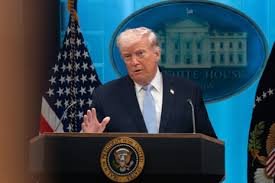 US and Iran Agree to Two-Week Provisional Ceasefire
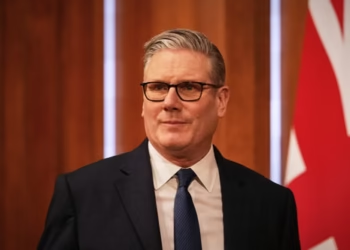 Starmer visits Gulf as US and Iran agree ceasefire
 Gaza Child Arrives in UK for Life-Changing Care
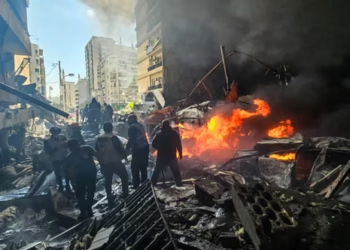 Israel Launches Massive Airstrikes Across Lebanon