Published: 15 April 2026. The English Chronicle Desk. The English Chronicle Online.
The vibrant landscape of British civil society currently faces a significant and looming shadow today. Major charitable organizations are now sounding a loud alarm regarding proposed new government regulatory powers. These groups fear that such changes could inadvertently stifle essential advocacy and community engagement efforts. Leaders from the nation’s most prominent non-profit bodies have united to voice their deep concerns. They argue that these measures risk suppressing the voices of those who challenge the status quo. The proposed expansion of the Charity Commission’s authority has sparked a very intense national debate. This conversation centers on the delicate balance between national security and the freedom of speech.
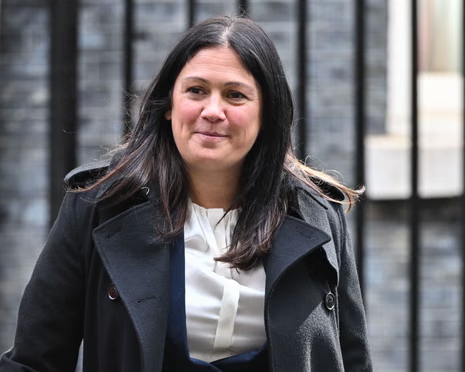
Several leading civil society organizations have officially urged the government to consult with them first. They believe that introducing these powers without sector input poses a grave risk to democracy. Signatories of a formal letter to Culture Secretary Lisa Nandy highlight these specific systemic dangers. The letter warns that new social cohesion measures might actually lead to widespread legal suppression. It suggests that lawful campaigning and community work could be mischaracterized as dangerous extremist activity. This collective action includes the National Council for Voluntary Organisations and the influential Muslim Charities Forum. Other notable participants include the historic Quakers in Britain and the international relief agency Oxfam. These organizations represent a broad and diverse spectrum of the United Kingdom’s charitable landscape.

The government’s proposal aims to introduce much broader grounds for reporting organizations for potential extremism. However, critics argue that these grounds lack the necessary safeguards and very well-defined thresholds. Without clear boundaries, the Charity Commission could remove trustees or close down organizations quite easily. The letter states that such powers could be applied in ways that target legitimate activity. This is particularly concerning for organizations that work on sensitive or highly contested social issues. Many of these groups are led by or represent the UK’s most diverse communities. They fear that their work will be unfairly scrutinized under the new regulatory framework. This tension arises as the UK navigates a complex period of social and political change.
Recent data shows a worrying rise in race and religious hate crimes across the country. Official statistics indicate that reported hate crimes increased by nearly ten percent over the last year. This trend has prompted the government to adopt a new definition of anti-Muslim hostility. In response, the policy paper titled Protecting What Matters was published just last month. This document identifies technological, demographic, and economic changes as major sources of social strain. It also points to the rise of extremism and foreign influence as significant national threats. The government views social cohesion as a key tool for building long-term national resilience. An uncertain global environment requires a more robust approach to domestic stability and safety.
The proposed solutions include a massive investment of eight hundred million pounds over ten years. This funding is specifically earmarked for forty areas in England where cohesion is under pressure. An additional eleven million pounds will support local partnerships to tackle hate and discrimination. Despite these financial commitments, civil society remains deeply skeptical of the accompanying regulatory changes. They argue that extending powers to suspend trustees could create a permanent chilling effect. Fadi Itani, the chief executive of the Muslim Charities Forum, emphasizes the need for clarity. He maintains that while hate must be eliminated, broad powers risk silencing vital advocacy. This perspective is shared by many who believe that dissent is healthy for democracy.
The letter notes that Muslim-led and racial justice organizations already face disproportionately high scrutiny levels. These groups often endure heightened regulatory pressure and frequent reputational attacks from various external actors. Such pressure can marginalize diverse voices and pose a truly existential threat to small charities. The signatories call for a transparent consultation process to ensure the independence of regulators. They believe that a healthy relationship between the state and the sector is absolutely essential. Paul Parker of the Quakers in Britain stresses the importance of welcoming dissenting public voices. He believes that the proposed measures risk imposing another unnecessary constraint on civil society’s speech. Balancing the suppression of hatred with the protection of liberty remains a primary challenge.
The Charity Commission has not been idle during this period of heightened social tension. Since October 2023, the regulator has opened more than four hundred individual regulatory cases. These cases specifically involve allegations of hate speech within the vast UK charitable sector. Nearly seventy of these cases were referred to the police for potential criminal investigations. This high volume of activity suggests that the commission is already using its current powers. Proponents of the new rules argue that the current tools are simply not enough. They believe that quicker and more decisive action is needed to protect public trust. Trust in the charitable sector is considered a cornerstone of British social and civic life.

A government spokesperson stated that the proposals will not undermine any legitimate civil society activity. They emphasized that the Charity Commission’s powers will include robust safeguards and rights of appeal. The government views charities as the vital lifeblood of communities across the United Kingdom today. The new proposals are designed to protect the vast majority of charities doing good work. However, the spokesperson insisted that individuals must not use charitable status to promote hatred. When such abuse occurs, the commission must have the authority to act very rapidly. This stance reflects a commitment to maintaining the integrity of the entire non-profit sector. Ensuring that public funds do not support extremism is a top priority for ministers.
The debate highlights a fundamental disagreement over the definition and boundaries of extremist behavior today. What one group sees as legitimate advocacy, another might perceive as a threat to cohesion. This subjectivity creates a significant legal and operational gray area for many active charities. Legal experts warn that vague definitions often lead to inconsistent enforcement by regulatory bodies. This inconsistency can cause charities to self-censor to avoid any potential regulatory complications. Such a result would diminish the richness of public debate and policy development work. The sector argues that advocacy is a core function of a healthy charitable organization. Without it, many marginalized groups would have no platform to voice their concerns.
The upcoming months will be crucial for the future of the UK’s charitable sector. The government must decide whether to move forward with the powers or seek compromise. Civil society leaders remain committed to defending their right to speak out on important issues. They hope that a transparent consultation will lead to a more balanced and fair approach. The outcome will likely define the relationship between the state and charities for years. For now, the sector remains on high alert, watching for any signs of overreach. The eyes of the international community are also on Britain’s approach to civic space. Protecting the freedom to advocate while ensuring public safety is a complex task indeed.
As the discussion continues, the importance of clear communication and mutual trust becomes more evident. Both the government and the charitable sector claim to want a safer society. Their methods for achieving this goal, however, appear to be at a crossroads. The eighty-thousand charities in the UK contribute billions to the economy every single year. Their impact on social welfare, education, and the environment is truly beyond any measure. Preserving their ability to function effectively is essential for the nation’s overall well-being. Whether the new powers provide protection or cause harm remains a subject of debate. The English Chronicle will continue to follow this developing story with great professional care. Readers are encouraged to consider the implications of these changes for their own communities.
Related News:
 Mansfield condemns refusal to meet hunger strikers
 Grief, Fear and Fury: Mothers Unite to End Israeli-Palestinian Violence
 Protest Rights Under Threat Across England and Wales
 Gambia Supreme Court Hears Case to Overturn FGM Ban
 Iran Leader Blames Protesters, Says They Serve Trump
 Civil groups oppose new anti-protest powers in England and Wales
 Iran Death Toll Crisis Exposed: Bodies, Mass Graves, and Concealment
 Thousands Protest ICE in New York Against Trump Deportation Campaign
 Concerns rise for Canberra boy amid Iran detention fears
 Australian Women in Syrian Camp Offer Separation Deal
 Hero Rescuer Saves Baby from Icy Chicago Lake
 Brazilian Politician Brothers Sentenced for Marielle Murder
 Anthony Albanese Must Uphold Rights for All Australians
 Woman Executed in Somalia Sparks Debate on Justice System
 Uganda Crackdown: Two Women Arrested for Public Kissing
 UK Activism Faces New Threats From Growing Repression
 Tribunal Rules Burgertory Founder’s Chant Incited Hatred
 Hong Kong Bookstore Arrests Spark New Freedom Concerns
 Police Seek Immunity in Indigenous Custody Death Case
 Manila Transport Crisis: Fuel Costs Hit Breaking Point
 UN Warns Israeli Death Penalty Bill Could Be a War Crime
 Spain Faces Backlash Over Xenophobic Chants in Egypt Draw
 A Global Voice For Justice: Stephen Lewis Dies At Age 88
 Artist Sues in Paris Over Israeli Strike Killing Parents
 Canadian Mother and Daughter Released From ICE Detention
 Queensland Youth Justice Debate: The Data Behind the Law
 Gaza Child Arrives in UK for Life-Changing Care
 Brisbane Rideshare Driver Faces Serious Assault Charges
 Tragedy in the Channel as Four Lives Lost in Boat Sinking
 Asylum Seekers Bound in Restraints During Removal Flights
 Kyiv and Odesa Mourn After Deadly Wave of Russian Strikes
 France Urges Release of Elderly Widow Held by ICE
 Queensland Protests Challenge New Speech Laws
 Trump Weighs Sending Afghan Allies to the Congo
 Prominent Voices Challenge Palestine Action Ban
 Aid Crisis Grows as Hormuz War Disrupts Supply
 Police Suspect Help in Missing Alice Springs Girl Case
 Australian Activists Detained as Gaza Aid Flotilla Intercepted
 Standoff Over Syria: Australia Defies Trump Repatriation Plea
 Desperation in Odisha: A Brother’s Grim Bank Protest
 Judge halts deportation of Yemeni refugees in US
 Activists allege abuse after Gaza flotilla seizure
 Asylum deal sparks fears over Syria deportations
 UK may ban protests amid rising antisemitism fears
 Alice Springs Murder Case: Justice Begins for Little Baby
 Afghan Families Left in Limbo Face Risk of Deportation
 Three Australian Women Detained Over Islamic State Links
 Australia Faces Rising Tide of Modern Antisemitism
 Security Failures and the Road to the Bondi Inquiry
 Immigration Judges Fear Pressure in Trump Era
 Mexico’s Missing: State Complicity in a Growing Crisis
 Human Rights Barrister Wins Appeal Over Contempt Charge
 Nobel Laureates Demand Release of Activist Narges Mohammadi
 London Prisoner Forced to Crawl Due to Lack of Care
 Plea for Mercy: The Battle to Bring Ahmed al-Doush Home
 Farage Faces Backlash Over Support for Preacher
 Court Upholds Landmark Win for Transgender Rights
 The Hidden Cost of Separation for Refugee Families
 Taliban Codifies Strict New Marriage and Divorce Legislation
 Israeli Strikes in Lebanon Kill 10 Amid Ceasefire Strain
 US green card applicants must apply from abroad, DHS says
 China mine blast death toll rises to 90
 Ebola outbreak in DRC overwhelms health system as cases surge
 Victim says non-custodial rape sentence ‘rock in my face’
 Former ICC prosecutor condemns US sanctions
 Preserving the Fragile Memories of Tiananmen Square
 Silenced Stitches: The Cost of Memory in Hong Kong
 Vision Lost Amid the Rubble of Modern Conflict
 Controversial London Property Show Sparks Legal Fury
 UK Watchdog Launches Major Privacy Inquiry Over NHS Bedroom Cameras
 US Supreme Court Rejects Trump Attack on Birthright Law
 UK Charity Funds Illegal Hebron Settlement Expansion
 Unflinching Witness: Doctors Document Gaza’s Medical Crisis
 Evidence of Abuse: New Photo Sparks Global Outrage
 Ukraine Creates Long-Range Strike Command
 Dreyfus Statue Finally Gets Permanent Paris Home
 Asylum Seekers Struggle as Hotel Closures Cause Chaos
 Florida Executes One of Its Oldest Death Row Prisoners
 Israeli Strike in Southern Lebanon Kills Seven
 Five Years of Taliban Rule Leave Afghanistan in Crisis