Published: 28 April 2026. The English Chronicle Desk. The English Chronicle Online.
Japan’s famously conscientious but overburdened baggage handlers will soon receive some unconventional help at Tokyo’s Haneda airport. These new arrivals are not typical human staff members but are advanced humanoid robots instead. The airport plans to integrate these robotic assistants into their daily ground operations quite soon. Japan Airlines is leading this trial starting from the very beginning of this coming May. They hope this initiative provides a practical solution to the country’s chronic labour shortage crisis. The airline expects these machines to assist with moving heavy luggage across the busy airport tarmac. Haneda airport currently serves more than sixty million passengers every single year without any pause. Managing such a high volume of travelers puts immense pressure on all existing ground service teams. Consequently, the airline and its partners are testing these units to ease the physical workload. This experiment is scheduled to run continuously until the final months of the year 2028. Both partners hope these robots will help human staff manage the recent surge in inbound tourism. Experts have also forecast that Japan will face even more severe labour shortages in coming years.
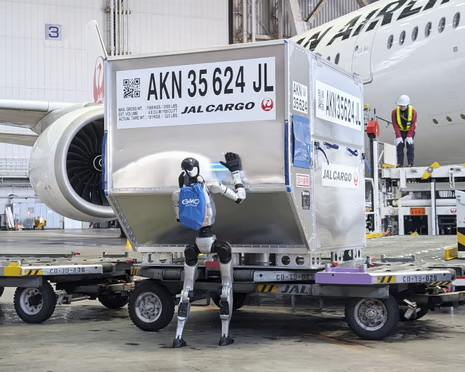
During a recent media demonstration, a specific robot model showcased its capabilities to the gathered crowd. This machine is approximately one hundred and thirty centimeters tall and was manufactured by a firm. The company responsible for this development is the technology firm Unitree based in the city Hangzhou. Observers watched as the robot tentatively pushed heavy cargo onto a conveyor belt near an aircraft. The machine even performed a polite wave toward a nearby human colleague during this live demonstration. The president of JAL Ground Service, Yoshiteru Suzuki, spoke about the benefits of this new technology. He stated that using robots for physically demanding tasks would inevitably reduce the strain on human workers. Mr. Suzuki believes these machines will provide significant advantages to the overall welfare of airport employees. However, he clarified that critical tasks will remain under the careful control of skilled human staff. Safety management and complex decision making require human intuition that robots cannot currently replicate with full accuracy. Therefore, humans will continue to oversee the most vital aspects of the airport’s daily ground operations.
The nation of Japan currently faces a difficult struggle to cope with two conflicting demographic trends. There is a simultaneous surge in visitors from overseas alongside an ageing and rapidly declining local population. According to data from the Japan National Tourism Organisation, over seven million people visited in early 2026. This follows a record of nearly forty-three million visitors arriving during the previous calendar year alone. These impressive figures continue despite a recent drop in tourists from China due to diplomatic tensions. The government now faces a complex challenge balancing economic growth with social and political demographic realities. Estimates suggest that Japan will require over six million foreign workers by the year 2040 period. Reaching national growth targets will be impossible without filling these critical gaps in the domestic labour market. The nation’s foreign population has risen dramatically in recent years to support these essential service sectors. However, the current government is under increasing political pressure to carefully manage and even rein immigration.

The president of GMO AI and Robotics, Tomohiro Uchida, highlighted the necessity of this technological shift. He noted that while airports appear highly automated, their back-end operations still rely heavily on humans. These specific areas continue to face serious shortages of personnel to handle the daily operational requirements efficiently. Many manual tasks at busy hubs like Haneda remain physically taxing and mentally exhausting for the staff. Integrating robotics into these specific workflows could transform the efficiency of ground handling for all airlines. These robots can currently operate continuously for approximately two to three hours before requiring a recharge. The companies involved in this trial are already planning to expand the robots’ roles very soon. Future tasks for these machines may include cleaning aircraft cabins between flights or assisting with terminal logistics. Expanding the functionality of these units would maximize the return on the investment for the airport operators. The success of this experiment could redefine how airports globally approach the persistent challenge of labor shortages. It marks a significant step forward in the practical application of humanoid robotics in real environments.
The experiment at Haneda represents a cautious yet determined move toward a more automated future for aviation. By blending human expertise with robotic efficiency, Japan hopes to maintain its reputation for excellent service standards. Passengers might soon become accustomed to seeing these mechanical helpers moving quietly alongside their human counterparts outside. The technology continues to evolve rapidly, suggesting that these units will become even more capable by 2028. Observers around the world will certainly watch the outcome of this specific trial with great professional interest. If successful, this model of cooperation between humans and robots could be exported to other busy airports. Achieving this harmony between automated systems and human oversight remains the primary goal for all involved stakeholders. It offers a glimpse into how the aviation industry might adapt to the challenges of the future. The trial serves as a vital bridge between current labor constraints and a highly efficient, tech-driven tomorrow. Everyone involved understands that the path forward requires careful calibration and a focus on both safety and innovation. As the project moves into its operational phase, the focus will shift toward reliability and real-world performance metrics. This initiative stands as a testament to Japan’s proactive approach to solving complex problems through advanced engineering and planning. For now, the baggage handlers of Haneda have gained a new partner that never gets tired of moving heavy suitcases.
Related News:
 Virgin Trains Moves Closer to Challenging Eurostar Monopoly
 UK Bans Fake Numbers: Scammers Lose Their Trick
 Vibe coding’ named Collins dictionary’s word of the year
 Patients to Test Health at Home to Ease NHS Winter Pressure
 One of world’s last dinosaurs on sale for £3m
 Britain deploys RAF specialists to assist Belgium with drone threats
 Government urges schools to ban phones to curb classroom disruption
 Stop using ChatGPT to write speeches, AI minister tells MPs
 Northern Lights may illuminate UK skies this week
 New laws to bolster UK’s defences against cyber attacks on NHS, transport and energy
 Hitler’s DNA Confirms He Truly Had Only One Testicle
 Working-Class Men with Prostate Cancer Left Behind by NHS
 New AI tool could cut wasted efforts in organ transplants
 How Cultures Interpreted the Aurora Through History
 From Baby Teeth to Bioengineering: The Future of Self-Healing Teeth
 Sundar Pichai Cautions on AI Hype and Market Risks
 Google Chief Urges Caution: Don’t Trust AI Blindly
 US Judge Says Meta Did Not Hold Illegal Social Media Monopoly
 Healthy Habits in Your 30s That Boost Life in Your 70s
 Raccoons Could Become America’s Next Pet
 Coffins Now Too Large to Cremate Amid Rising Obesity Crisis
 UK Taskforce Unveils Plan to Streamline Nuclear Reactor Rules
 NHS paediatric leave parents waiting months for answers
 Ofcom urges platforms to limit abuse and curb online ‘pile-ons’
 AI Actress Creator Says Tilly Norwood Won’t Replace Actors
 Starmer’s communications chief to outline media strategy overhaul
 UK Car Sales Pass 2 Million as Chinese Brands Surge
 AI Grok Sparks Child Safety Alarm in the UK
 Google Removes Some AI Health Summaries Over Safety Concerns
 Nasa ISS Medical Evacuation: Crew-11 To Return Early
 US Clears Nvidia AI Chip Sales to China in Policy Shift
 Amazon Milton Keynes closure sparks concern for UK warehouse workforce
 BP’s Influence Sparks Controversy in UK STEM Education
 Astronomers Prepare for First-Ever Movie of a Black Hole
 MPs warn AI financial risks threaten UK stability
 MPs warn AI financial risks threaten UK stability
 Pornhub blocks new UK users over age checks dispute
 Amazon mistakenly signals new global layoffs to employees
 AI breast screening cuts later cancer diagnoses by 12%, study finds
 UK Launches First Rapid-Charging Battery Train This Weekend
 UK New Car Discounts Near £6,000 as Prices Are Slashed
 Most Statin Side-Effects Are Not Caused by Drugs, Study Confirms
 BT Names New Openreach Chief Amid Major Fibre Expansion
 AI fears hit UK wealth and comparison sites
 Tech Trends Set to Transform Life in 2026
 Starmer Targets AI Chatbots Over Child Safety Concerns
 Toxic e-waste found in dolphins raises urgent health concerns
 How Ancient Scottish Rocks Challenge ‘Snowball Earth’ Theory
 Ayahuasca Psychedelic DMT Shows Potential as Depression Therapy
 Stewart Brand on Musk, Bezos and a Life of Long Thinking
 Facial Recognition Error Leads to Wrongful Arrest in Milton Keynes
 Social Media Trial: Woman Says Addiction Began at Six
 UK Social Media Ban for Under-16s Gains Momentum
 UK Teen Social Media Ban Trials Begin
 Zorevunersen Breakthrough for Dravet Syndrome
 Revealed: UK AI Push Faces Phantom Investment Claims
 Taking Multivitamins Daily Could Slightly Slow Ageing, Study Finds
 Ministers Urged to Act Faster on Deepfakes Threat
 Tesla Enters British Energy Market Following Ofgem Approval
 Social Media Giant Trial Reaches Final Jury Decision
 Cern Prepares First-Ever Antimatter Transport Test
 The Molten Mystery of L98-59d: A New Class of Liquid Planet
 Scientists Unveil Heavier Proton at CERN LHC
 House of Lords Backs Landmark Social Media Ban for Youth
 Charity Watchdog Warns Alan Turing Institute Over Conduct
 UK Watchdog Probes Five Firms Over Fake Review Failings
 The Woman Guarding Earth From the Threat of Asteroids
 California Defies Trump With Strict New AI Standards
 New Gmail Feature Ends Era of Embarrassing Email Names
 Apple at 50: Three Products That Changed How We Live
 Tech Giants Condemn EU Over Lapse in Child Abuse Laws
 Elon Musk’s xAI Sues Colorado Over New AI Regulations
 Washington Summit Targets Massive Cyber Risks From Latest AI Breakthrough
 Heavier SUVs Accelerate Britain’s Pothole Crisis
 Europe EV Demand Surges as Fuel Prices Rise
 UK Banks to Deploy Controversial Mythos AI Tool Next Week
 Big Tech Lobbies EU to Hide Massive Datacentre Emissions
 Canadian astronaut French words ease language row
 Reform UK funding: mystery billionaire revealed
 Musk and Altman Clash in OpenAI Courtroom Battle