Published: 14 May 2026. The English Chronicle Desk. The English Chronicle Online.
The British economy has demonstrated a surprising level of resilience during the first full month of the conflict in Iran. Recent official figures suggest that the Middle Eastern crisis has not yet dampened national growth as many had feared. Data released by the Office for National Statistics shows a growth of 0.3% in gross domestic product for March. This figure follows a revised rise of 0.4% in February and a stagnant performance throughout the month of January. Originally, the statistics agency estimated that the economy grew by 0.5% in February and 0.1% in January. The confirmed figure for March remains significantly better than the grim expectations held by many leading City economists. Most analysts had previously forecast that the national gross domestic product would actually shrink by 0.2% lately.
Over the first three months of 2026, the gross domestic product rose by a total of 0.6%. This represents a sharp increase from the 0.1% growth seen in the final quarter of last year. The economy also grew by 1% when compared with the same opening quarter of the year 2025. Simon Pittaway, a senior economist at the Resolution Foundation, noted that the UK made a fast start. He remarked that respectable growth makes the UK the currently fastest growing economy within the G7 nations. The statistics office stated that first-quarter growth was led by broad-based increases across the vibrant services sector. This specific area of the economy grew by a healthy 0.8% during the start of the year. Computer programming and the advertising industries were cited as performing particularly well during this difficult global period.
Construction also returned to growth by rising 0.4% after a long period of stagnation for the sector. However, this recovery was primarily driven by repair and maintenance work rather than by any new projects. Industrial production, which includes various manufacturing industries, also rose by 0.2% according to the latest government data. On a monthly basis, the biggest downward effect on the growth figures was a very sharp fall. Travel agency and tour operator activities dropped by 6.4% as the Middle East conflict escalated quite rapidly. This suggests that the ongoing war is leading many British consumers to reconsider their upcoming summer holiday plans. People appear to be staying closer to home while the geopolitical situation remains so incredibly tense abroad.
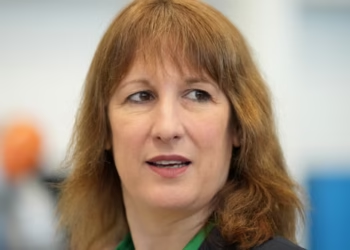
The March figure is one of the first official signs that the war is not failing businesses. The conflict broke out on the final day of February and caused immediate concerns for the markets. Activity for businesses and consumers is not as badly affected as many experts had initially predicted today. This resilience comes despite soaring oil and gas prices due to the closure of the Hormuz strait. Energy costs have risen sharply but the broader economy seems to be absorbing these shocks for now. Rachel Reeves, the Chancellor of the Exchequer, said the figures showed the government has the right plan. She argued that the choices she has made mean the economy is in a much stronger position. The Chancellor believes the nation is now better prepared to deal with the high costs of war.
Reeves also hinted at the ongoing political in-fighting currently happening within the senior ranks of the Labour party. Prime Minister Keir Starmer is currently fighting a difficult battle to hang on to his leadership position. The Chancellor added that now is certainly not the time to put our economic stability at risk. To do so would leave many hardworking families and local businesses much worse off than they are. Instead, she insisted this government is getting on with the job of building a much stronger economy. She wants to ensure the nation is more resilient and prepared for any future global economic shocks. Speaking to the BBC, she said we should not put our progress at risk by plunging. She believes plunging the country into chaos during a global conflict would be a very grave mistake.
The Chancellor noted that the plan to grow the economy is finally starting to bear some fruit. After seeing this growth, she plans to set out more support for families and for local businesses. These plans will address the challenges that have come specifically from this latest conflict in the Middle East. She looks forward to setting out these new financial measures to the public sometime next week. Reeves has already stated that any financial support for households would be targeted at those most needy. This approach aims to help vulnerable people without adding further pressure to the rising national inflation rate. Living standards have also improved at the fastest pace seen since the year 2022, the report said. Real gross domestic product per head grew by 0.6% during the first quarter of the current year.
This is a notable rise from the 0.1% growth recorded during the last three months of 2025. The latest reading ties in with several business surveys that suggest the economy has maintained its momentum. The closely watched purchasing managers index for the UK showed business activity rising throughout the month of April. This was largely due to upturns in manufacturing production and output from the various private service sectors. Retail sales also rose in March, even when excluding the significantly increased cost of automotive fuel supplies. Despite these positive signs, some analysts remain cautious about the long-term outlook for the British Isles. Ruth Gregory, an economist at Capital Economics, said the economy performed remarkably well during the energy shock. She warned that this might be the high point for the year given the ongoing war.
Experts believe the effects of the war in Iran will sap growth from the second quarter onwards. Many economists remain pessimistic about the current growth levels continuing into the middle of the calendar year. Some of the rise may be due to businesses and consumers stocking up on essential goods now. People are buying fuel and raw materials ahead of possible supply shortages and higher future borrowing rates. Yael Selfin, the chief economist at KPMG, said the adverse effect of the war is likely showing. She expects growth to slow as higher costs and softer demand continue to weigh on domestic activity. The Bank of England is expected to raise interest rates in response to rising national inflation. Higher prices for imported goods are expected to push the cost of living up for many people.
However, the deputy governor of the central bank, Sarah Breeden, has offered a more measured perspective today. Speaking to the Financial Times, she said that the bank cannot wait forever to take firm action. She clarified that they do not necessarily need to raise rates in June or in July. This suggests that the central bank may take a cautious approach to any future monetary policy changes. They are likely waiting to see how the conflict develops before making any major financial decisions soon. For now, the UK economy remains in a better position than many had dared to hope for. The government will be hoping that this surprising resilience can be maintained throughout the coming summer months. Businesses will need to stay adaptable as the global situation continues to evolve at a rapid pace.
The resilience of the services sector has been a primary driver of this unexpected economic success story. If the computer programming and advertising sectors continue to thrive, the UK might avoid a deeper recession. The government remains focused on its long-term plan to ensure that economic stability is maintained at all. Families across the country will be watching closely for the support measures promised by the Chancellor next week. These measures could be vital for those struggling with the rising costs associated with the overseas conflict. The English Chronicle will continue to provide updates as more economic data becomes available to the public. For now, the message from the Treasury is one of cautious optimism in a very difficult world. The British public will hope that this positive momentum can survive the challenges that lie ahead.
Related News:
 Reeves Faces Setback as Labour May Miss Homes Target
 Trump’s UK Ambassador Urges North Sea Drilling to Strengthen US Ties
 ABF May Split Primark from Food Division Amid Tough Market
 M&S Profits More Than Halve After Cyber-Attack
 Tony Blair think tank warns Rachel Reeves must cut taxes if manifesto broken
 Oprah enjoys Meghan’s jam on English muffins
 Millionaires group urge Reeves to introduce wealth tax to ‘lift kids out of poverty’
 UK toy market enjoys bumper year as ‘kidults’ fuel demand
 Global markets drop amid tech sell-off and China slowdown
 PM Highlights UK Business at G20 in South Africa
 Mossmorran Plant Closure Hits Cowdenbeath Hard
 UK Taskforce Unveils Plan to Streamline Nuclear Reactor Rules
 Steel billionaire Lakshmi Mittal reportedly leaves UK
 Starmer Says Labour’s Economic Plan Needs Years to Deliver
 Virgin Media Fined £23.8m Over Telecare Safety Failures
 Rising Water Bills Lift Troubled Thames Back to Profit
 Starmer Faces Parliamentary Battles Over UK-EU ‘Reset’ Plan
 Phoenixism Costs UK Taxpayers Millions in Recruitment Sector
 ScottishPower Tops List of Worst UK Energy Suppliers
 City & Guilds pay surge sparks backlash amid £22m cuts
 UK Government Borrowing Drops to £11.6bn in December
 AI job losses UK: Britain faces sharper employment shock
 Most young adults in UK fear uncertain jobs and economic future
 Royal Mail delivery delays affect 16 million during Christmas
 UK Housing Market Shows Early Recovery Signs
 UK economy struggles as growth stalls at 0.1% in late 2025
 Bank of England Urged to Cut Rates to Spur Growth
 UK Unemployment Rate Climbs to 5.2% Peak
 UK shelves £110m border project amid trade strain
 UK Inflation Surprise Sparks Early Rate Cut Hopes
 Progress on gender equality at top UK firms ‘achingly slow’
 Reeves Must Back Defence Plan or Face Dismissal, Says Unite Chief
 Switching Energy Deal Can Save £200 as Price Cap Falls
 OBR Reform Row Deepens Before Spring Forecast
 UK Hotel Data Sharing Probe Shakes Global Chains
 Rachel Reeves Faces Middle East Conflict Test
 Grocery Inflation Rises Amid War Fears
 Peak Greggs fears as profits tumble sharply
 BrewDog sold Highland estate for knockdown price after abandoning reforestation plans
 Yorkshire Water Funding Sparks Debate Amid Fines and Pay Row
 New £10bn rescue plan offered for Thames Water
 UK Energy Reform Could Cut Bills by £200
 Rising Costs Force Families to Rethink Days Out
 Hospitality Sector Teeters on Brink as Costs Surge
 Iceland Boss Offers Role to Sacked Waitrose Employee
 Student Loan Interest May Rise Despite 6% Cap
 Aegon Sells Historic UK Arm to Standard Life for £2bn
 Major Housebuilder Cuts Land Buying Amid Global Unrest
 UK Staycations Rise as Travel Fears Grow
 City & Guilds Sale Sparks Fees and Pay Uproar
 Silent Tracks: Rail Line Without Passengers
 Heathrow Chair Seeks Peace to Save Third Runway
Carillion Executives Banned After Reckless Misconduct
Heathrow Chair Seeks Peace to Save Third Runway
Carillion Executives Banned After Reckless Misconduct
 Lotus Boss Pledges Future to Norfolk and Seeks State Support
 Millionaires Back Higher Taxes to Save UK Public Services
 Crypto Tycoon Enters UK Rich List at Number Six
 UK Firms Freeze Spending as Iran Conflict Bites
 Summer Shock: British Energy Bills Set for Grim July Hike
 Reeves to Fast-Track Clean Energy Amid Iran Crisis
 M&S Boss Slates Food Price Caps as ‘Preposterous’
 UK Pushes for New EU Goods Trade Deal
 UK Urged to Build EU Rejoin Consensus, Says Miliband
 Tube Strike Brings Capital to a Standstill Over Shift Disputes
 BP Stands Firm on Amanda Blanc Amid Boardroom Storm
 Steel Tensions Rise Between United Kingdom and European Union
 UK House Prices Drop For Third Month Due To War Fears
 Top Chefs Back Andy Burnham to Save UK Hospitality Sector
 UK Steel Crisis: Jingye Demands Payout After Takeover
 Flutter to Cancel London Stock Exchange Share Listing
 AI Scams Push UK Investment Fraud Past £220m
 Whitehall Steps In: The Battle Over Thames Water Deepens
 Thames Water Nationalisation Pushes Closer After Rescue Objected
 John Lewis Invests £20m in Glasgow Store Upgrade
 Andy Burnham Enlists Economic Heavyweights for Leadership Bid
 Tories Clinch Shock Victory in Aberdeen South Byelection
 Rethinking the Blueprint for Youth Employment in Britain
 Sainsbury’s Boss Optimistic As Grocery Inflation Eases
 UK Households Suffer Squeeze As Disposable Incomes Drop
 Bank of England Eases Rules Despite Rising AI Risks
 BBC Faces Real Jeopardy as Licence Fee Income Declines