Published: 14 May 2026. The English Chronicle Desk. The English Chronicle Online.
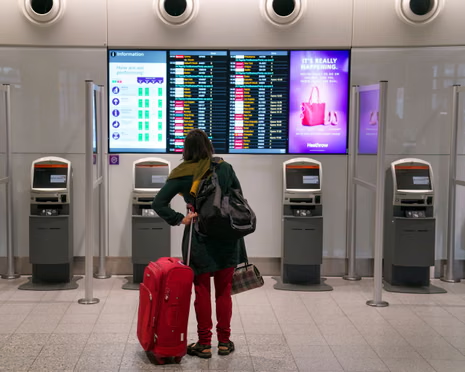
The golden age of affordable summer getaways appears to be facing a significant structural challenge. Willie Walsh has issued a stark warning regarding the future of European aviation costs this year. The former British Airways chief executive now leads the International Air Transport Association with great authority. He suggests that travelers must prepare themselves for a noticeable increase in standard ticket prices soon. This prediction stems directly from the soaring costs associated with essential global jet fuel supplies today. While some smaller airlines have recently discounted fares to stimulate weak consumer demand, this is temporary. Walsh insists that carriers cannot continue to absorb these massive additional operational expenses indefinitely at all. The long-term economic reality of the industry suggests that these costs must eventually reach the consumer.
The current geopolitical climate has placed an immense amount of pressure on global energy markets lately. Specifically, the ongoing conflict involving the United States, Israel, and Iran has caused significant logistical ripples. The effective closure of the Strait of Hormuz has restricted a vital artery for international shipping. This specific maritime route is responsible for a huge portion of the world’s daily oil transport. Even if the strait were to reopen tomorrow, the damage to supply chains remains very deep. Walsh believes the impact of this disruption could easily be felt well into the next year. The scarcity of refined jet fuel has sent market prices to levels rarely seen before now. Consequently, the aviation industry is struggling to find a sustainable way forward amidst this extreme volatility.
There is no immediate reason for passengers to panic about potential fuel shortages this summer. Walsh believes that widespread flight cancellations can still be avoided through careful planning and strategic management. However, the timing of this supply crisis is particularly unfortunate for the United Kingdom’s aviation sector. The UK usually sees a twenty-five percent increase in flights during the peak holiday months. July and August require significantly more fuel than the quieter months like March or early April. If alternative sources of fuel are not secured quickly, some localized shortages could potentially occur later. This creates a delicate balancing act for airport authorities and airline operators across the entire country. The industry must now focus on sourcing fuel from regions outside of the Middle Eastern hub.
The United Kingdom remains heavily reliant on fuel imports that typically travel through the Suez Canal. European nations are also scrambling to find new partners to replace their traditional energy supply chains. Recently, the European Union clarified that United States grade jet fuel is safe for local use. This regulatory shift allows airlines to tap into American reserves to bolster their dwindling regional stocks. However, the introduction of different fuel grades must be managed with extreme technical precision and care. Dan Jørgensen, the EU energy commissioner, recently addressed these concerns during a high-level press conference. He stated that while immediate supplies are stable, long-term availability remains a very serious concern indeed. The industry is looking toward the latter half of the decade with a sense of caution.
Travel operators like Tui are attempting to provide a more optimistic outlook for their loyal customers. Sebastian Ebel, the chief executive of Tui, does not expect significant shortages in the coming months. He believes the industry has enough resilience to manage the current levels of demand without failing. Similarly, the UK Transport Secretary, Heidi Alexander, has offered reassurances to the British public this May. She stated that summer holiday plans should not face large-scale disruption due to any fuel issues. The government has successfully increased the volume of fuel imported from various refineries in the States. Furthermore, domestic refineries within the UK have ramped up their production to meet the rising demand. These combined efforts are designed to protect the traditional British summer holiday for millions of families.
To further conserve energy, the government has introduced a temporary and innovative new rule for airlines. Carriers are now permitted to group passengers from different scheduled flights together on fewer aircraft frames. This consolidation strategy is intended to maximize fuel efficiency during this period of restricted global supply. While this may lead to some schedule changes, it helps keep the planes in the air. Walsh warns that these fuel challenges could potentially linger until the year twenty-seven or even beyond. The road to total recovery for the aviation sector seems longer than many had initially hoped. Current data from aviation analytics company Cirium shows that some minor disruption is already taking place. Airlines have already cancelled nearly three hundred departures from various UK airports during this current month.
This figure represents a very small fraction of the total flights scheduled across the British Isles. Specifically, only point seven five percent of flights have been removed from the active flight schedules. While this number is relatively low, it highlights the growing pressure on the overall aviation network. Passengers are advised to check their flight status regularly before traveling to the airport this season. Despite these concerns, there is some very positive news for families traveling with younger children soon. The Home Office has announced a significant update to the entry requirements for the United Kingdom. Starting on the eighth of July, younger children will be granted access to the automated e-gates. This change applies to children aged eight and nine who are returning from their overseas trips.
Previously, the minimum age for using these efficient automated gates was set at ten years old. To qualify, children must be at least one hundred and twenty centimeters in total physical height. They must also be accompanied by a responsible adult when passing through the airport security checkpoints. The government estimates that this change will benefit up to one point five million more children annually. This move is expected to significantly reduce waiting times at major UK hubs like Heathrow and Gatwick. Faster processing at the border will likely improve the overall experience for tired families arriving home. It represents a practical step toward modernizing the border experience for all types of international travelers. While fuel costs remain high, the ease of travel through the airport is slowly improving.
The intersection of geopolitical tension and logistical necessity is defining the travel landscape of twenty-six and beyond. Travelers are caught between the joy of exploration and the reality of rising global operational costs. Industry experts agree that transparency regarding fare increases is essential for maintaining consumer trust and confidence. While the price of a seat may go up, the commitment to safety remains unchanged. The aviation sector has a long history of adapting to difficult global circumstances with great ingenuity. From new fuel sources to smarter passenger processing, the industry is constantly evolving to meet challenges. Whether you are flying for business or pleasure, staying informed is the best way to travel. The coming months will undoubtedly test the resolve of both the airlines and the traveling public.
As we look toward the peak of summer, the message from the English Chronicle is clear. Preparation and flexibility will be the most important tools for any traveler heading abroad this year. Keep a close watch on your booking details and be ready for slight price fluctuations. The world remains open for discovery, even if the journey requires a bit more financial planning. Our commitment is to provide you with the most accurate and responsible news as it happens. We will continue to monitor the fuel situation and its impact on your holiday plans daily. For now, the focus remains on ensuring that every passenger reaches their destination safely and efficiently. The spirit of travel survives even the most difficult economic or political headwinds in our world. Safe travels to everyone heading out across the skies of Europe and beyond this bright summer.
Related News:
 Qantas Revamps Loyalty Program Amid $1.46bn Profit Surge
 Rolling Hills and Heritage: A Car-Free Break in Leicestershire
 Death Valley Blooms Signal Potential Superbloom Year
 Last Weekend of Summer Brings Sparkle and Stars to Sydney
 Middle East Airspace Crisis Strands Thousands
 LA 2028: Millions of Affordable Olympic Tickets Announced
 UK Aviation Watchdog Clips Heathrow’s Fee Hike Wings
 EU Biometric Border Checks Delayed for UK Travellers
 Storm Dave Disrupts Travel but Conditions Set to Ease
 Teen Surfer Escapes South Australian Shark Encounter
 Own an Entire Australian Town for the Price of a UK Flat
 Battle of Britain Tower to House Tourists and Bats
 Two Dead in Adelaide Airport Plane Crash Fire
 Border Chaos: UK Travellers Face Massive EU Delays
 Bad Weather Threatens Hantavirus Cruise Ship Evacuation
 Search Intensifies for Missing Hiker on WA Bibbulmun Track
 Australia Welcomes the Iconic Michelin Guide
 France Quarantines Cruise Ship After Suspected Virus Death
 Lockdown Lifted for British Cruise Ship in Bordeaux
 Belfast Approves Pilot Extension of Sunday Trading Hours
 Essex valley emerges as rising English wine hub
 Man killed in shark attack on Great Barrier Reef
 Tourist Beaches Plagued by Sophisticated Payment Scams
 Can Robots Truly Replicate the Unmatched Magic of K-Pop?
 Thailand Tightens Visa Rules to Curb Tourist Misbehavior
 Airlines Demand Freeze on EU Border System as Chaos Peak Looms
 Jet2 Sees Summer Surge Despite Global Tensions
 England and Norway Fans Turn Miami Into World Cup Carnival
 London Tube Heat Reaches Dangerous Levels
 Italy’s Beach Lunch Ban Sparks Holiday Backlash
 EasyJet Takeover Sparks Fears Over Passengers’ Future
 Olympus Awaits Unesco Heritage Recognition
 Zelenskyy Signs Fighter Jet Deal Amid Russian Drone Attacks
 Sundar Pichai Cautions on AI Hype and Market Risks
 Shadow Fleet at Sea: Europe’s Battle Against Illicit Oil Shipping
 Snow and Ice Cause Travel Chaos in North Yorkshire
 Director Michael Caton-Jones Reflects on Career and Beginnings
 Inside the Helpline Protecting Missing Children in the UK
 PlayStation PS5 Deals Hit Lowest Prices Ahead of Black Friday
 US Suspends Afghan Immigration After White House Shooting
 Five-Year-Old Dies After Rare Tonsil Surgery Complication
 Starmer Says Labour’s Economic Plan Needs Years to Deliver
 ‘Extinct’ Antelope Returns to Sahara, Bringing Hope
 IndiGo Cancels Hundreds of Flights Amid Pilot Shortages
 Young Britons Face Heaviest Burden from Ageing Population, Lords Warn
 U‑Turn on Farmers’ Inheritance Tax Sparks Political Firestorm
 Aston Villa Remain Arsenal’s Key Obstacle in Title Pursuit
 Irish Beach Tragedy: Irish Drown at Whitehaven Beach in Australia
 Starmer Faces Parliamentary Battles Over UK-EU ‘Reset’ Plan
 Met Police Vetting Failures Let Serial Rapists Remain
 Federal Immigration Shift: Officers Leave Louisiana for Minneapolis
 Fatal Bolton Taxi Crash Claims Three Teens and Driver
 Australia grants Asio powers to designate hate groups under new laws
 Friedman Uninvited From 2024 Adelaide Writers’ Week
 Wes Streeting faces narrow road to Labour members’ favour
 Keir Starmer Struggles to Secure His Grip on Downing Street
 Trump and Xi Convene in Beijing for Historic High-Stakes Summit
 Tensions Flare as Israeli Nationalists March in Jerusalem
 UK Firms Freeze Spending as Iran Conflict Bites
 UK Job Market Squeezed as Iran War Drives Jobless Rate to 5%
 Reeves to Fast-Track Clean Energy Amid Iran Crisis
 The Battle for Wembley Sparking Unprecedented Legal Warfare
 Tony Abbott Returns as New Liberal Party President
 Pope Meets Families in Italy Toxic Waste Zone
 Royal Ascot Allegation Sparks Wider Police Inquiry
 Secret Role of UK Security Services in Troubles Amnesty Law
 Tube Strike Brings Capital to a Standstill Over Shift Disputes
 Teaching Machines Right From Wrong in the Digital Age
 Is Ollie Robinson the Chaos English Cricket Needs Today?
 The Hidden Crisis Eroding Trust in British Communities
 Saving the Scalloped Hammerhead: The Pacific Battle
 Stolen Mobiles Could Soon Become Useless Bricks
 Clean Air Initiatives Spark Major Fall in London Hospital Admissions
 Fearless Pioneer of Investigative Journalism Dies Aged 83
 Trump Urged to Condemn UFC Fighter Over Obama Slurs
 The Fear Gap: Why Europe Feels Less Safe Than It Is
 US Military Pacific Boat Strike Kills Three People
 Dettol Apologises for ‘Toxic Men’ Advert Backlash in China
 UK Care Crisis: Row Explodes Over New Visa Settlement Rules
 Sainsbury’s Boss Optimistic As Grocery Inflation Eases