Published: 24 August 2026. The English Chronicle Desk. The English Chronicle Online
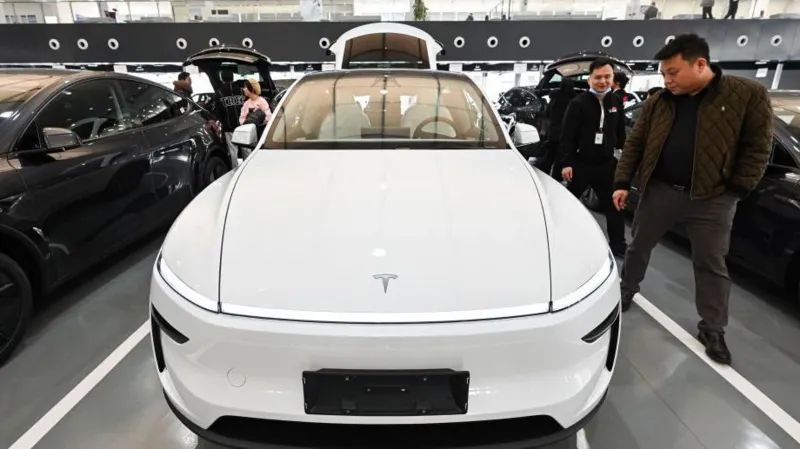
Minimalist hidden door handles, once promoted as a defining feature of modern electric vehicles, are at the centre of China’s biggest vehicle recall, with more than four million cars affected by safety concerns.
The recall includes 2.98 million China-made Tesla vehicles, as well as vehicles produced by Chinese manufacturers including XPeng, Xiaomi and Geely. Authorities are concerned that concealed door handles can be difficult to identify and operate during emergencies, particularly when a crash causes the vehicle’s electrical systems to fail.
The affected vehicles will receive warning labels on their interior doors and a software update intended to automatically lower the windows following a collision. The measures are designed to make it easier for occupants and rescuers to gain access when conventional electronic systems are unavailable.

The issue has gained wider attention following two fatal crashes in China involving Xiaomi electric vehicles. Power failures were suspected of preventing doors from being opened, raising questions about whether increasingly sophisticated vehicle designs could create additional risks during serious accidents.
Tesla said in a statement that certain Model 3, Model Y, Model S and Model X vehicles were being recalled because their door handles could be “difficult to identify and operate because their colour is similar to the interior trim”.
The company said that in extreme circumstances, including a severe collision that causes the low-voltage system to fail, occupants could have difficulty opening the doors to escape. Rescuers outside the vehicle could also face problems accessing those inside.
The concern is particularly significant in electric vehicles, where many conventional mechanical functions have increasingly been replaced or supplemented by electronic controls.
Tesla design becomes an industry trend
Hidden door handles became closely associated with Tesla after the company introduced them as part of the streamlined design of its vehicles.
The handles sit almost flush with the bodywork and extend when the vehicle is unlocked or approached. The arrangement gives cars a smoother appearance and has become an important element of the minimalist styling associated with many modern EVs.
Chinese manufacturers subsequently adopted similar designs.
Tu Le, founder of consultancy Sino Auto Insights, said the use of hidden handles had “snowballed” after Chinese carmakers began copying the sleek appearance of Tesla’s Model S sedan from 2014 onwards.
What began as a design innovation has therefore become widespread across China’s rapidly growing electric vehicle industry.
The scale of the latest recall highlights the difficulty of ensuring that aesthetic and technological advances do not create new safety problems.
While concealed handles may improve a vehicle’s appearance, emergency situations can be very different from normal driving conditions. Passengers may be injured or disorientated, while electrical failures can prevent electronic mechanisms from operating normally.
Emergency workers may also be unfamiliar with the release mechanisms of different vehicle models, potentially delaying rescue efforts.
Warning labels and software update
Tesla’s immediate response will involve both physical warnings and a software modification.
Warning labels will be placed on the interior doors to make the release mechanism easier to identify. The software update will automatically lower vehicle windows after a collision, creating another potential route for occupants or rescuers to access the vehicle.
However, Tu Le described the measures as more of a “band-aid” than a permanent solution.
His criticism reflects a broader debate about whether software-based solutions are sufficient when the underlying concern involves electrical failure.
A software update can potentially improve the response of a vehicle under certain circumstances, but it cannot eliminate the possibility that a serious collision could damage electrical components or leave passengers unable to operate the normal controls.
China appears to be moving towards a more fundamental solution.
China moves to restrict hidden handles
In February, Chinese authorities announced a ban on hidden door handles for future vehicles.
Under rules due to take effect on 1 January 2027, vehicles will only be permitted to be sold in China if they have a mechanical release on both the inside and outside of their doors.
The requirement is significant because it establishes a basic mechanical escape mechanism as a mandatory safety feature.
Mechanical releases do not rely solely on electrical power and can therefore provide an alternative means of opening a door following a collision.
The regulations could force manufacturers to rethink the design of future vehicles and potentially increase manufacturing costs.
They may also influence automotive regulations in other countries if overseas authorities reach similar conclusions about the safety of concealed electronic door systems.
Tesla has faced scrutiny in the US
The concerns surrounding Tesla’s door handles are not confined to China.
US safety regulators have previously investigated reports that Tesla door handles suddenly stopped working, including cases in which children were reportedly left trapped inside vehicles.
In July, the US National Highway Traffic Safety Administration suggested creating a formal safety standard covering the issue across the automotive industry.
The agency’s interest indicates that regulators are increasingly examining whether modern vehicles provide reliable emergency access when electronic systems fail.
The BBC has contacted the agency for comment.
It remains unclear whether Tesla, XPeng, Xiaomi and Geely will introduce similar recalls or modifications for vehicles sold outside China.
The Chinese recall could nevertheless become an important reference point for regulators and manufacturers elsewhere.
A wider challenge for electric vehicles
The controversy highlights a larger question facing the global EV industry.
Electric cars have introduced major technological changes to vehicle design. Digital controls, electronic locks, powered handles and software-controlled safety systems have replaced many mechanical components traditionally used in cars.
These innovations can make vehicles more convenient and visually distinctive, but they also mean that a failure of electrical systems can affect functions that were once largely independent of vehicle power.
Emergency access is particularly sensitive because it must remain reliable under conditions in which the vehicle itself may be badly damaged.
A passenger involved in a serious crash may not have the time or ability to search for an unfamiliar emergency release. A rescuer arriving at the scene may also need to identify the correct mechanism immediately.
That makes simple, clearly marked and mechanically reliable controls especially important.
China’s new rules suggest regulators believe manufacturers should prioritise this principle over minimalist styling.
The future of hidden door handles
For Tesla, the recall represents an awkward moment for a design feature that has become closely associated with the company’s identity.
The hidden handle was intended to make vehicles appear cleaner and more technologically advanced. Its adoption by competing manufacturers demonstrated how influential Tesla’s design choices had become.

But the latest safety concerns could accelerate a move towards more conventional emergency-release systems.
For consumers, the issue may also change how vehicle features are judged. A design that looks futuristic in a showroom can become a serious liability if it is difficult to understand or operate during a crash.
The Chinese recall is therefore not simply a regulatory response involving millions of vehicles. It is also a warning to manufacturers that innovation must be accompanied by robust safety testing and straightforward emergency procedures.
As electric vehicles become increasingly software-driven, regulators are likely to pay greater attention to what happens when those systems stop working.
China’s decision to require mechanical releases from 2027 could set an important precedent. If other major automotive markets adopt similar standards, hidden electronic door handles may have to evolve significantly—or become a feature of the past.
Related News:
 How to Exit Your Broadband Contract Without Paying Exit Fees
 Unseen Killers of the Deep Inside the UK Lab Uncovering the Silent Deaths of Sea Creatures
 Shocking Rise in Children’s Exposure to Violent Online Pornography Raises Alarm
 Spectacular ‘Blood Moon’ Illuminates Skies Across the Globe
 Weatherwatch: From Astrology to Modern Meteorology
 British Pilot Joins Crew Training for Year-Long Mars Simulation Mission
 UK and US Forge Landmark Deals to Build Modular Nuclear Reactors Across Britain
 Big Pharma Investment Freeze Puts UK Life Sciences Sector Under Strain
 Jaguar Land Rover Extends Production Halt Following Cyber-Attack
 Persistent Offenders Owe Over £700m in Ulez Fines as TfL Cracks Down on Evasion
 Google at 27: The Untold Story of Ruth Kedar, the Woman Behind the Iconic Logo
 Millions in the UK at Risk of Cyber-Attacks as Microsoft Ends Windows 10 Updates, Warns Which?
 Yvette Cooper Backs Digital ID Plan for UK Teens
 Reform UK candidate fined £19,000 after using AI-generated cases to challenge election
 Harry and Meghan join global AI leaders urging superintelligence ban
 UK Campaigners Launch Bill to Grant Legal Rights to Nature
 Experts Warn Russia’s Burevestnik Missile Could Destabilise Arms Control
 Virgin Trains Moves Closer to Challenging Eurostar Monopoly
 UK Bans Fake Numbers: Scammers Lose Their Trick
 Vibe coding’ named Collins dictionary’s word of the year
 Patients to Test Health at Home to Ease NHS Winter Pressure
 Britain deploys RAF specialists to assist Belgium with drone threats
 Stop using ChatGPT to write speeches, AI minister tells MPs
 Northern Lights may illuminate UK skies this week
 New laws to bolster UK’s defences against cyber attacks on NHS, transport and energy
 Valve Opens the Door for Android Games on Steam
 Working-Class Men with Prostate Cancer Left Behind by NHS
 Pokémon to open world’s first theme park in Japan next year
 New AI tool could cut wasted efforts in organ transplants
 Sundar Pichai Cautions on AI Hype and Market Risks
 Google Chief Urges Caution: Don’t Trust AI Blindly
 Healthy Habits in Your 30s That Boost Life in Your 70s
 Coffins Now Too Large to Cremate Amid Rising Obesity Crisis
 Beachy Head Woman Identified as Local Eastbourne Resident
 Google Removes Some AI Health Summaries Over Safety Concerns
 Nasa ISS Medical Evacuation: Crew-11 To Return Early
 Government Abandons Mandatory Digital ID for UK Workers
 China Halts Nvidia H200 Chips Despite US Export Approval
 EU launches Grok AI probe into X over explicit images
 AI job losses UK: Britain faces sharper employment shock
 ABC Facebook Page Briefly Hacked, Adult Photos Posted
 US Robotaxis Train for London Streets Before Launch
 Meta trial over child exploitation claims begins
 Autistic Girls Often Missed in Childhood Diagnoses, Study Finds
 Most Statin Side-Effects Are Not Caused by Drugs, Study Confirms
 Childnet Censorship Row Over Teen Safety Speeches
 BT Names New Openreach Chief Amid Major Fibre Expansion
 Tech Trends Set to Transform Life in 2026
 Starmer Targets AI Chatbots Over Child Safety Concerns
 Ocean Warming Drives Massive Marine Life Loss, Study Warns
 Stewart Brand on Musk, Bezos and a Life of Long Thinking
 Facial Recognition Error Leads to Wrongful Arrest in Milton Keynes
 Zorevunersen Breakthrough for Dravet Syndrome
 Cancer Death Rate in Britain Falls by Nearly a Third
 Taking Multivitamins Daily Could Slightly Slow Ageing, Study Finds
 The Kill Line: A Shifting Vision of the American Dream
 ‘Drinking from a Fetid Pond’: Superbug Genes in Lough Neagh
 Scientists Unveil Heavier Proton at CERN LHC
 Artemis II: Humanity Returns to the Moon After Decades
 Artemis II Returns After Historic Moon Flyby
 UK Banks to Deploy Controversial Mythos AI Tool Next Week
 Robots Outpace Humans in Beijing Half-Marathon
 UK Faces Growing Threat of Scale Hacktivist Attacks
 WHO approves first malaria drug for babies
 UK Watchdogs Warn Over AI Facial Recognition Oversight
 DeepMind Staff Vote to Unionize Over US Military Contract
 Trump Lands in Beijing for High-Stakes Summit with Xi
 Court Upholds Landmark Win for Transgender Rights
 Tech Trends and the Battle Against Exam Hall Cheating
 Stolen Mobiles Could Soon Become Useless Bricks
 From Pocket Monsters to the Frontline
 UK Ministers Lobby Trump Over Under-16s Social Media Ban
 Trump Faces Backlash Over $2bn Earnings Since Return
 Sydney Records Hottest June Since 1859 as Expert Warns New High a ‘Signature’ of Global Warming
 Record £28m Fine for Virgin Media Over Cancellation Woes
 Telstra Software Fault Triggers Massive Nationwide Outage
 Telstra Software Fault Triggers Massive Nationwide Outage
 Meta Under Fire: The Battle Over Addictive Social Media Design
 Meta Sued Over Alleged AI-Driven Layoffs
 Gen Z turns to BirdTok for a gentler digital escape