Published: 16 September ‘2025. The English Chronicle Desk, English Chronicle Online
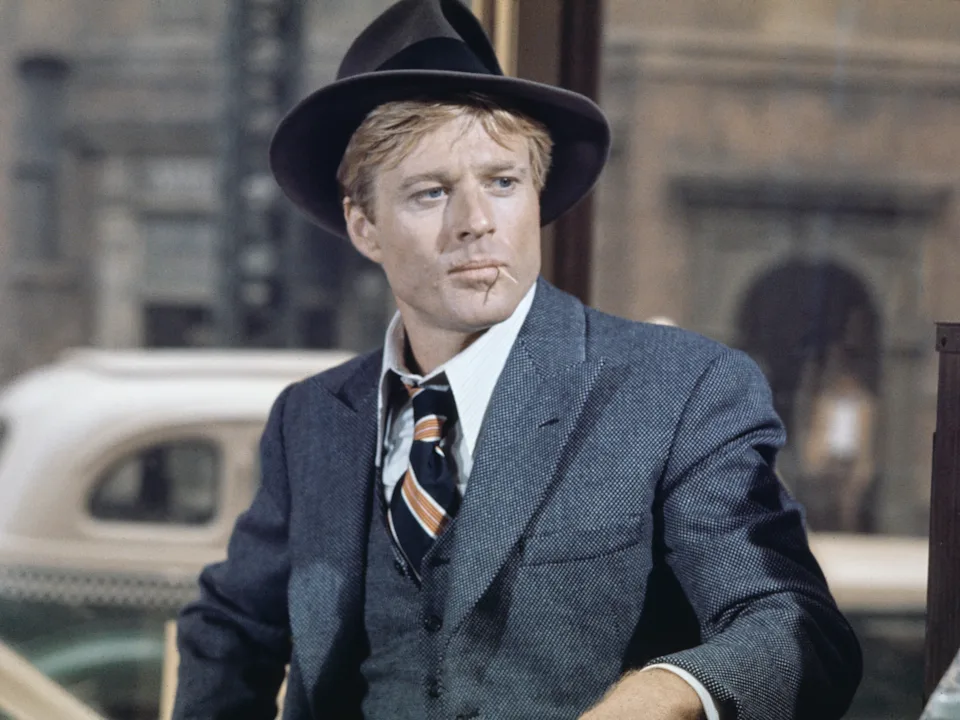
American independent cinema owes an immense debt to Robert Redford, whose vision, advocacy, and unwavering support helped shape a creative landscape that might otherwise never have flourished. Through the Sundance Film Festival and the Sundance Institute, Redford lent not only his star power but also his resources and personal energy to nurturing risk-taking filmmakers, offering them a platform to develop, showcase, and distribute their work outside the mainstream Hollywood system. More than an actor, more than a director, Redford became a mentor, patron, and guardian of independent film, cultivating an enduring ecosystem that has launched the careers of some of the most acclaimed directors across multiple generations.
Redford’s impact, as noted by Franklin Leonard, founder of the Black List, extends beyond his on-screen work: “Arguably the film industry’s most consequential American over the last fifty years,” Leonard remarked on X, attributing Redford’s influence primarily to his work with Sundance rather than his personal filmography. Indeed, it is through the Sundance Institute, which he founded in 1981, that Redford’s legacy as a champion of independent cinema is most profoundly felt. Named after his character “Sundance Kid” from the 1969 film Butch Cassidy and the Sundance Kid, the institute emerged from Redford’s frustration with the rigid structures and profit-driven priorities of Hollywood.

At the time, Redford, then forty-four, recognized that securing distribution for films without massive box-office potential was increasingly difficult. “We started this with no rigid expectations,” Redford told critic Roger Ebert during an early festival iteration. “I have no idea what this will turn out to be. I know that it’s getting increasingly hard to get a movie well distributed in this country unless it has the potential to make millions of dollars.” As an alternative, Redford invited ten screenwriters to a cabin in Utah’s Wasatch Mountains, where he had established a personal retreat, providing a creative sanctuary for developing low-budget scripts in a setting far removed from the pressures of commercial cinema.
From these modest beginnings, the Sundance Institute gradually expanded into a festival when Redford purchased the struggling Utah/US Film Festival in 1984. By 1989, when Steven Soderbergh’s Sex, Lies and Videotape premiered at the January gathering in Park City, the event had already begun to define itself as the vanguard of American independent filmmaking. Over the 1990s, the festival became the birthplace of some of the decade’s most influential films, including Reservoir Dogs, Before Sunrise, and The Blair Witch Project, as well as landmark documentaries like Hoop Dreams and Paris Is Burning.
The Sundance Film Festival has long been recognized as a pipeline for diverse talent. Renowned directors such as Quentin Tarantino, Richard Linklater, Chloé Zhao, Ava DuVernay, Ryan Coogler, Nicole Holofcener, David O. Russell, Darren Aronofsky, the Daniels, and Celine Song all benefited from the festival’s early support. In 2022, CODA, directed by Sian Heder on a modest $10 million budget, became the first festival premiere to win the Academy Award for Best Picture. Its star, Marlee Matlin, emphasized the festival’s pivotal role, noting on X, “Coda came to the attention of everyone because of Sundance. And Sundance happened because of Robert Redford.”
Sundance has also become a key platform for documentaries tackling urgent and socially relevant issues. The 2017 documentary boom, in large part, began at Sundance when Netflix purchased Icarus, an investigative film on the Russian doping scandal, for a record $5 million, marking the streaming service’s first Oscar win. The festival’s marketplace quickly became an incubator for both large and small-scale documentaries, from celebrity-driven stories involving Taylor Swift, Brooke Shields, and Michael J. Fox to politically charged profiles of figures such as Christopher Reeve, Alexei Navalny, and Hillary Clinton. In 2025, the festival continues to highlight pressing social issues, showcasing films on Florida’s stand-your-ground laws, Alabama’s prison conditions, and book bans in schools. Sundance-supported documentaries have earned a total of 20 Oscars, and all but one of the previous year’s Best Documentary nominees premiered at the festival.
While the festival has grown into a major cultural event, attracting celebrities, sponsors, and tens of thousands of visitors, Redford has remained committed to its founding ethos. The rise of celebrity culture at Sundance—long lines, branded pop-ups, and photo opportunities with Hollywood stars—has drawn mixed reactions. Redford himself expressed frustration with this mainstreaming in later years, once remarking during the 2012 festival, “I want the ambush marketers—the vodka brands and the gift-bag people and the Paris Hiltons—to go away forever.” Despite the commercialization of some aspects, the institute continues to provide vital mentorship, grants, labs, and fellowships for early-career artists, ensuring the preservation of independent voices.
Since its establishment, the Sundance Institute has supported more than 11,000 artists worldwide, providing opportunities ranging from script labs to intensive programs and individualized mentorship. Its Native American and Indigenous program, founded in 1994, has been particularly instrumental in fostering underrepresented voices in film. The program has helped launch the careers of filmmakers like Chris Eyre, whose Smoke Signals premiered in 1998, Sterlin Harjo of Reservation Dogs, and internationally acclaimed Taika Waititi. By emphasizing mentorship and community-building, the institute has cultivated generations of filmmakers who might have otherwise been marginalized in a Hollywood dominated by conventional commercial imperatives.

Redford’s stewardship of Sundance spans nearly four decades, and while the festival is no longer the scrappy, iconoclastic gathering it once was, its impact on the landscape of American cinema remains unparalleled. Its influence extends beyond film screenings, shaping distribution, audience engagement, and industry recognition. Each year, the festival produces its share of low-budget, naturalistic dramas, yet these films are part of a larger ecosystem of support, experimentation, and exposure that Robert Redford envisioned: a space where artistic freedom is nurtured, and creative risks are rewarded.
In his 2002 honorary Oscar speech, Redford encapsulated his vision succinctly: “I want to make sure the freedom of artistic expression is nurtured and kept alive.” Over the last forty years, he has done more than most to uphold this principle. Through Sundance, he has created a legacy that extends far beyond his own filmography, fostering an environment in which independent voices can flourish and bold cinematic experimentation is celebrated. His influence is not measured solely in awards or box-office receipts, but in the careers launched, the stories told, and the cultural imprint left on American cinema.
Robert Redford’s contribution to the arts transcends his on-screen presence; it lies in his unwavering dedication to independent storytelling, mentorship, and the creation of a lasting institutional framework for filmmakers outside the Hollywood system. As a mentor, advocate, and benefactor, Redford ensured that independent cinema would not only survive but thrive, shaping generations of filmmakers and defining the contours of a distinctly American creative expression. His legacy at Sundance remains a testament to the power of vision, perseverance, and the enduring value of artistic freedom.
Related News:
 Chappell Roan Delivers Fairytale Spectacle at Reading Festival, Cementing Pop Stardom
 Academy Award-Winning Actress Diane Keaton Dies at 79
 Netflix’s A House of Dynamite Hits Reality Walls
 Meghan ‘to return to acting’ after eight-year hiatus
 Pauline Collins, Beloved ‘Shirley Valentine’ Star, Dies at 85
 I’m a Celebrity 2025 line-up revealed: Osbourne joins
 Boos, backlash and body horror: The story of Alpha
 Pat Butcher Returns to EastEnders in Touching Dementia Storyline
 SS Rajamouli Announces ‘Varanasi,’ a Mythic Time-Travel Epic
 Tom Cruise Receives Honorary Oscar, Celebrates Cinema
 The Lasting Legacy of Seven: Crime, Morality, and Urban Decay
 Director Michael Caton-Jones Reflects on Career and Beginnings
 Robert Irwin Claims Dancing with the Stars Crown
 Farewell to a Cultural Icon: Malcolm-Jamal Warner Dies at 54 During Holiday in Costa Rica
 Murder, Mischief, and Mystery: Cosy Crime Series to Watch Before The Thursday Murder Club Premieres
 The Walking Dead’ Actress Kelley Mack Dies at 33
 Sean Hayes Reimagined: From Sitcom Stardom to Serious Stage Acclaim
 Love? Actually, No: Emma Thompson Reveals Donald Trump Once Asked Her on a Date
 Flashman and the Silver Screen: The Little-Known Hollywood Adventures of George MacDonald Fraser
 Millie Bobby Brown and Jake Bongiovi Begin Parenthood Through Adoption
 Emma Heming Willis Speaks Openly on Bruce Willis’s Declining Health Amid Dementia Battle
 September’s Must-See Films: From Spinal Tap II to Leonardo DiCaprio’s Latest Thriller
 Watchdog, Cornflakes and Courage: Remembering John Stapleton, a Broadcaster Who Did It All
 Kerry Katona’s Heartfelt Regret Over Ricky Hatton’s Death
 Dawson’s Creek” Cast Reunites for Special Broadway Benefit to Support James Van Der Beek
 Beloved Actress Dame Patricia Routledge Dies Aged 96
 Karen Carney Shines on Strictly Come Dancing Week Two Despite Tango Wobbles
 Celebrity Traitors First Look: A Star-Studded Highland Adventure That Hooks from the Start
 Who is Ruth Codd? All about the Irish actress on Celebrity Traitors
 Strictly Celebs Starstruck as Cynthia Erivo Shines
 Grange Hill Creator Criticises TV’s ‘Oxbridge Gang’ Rule
 Kaye Adams Yet to Receive Complaint Weeks After Suspension
 Dave Ball: The Unsung Genius Behind Soft Cell’s Bold Sound
 Prunella Scales: From Fawlty Towers Icon to Beloved Canal Explorer
 Charlie Kaufman: They told me Being John Malkovich would never get made
 Kate Winslet to Narrate Film Highlighting King’s Environmental Mission
 The upcoming book-to-screen adaptations I’m most excited about
 Hollywood Is an Industry of Looney Tunes Pretending to Be Normal
 Lola Petticrew: ‘Calling it the Troubles minimises what it really was’
 Amber Davies Shines on Strictly – Time to Drop the West End Debate
 EastEnders icon Pat Butcher returns to Walford this Christmas
 Wuthering Heights: bold new trailer for Emerald Fennell’s epic adaptation
 Yungblud Pauses Tour Over Health Concerns, Apologises to Fans
 Two Judges Quit Miss Universe Amid Allegations of Rigged Competition
 New Miss Universe Crowned Amid Controversy in Thailand
 Rosalía Inspires Young Listeners to Discover Classical Music
 Belfast’s Elle Vosque finishes runner-up on Drag Race UK
 Ozzy Osbourne: The Prince of Darkness Bows Out, Leaving Behind a Legacy of Metal and Myth
 Justin Timberlake Shares His Lyme Diagnosis and the Strain of Performing Through Illness
 Heartbreak and Hardship at Diddly Squat: Jeremy Clarkson Faces TB Outbreak, Pup’s Death, Failing Crops, and Rising Theft Threats
 Unseen Killers of the Deep Inside the UK Lab Uncovering the Silent Deaths of Sea Creatures
 Gen Z Embraces the Big, Bold ‘Fake’ Indian Wedding Party Trend
 My Husband Won’t Stop Playing with Lego and It’s Driving Me Nuts
 Jack Osbourne Breaks Silence with Heartfelt Tribute Following Ozzy Osbourne’s Funeral
 Russell T Davies Warns of Declining UK Gay Rights Amid Rise of Reform UK and Trump Influence
 Terence Stamp, ’60s British Film Legend and Star of Superman, Dies at 87
 Peter Andre Praises Son Junior’s ‘Quiet Season’ Amid Ongoing Family Dispute
 Kelsey Parker Opens Up About Heartbreak and Healing Following Stillbirth
 Actor Noel Clarke Arrested at London Home Amid Ongoing Investigation
 Patricia Crowther, Known as UK’s Oldest Witch, Dies Aged 97
 Jilly Cooper: The Bonkbuster Queen Who Redefined Romantic Fiction
 Alan Davies Criticises England Flag Displays and Patriotism
 D’Angelo: Neo-Soul’s Radical Genius and Lasting Legacy
 Man Charged Over 2020 Death of Tattoo Artist Georgina Ward
 Fabio Wardley stuns Joseph Parker to earn Usyk title shot
 British Airways suspends podcast sponsorship after controversial interview
 Top Christmas Books Reads: Classics to Cozy Romcoms
 Oprah enjoys Meghan’s jam on English muffins
 VAR Must Rein Its Neck In to Save Football’s Spirit
 Pop Stars Call on UK Government to Cap Resale Prices for Fans
 Pokémon to open world’s first theme park in Japan next year
 The Devil Wears Prada 2 teaser trailer revealed
 Eminem Takes Legal Aim at Australian ‘Swim Shady’ Brand
 Bill Murray Terrified Wes Anderson but Became His Closest Collaborator
 Reggae Legend Jimmy Cliff Dies at 81
 Karen Carney Stuns on Blackpool Week, Deserves Strictly Final
 Prisoner 951 Review: arrowing Retelling of Nazanin Zagharz-Ratcliffe
 Pavarotti statue frozen in Italian ice rink sparks backlash
 Prince Andrew Named Punchline in Top Christmas Cracker Joke