Published: 22 September ‘2025. The English Chronicle Desk. The English Chronicle Online
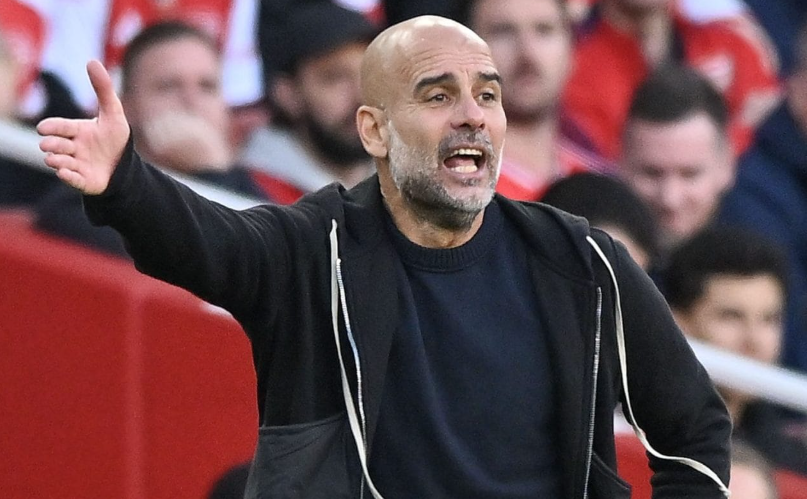
Pep Guardiola, long celebrated as one of football’s most innovative tacticians, appeared to depart sharply from his trademark philosophy in Manchester City’s recent clash against Arsenal, prompting widespread discussion about whether the Catalan manager is edging toward a more pragmatic, José Mourinho-like approach. Fans and analysts alike were left questioning the identity of a coach who has spent over a decade revolutionising modern football with fluid, attacking strategies, only to seemingly embrace extreme conservatism in a match where City led by a single goal.
The fixture at the Emirates Stadium saw Guardiola deploy an unusually defensive formation, opting for a five-at-the-back system designed to preserve a narrow advantage. The move, while ultimately understandable in the context of a grueling fixture schedule, sparked incredulity among observers accustomed to Guardiola’s fluid, possession-oriented philosophy. Even more startling were the micro-decisions on the touchline, including an apparent kiss shared with fourth official Craig Pawson—an almost theatrical gesture that seemed to encapsulate the surreal nature of the evening.

Manchester City’s defensive stance held initially, but Gabriel Martinelli’s late strike, which floated over City’s carefully positioned defensive wall, highlighted the potential risks of prioritising preservation over creativity. For those following Guardiola’s storied career, moments such as Barcelona’s 5-0 dismantling of José Mourinho’s Real Madrid in 2010 come to mind—a match that epitomised tactical audacity, innovation, and supremacy. The contrast between that peak and City’s cautious, almost fearful approach against Arsenal could not have been starker.
Critics argue that Guardiola’s willingness to “park the bus” and encourage time-wasting, including the substitution of Phil Foden for a left-back in the closing stages, marks a significant departure from the manager’s long-established principles. Manchester City’s statistics from the game further reinforced this narrative. The squad recorded just 32.8 percent possession—their lowest figure under Guardiola in nearly a decade—and completed only 295 passes, the fewest in a Premier League fixture since his arrival. Shots on target were equally sparse, with City attempting only five during the entire match, representing a record low over the past 21 months.
Such metrics underscore the perception that Guardiola, at times, risked becoming a tribute to the very style of football he has historically criticised. Comparisons to Mourinho—whose tactical conservatism often prioritised results over aesthetics—emerged almost immediately, with fans and pundits noting a rare instance in which the “art of football” seemed subordinated to defensive pragmatism. Even Gianluigi Donnarumma, City’s goalkeeper, came under scrutiny for his perceived lethargy, culminating in a booking from referee Stuart Attwell by the 76th minute amid loud whistles from the Emirates crowd.
Some analysts argue that Guardiola’s choices could be interpreted as a form of tactical evolution rather than regression. The Spaniard’s decision to withdraw Erling Haaland, who had contributed to City’s lead with a dynamic counter-attack, in favour of defensive reinforcement Nico González was seen by some as an experiment in adaptation. Yet for many supporters, the substitutions and structural reshaping felt like a betrayal of City’s identity—a shift so radical that it was difficult to reconcile with Guardiola’s reputation for attacking ingenuity.
In post-match interviews, Guardiola defended his strategy as a pragmatic response to fixture congestion and player fatigue, citing recent victories over Manchester United and Napoli as evidence that City needed to conserve energy. The manager described the defensive setup as an anomaly, joking that such extreme measures occur only “one time in ten years,” yet the perception among observers was that the choice reflected a growing tension between City’s attacking ambitions and the practical demands of elite competition.
The match exposed some of the limitations inherent in City’s current approach. Despite numerical superiority in certain areas, the team often appeared disjointed when transitioning from defence to attack, with long punts replacing the intricate passing sequences typically associated with Guardiola’s philosophy. Jeremy Doku of Arsenal, in particular, exploited these moments, demonstrating his agility and skill as he bypassed multiple defenders in a single move, underscoring the challenges City faced in maintaining cohesion under a defensive-first strategy.
Guardiola’s broader challenge this season lies in balancing his instinct for control with the reality of a squad that must contend with fixture congestion, fatigue, and tactical opposition. While City’s style remains rooted in possession and positional play, the contrast between their typical dominance and the restrained performance against Arsenal has sparked debate over whether the manager is experimenting with contingency plans that risk undermining the aesthetic principles he has championed throughout his career.
Beyond individual matches, Guardiola’s approach has wider implications for Manchester City’s ambitions in domestic and European competitions. The team’s low possession statistics and conservative substitutions suggest an evolving tactical philosophy, one that prioritises risk management and defensive solidity over the exuberant attacking football that has defined Guardiola’s teams at Barcelona, Bayern Munich, and City itself. This evolution, whether temporary or permanent, raises questions about the identity of a team built on ingenuity, precision, and relentless forward momentum.
Fans and pundits alike are also reflecting on Guardiola’s career arc, noting that the current stage of his tenure represents a period of transition. With Guardiola approaching the latter stages of a storied managerial journey, moments like the Emirates fixture highlight the tension between preserving legacy and adapting to contemporary challenges. City’s cautious approach, while defensible in context, stands in stark contrast to the philosophical boldness that has become synonymous with Guardiola’s name.
Observers suggest that the managerial decision to prioritize defence may also reflect the increasing difficulty of sustaining elite-level attacking football in an era of highly competitive Premier League fixtures. Teams now approach matches with meticulous defensive structures designed to counter City’s trademark possession play, forcing Guardiola to experiment with strategies that ensure results, even at the expense of stylistic purity.

Despite the scrutiny, there is room for cautious optimism. Guardiola’s career is defined by his capacity for reinvention, and many expect that the tactical adjustments witnessed against Arsenal represent an experiment rather than a permanent shift. Donnarumma’s introduction, defensive substitutions, and the unusual 5-1-3-1 formation may yet be refined into a more balanced strategy that allows City to protect leads while retaining offensive threat.
For supporters, the hope is that City’s identity remains intact, blending Guardiola’s visionary approach with necessary pragmatism. The challenge lies in ensuring that moments of defensive conservatism do not overshadow the team’s hallmark attacking philosophy, which has enthralled audiences worldwide and redefined contemporary football tactics.
In conclusion, Manchester City’s encounter with Arsenal served as a reminder that even the most esteemed tacticians are confronted with moments of adaptation, compromise, and experimentation. Pep Guardiola’s decision to employ a defensive masterclass, while divisive, underscores the complex calculus of modern football management, where style, results, and context intersect. Whether this marks a fleeting anomaly or the beginning of a more pragmatic phase in Guardiola’s career remains to be seen, but one certainty endures: the football world will continue to watch every move, every substitution, and every tactical adjustment, measuring them against the legacy of one of the sport’s most brilliant minds.
Related News:
 Predicted Leicester Line-ups Reflect Cifuentes’ Tactical Plans Ahead of New Season
 Lionesses Return in Glory with an Open-Top Parade, Spark National Pride and Rewrite the Future of Women’s Football
 Central London Gears Up for Lionesses’ Victory Parade as Thousands Prepare to Celebrate Historic Women’s Euros Win
 London Set to Honour Euro 2025 Champions as Lionesses Take Victory Parade Through the Capital
 Rangers Boss Russell Martin Launches Blistering Critique After Disappointing Draw with Motherwell
 Ngumoha Shines Bright as Liverpool’s Future Looks Fiercely Promising
 Minute’s Silence for Diogo Jota Abruptly Ended After Wembley Tribute Disrupted
 Premier League Supercomputer Predicts Tough Season for Man Utd Amid Three-Team Title Battle
 Diogo Jota’s Empty Seat at Liverpool: A Symbol of Grief, Inspiration, and Duty
 Aston Villa Under Pressure as Newcastle Take on Hosts in Premier League Opener
 Isaac Price Shines as West Brom Clinch 3-2 Victory at Wrexham’s Championship Return
 Tottenham Make Three Changes as Spurs Prepare to Host Burnley in Premier League Opener
 FIFA Eyes Biennial Club World Cup from 2029, Plans Possible Expansion
 European Football: Atlético Madrid Stumble at Espanyol as Vitinha Secures PSG Win
 Leeds Mark Premier League Return with Gritty Win Over Everton
 Arsenal Move to Secure Eberechi Eze, Outpacing Tottenham
 Mateta’s Strike Gives Crystal Palace First-Leg Edge in Conference Playoff
 British Paralympians Accused of Disrespect After Turning Backs During Israeli Anthem
 Ruby Tui Emerges as the BBC Rugby Pundit Fans Never Knew They Needed
 Grimsby Stun Manchester United in Dramatic Penalty Shootout
 Club Brugge Crush Ten-Man Rangers to Deepen Russell Martin’s Crisis
 Guardiola Admits City ‘Forgot to Play’ After Shock Defeat to Brighton
 Morgan MacRae: From 17 Minutes Dead to Returning to Rugby in Six Weeks
 Serbia Humiliated 0-5 by England in World Cup Qualifier
 Fábio Carvalho’s Last-Minute Heroics Deny Chelsea Victory at Brentford
 Tottenham Cruise to 3-0 Victory Over 10-Man West Ham in London Derby
 Terence Crawford Shocks Canelo Álvarez to Claim Undisputed Super-Middleweight Crown
 England Must Stay True to Their Style Ahead of Women’s Rugby World Cup Final: Lessons from 1991
Liverpool Vs outhampton Set for Carabao Cup Clash at Anfield
England Must Stay True to Their Style Ahead of Women’s Rugby World Cup Final: Lessons from 1991
Liverpool Vs outhampton Set for Carabao Cup Clash at Anfield
 Chelsea Survive Lincoln City Scare to Advance in Carabao Cup
 Dickie Bird: Cricket’s Beloved Umpire Who Won Hearts with Wit and Integrity
 Aston Villa Edge Bologna as Europa League Campaign Kicks Off
 Tottenham Salvage Point with Stoppage-Time Palhinha Strike Against Wolves
 Manchester City Dominate Burnley 5-1 as Haaland’s Brace Secures Vital Win
 Arsenal VS Newcastle Hearts with Dramatic Late Turnaround at St James’ Park
 Aston Villa Fight Back to End Winless Run with Convincing Victory over Fulham
 Tragic Death Strikes Half-Marathon in Stoke-on-Trent: Runner Dies Shortly After Crossing Finish Line
 Postecoglou Stands Firm Amid Mounting Forest Fan Frustration
 Tuchel Criticises ‘Silent Wembley’ After England Win
 Kane’s Double Seals England’s World Cup Qualification
 Ronaldo’s Record Not Enough as Hungary Hold Portugal
 Fulham vs Arsenal Trossard Strike Sends Gunners Three Points Clear
 Ange Postecoglou’s Naivety Premier League Misadventure Ends
 Arsenal vs Atlético Madrid,Gyökeres Double Secures 4-0 Champions League Victory
 Barnes Inspires Newcastle to Champions League Triumph Over Benfica
 Gibbs-White Inspires Forest to Thrilling Win Over Porto
 Go Ahead Eagles Shock Aston Villa as Buendía Misses Late Penalty
 Aaronson and Rodon Punish West Ham as Leeds Claim Victory
 Manchester United triumph as Mbeumo brace seals thrilling win
 Fabio Wardley stuns Joseph Parker to earn Usyk title shot
 Tottenham shine at Everton but Frank wary of title push
 Brentford Dominate Grimsby in Carabao Cup, Collins Seals 5-0 Triumph
 Lecomte Shines as Fulham Edge Wycombe in Nervy Carabao Cup Win
 Sarr Double Sinks Young Liverpool in Carabao Cup
 Nwaneri and Saka Secure Arsenal Win Over Brighton
 Woltemade Hot Streak Fires Newcastle Past Spurs
 Salah & Gravenberch Lead Liverpool to Win Against Villa
 Dyche Criticises Corner Decision as Forest Draw with United
Caicedo Shines as Chelsea Edge Spurs in Chaotic Derby
Dyche Criticises Corner Decision as Forest Draw with United
Caicedo Shines as Chelsea Edge Spurs in Chaotic Derby
 Granit Xhaka Rescue Earns Everton Draw at Sunderland
 Liverpool Edge Real Madrid 1-0 in Champions League Thriller
 Burn and Joelinton Head Newcastle to Victory Over Bilbao
 Foden shines as Man City dismantle Dortmund in dominant display
 Garnacho Spares Chelsea From Shock Champions League Loss in Baku
 Tension and Turmoil at Aston Villa v Maccabi Match
 Bellingham has ‘the edge’ among England No 10s
Man City Masterclass on Guardiola’s Milestone Day Exposes Liverpool Woes
Bellingham has ‘the edge’ among England No 10s
Man City Masterclass on Guardiola’s Milestone Day Exposes Liverpool Woes
 Lando Norris Dominates Brazil GP to Strengthen F1 Title Bid
 England cannot afford to be in awe of the All Blacks, warns Jamie George
 VAR Must Rein Its Neck In to Save Football’s Spirit
 Trescothick Hints Pope Will Keep Number Three Spot
 Ronaldo Confirms Final World Cup and Plans Retirement
 Mary Earps’s Manchester United Return Faces Mixed Reception
 Sam Kerr Stars in Chelsea Return with Champions League Double
 This kid is something else: Alex Scott’s rise to England call-up
 Former Lion Heskey Warns of Shortage of England Strikers
 Moyes Defends Gueye After Dramatic Everton Bust-Up
 Jac Morgan to Miss Six Nations Start After Surgery
 Alexander Isak ends drought as Liverpool stop rot with win at West Ham
 Mbappe rescues Real Madrid with a penalty at Girona