Published: 12 October 2025. The English Chronicle Desk. The English Chronicle Online.
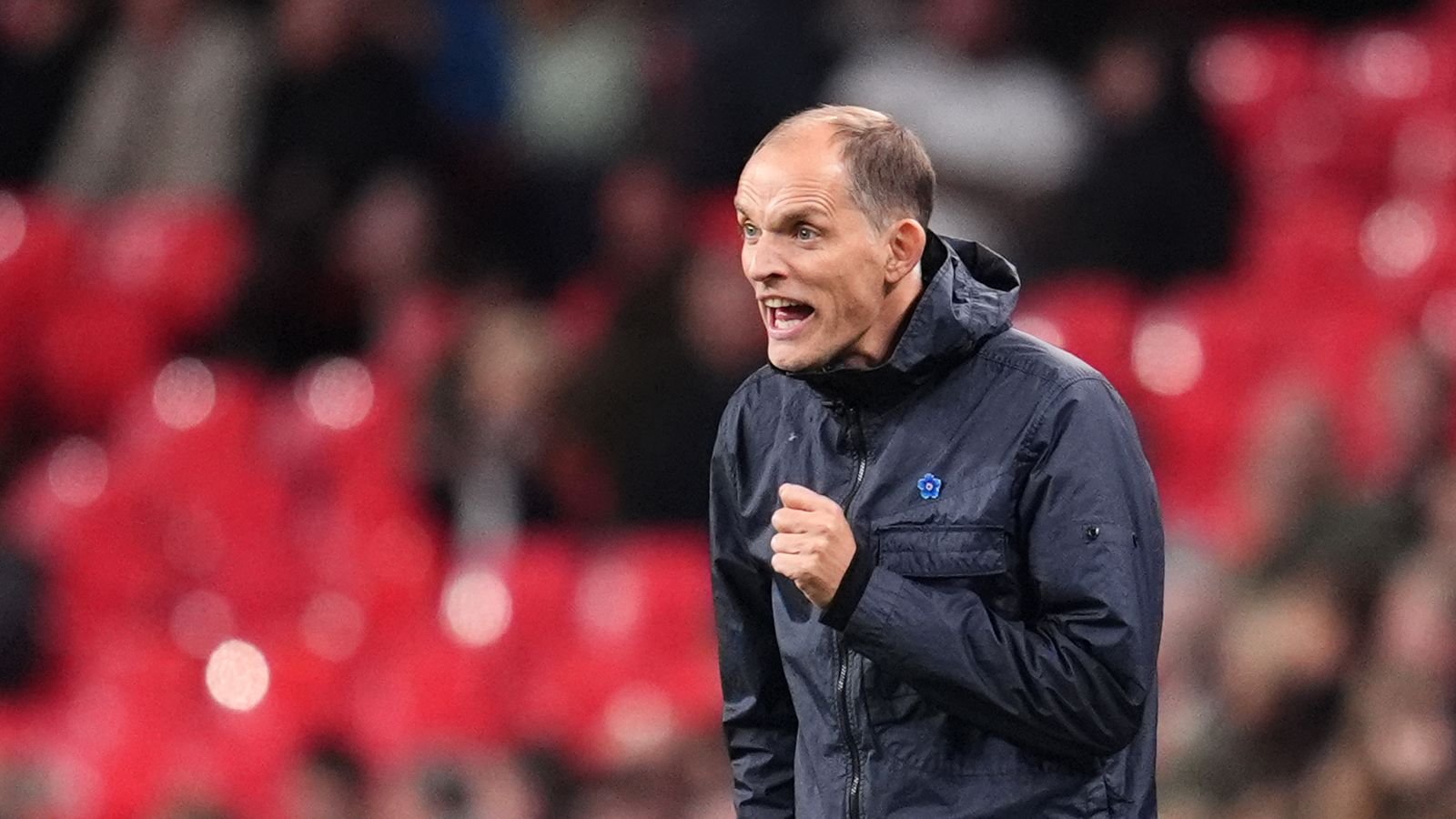
England’s 3-0 victory over Wales at Wembley Stadium was impressive, decisive, and in many ways a celebration of the team’s evolution under new management. Yet, for Thomas Tuchel, the headline moment was not the goals, the attacking fluidity, or the solid defensive display — it was the “silent” atmosphere in the stadium during the second half that left the German manager frustrated.
The match, a friendly, began with all the energy expected at England’s home of football, yet as the game progressed, pockets of quiet appeared in the stands. Several paper airplanes flew down towards the dugouts, a small but symbolic disruption, reflecting a wider disengagement among some fans once the outcome seemed inevitable. Tuchel’s irritation stemmed from this perceived lack of energy, particularly as England had produced some dazzling football in the first half.

Morgan Rogers’ electric runs, Ollie Watkins’ clinical finishing, and Bukayo Saka’s rasping strike into the top corner showcased a team moving with confidence and flair. England could have been 5-0 up at half-time, Tuchel noted, lamenting missed chances including a one-on-one from Saka, whose effort was blocked by a desperate Joe Rodon, and a close-range miss from Watkins. Yet despite the on-field excellence, Tuchel claimed the stadium remained “silent,” offering little support to the team’s performance.
“Yes, we expected more from the fans,” Tuchel explained. “What more can you give in 20 minutes? We didn’t let them escape. If you hear just Wales fans for half an hour, it’s sad because the team deserved more support today.” His words, though critical, underscored a broader concern about how atmosphere can influence player performance, even in a match that seems comfortably won.
While Wembley did not erupt in the same raucous celebrations seen during the Euros semi-final win against Denmark, Tuchel’s expectations were clear: England players deserve energy and encouragement from supporters, particularly when demonstrating the kind of attacking football that excites fans. His critique was not about hostility or negativity, but a perceived lack of reciprocal enthusiasm, an element he sees as vital in bridging the gap between friendly matches and competitive intensity.
Despite his criticism, Tuchel remained pragmatic when asked about rotating home venues to boost atmosphere for future games. “No, we don’t need to make a big thing,” he said. “Today I thought the team deserved it. We have a kind of derby, many spectators from Wales, we are 3-0 up, and we have ball-win after ball-win, chance after chance. They should not underestimate how much it helps if the game goes a bit flat. It is give and take.”
Tuchel’s vision for the team extends beyond stadium atmosphere. Since taking charge, he has emphasized transforming England into a side capable of playing with the speed, fluidity, and technical precision associated with Premier League clubs. The first half against Wales offered evidence that this change is already taking root. England moved the ball quickly, opened up spaces with intelligent movement, and displayed an appetite for risk and creativity, as highlighted by Saka’s remarkable strike.
“We are getting there,” Tuchel said. “In Serbia it looked like club football, and today it looked like club football. We are getting there 100 per cent.” The comparison to club-level performance is deliberate, reflecting Tuchel’s desire to instil familiarity with fast-paced, attacking systems that challenge traditional international match structures.
England’s tactical formation further illustrates this approach. In possession, the team adopted a 3-2-5 setup, allowing five attacking players freedom to operate while Elliott Anderson provided a dynamic link with Declan Rice in midfield. The balance between structure and creative liberty enabled fluid transitions and sustained pressure on the Welsh defence, with the team often moving in synchrony reminiscent of a top-flight club side.
Returning players like Jude Bellingham and Cole Palmer are expected to thrive in this system once available, adding competition for places and reinforcing motivation even during friendly matches. The squad depth allows for tactical experimentation without sacrificing cohesion, a factor that will be critical as England approaches the 2026 World Cup.
Amidst all the attacking brilliance, England’s defensive resilience, anchored by goalkeeper Jordan Pickford, cannot be overlooked. Pickford now holds the record as the first England goalkeeper to keep eight consecutive clean sheets for the national team. Against Wales, his crucial stops against David Brooks and Chris Mepham demonstrated not just reliability, but also the team’s ability to win matches in multiple ways. Pickford’s performance provided a foundation for the attacking players to flourish, knowing the backline and goalkeeper offer consistent security.
Even in highlighting fan engagement, Tuchel offered a measured acknowledgment of supporter contributions. “I said the support in Serbia was absolutely fantastic,” he noted. “I love English football fans and the support they give. The atmosphere did not match the performance on the field today. But in Latvia, we will have another chance to shine.” His comments balanced critique with appreciation, emphasizing the importance of fan involvement without diminishing the team’s achievements.
Looking forward, England will face Latvia with the opportunity to continue building momentum and cohesion. Key players such as Harry Kane, sidelined with a minor ankle knock, are expected to return, adding strength to a squad already demonstrating tactical flexibility. Ollie Watkins, despite a first-half knee knock, also reaffirmed his fitness, ensuring that England can maintain intensity across the squad.
The flexibility in the full-back positions, illustrated by performances from Ezri Konsa and Djed Spence, underscores Tuchel’s adaptability. While Reece James remains sidelined due to injury and Myles Lewis-Skelly lacks match sharpness, the team’s ability to interchange players without losing rhythm highlights depth and preparedness, essential attributes for tournament success.
Ultimately, Tuchel’s “silent Wembley” remarks serve as a minor distraction from a much larger narrative: England is progressing, evolving, and asserting itself as a side capable of combining Premier League-level intensity with international discipline. His comments are less about criticism and more a reflection of the standards he expects — high standards befitting a team aspiring for World Cup success.

While fans, pundits, and media focus on atmosphere and noise levels, the match itself remains a clear indicator of progress. England’s movement, creativity, defensive solidity, and composure reflect a team on an upward trajectory, ready to face the challenges of the 2026 World Cup with confidence.
In sum, while Thomas Tuchel’s comments on fan energy generated discussion, they do not overshadow the clear achievements of the England squad. The Three Lions demonstrated a new identity: one of pace, tactical intelligence, and attacking ambition, complemented by defensive reliability. The win over Wales, though a friendly, serves as a platform for future success, suggesting that England is ready to compete at the highest level while gradually adopting the dynamic, club-like style Tuchel envisions.
As Wembley prepared to empty its stands and fans reflected on the match, the overarching message was clear. England is evolving, and while stadium noise may fluctuate, the team’s focus, quality, and ambition continue to rise. Tuchel’s critique, far from a distraction, signals the high expectations he sets — expectations that, if met, could see England enter the 2026 World Cup as a team both admired for its skill and feared for its cohesion.
Related News:
 Glory for the Lionesses: England Crowned Women’s Euros Champions Again Amid National Calls for Bank Holiday
 Manchester City Announce Their Return in Style with Haaland Double and Debut Goals at Wolves
 New Season, Same Strife Between the Sticks for Manchester United
 FIFA Eyes Biennial Club World Cup from 2029, Plans Possible Expansion
 Germany and Northern Ireland Set for Crucial World Cup Qualifier Clash in Cologne
 Serbia Humiliated 0-5 by England in World Cup Qualifier
 Man City 2-0 Napoli: Haaland Reaches 50 Champions League Goals After Red Card Turns Tide
 Rashford’s Brilliance Stuns Newcastle as Barcelona Claim Champions League Victory
 Tributes Pour In as Former Liverpool Women Manager Matt Beard Dies Aged 47
 Liverpool Vs outhampton Set for Carabao Cup Clash at Anfield
 Ferguson Fires Scotland to Dramatic Comeback Win Over Greece
 England Thrash Wales as Rogers, Watkins and Saka Shine Bright
 Clarke’s Anger Overshadows Scotland’s Historic Win
 Kane’s Double Seals England’s World Cup Qualification
 Barnes Inspires Newcastle to Champions League Triumph Over Benfica
City shine with PlayStation-style football to overwhelm Villarreal
Barnes Inspires Newcastle to Champions League Triumph Over Benfica
City shine with PlayStation-style football to overwhelm Villarreal
 Fabio Wardley stuns Joseph Parker to earn Usyk title shot
 Tension and Turmoil at Aston Villa v Maccabi Match
 Lando Norris Dominates Brazil GP to Strengthen F1 Title Bid
 Ronaldo Confirms Final World Cup and Plans Retirement
 England’s Euro Odyssey: A Tale of Grit, Glory and the Lionesses’ Miraculous March to the Final
 UK Must Act with Courage and Clarity on Israel-Palestine Conflict, Says Foreign Affairs Committee Report
 Predicted Leicester Line-ups Reflect Cifuentes’ Tactical Plans Ahead of New Season
 Central London Gears Up for Lionesses’ Victory Parade as Thousands Prepare to Celebrate Historic Women’s Euros Win
 London Set to Honour Euro 2025 Champions as Lionesses Take Victory Parade Through the Capital
 Rangers Boss Russell Martin Launches Blistering Critique After Disappointing Draw with Motherwell
 Tottenham Takes On Newcastle
 Radioactive Leak at UK’s Nuclear Warhead Base Sparks Outcry Over Safety and Secrecy
 Mutual Inconvenience: Why Alaska Was Chosen for the Trump-Putin Summit on Ukraine
 Premier League Supercomputer Predicts Tough Season for Man Utd Amid Three-Team Title Battle
 Aston Villa Under Pressure as Newcastle Take on Hosts in Premier League Opener
 Terence Stamp, ’60s British Film Legend and Star of Superman, Dies at 87
 Where Is Prince William and Kate Middleton’s New House? Inside the Historic Lodge Set to Become Their ‘Forever Home’
 Is the UK Ready to Put Boots on the Ground in Ukraine? Assessing Military Capacity and Challenges
 Grimsby Stun Manchester United in Dramatic Penalty Shootout
 Guardiola Admits City ‘Forgot to Play’ After Shock Defeat to Brighton
 Shein UK Faces Allegations of Shifting Majority of Profits to Singapore to Reduce UK Tax
 British Couple Among 16 Killed in Lisbon Funicular Tragedy
 Protests Expected as Israeli Arms Firms Join Global Defence Trade Fair in London
 Thousands Gather in London to Protest Donald Trump’s Second UK State Visit
 British AI Startup Outshines Human Forecasters in Global Prediction Contest
 Dembélé and Bonmatí Shine as Ballon d’Or Winners in Glittering Paris Ceremony
 UK Fighter Jet Purchase Could Breach Nuclear Treaty, Warns CND
 Arsenal VS Newcastle Hearts with Dramatic Late Turnaround at St James’ Park
 Aston Villa Fight Back to End Winless Run with Convincing Victory over Fulham
 Everton Held by West Ham as Bowen Cancels Out Keane’s Header in Nuno’s First Game
 ICC Women’s World Cup 2025: India to Host as Pakistan Fixtures Moved to Neutral Venues
 A Third of EU Citizens in UK Report Discrimination by Public Bodies Post-Brexit
Monaco Hold Man City to Dramatic 2-2 Draw as Eric Dier Converts Late Penalty
A Third of EU Citizens in UK Report Discrimination by Public Bodies Post-Brexit
Monaco Hold Man City to Dramatic 2-2 Draw as Eric Dier Converts Late Penalty
 Arsenal Edge Past West Ham Amid Injury Concerns
 Chaos at Ibrox as Martin’s Rangers Era Comes to an End
 Arsenal Showcase Depth and Flexibility as Arteta Eyes Title Challenge
 Questions Remain as Rugby Legend Lewis Moody Faces Motor Neurone Disease Diagnosis
 Public Trust in SNP Hits Historic Low Amid NHS Concerns
 Cooper Unveils £4m Cyber Plan Against Russian Hackers
 Johnson Suggests Mandelson Linked to China Spy Controversy
 Witness statements reveal the CPS China spy row collapse in the UK
 China warns UK over delayed London mega embassy decision
 Rachel Reeves signals welfare reform ahead of key budget
 Fulham vs Arsenal Trossard Strike Sends Gunners Three Points Clear
 Kosovo agrees to host Britain’s refused asylum seekers
 Gibbs-White Inspires Forest to Thrilling Win Over Porto
 Manchester United triumph as Mbeumo brace seals thrilling win
 British Woman in Iran ‘Losing Hope’ Amid Ongoing Detention
 Johnson Approved China’s London ‘Super-Embassy’ in 2018
 BBC Journalist Held and Interrogated in Vietnam
 Salah & Gravenberch Lead Liverpool to Win Against Villa
 Granit Xhaka Rescue Earns Everton Draw at Sunderland
 Top Christmas Books Reads: Classics to Cozy Romcoms
 Just Stop Oil Protesters Convicted Amid Climate Defence Row
 Bellingham has ‘the edge’ among England No 10s
Man City Masterclass on Guardiola’s Milestone Day Exposes Liverpool Woes
Bellingham has ‘the edge’ among England No 10s
Man City Masterclass on Guardiola’s Milestone Day Exposes Liverpool Woes
 VAR Must Rein Its Neck In to Save Football’s Spirit
 Trescothick Hints Pope Will Keep Number Three Spot
 Mary Earps’s Manchester United Return Faces Mixed Reception
 Sam Kerr Stars in Chelsea Return with Champions League Double
 Former Lion Heskey Warns of Shortage of England Strikers
 Haiti Qualifies for World Cup Despite Coach Never Visiting Country
 Moyes Defends Gueye After Dramatic Everton Bust-Up
 Mbappe Scores 4 as Real Madrid Edge Olympiakos